Why Themed Rooms Fail
Your themed bunk looked great at launch but bookings didn't move — usually one of seven predictable failures, not the wrong theme.
Sound familiar?
Your themed bunk photographed great at launch — but bookings didn't move. Usually it's one of seven predictable failures, not "wrong theme." The room often still looks fine on an in-person walkthrough six months later, which is exactly why owners misdiagnose it as a marketing problem instead of checking the gallery, the operational kit, or the audience match first.
In short
- Themed-room failures fall into seven categories: design, material, durability, operational, photography, scope, and IP. Most underperforming themed rooms are in Categories 4 and 5 (operational and photography), both the cheapest to fix.
- Category 6 (scope — wrong theme for the property) is the most expensive to recover from because it requires rebuilding from wall finishes up. Avoid by booking-audience analysis at planning stage.
- Category 7 (IP — licensed characters, team logos, named animated-film references) is the highest-risk because the listing can be removed by the platform. Original-art and trademark-safe vocabulary throughout the build.
- Residential-grade material in a commercial-grade context is invisible at install and compounds month over month — the spec gap is the single most predictable durability mistake.
- Triage underperforming themed rooms in the order: listing photos/photography check → operational check → durability check → audience-theme check → IP check. Cheap fixes first, expensive rebuilds last.
- Monday action: compare your listing to three comps on bunk, outdoor, and primary suite before signing a furniture PO.
A bad living room is usually one bad sofa. A bad themed room is usually a category mistake — wrong materials, weak photos, or an ops gap the cleaning crew can't sustain. Here are the seven we see on callbacks. Every failure we get called in to fix traces back to one of these categories, and most of them cost far less to correct than a full re-theme once you know which one you're dealing with.
What to know
Category 1 — Design mistakes (palette, scale, composition)
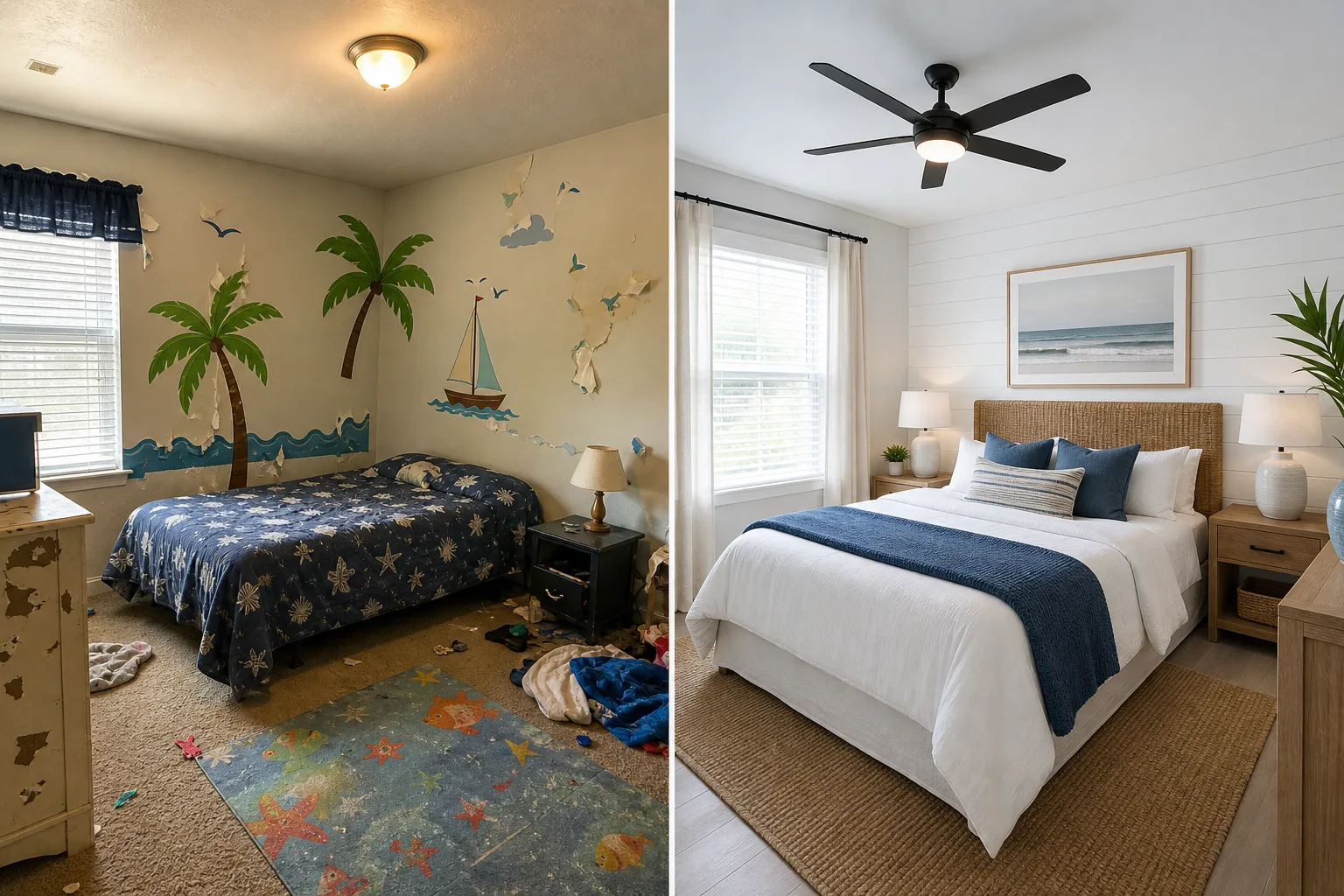
Design mistakes are the most visible category — they show up immediately in listing photos and are the most expensive to fix because the wall finishes and mural work need to be redone. Common patterns: bright saturated walls (saturated pink for princess, neon green for jungle, electric blue for superhero) instead of the more sophisticated palette each theme actually wants; mural and wall-graphic placement on the entry wall instead of opposite-entry where the photographer can frame the hero shot; oversaturated accent pillows and decor in a palette that fights the wall treatment; mixing too many sub-themes in one room (cockpit + astronaut adventure + lunar landing all in one space). Recovery: usually requires repainting the focal wall and re-commissioning the wall-graphic or mural element. Avoiding the mistake is a design-direction call at the consultation stage. The princess-themed Airbnb room guide, superhero-themed bunk room guide, and space-themed vacation rental room guide cover the palette logic for each theme type.
Category 2 — Material mistakes (residential-grade in commercial-grade context)
Material mistakes are the most predictable category — they always fail at the same wear points and always on a similar timeline. Common patterns: residential-grade bunk furniture (the rails bend, the joints loosen, the rungs split within the first booking season); residential-grade wall graphics on textured drywall (adhesive fails inside 30 days, graphics peel); craft-store plastic vine garlands and silk plants from craft retailers (look amateur in listing photos and accumulate dust unsustainably); residential-grade canopy fabric in princess rooms (snags and yellows under guest use); glass crystal or prism accents in princess and luxury bunks (shatter under guest handling). Recovery: piecewise replacement with commercial-grade alternatives. The expensive lesson is that the residential-vs-commercial spec gap is invisible at install but compounds month-over-month — by month six the residential build photographs as worn while the commercial build still photographs new.
Category 3 — Durability mistakes (wear patterns the build did not accommodate)
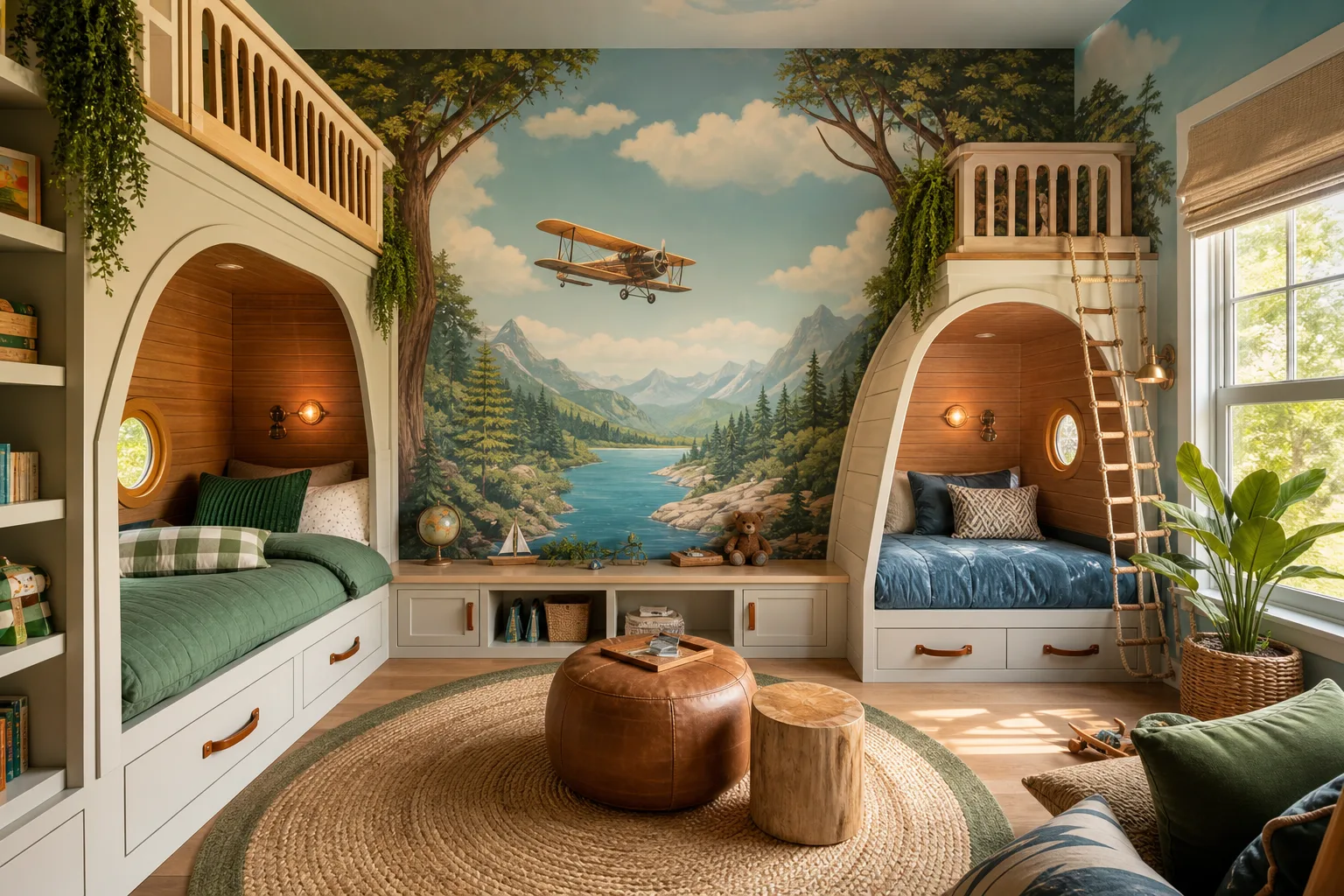
Durability mistakes are theme-specific and miss the wear pattern each theme actually produces. Common patterns: princess rooms spec’d for residential wear instead of the 4-9-girl pattern of touching and moving decorative pieces (tiaras pulled off hooks, accent pillows dragged around); superhero rooms spec’d for residential wear instead of the 7-13-boy pattern of climbing the bunk furniture and throwing accent items (residential bunks bend, mounted decor falls); space rooms with residential-grade fiber-optic ceiling kits from craft stores (fiber strands fail under guest tugging); sports rooms without the safety scope (no wall padding behind bunks, no anchored shelving, no rounded-edge furniture — kids get hurt and the room exits rotation); jungle rooms with under-spec’d rattan (the joints loosen, the furniture wobbles); luxury bunks with residential-grade bedding (the photo positioning collapses, the booking-audience signal fails). Recovery: piecewise upgrade to theme-specific durability spec. Avoiding the mistake is theme-aware spec at the build stage.
Category 4 — Operational mistakes (what the cleaning crew cannot sustain)
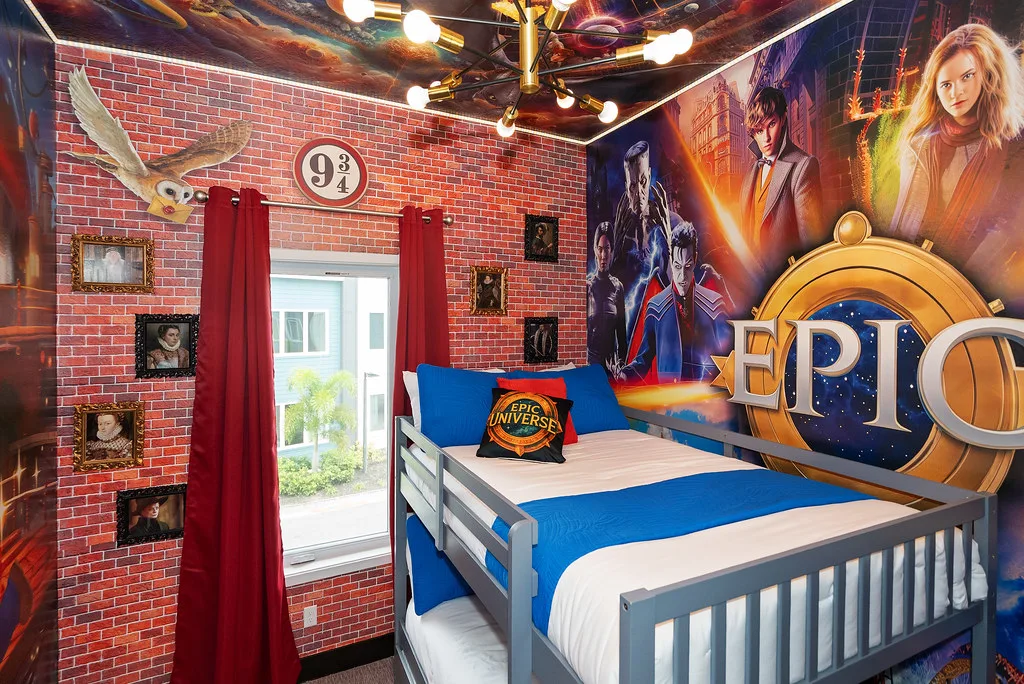
Operational mistakes are invisible at install and emerge over months. They are the most under-budgeted failure category because owners think of themed rooms as install projects rather than as operational systems. Common patterns: no accent-kit checklist (decorative pieces walk out in guest suitcases over months, the room photographs progressively thinner across the year); no second bedding rotation spec (pastel princess bedding runs out of fresh sets inside a peak week, the cleaning crew turns over against worn bedding); no scheduled foliage dust-rotation in jungle rooms (silk plants accumulate dust and photograph dingy by month three); no LED-refresh schedule in space rooms (fiber-optic strands burn out and the hero photo degrades unnoticed); no quarterly accessory inspection (broken or missing pieces stay broken or missing because no one was tracking the baseline). Recovery: operational documentation rollout, accent-kit re-stock from supplier records. Avoiding the mistake is handoff documentation at install. The themed-room planning guide covers the handoff scope.
Category 5 — Photography mistakes (the room exists but the listing fails)
Photography mistakes produce the most counterintuitive failure: a beautifully-built themed room that does not move bookings because the listing photos does not communicate the theme. Common patterns: shoot scheduled before bedding and accent layer install (the listing photos captures an unfinished room); photographer not briefed on themed-room staging (the hero shot is framed wrong, the lighting temperature mismatches the palette, the styling layer is sparse); themed-room photo placed in the wrong listing photos slot (theming buried in slot ten instead of foregrounded in slot two or three); the room photographed under default natural-window light only (warm-temperature interior lighting is required for most theme palettes to read correctly); reshoot never scheduled after month 12 operational wear (the gallery ages while the room itself has been refreshed). Recovery: reshoot with proper briefing and staging. The themed-room photo strategy guide covers the photography playbook in detail.
Category 6 — Scope mistakes (wrong theme, wrong tier, wrong property)
Scope mistakes are the most expensive category because they cannot be fixed without rebuilding the whole themed room. Common patterns: princess theme in a property booking athletic-teen families (the audience-theme mismatch is structural); loud theming in a sophisticated whole-house design direction (aesthetic dissonance shows in every gallery photo); single themed bunk at 8BR full-amenity-resort scope where neighborhood comps has multi-themed estates (under-investment relative to the market); luxury bunk at 5BR scope where the booking audience skews family-Disney-trip (over-investment in the wrong audience direction); themed scope in 2BR-3BR condos where the listing competition does not reward differentiation. Recovery: full re-theming if budget permits, repositioning the listing to match the existing theme if not. Avoiding the mistake is booking-audience analysis at the planning stage. The themed-room planning guide and themed-room vs standard bedroom Airbnb comparison cover the scope-decision logic.
Category 7 — IP and licensing mistakes (the legal failures)
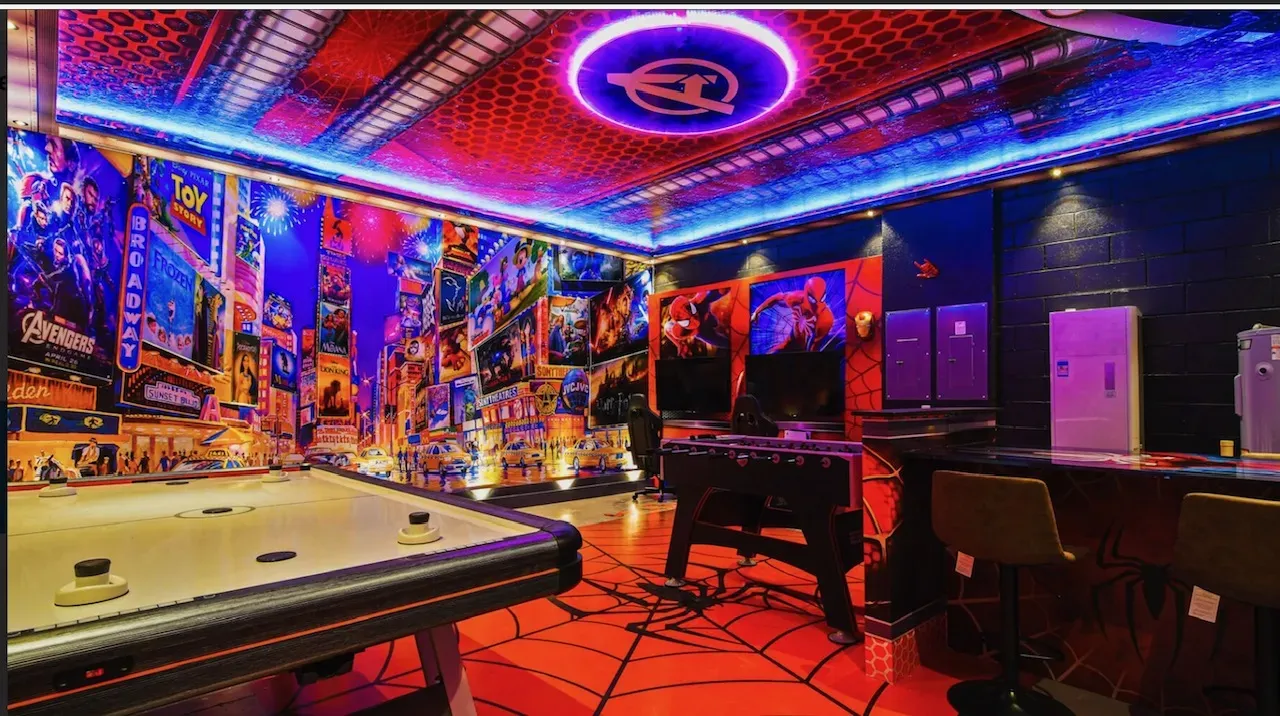
IP mistakes are the highest-risk category because the cost of failure is not just an aesthetic problem — the listing can be removed by the platform. Common patterns: licensed-character murals (Disney princess imagery, specific Marvel or DC characters, Star Wars-licensed elements, specific named animated-film characters); licensed-team sports imagery (NFL/NBA/MLB/NHL/NCAA logos, team jersey numbers in team colors, framed printed jerseys, stadium silhouettes recognizable as specific teams); licensed-music-themed rooms with specific band imagery or album-art murals; specific licensed-film stadium or location recreations. Recovery: repaint and re-mural with original artwork; replace licensed accent pieces with generic alternatives. Avoiding the mistake is trademark-safe vocabulary at build commissioning. Each of the 6 theme-specific guides — princess, superhero, space, sports, jungle, luxury — covers the trademark-safe design palette for that theme type. The legal exposure is real and the platform enforcement is real, not theoretical.
How to spot and recover from a failed themed room (decision framework)
When evaluating an existing themed room that "isn’t performing," the diagnostic sequence: (a) Check the gallery — is the themed-room photo present, in slot two or three, with proper composition? If not, the failure is Category 5 (photography), recoverable with a reshoot. (b) Check the operational state — accent kit complete, bedding fresh, foliage dust-rotated, LEDs functional? If not, the failure is Category 4 (operational), recoverable with handoff documentation. (c) Check the durability state — bunks tight, walls clean, furniture stable? If not, the failure is Category 2 or 3 (material/durability), recoverable with piecewise spec upgrade. (d) Check the audience-theme match — is the theme appropriate for the actual booking audience? If not, the failure is Category 6 (scope), and recovery is a re-theme. (e) Check for licensed imagery — any team logos, character imagery, specific licensed elements? If yes, the failure is Category 7 (IP) and recovery is original-art replacement, urgent. Most underperforming themed rooms have failures in Categories 4 and 5 (operational and photography) — the cheap fixes — rather than Categories 2, 3, or 6 (the expensive ones). Triage in that order saves the most budget.
What to do first this week
Open three same-bedroom-count comps on Airbnb or VRBO and screenshot bunk photos, outdoor dining seats, and primary suite finish. List where your home falls short — that gap list becomes your furnish scope. Themed room underperforming? Send photos — we'll triage fixes before a rebuild.
What we see go wrong
- Treating "themed room not performing" as a single problem instead of triaging which of the seven failure categories the room is actually in.
- Skipping the photography reshoot at month 12 — operational wear is visible in close-up themed photos faster than in standard bedrooms, and the gallery ages while the room is being maintained.
- Spec’ing residential-grade material for any themed-room component (bunk furniture, wall graphics, canopy fabric, fiber-optic kits, rattan furniture) — saves install cost, loses photo-quality cost month over month.
- Building licensed-IP themed elements (specific characters, team logos, named animated-film references) — the legal exposure is real and platforms enforce.
- No accent-kit checklist at handoff — decorative pieces walk out in guest luggage progressively, the room thins out across the year, no one was tracking the baseline.
- Theming the primary suite instead of a secondary bedroom — primary suites should photograph as luxury escape for the booking adult, not as kid-themed space.
- Choosing the theme based on the owner’s personal taste rather than the booking-audience profile — the most common scope-category mistake.
Related Community Guides
Eight Core Services
Turnkey to Themed Rooms — All Under One Roof
Full furniture packages, STR interior design, themed kids suites, game room conversions, property prep, custom bunks, white-glove install, and listing-ready staging — for vacation rentals and second homes across Orlando, Kissimmee, Davenport, and the full Florida STR market.
Frequently Asked Questions
How do I know if my themed room is "failing" or just settling in?
Themed rooms have an early-life adjustment period — bedding rotates in, guests test the durability spec, the photographer or property manager catches small staging issues. Genuine failures show up after month three: bedding photographs worn, accent pieces are missing, listing-photo performance has not improved against same-floor-plan neighbors. Run the diagnostic sequence in the body (listing photos check, operational check, durability check, audience-theme check, IP check) — most underperforming themed rooms are in Categories 4 or 5 (operational or photography), both cheap to fix.
Can a failed themed room be re-themed without rebuilding?
Partial re-themes are doable when the failure is design or palette only (Category 1) — repaint the focal wall, re-commission the mural, refresh the accent pieces. Full re-themes (different theme entirely) are doable when the build was furniture-based rather than millwork-based — replace the wall graphics, swap the bedding, change the accent kit. Custom-millwork themed builds (luxury bunks especially) are much harder to re-theme because the build is architectural. The themed-bunk-room planning guide covers the package tier decisions that affect re-theming flexibility.
Which failure category is the most expensive to recover from?
Category 6 (scope mistakes — wrong theme for the property) is the most expensive because it requires rebuilding the themed room from the wall finishes up. Category 7 (IP mistakes) is the most urgent because the listing can be flagged or removed by the platform, but the recovery itself (original-art replacement) is moderate cost. Categories 4 and 5 (operational and photography) are usually the cheapest because they require documentation and reshoots rather than rebuilds — and they are the most common categories underperforming themed rooms actually fall into.
How long do most themed rooms last before they need refresh?
Theme-dependent. Princess rooms run 18-24 months between refresh cycles (bedding rotation, accent-kit restock). Superhero rooms run 18-24 months similarly. Space rooms run 24-30 months (deep-color palette holds up better). Sports rooms run 18-24 months with three bedding rotations standard. Jungle rooms run 24-30 months with foliage dust-rotation as the operational variable. Luxury bunks run 30-36+ months because the millwork carries the build rather than rotating accent layers. The refresh definition matters too — most "refresh" cycles are bedding swap plus accent-kit restock plus minor wall-graphic spot-replacement, not full re-mural or re-furnishing.
Do these mistake categories apply to game rooms and theater rooms too?
Some apply directly (Categories 2, 3, 4 — material, durability, operational), others are different. Game rooms have their own scope-mistake patterns (treating them as furniture purchases instead of construction-adjacent scope, skipping the HVAC and electrical phase, scoping arcade-and-table-game count below the resort baseline). The game-room conversion cost planning guide covers the game-room-specific failure modes. Theater rooms have a different set again. The themed-room mistake catalog above is themed-bunk-room specific.
What should I do first?
Pull three in-community comps with your bedroom count, note bunk, outdoor, and primary suite in the hero photos, then send your floor plan. We match package tier to that comp set before you order furniture.
How much does it typically cost to fix an operational or photography failure compared to a full re-theme?
A Category 4 or 5 fix — restocking the accent kit, refreshing bedding, rebriefing a photographer for a reshoot — usually costs a few hundred dollars and a single afternoon, not a new furniture order. A full re-theme (a Category 6 scope mismatch or a Category 1 design rebuild) means repainting walls, re-commissioning murals, and often new bunk fabrication, which puts it in the same cost range as building the themed room the first time. That gap is exactly why running the diagnostic sequence before assuming a rebuild is worth the ten minutes it takes.