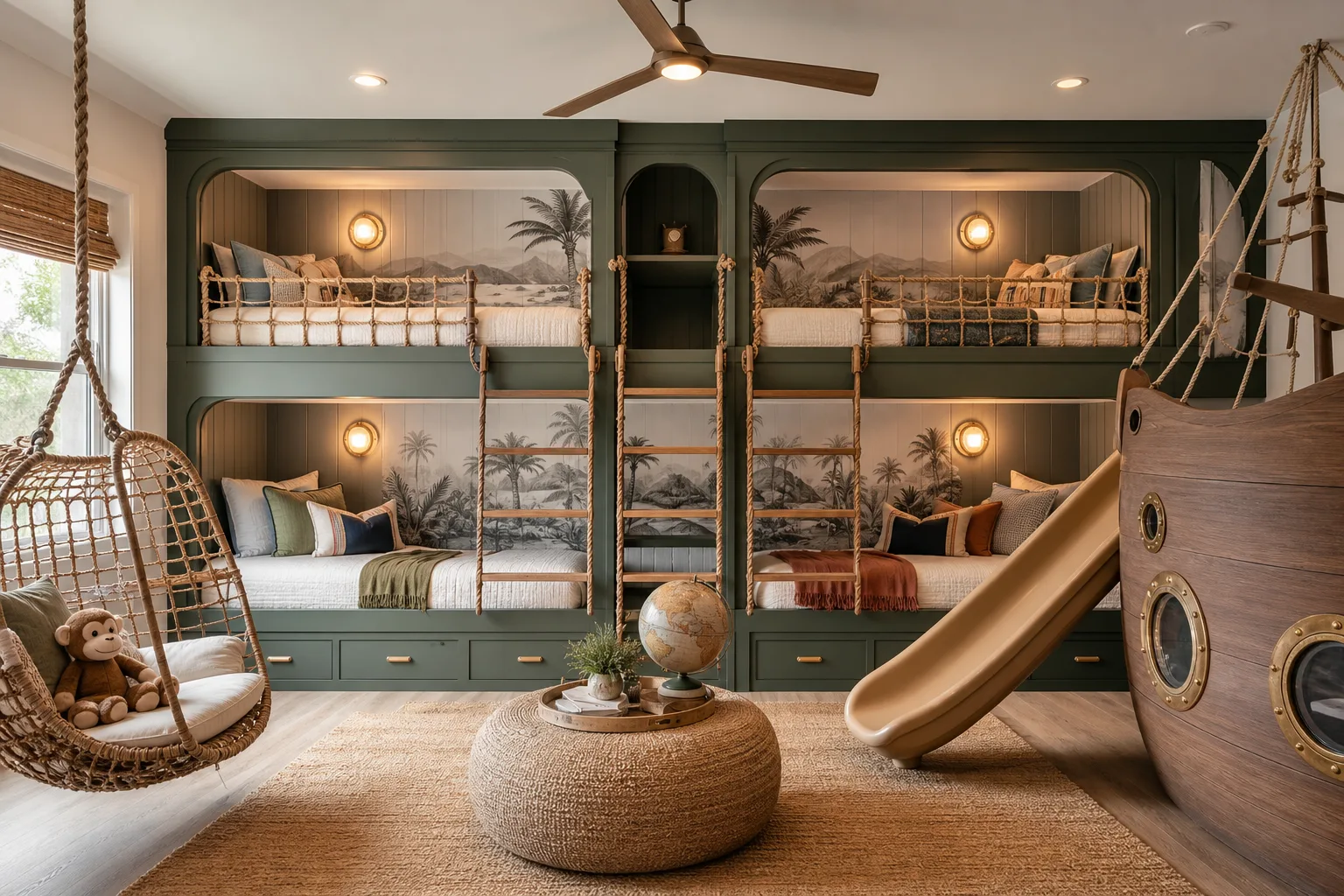
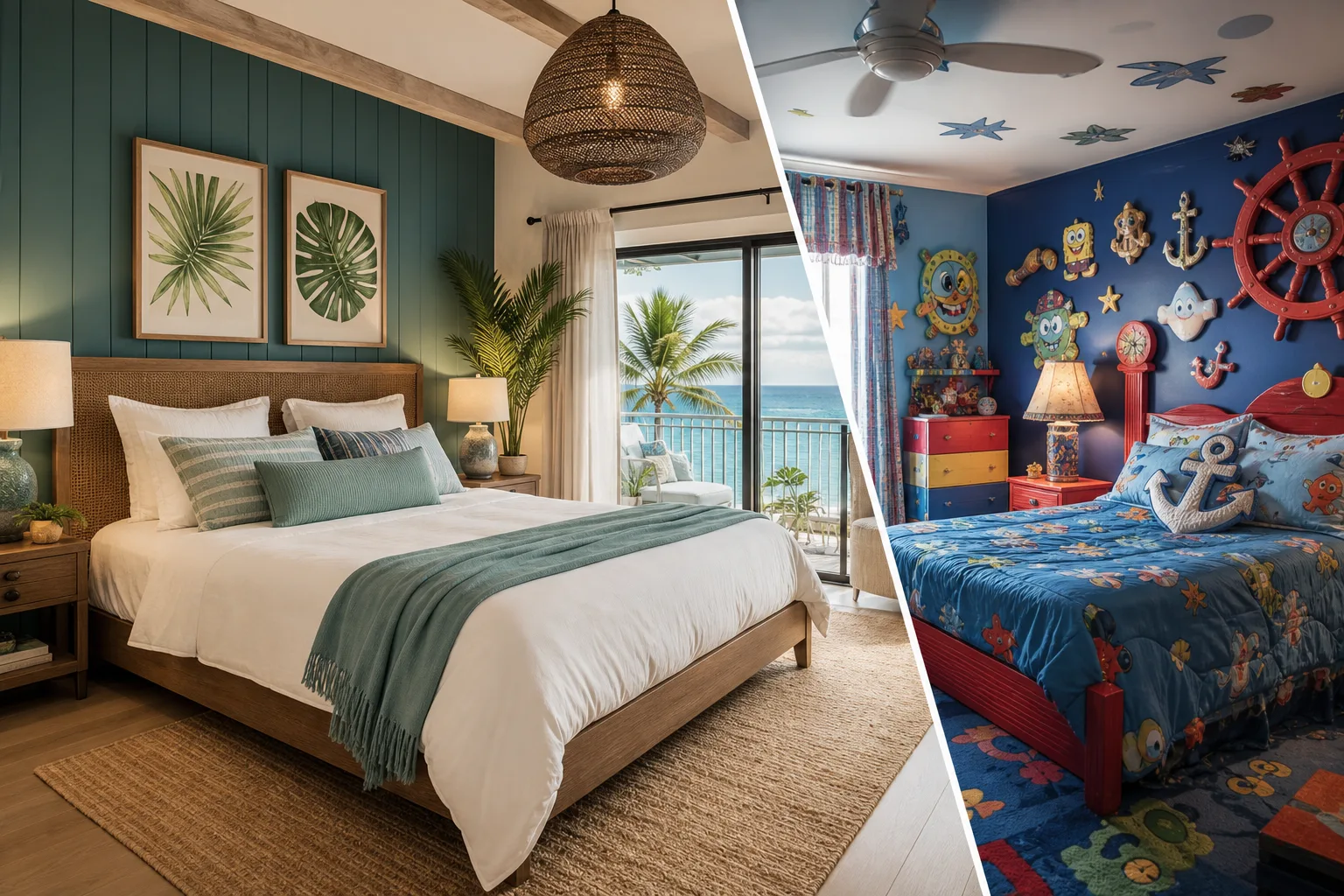
Themed vs Standard Bedroom
When a standard bedroom actually wins, when a themed room is clearly the right call, and the hybrid pattern most successful 5BR Disney-corridor properties use.
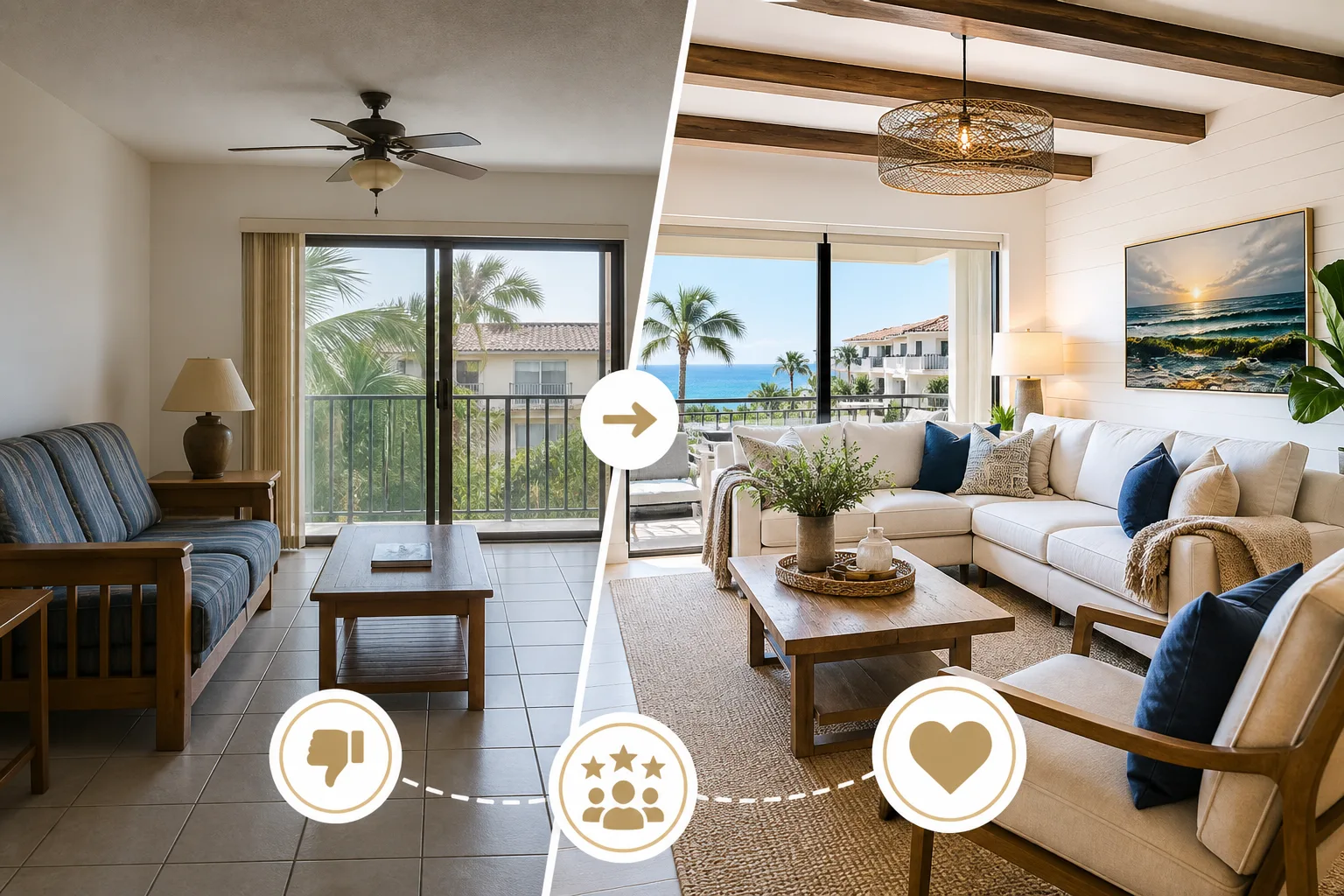
Sound familiar?
Almost every guide on themed-vs-standard bedrooms makes the same case — themed always wins. That is not true, and owners who treat it as true end up theming properties where the booking audience would have rewarded a sophisticated standard build instead. The honest comparison is more nuanced: each approach wins in specific contexts, the hybrid pattern wins in the most contexts, and the decision is fundamentally about the property’s neighborhood comps and booking-audience profile, not about which approach is "better."
In short
- Themed-vs-standard is a commercial positioning decision tied to the property’s neighborhood comps and booking-audience profile — not an aesthetic preference. Both approaches win in specific contexts; the wrong one for the property depresses booking conversion.
- Standard wins in: mostly un-themed neighborhood comps, non-family booking audiences, sophisticated whole-house design directions, smaller bedroom counts, urban or boutique markets.
- Themed wins in: Disney-corridor 5BR-8BR resort properties, tournament-corridor sports-travel markets, 8BR+ full-amenity-resort and mega-rental scope, properties launching against heavily-themed neighbor sets.
- The hybrid pattern (one themed secondary bunk plus sophisticated standard everywhere else, especially the primary suite) is the default recommendation for most 5BR-7BR Disney-corridor properties — earns listing photos differentiation while preserving sophistication signal.
- Run the 6-question decision framework (neighborhood comps, audience, sleep-count shift, design direction, operational complexity, photography ambition) before committing to either approach. Three or more themed answers → themed scope; three or more standard → standard wins; mixed → hybrid pattern.
- Monday action: compare your listing to three comps on bunk, outdoor, and primary suite before signing a furniture PO.
This is the binary-decision comparison: when a standard bedroom is genuinely the right call for an Airbnb or STR, when a themed room clearly wins, and the hybrid pattern that most successful 5BR Disney-corridor properties actually use. The themed-bunk-room planning guide covers the broader strategic framework; this comparison narrows to the single most common pre-decision question.
What to know
The fundamental question: differentiation vs cohesion
The standard-vs-themed decision is fundamentally about how the property positions in its neighborhood comps. Themed rooms are a differentiation move — the property reads as visibly different from same-floor-plan neighbors in the gallery. Standard bedrooms are a cohesion move — the property reads as sophisticated and intentional across every room. Both are legitimate commercial strategies, and the wrong one for the property depresses booking conversion. A Storey Lake 5BR with a standard bedroom where the neighbors all have princess and superhero themed bunks is reading as "older or under-invested listing" in 2026 search results. A boutique design-conscious STR in Charleston with a princess-themed bunk room is reading as "kid-themed rental" to an audience that wanted sophisticated multi-generational. Both situations are the wrong-call mistake in opposite directions.
When a standard bedroom actually wins
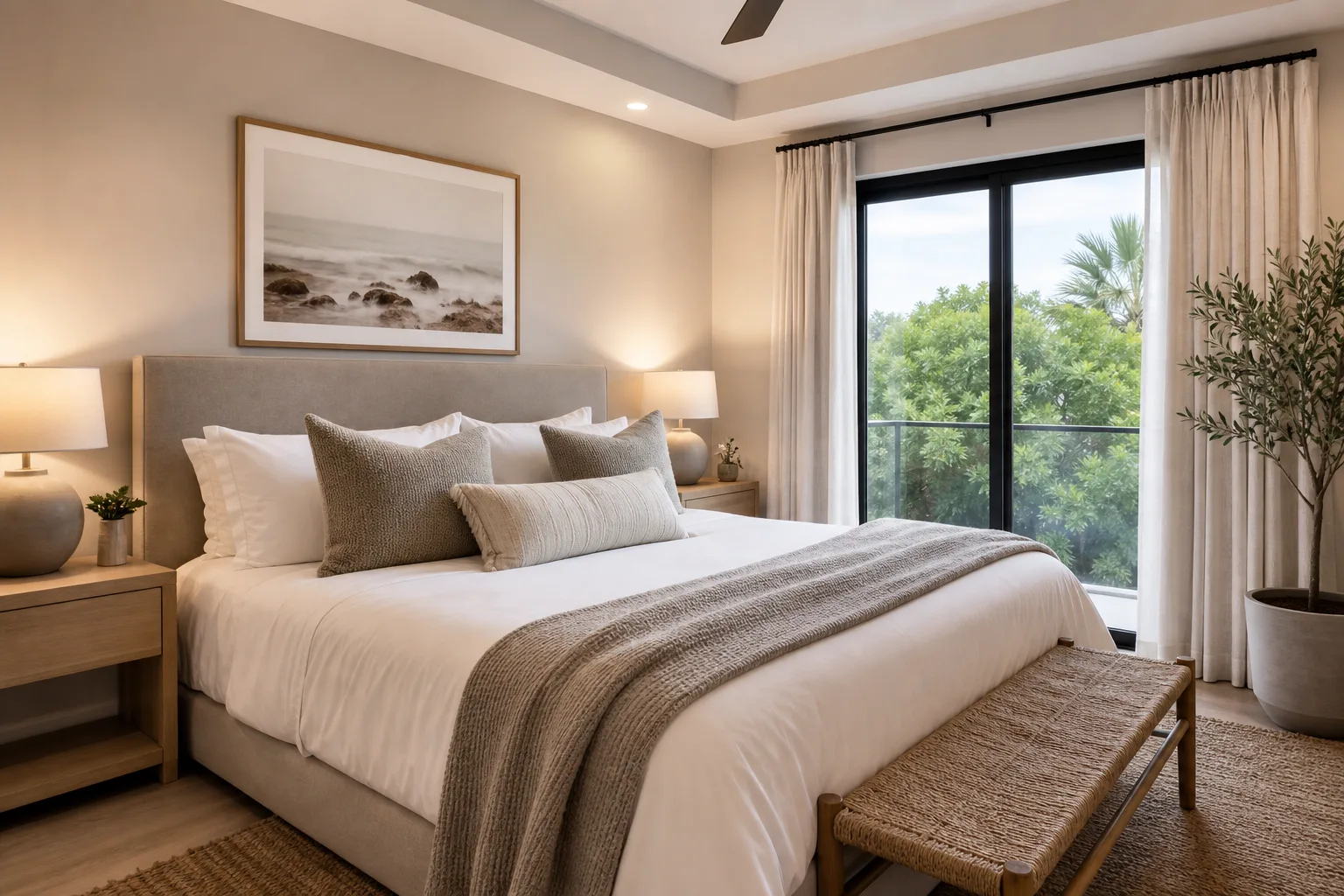
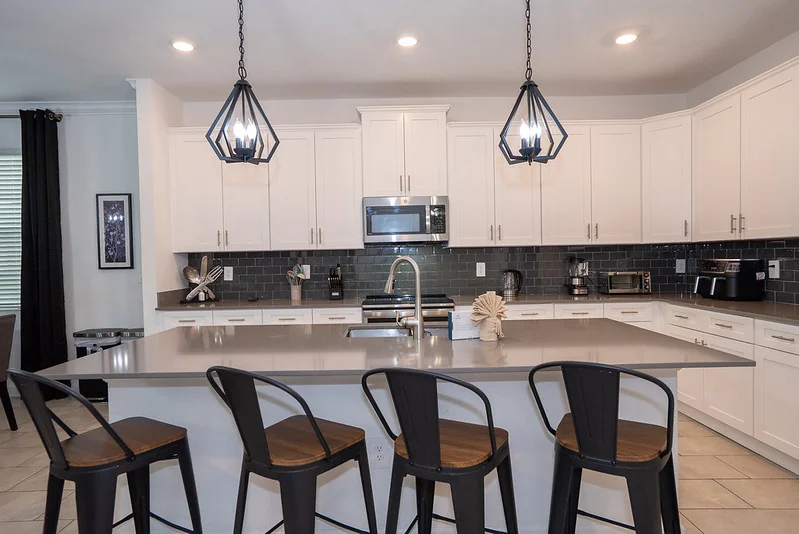
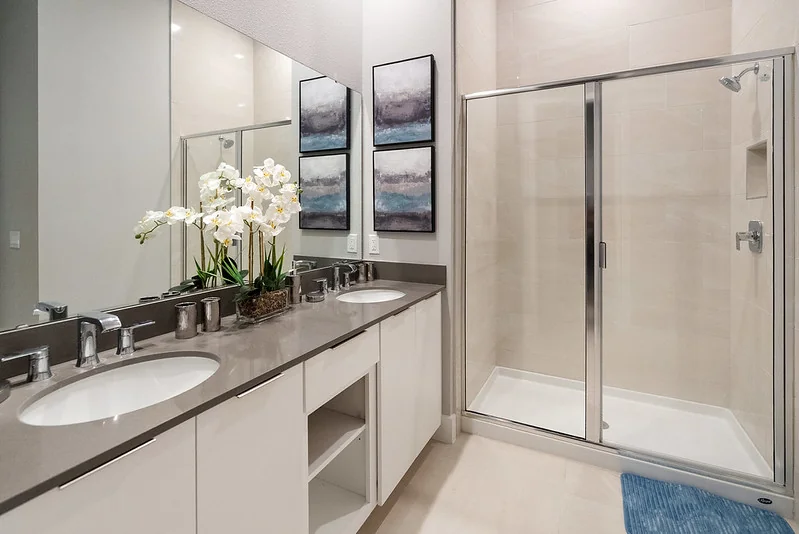
A sophisticated standard bedroom genuinely wins in five contexts. (1) Properties competing in markets where the neighbor neighborhood comps is mostly un-themed — themed scope becomes a differentiator at the cost of fitting the market signal, and the listing reads as outlier rather than as best-in-class. (2) Properties marketing primarily to non-family audiences — business travel, adult getaway, multi-generational adult, group celebration (other than family-Disney-trip), wedding-party booking. (3) Properties where the whole-house design direction is genuinely sophisticated/neutral and a loud themed room would create aesthetic dissonance visible in listing photos. (4) Smaller-bedroom properties (2BR-4BR condos and townhomes) where the family-Disney-trip booking audience is a smaller share of search results and themed scope does not produce the target guest shift. (5) Markets where themed-room IP enforcement risk is higher (urban high-rise STR properties with stricter platform monitoring) and trademark-safe themed builds add planning overhead the property may not want. The "standard wins" case is real and the listings competing in these contexts often book stronger with a sophisticated standard build than with under-confident themed scope.
When a themed room is clearly the right call
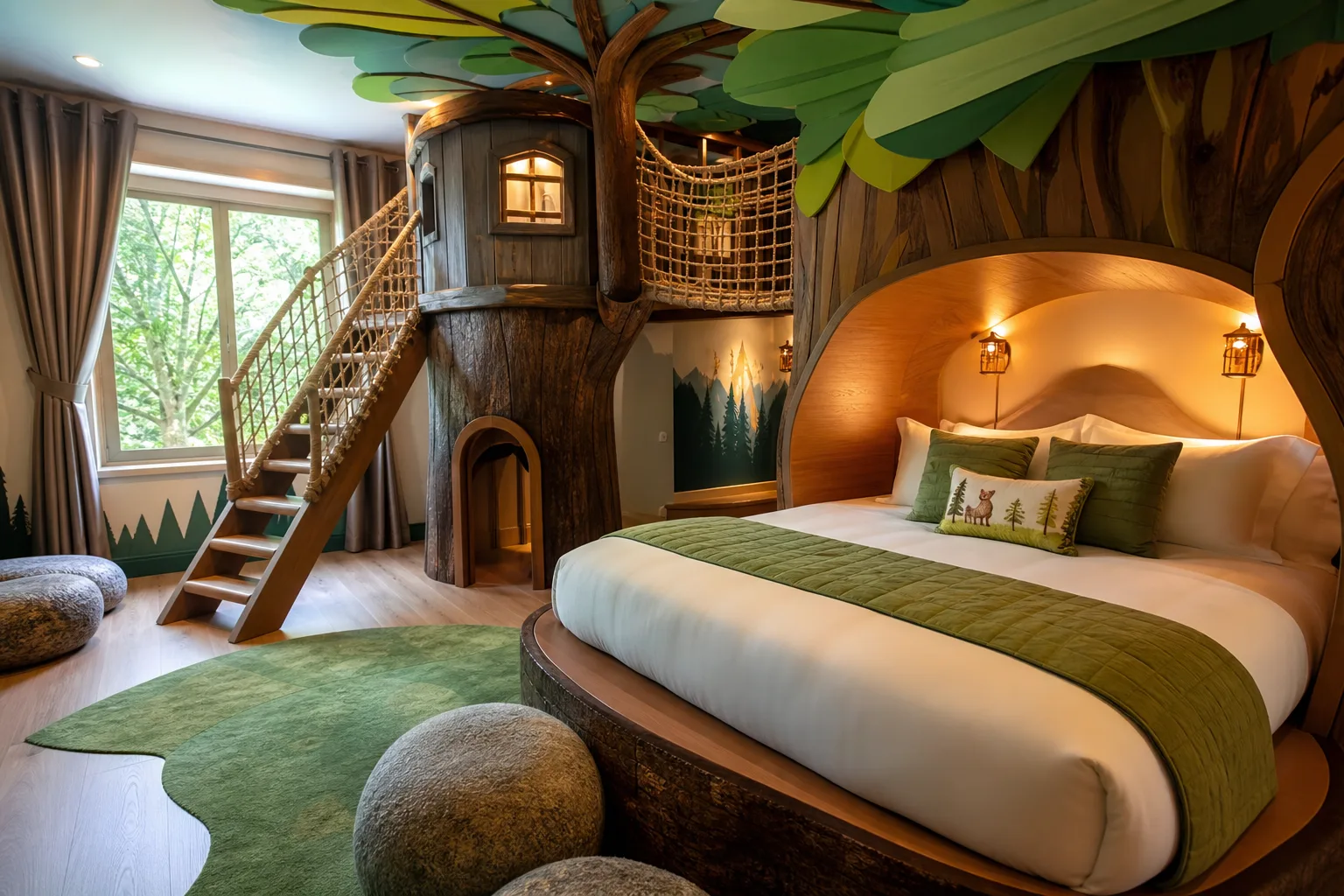
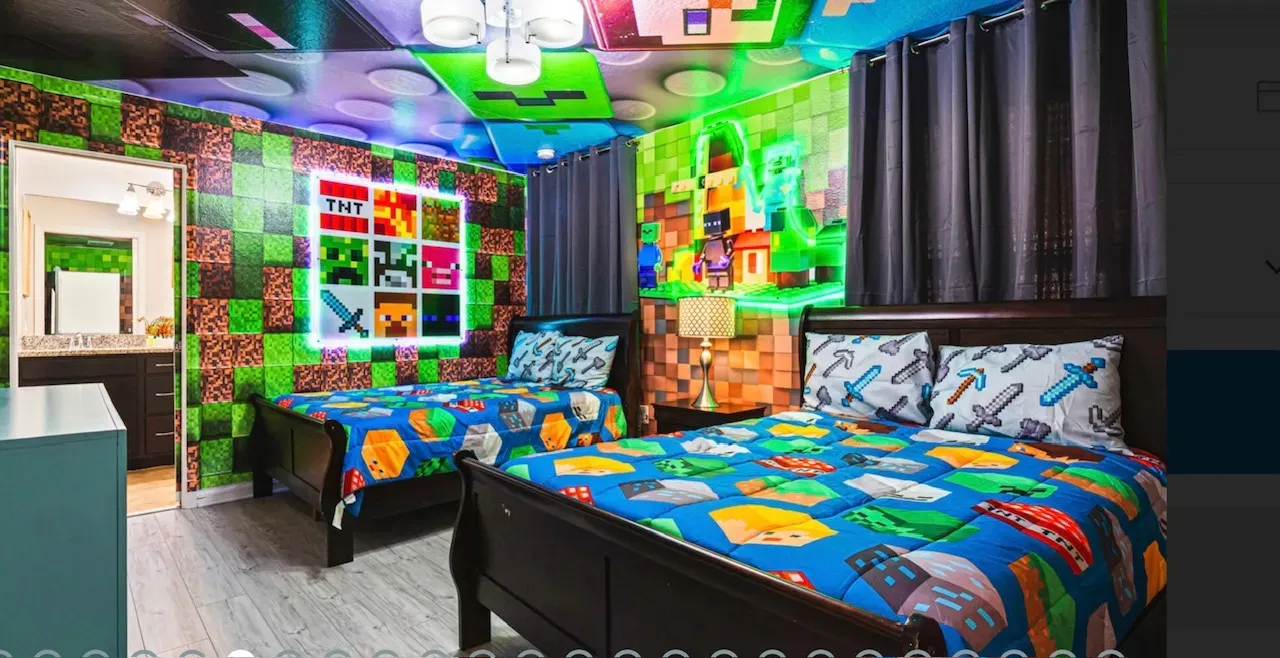
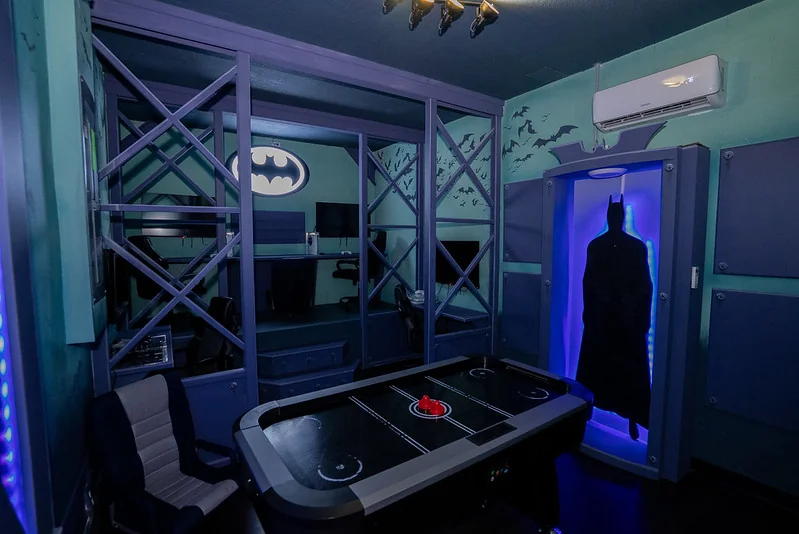
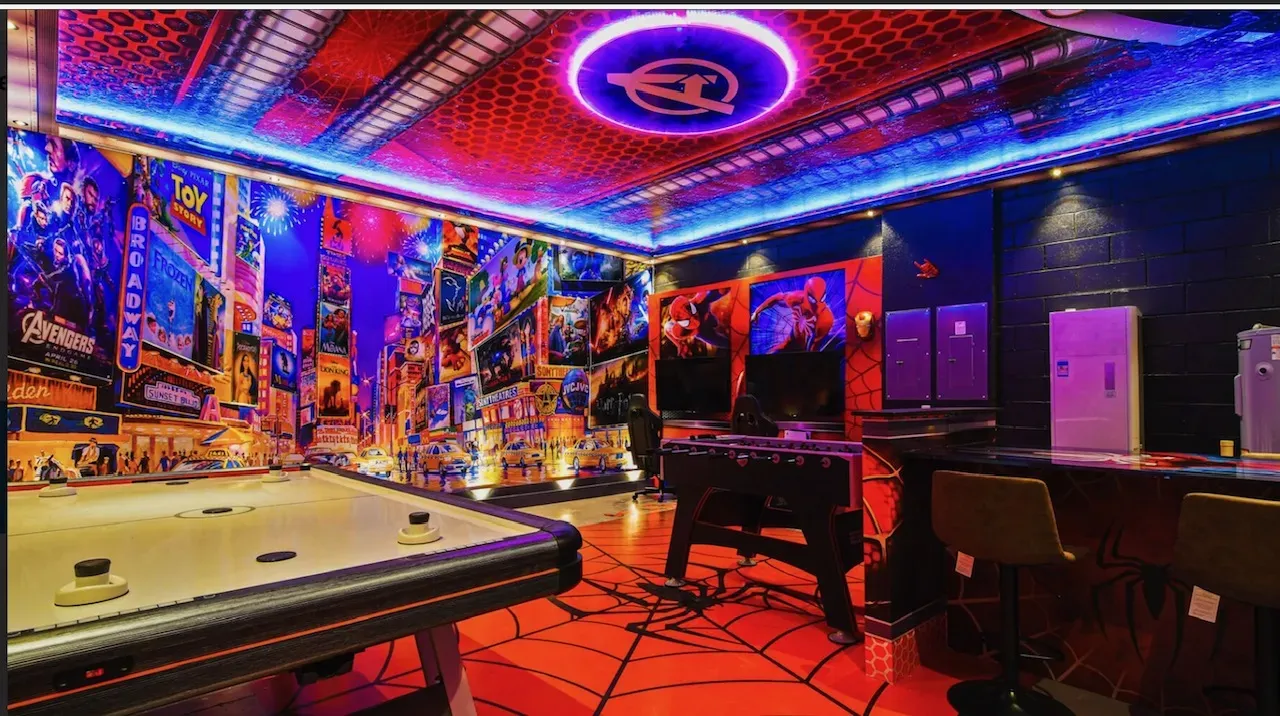
A themed room clearly wins in four contexts. (1) Disney-corridor resort 5BR-8BR properties (Storey Lake, Solara, Windsor Island, Windsor Cay, ChampionsGate, Windsor at Westside, Reunion Resort, Paradiso Grande) where the booking audience skews family-Disney-trip and every same-floor-plan neighbor already has at least one themed bunk. Matching the neighborhood comps is required. (2) Properties marketing to tournament-corridor sports-travel audiences in markets near ESPN Wide World of Sports, AdventHealth Sports Park, or other major youth-tournament venues — sports-themed scope produces real audience-match value. (3) 8BR+ full-amenity-resort and mega-rental builds where the amenity setup drives nightly rate and multiple themed spaces compound in gallery performance. (4) Properties launching against established themed-neighbor neighborhood comps where the listing needs a visible reason to win the booking decision in the first 30 seconds of gallery scrolling. The themed-bunk-room planning guide covers the specific theme-selection logic for each of these cases.
The hybrid pattern — themed bunk plus sophisticated standard primary suite
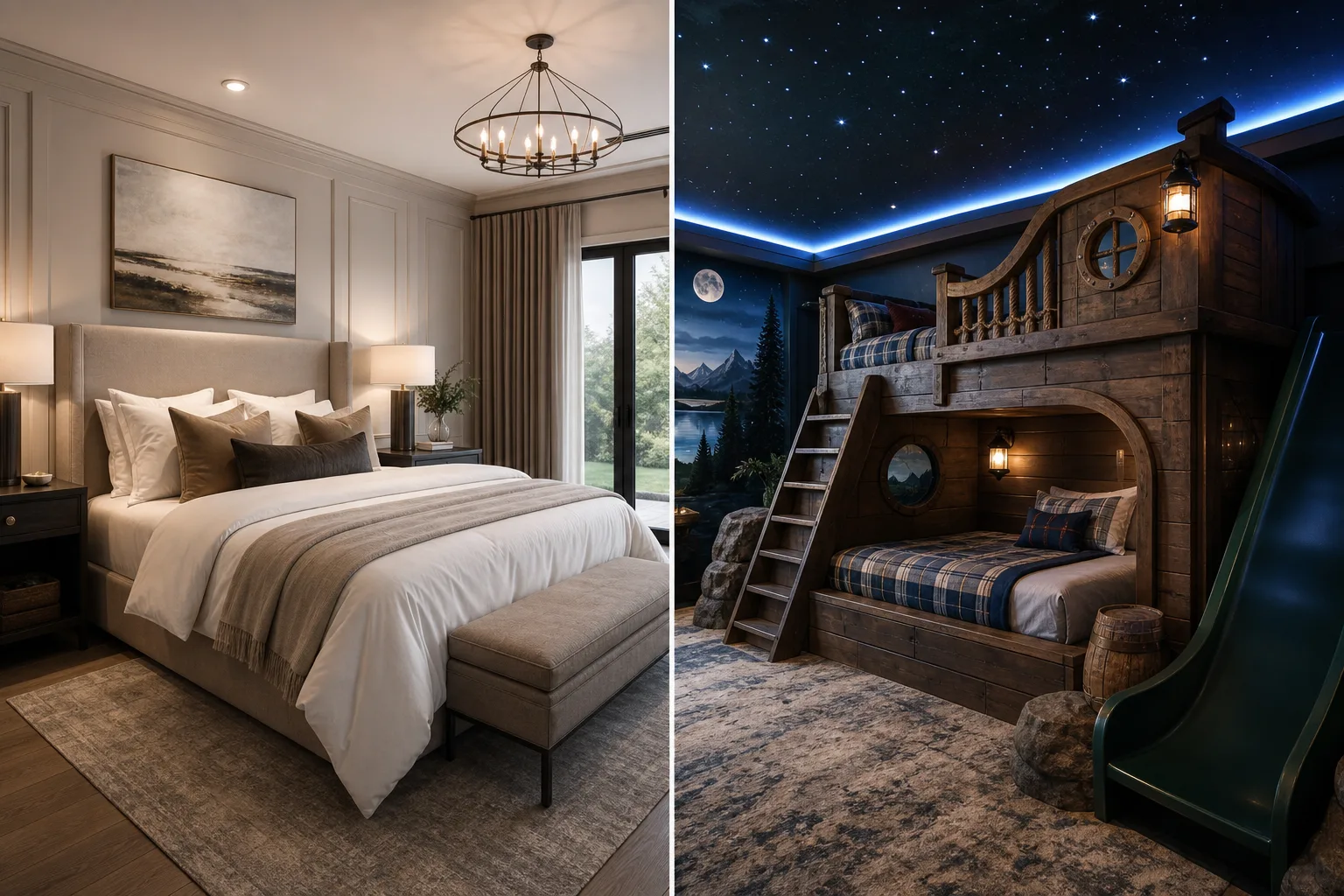
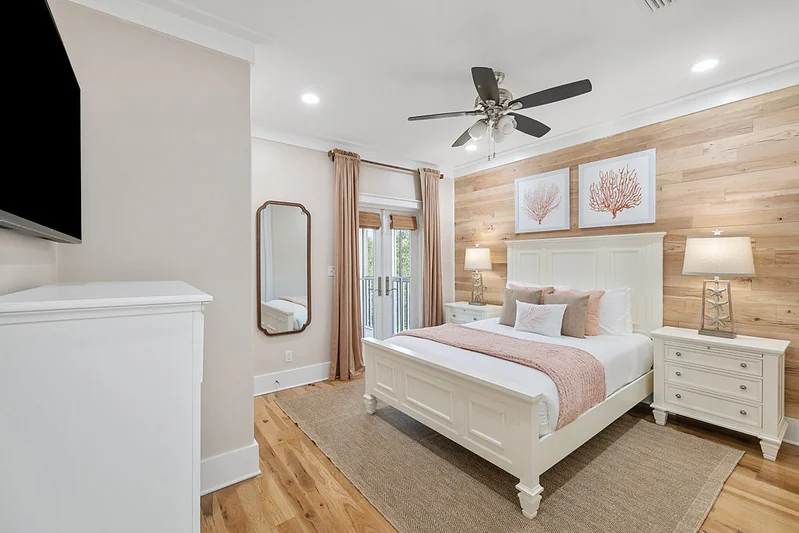
The most successful 5BR Disney-corridor properties use a hybrid pattern that combines both approaches: a themed bunk room in one secondary bedroom (princess, superhero, space, or sports depending on audience), and sophisticated standard bedrooms everywhere else including the primary suite. This pattern earns the gallery-photo differentiation a themed bunk delivers while preserving the booking-adult’s perception of the property as sophisticated and intentional. The themed-bunk photo lands in slot two or three of the gallery; the primary-suite photo in slot one (or slot two after the exterior) reads as luxury escape. Combined, the listing communicates "this property is built for the family-Disney-trip booking decision but designed for the adult who is paying for it." The hybrid pattern is the default recommendation for most 5BR-7BR Disney-corridor properties.
Cost comparison — where the budget actually shifts
Standard-vs-themed budget shifts are smaller than most owners think, and they shift unevenly. The biggest cost difference: the original-art and wall-graphic commissioning for a themed room (custom mural, vinyl-decal sourcing, theme-coordinated accent kit) sits in published planning ranges on the themed-rooms service page; a sophisticated standard bedroom uses framed art and curated accent layers at roughly comparable accent-spend but no custom-art commissioning. The biggest cost similarity: bunk-bed fabrication, bedding spec, lighting, and ceiling work are similar across both approaches at equivalent quality tiers. The biggest hidden cost on the themed side: the operational handoff (accent-kit checklist, refresh-cycle calendar, scheduled re-shoot cadence) is real additional scope that standard bedrooms do not require at the same depth. Final pricing for either approach requires a scoped proposal; the themed package tier planning ranges live on the service page. The vacation rental furniture cost by bedroom count guide walks through how amenity scope (including themed) interacts with bedroom-count math.
Listing-photo impact — same bedroom count, very different listing photos
The listing-photo difference between themed and standard is the most-visible commercial impact and the cleanest signal to evaluate before committing. A sophisticated standard bedroom photographs as "magazine-quality residential" — the gallery shows polished, cohesive, hotel-suite-grade space. A themed bunk photographs as "specifically built for our family-Disney-trip" — the gallery shows immediate audience-match signal. Same bedroom count, completely different signal. The decision comes down to which signal the booking audience is actually filtering on. Family-Disney-trip bookers filter on audience-match signal first (the themed photo wins the click). Adult-getaway and multi-generational-adult bookers filter on sophistication signal first (the standard photo wins the click). Properties competing in mixed booking audiences benefit from the hybrid pattern where both signals are present in the gallery.
Operational complexity — what each approach asks of the cleaning crew
Standard bedrooms have lighter operational complexity than themed rooms. The cleaning crew turnover checklist is shorter (no themed-accent kit to restock, no scheduled foliage rotation, no fiber-optic LED inspection, no themed-bedding rotation accounting), the refresh cycle is longer (24-36 months for a sophisticated standard bedroom vs 18-24 for most themed rooms), and the operational handoff documentation is simpler. For owners managing remotely or working with property managers who handle multiple properties, the operational simplicity of standard bedrooms is a real consideration — themed scope adds turnover-cycle complexity that compounds across many properties. The hybrid pattern (one themed bunk plus standard bedrooms elsewhere) limits the operational complexity to a single room rather than across the whole property. The themed-room mistakes catalog covers operational-failure-mode patterns in detail.
The 6-question decision framework
Run the decision through six questions before committing to themed or standard: (1) What is the property’s neighborhood comps? Heavily themed (Disney-corridor 5BR-8BR resort) → themed required. Mostly un-themed (urban condo, boutique market) → standard wins. (2) Who is the primary booking audience? Family-Disney-trip → themed audience-matches; non-family audiences → standard wins. (3) Does the property need the target guest shift from added sleep positions? If themed scope adds 4 sleep positions and shifts the listing from sleep-8 to sleep-10+, themed has compounding value beyond gallery photo impact. (4) What is the whole-house design direction? Sophisticated/neutral → standard or hybrid; intentionally playful → themed integrates better. (5) Who manages the property operationally? Owner-operator or single-property focus → themed operational complexity is manageable; multi-property property manager → standard simplifies ops. (6) What is the photography ambition? Hero-shot differentiation needed → themed; subtle whole-listing cohesion needed → standard. Three or more "themed" answers → commit themed scope. Three or more "standard" answers → standard wins. Mixed → hybrid pattern.
What to do first this week
Open three same-bedroom-count comps on Airbnb or VRBO and screenshot bunk photos, outdoor dining seats, and primary suite finish. List where your home falls short — that gap list becomes your furnish scope. Themed bunk or standard build? Send address and community — we'll recommend what your neighbors actually need.
What we see go wrong
- Theming a property whose neighborhood comps is mostly un-themed — the listing reads as outlier or under-confident rather than as best-in-class.
- Building a sophisticated standard bedroom in a heavily-themed Disney-corridor neighborhood comps — the listing reads as "older listing" against same-floor-plan neighbors who all theme.
- Treating themed-vs-standard as an aesthetic preference rather than as a commercial positioning decision tied to the booking audience and neighborhood comps.
- Skipping the hybrid pattern at 5BR-7BR Disney-corridor scope — the single-themed-bunk-plus-sophisticated-everything-else pattern is the default recommendation for most properties.
- Theming the primary suite — primary suites should photograph as adult-luxury-escape regardless of which approach the secondary bedrooms take.
- Under-estimating themed-room operational complexity for multi-property property managers — the per-property operational lift compounds across portfolios.
- Locking the standard-vs-themed decision before scoping the property’s booking-audience profile and competitive-set themed depth.
Related Community Guides
Eight Core Services
Turnkey to Themed Rooms — All Under One Roof
Full furniture packages, STR interior design, themed kids suites, game room conversions, property prep, custom bunks, white-glove install, and listing-ready staging — for vacation rentals and second homes across Orlando, Kissimmee, Davenport, and the full Florida STR market.
Frequently Asked Questions
Is a standard bedroom always cheaper than a themed bedroom?
Not always meaningfully. The biggest cost difference is the original-art commissioning and accent-kit on the themed side, which sits in published planning ranges on the themed-rooms service page. Bunk fabrication, bedding spec, and lighting are similar across both approaches at equivalent quality tiers. A sophisticated standard bedroom with curated accent layers and quality bedding can land at comparable total scope to a single themed bunk room. The biggest hidden cost on the themed side is operational (accent-kit, refresh-cycle, scheduled reshoots) — real ongoing scope that standard bedrooms do not require.
Can I theme just one room and leave the others standard?
Yes — this is the hybrid pattern and it is the default recommendation for most 5BR-7BR Disney-corridor properties. A themed secondary bedroom (princess, superhero, space, or sports depending on the booking-audience profile) combined with sophisticated standard primary suite and standard remaining bedrooms earns the gallery-photo differentiation while preserving the property’s sophisticated whole-house signal. At 8BR full-amenity-resort scope, the pattern usually expands to two themed secondary bedrooms plus sophisticated standard everywhere else.
How do I know if my neighborhood comps is themed enough to require theming?
Open the listing photoss of the 8-10 nearest same-floor-plan properties on Airbnb and VRBO. Count how many show a themed bunk room (princess, superhero, space, sports, themed pirate/mermaid/race-car, etc.) in any slot of their listing photos. If half or more show themed scope, the neighborhood comps is themed-heavy and a standard build will read as outlier. Under half — the market is mixed and the hybrid pattern is safe; the all-standard build is also viable. Almost none — the market rewards sophisticated standard and themed scope becomes differentiation-at-cost-of-fitting-market.
Does themed-vs-standard affect nightly rate the same way at every bedroom count?
Theme scope compounds differently with bedroom count. At 4BR-5BR Disney-corridor properties, themed scope is usually about competitive-set matching (the gallery needs the themed photo to compete against neighbors who all have one). At 6BR-7BR, themed scope plus game-room conversion start producing listing amenity appeal in the listing. At 8BR+ full-amenity-resort and mega-rental scope, multi-themed spaces plus full amenity setup (game room, theater, premium outdoor) drive nightly rate as much as the bedroom count does — the property is competing on amenity differentiation, not on bedroom count alone. The vacation rental furniture cost by bedroom count guide and 4BR vs 5BR investment guide walk through how amenity scope interacts with bedroom-count math.
Can a property be re-themed (or de-themed) after launch?
Partial re-themes or de-themes are doable when the original build was furniture-based — replace the wall graphics, swap the bedding, change the accent kit. De-theming from a custom-millwork themed build (luxury bunks, integrated themed paneling) is harder because the build is architectural. Most re-theming decisions happen at the 12-18-month mark when owners get clearer signal on which booking audience the property is actually attracting; the operational cost is real but recoverable. Properties launched correctly the first time (theme matched to audience, neighborhood comps, and package level) rarely need re-theming inside the first 36 months.
What should I do first?
Pull three in-community comps with your bedroom count, note bunk, outdoor, and primary suite in the hero photos, then send your floor plan. We match package tier to that comp set before you order furniture.
I have a limited budget — should I put it all into one great themed room, or spread it across a few rooms?
Concentrate it. One themed bunk room built and photographed correctly outperforms two or three rooms with thin, under-spec'd theming spread across them — the hero photo either lands or it doesn't, and a half-themed room often photographs worse than a fully standard one. If budget is tight, the hybrid pattern already points you here: one strong themed secondary bedroom plus sophisticated standard everywhere else beats multiple weak themed attempts every time.