Themed Room Photo Strategy for Vacation Rentals
How themed rooms get photographed for maximum listing photo impact — pre-shoot prep, hero-shot composition, lighting setup, gallery slot strategy, post-production rules.
Sound familiar?
A themed bunk room can be built correctly and still fail commercially because the listing photos does not communicate the theme. Most STR photography briefs treat themed rooms as just another bedroom and ask the photographer to shoot it the same way — which is the single most common reason a beautifully-built themed room produces no booking lift. This guide is the briefing playbook for getting themed rooms photographed at the quality level the gallery actually needs.
In short
- A themed bunk room is only as commercially valuable as the listing photos photo of it. Pre-shoot prep (room fully styled 7-10 days before shoot), hero-shot composition (corner angle, mid-height camera, wide-angle lens, foreground anchor), and lighting setup (theme-specific color temperature) determine whether the room earns its scope or not.
- Carousel slot strategy: themed-room hero shot in slot 2 or 3 (not slot 1, not slot 8+). Supporting themed-room shots in slots 4-6. Single-themed properties typically have 4 themed-room photos in the gallery; multi-themed 8BR properties have 6-8.
- Lighting setup is theme-specific — warm-temperature for princess, jungle, luxury; warm-with-directional-emphasis for superhero, sports; dual-temperature (warm room + cool accents) for space themes. Cool-white setups for warm-palette themes wash out the gallery impact.
- Post-production rules: hold the theme palette signature, light contrast/saturation increase only, no auto-balance toward neutral. Auto-balance is the single most common post-production failure for themed rooms.
- Reshoot cadence: themed rooms reshoot every 12-18 months (faster than standard bedrooms’ 24-36 months) because operational wear shows in close-up themed shots faster than in standard rooms. Single-themed-room refresh shoots are meaningfully cheaper than full-property shoots and most property managers schedule them independently.
A themed room photograph does work the listing description text never gets to do. It signals audience-match in the first thumbnail scroll, anchors the booking adult’s emotional decision, and differentiates the property against same-floor-plan neighbors. None of that happens if the photographer treats the themed room as just another bedroom. This is the briefing playbook — pre-shoot prep, hero-shot composition, lighting setup, staging rules, gallery slot strategy, post-production, and reshoot cadence — used on every themed-room photoshoot we coordinate.
What to know
Pre-shoot prep — the room must be ready before the photographer arrives
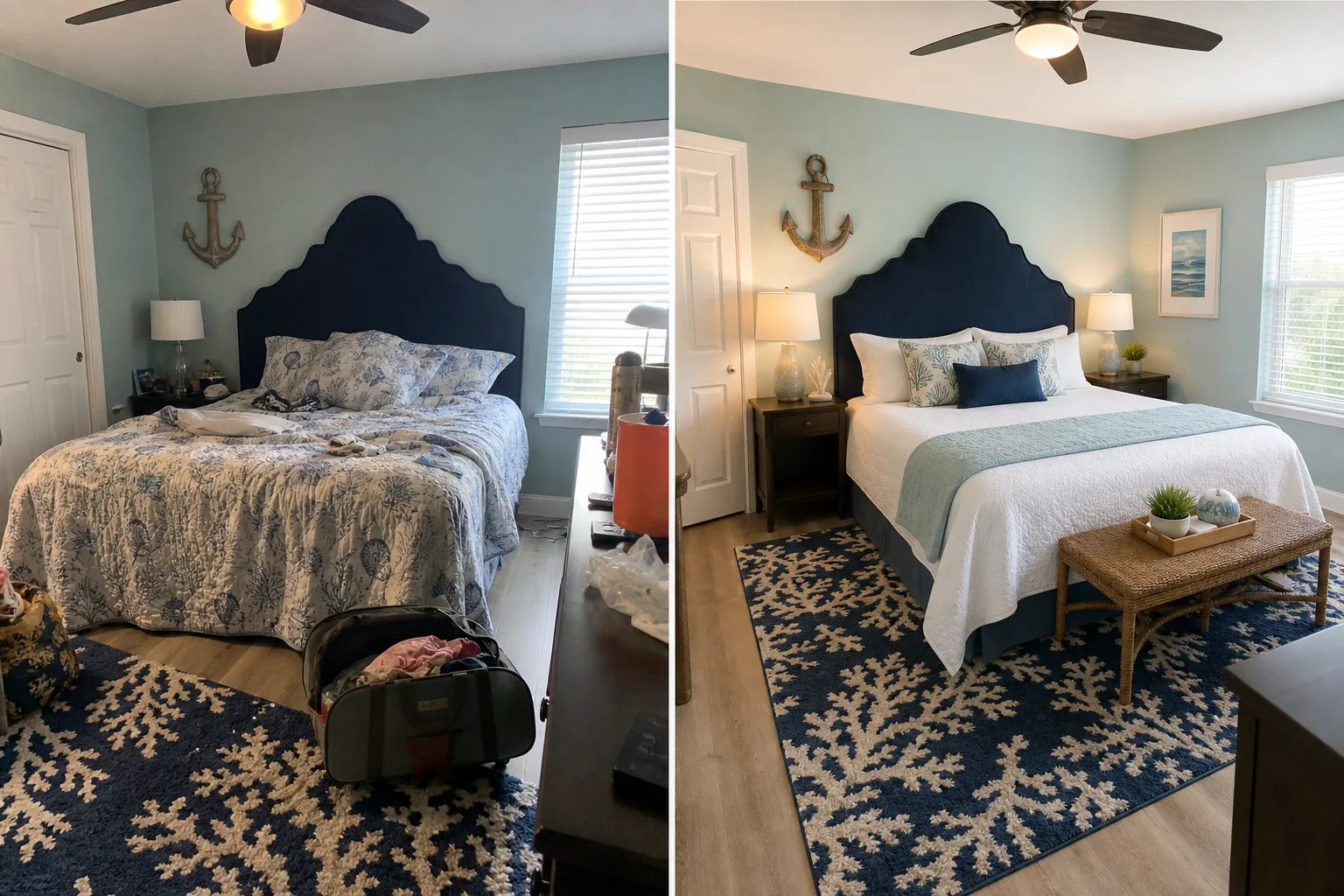
A photoshoot scheduled before the themed room is fully styled is a wasted shoot. The photographer arrives, takes the available photos, and the gallery uses photos that capture the room mid-install. Recovery requires a second shoot, which is more expensive than scheduling the first one correctly. The pre-shoot checklist we use: (1) all wall graphics installed and inspected, no peeling edges, no air bubbles in vinyl-decal work; (2) painted murals fully cured (minimum 48 hours after final coat) with no touch-up patches visible; (3) all accent pieces in position per the accent-kit baseline (this is what the laminated kit-card is for); (4) bedding fresh (not the rotation that came off the previous turnover), styled per the bedding photography spec for the theme; (5) lighting fixtures tested — every bulb, every fiber-optic strand, every LED accent functioning; (6) floor cleaned, baseboards wiped, no construction debris visible. We sequence the themed-room install minimum 7-10 days before the scheduled photoshoot for this reason — small punch-list items always emerge and the buffer absorbs them.
Hero-shot composition rules — what the gallery actually needs
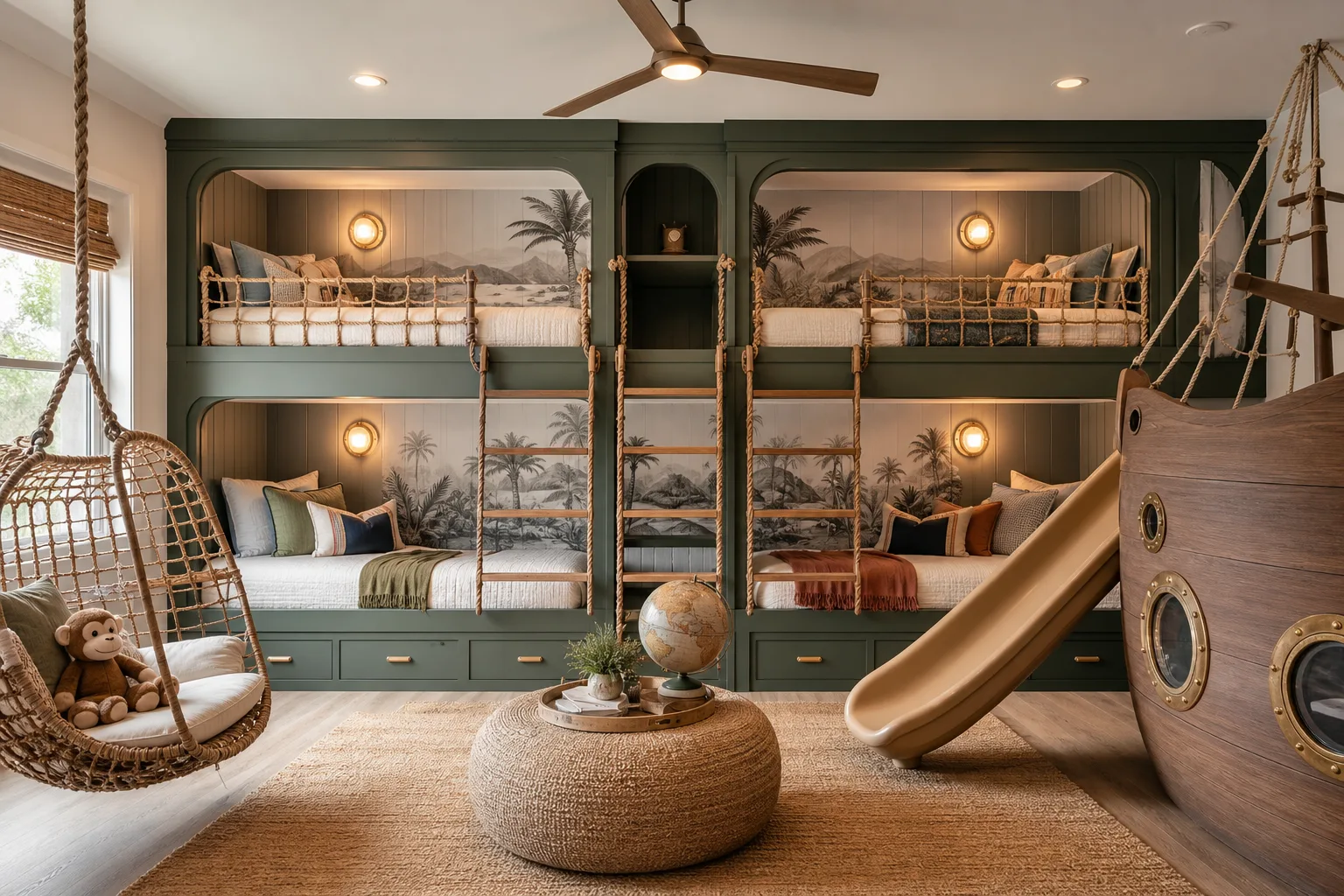
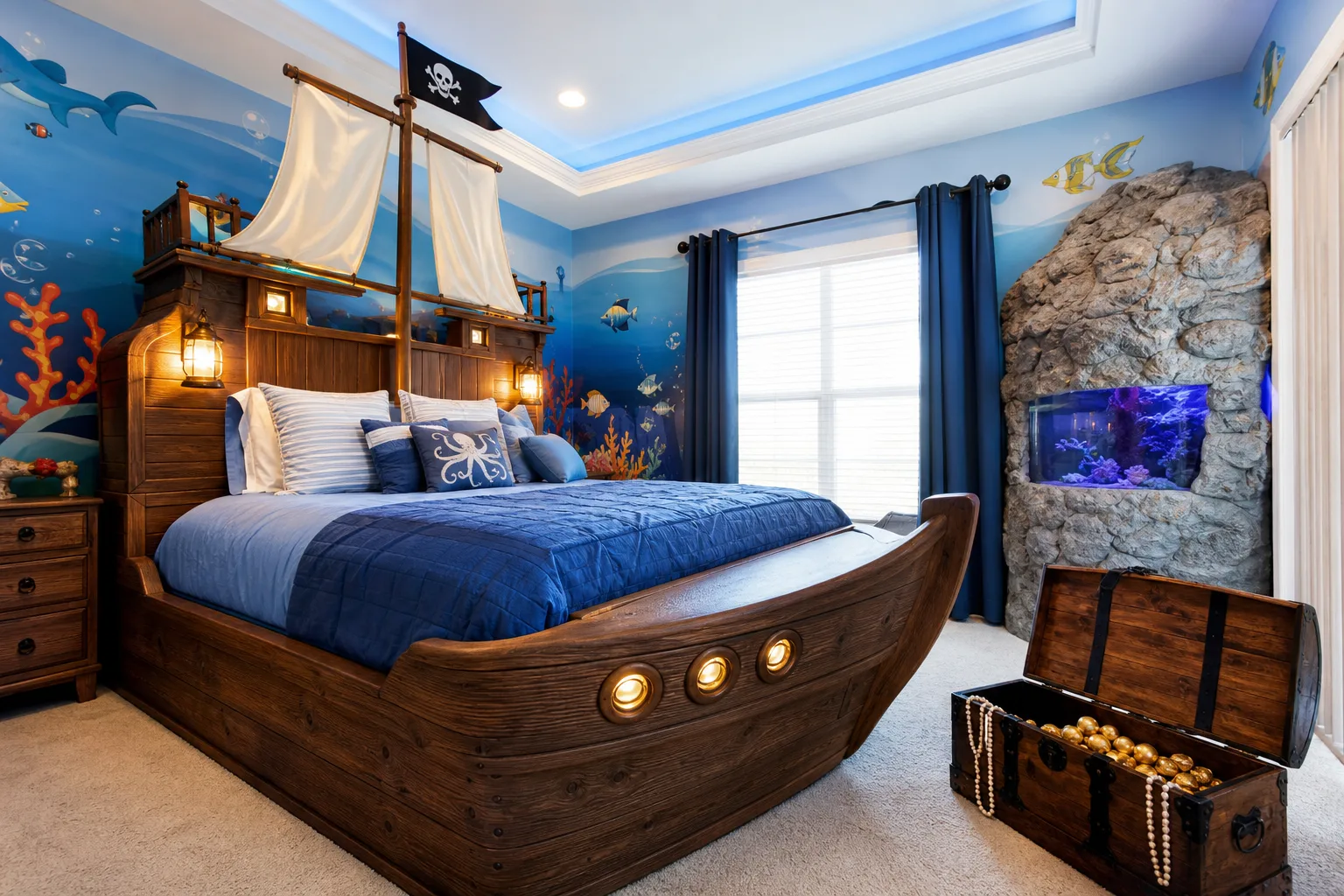
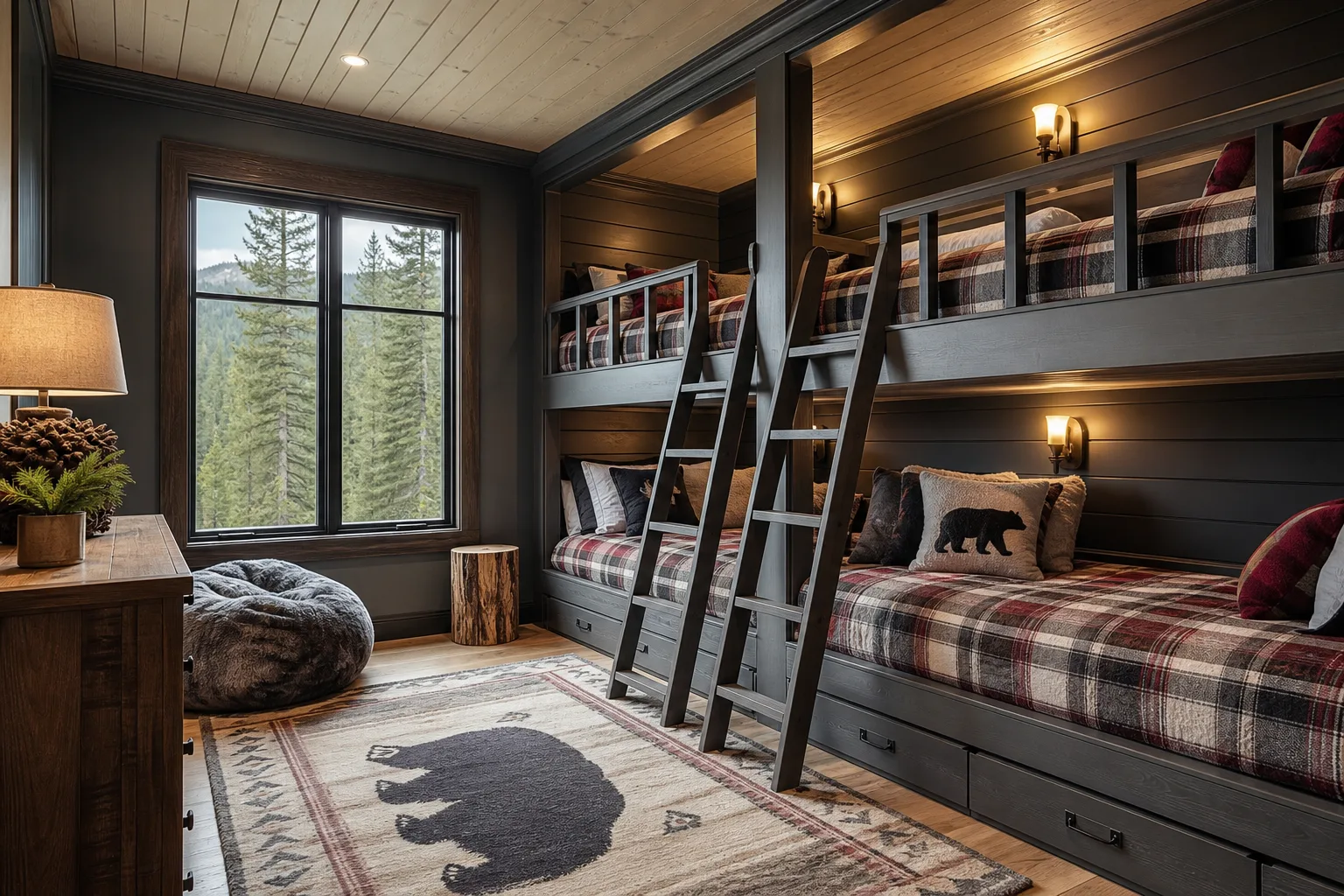
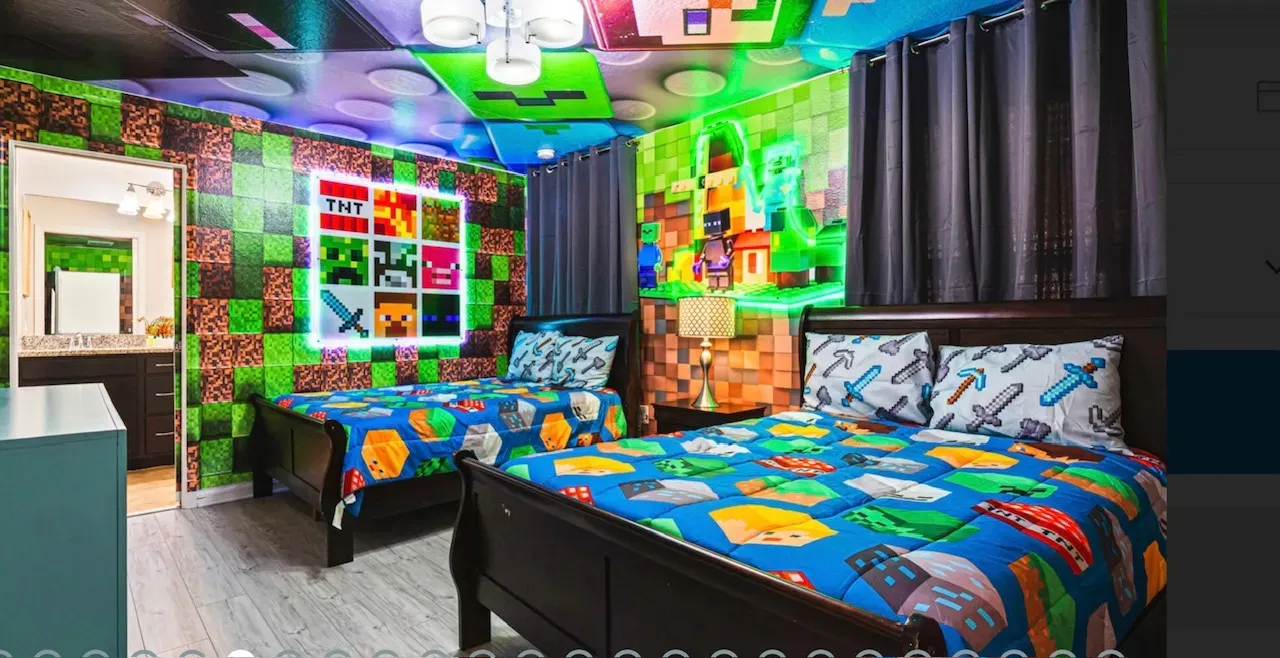
The hero shot is the single themed-room photo that anchors the gallery position. Composition decisions: (1) Shoot from the corner of the room opposite the focal feature, not directly facing it. The corner angle captures both the focal-feature wall (mural, paneled millwork, castle silhouette, cockpit panel, comic-panel wall) and the bunk configuration in one frame; the dead-on shot flattens the depth and loses both. (2) Camera height: 4-5 feet from the floor, not standard tripod height (5.5-6 feet). Themed rooms shot at adult-height read as "kid-bedroom-from-above"; mid-height shooting captures the spatial scale guests will actually experience. (3) Wide-angle lens: 16-24mm full-frame equivalent, not standard 35mm. The wide angle is what makes the small themed room read as expansive in the gallery thumbnail. (4) Aperture: f/8 to f/11 for depth-of-field through the whole frame; sharp focal feature on the back wall and sharp bunk in the foreground. (5) Foreground anchor: an accent piece (themed accent pillow, decorative element, styled vignette) in the lower-third of the frame anchors the eye and triggers depth perception. Without the foreground anchor, the photo reads flat.
Lighting setup — by theme type
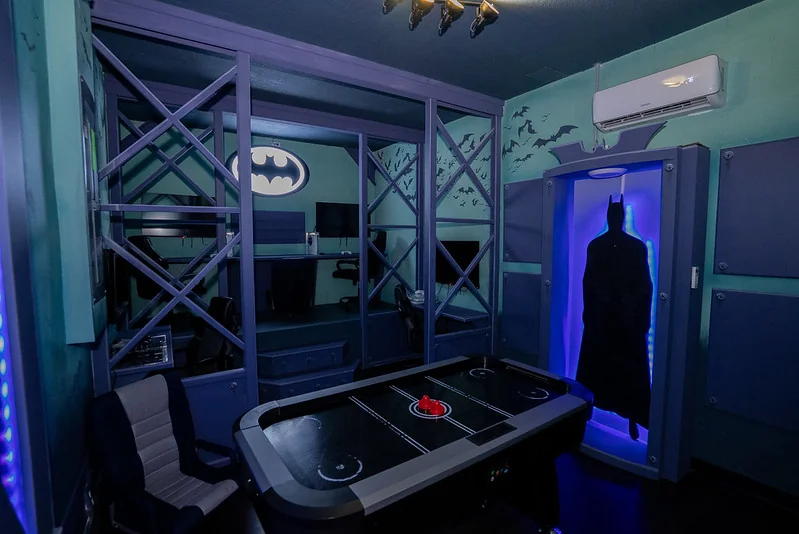
Themed-room lighting setup is theme-specific and is the most common photoshoot failure mode. (1) Princess rooms: uniformly warm-temperature lighting (2700K-3000K) across all fixtures, soft daylight balance through windows during the shoot. Pastel palette and metallic accents wash out under cool-white light. (2) Superhero rooms: warm-temperature ceiling fixtures (2700K-3000K) with directional placement that emphasizes the comic-panel wall contrast. Primary-color palette pops under warm light, flattens under cool light. (3) Space rooms: dual-temperature setup — warm ceiling fixtures (2700K) for the room ambient plus cool accent lighting (5000K+ LED stars, fiber-optic strands) for the deep-space contrast. The contrast between warm room and cool accents is the entire visual story. (4) Sports rooms: directional warm lighting that emphasizes the athletic-loft aesthetic; avoid flat ceiling-can lighting that reads as residential. (5) Jungle rooms: uniformly warm-temperature lighting with filtered shadow patterns from rattan or natural-fiber pendant shades. Cool-white kills the warm wood and rattan palette. (6) Luxury bunks: warm-temperature lighting throughout (2700K) for the hotel-suite-aesthetic; individual bunk reading lights on for the photo to communicate the integrated-electrical signal. Photographer briefing should specify the exact color-temperature target before the shoot.
Staging the room — what to add, what to remove
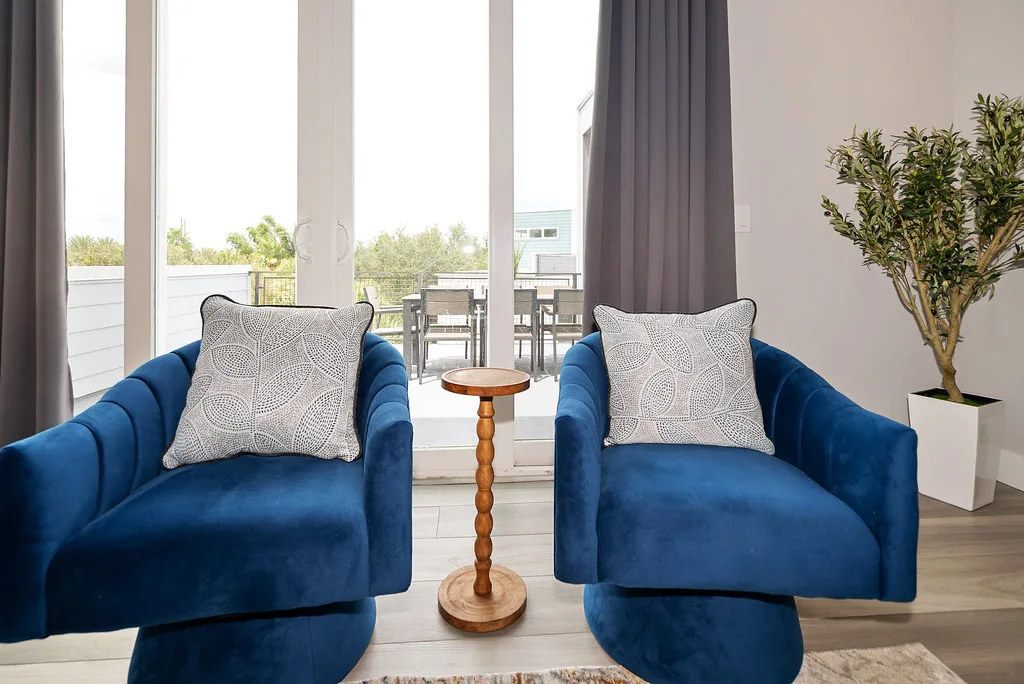
Themed-room staging is different from standard-bedroom staging in three specific ways. (1) Add layered bedding (decorative top sheet, two accent pillows minimum at the head, one accent throw at the foot) at every bunk position — flat made-bed styling reads as residential rental, layered styling reads as styled and intentional. (2) Add foreground anchor: an accent piece (themed pillow on the floor at bunk-base, decorative object on the nightstand, framed art partially in-frame) that triggers depth perception. Without this, the photo reads flat. (3) Remove everything that fights the theme: travel guides, branded packaging from delivery, residential clutter, off-theme accent pieces. Remove window curtains pulled aside that show heavy traffic outside; leave window curtains drawn closed for clean window framing. (4) Add small operational signals that read as hosting quality: a clean towel folded on a nightstand or chair, a styled tray of welcome items if the theme accommodates it, a single book or magazine staged on the bunk pillow. (5) Remove anything that breaks the trademark-safe scope (we have caught photographer-supplied props that included licensed-character items on staging tables more than once). The photographer briefing covers staging-add and staging-remove lists per theme.
Carousel slot strategy — which themed-room shot goes in which slot
The Airbnb and VRBO listing photoss reward specific slot strategies for themed rooms. (1) Slot 1: exterior hero shot or main living room hero shot. Themed-room photos do not belong in slot 1 — the booking-platform algorithms reward exterior/living-room slot-1 imagery and the themed-room photo loses click-through value when buried under exterior signal. (2) Slot 2 or 3: themed-room hero shot. This is the prime prime gallery slot for themed scope. The first themed-room photo lands here. (3) Slot 4-6: supporting themed-room photos (detail shots of focal wall, bunk close-up, accent layer staging) if multi-themed property; or primary-suite shot if single-themed property. (4) Slot 7+: remaining bedroom, bathroom, exterior amenity (pool, game room, theater) shots. The slot strategy matters because most bookers scroll the first 6 gallery photos and decide; deeper slots produce diminishing booking-decision impact. Properties that bury themed-room photos in slot 8+ are commercially under-using the scope they paid for.
Supporting shots — beyond the hero
The hero shot earns the gallery slot; the supporting shots earn the booking-decision close. Three supporting shots we coordinate for every themed room: (1) Focal-feature close-up — tight crop on the mural, castle silhouette, cockpit panel, comic-panel wall, or luxury-bunk paneling that captures the original-art commissioning quality. This is the photo that earns the "this is a serious build" signal. (2) Bunk-detail shot — tight crop on one bunk position showing the bedding layer, accent pillow, reading light or themed lighting accent. This is the photo that earns the "we sleep here" emotional signal for the booking adult. (3) Wide composition variant — a second wide-angle shot from the opposite corner of the room, capturing the room from a different perspective. Listing listing photoss reward variation; two wide-angle shots of the same themed room from different corners give the algorithm more gallery weight than one wide-angle shot alone. Total supporting shots per themed room: 3-4 gallery photos. Single-themed-bunk properties: 4 themed-room photos in gallery slots 2-5. Multi-themed 8BR properties: 6-8 themed-room photos across gallery slots 2-7.
Post-production — what photographers should and should not do
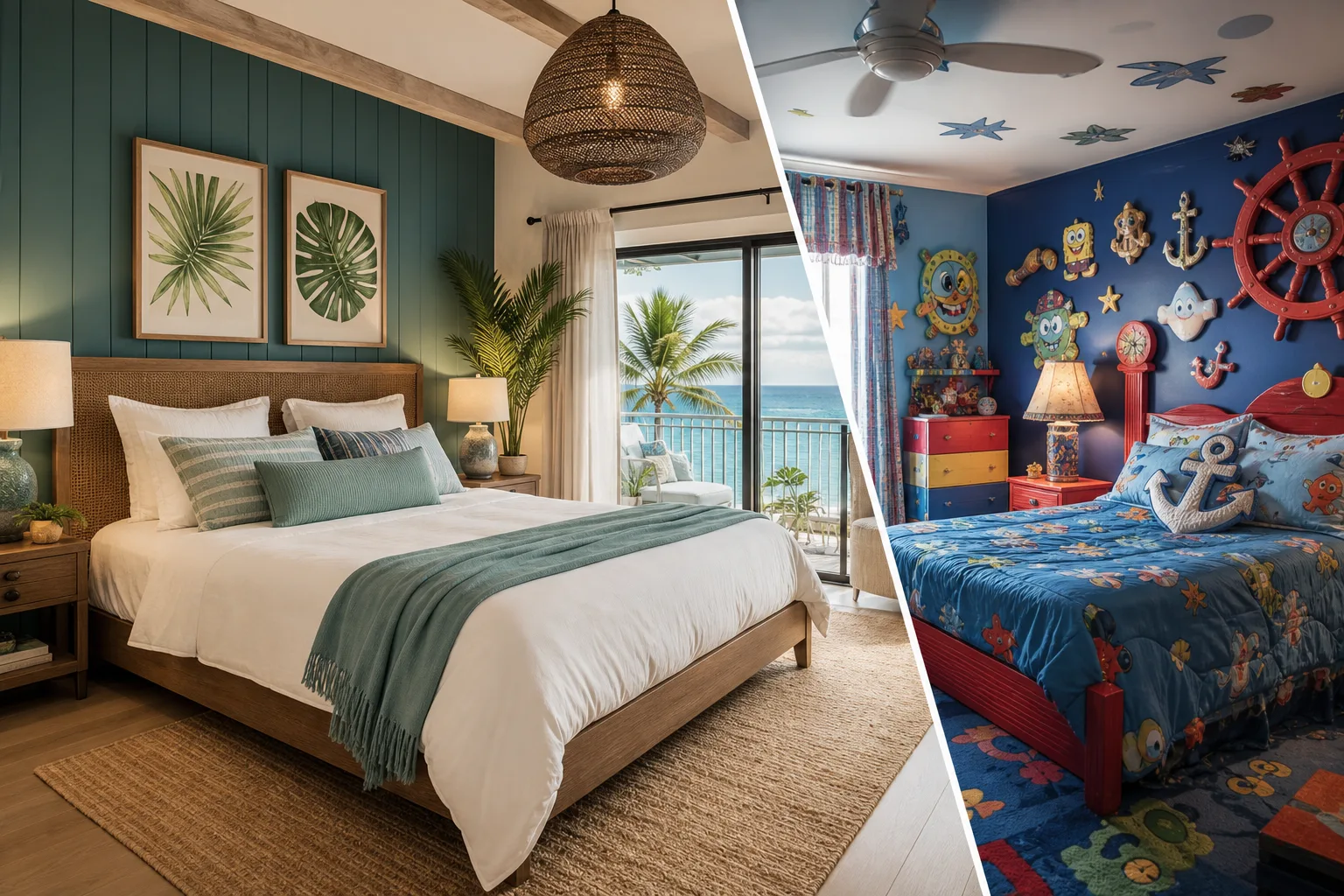
Post-production for themed rooms requires specific photographer guidance because default editing presets often degrade the themed-room signal. (1) Color temperature: do not auto-balance toward neutral. Princess rooms should retain their warm pastel signature; space rooms should retain their deep navy and cool-accent contrast; superhero rooms should retain their primary-color saturation; jungle rooms should retain their warm wood-and-rattan palette. Auto-balance washes out the theme palette. (2) Contrast and saturation: light increase only. Heavy contrast or saturation reads as over-edited and depresses booking trust. (3) Skin-tone correction: not applicable to themed-room shots and should not be applied. (4) Sky replacement, exterior color enhancement: not applicable to themed-room shots. (5) Object removal: yes for residual install debris, accidental visible electrical cords, photographer-reflected-in-mirror artifacts. No for visible accent pieces that look "small" — those are the depth-anchors. (6) Final image dimensions: 4000+ pixels wide minimum for listing-photo quality; smaller dimensions get up-scaled by Airbnb and produce visible artifacts on desktop browsers. The photographer briefing includes the post-production specifications discretely so the deliverable is what the listing actually needs.
Reshoot cadence — when to refresh the gallery
Themed-room photography has a faster aging cycle than standard-bedroom photography because operational wear is visible in close-up themed shots faster than in standard rooms. (1) Standard bedrooms: reshoot every 24-36 months, sooner if major furniture refresh. (2) Themed rooms: reshoot every 12-18 months, sooner if accent kit has restocked, bedding rotation has cycled, or operational wear is visible in the existing listing photos. (3) Trigger events that force a reshoot: theme refresh (new mural work, palette repositioning), accent-kit changes (significant decor swap), bedding refresh (new colorway or pattern), major operational wear visible (faded mural, peeling vinyl, broken accent pieces). (4) Cost planning: a single-themed-room refresh shoot is meaningfully cheaper than a full-property shoot because the photographer is on-site for one room rather than 12-15 rooms. Most property managers schedule themed-room refresh shoots independently of full-property reshoots. The themed-room mistakes catalog covers the operational impact of skipping reshoots — listing photoss that age out while the room itself has been refreshed.
What we see go wrong
- Scheduling the photoshoot before the themed-room install completes — captures an unfinished room and forces a second shoot for recovery.
- Photographing the themed room from the entry-facing angle instead of from the corner opposite the focal feature — flattens depth and loses both the wall feature and the bunk configuration in one frame.
- Shooting at adult-tripod height (5.5-6 feet) instead of mid-height (4-5 feet) — reads as "kid-bedroom-from-above" instead of guest-perspective spatial scale.
- Cool-white lighting setup for warm-palette themes (princess pastels, jungle wood-and-rattan, luxury hotel-suite) — washes out the theme palette and depresses the hero-shot impact.
- Burying the themed-room hero shot in gallery slot 8+ — diminishes booking-decision impact because most bookers scroll the first 6 photos and decide.
- Skipping foreground anchor staging — the photo reads flat without an accent piece in the lower-third triggering depth perception.
- Auto-balance color correction in post-production — washes out the theme palette signature and undermines the themed scope’s commercial purpose.
Related Community Guides
Eight Core Services
Turnkey to Themed Rooms — All Under One Roof
Full furniture packages, STR interior design, themed kids suites, game room conversions, property prep, custom bunks, white-glove install, and listing-ready staging — for vacation rentals and second homes across Orlando, Kissimmee, Davenport, and the full Florida STR market.
Frequently Asked Questions
Should I hire a specialist STR photographer or a residential interiors photographer?
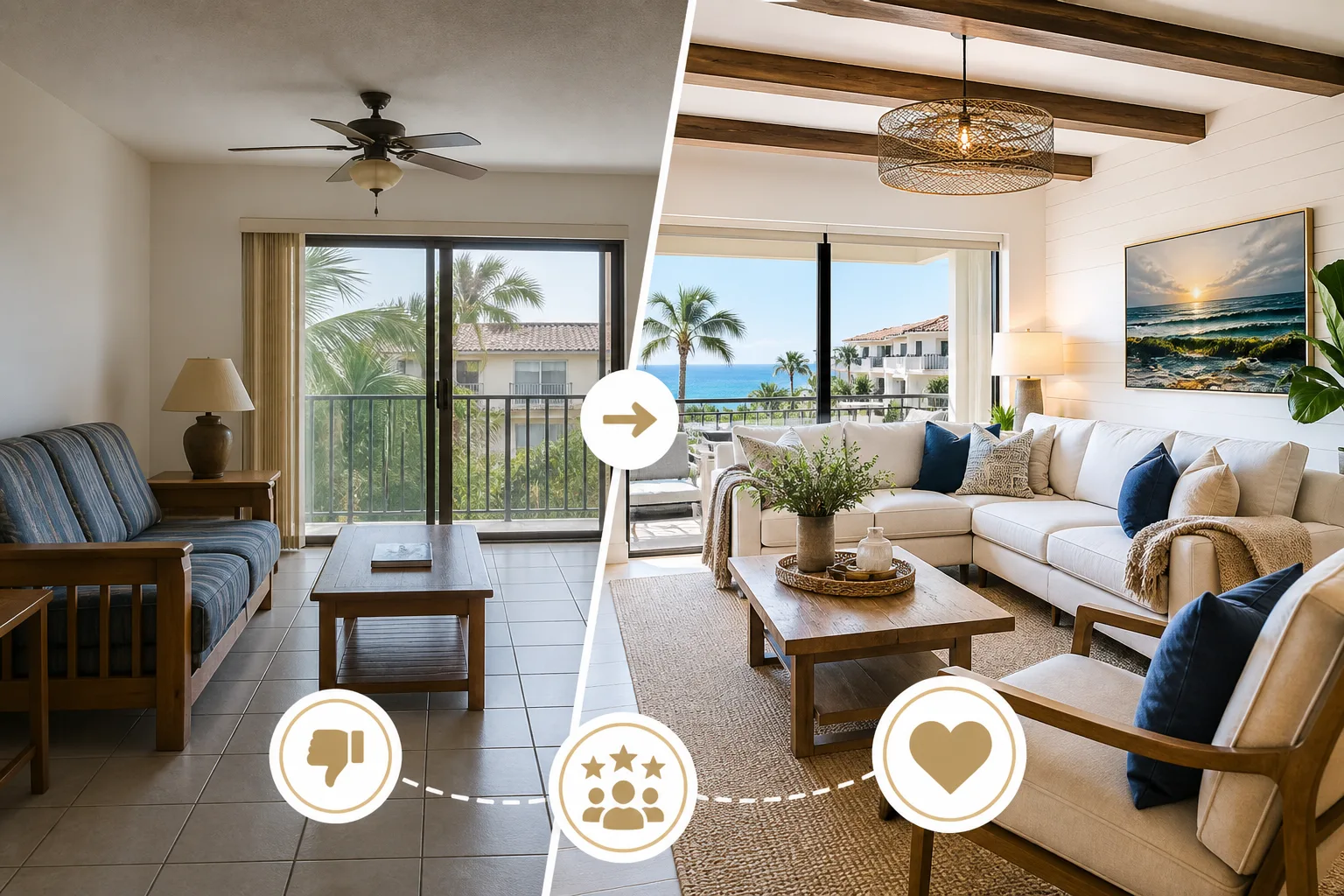
Specialist STR photographer almost always. Residential interiors photography is composed for magazine spreads (single hero shot, sophisticated styling, slow capture pace). STR photography is composed for booking decisions (multiple wide-angle shots per room, fast capture pace, specific platform aspect ratios). For themed rooms specifically, an STR photographer who has shot themed properties before will understand the listing photos slot strategy, the dual-temperature lighting requirements, and the platform aspect-ratio constraints. Residential photographers often produce beautiful but commercially-underperforming themed-room shoots because they are optimizing for a different output.
Can I take the themed-room photos myself with a phone camera?
For interim gallery during the launch ramp, possibly. For permanent gallery photos, no. Phone cameras at thumbnail size (which is how 80%+ of Airbnb and VRBO bookings start) handle the themed-room palette and contrast acceptably; at full-screen desktop display (which is where bookers commit) the technical limitations are visible — lens distortion, sensor noise in lower-light themed palettes (especially space themes), shallow depth-of-field that does not capture the focal wall and bunk in one frame. The cost of a single-property themed-room shoot is small relative to the booking value the gallery produces. Phone photography is a planning-phase placeholder, not a permanent listing solution.
How long does a themed-room photo shoot actually take on the day?
60-90 minutes per themed room for a properly-briefed photographer. The breakdown: 15-20 minutes for staging review and small adjustments (accent piece positioning, bedding layer, foreground anchor placement); 20-30 minutes for the hero shot and primary supporting shots; 15-20 minutes for variation angles and detail close-ups; 10-15 minutes for lighting adjustments between shots. Multi-themed 8BR properties run 2-3 hours of themed-room shoot time inside a full-property shoot. Properties that under-budget the themed-room shoot time end up with the photographer rushing the staging and missing supporting shots.
What if the existing listing photos under-performs the themed room?
The most-common diagnostic: gallery slot positioning (themed photo buried in slot 8+ instead of foregrounded in slot 2 or 3), photo composition (entry-facing angle, adult-height tripod, missing foreground anchor), and lighting temperature (cool-white setup for warm-palette theme). All three are recoverable without a full re-shoot — slot positioning is a listing-edit, composition and lighting are a single-room refresh shoot. The themed-room mistakes catalog covers the diagnostic sequence for underperforming themed-room photography in detail.
How does themed-room photography differ from game-room or theater-room photography?
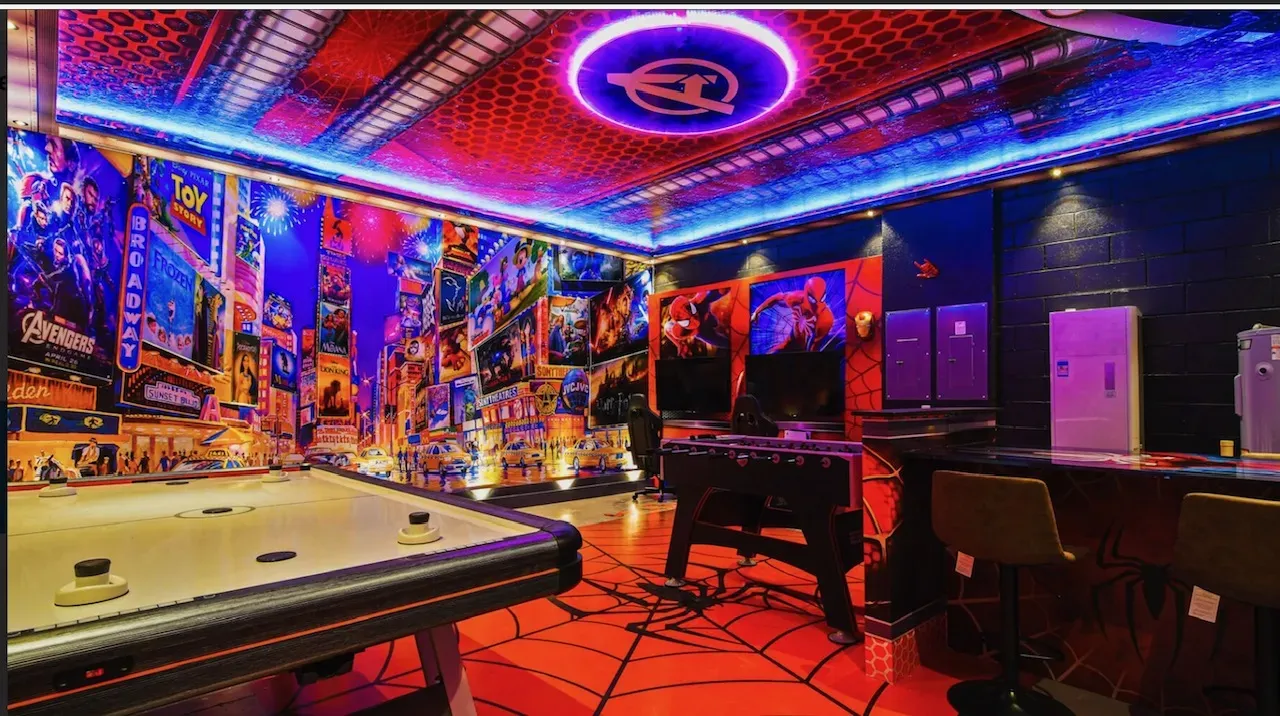
Game rooms and theater rooms have different photo composition rules. Game rooms photograph best with wide-angle shots that capture multiple arcade or table-game pieces in one frame; theater rooms photograph best with dim-light setups that capture the theater seating against a softly-lit screen. Themed rooms specifically require the corner-angle hero shot and mid-height camera that captures the focal wall feature and bunk configuration together. The amenity plan at 8BR properties (themed bunks + game room + theater room + premium outdoor) usually requires a photographer who can adapt across all four photography styles in the same shoot day.