Themed Room Cost Planning
What actually drives the cost of a themed room in a vacation rental — custom fabrication, sleep count, materials grade, photo-prop volume, and the difference between assembled and built-in scope.
Sound familiar?
Themed room cost varies more across providers and more within package levels than almost any other line item in a vacation rental furnishing project. Owners comparing themed-room proposals routinely see planning ranges that differ by 2–3x for what looks like the same scope, with no clear explanation of why. The reason is that themed-room scope has more cost drivers than any other room type — and most proposals do not surface them explicitly.
In short
- Themed-room scope has more cost drivers than any other room type. Assembled vs built-in execution is the largest single split.
- Higher sleep counts (8–12+) almost always require custom millwork rather than assembled scope. The cost differential vs 4–6 sleepers is 5–7x, not 2–3x.
- Photo-prop volume is the most under-budgeted driver. Themed rooms without scaled photo-prop installation photograph as kid bedrooms with theme decor.
- Trademark-safe (inspired-by) scope is the right path for STR use; commodity-licensed scope carries IP risk that surfaces post-launch.
- Themed-scope line items belong as discrete items in scoped proposals — not folded into general bedroom or furniture totals.
This is a cost-driver decomposition, not a planning framework or a build catalog. The themed bunk room planning guide covers the decision framework (should this property have one? which theme? package level sizing?); the theme-specific build guides (superhero-inspired, princess-inspired, space-inspired, sports-inspired, jungle-inspired, luxury-inspired) cover the build palette for each theme type. This post covers what makes themed scope cost what it costs, and what moves the planning range up or down within a single theme and package level. Final pricing requires a scoped proposal.
What to know
Assembled vs built-in is the largest cost-driver split
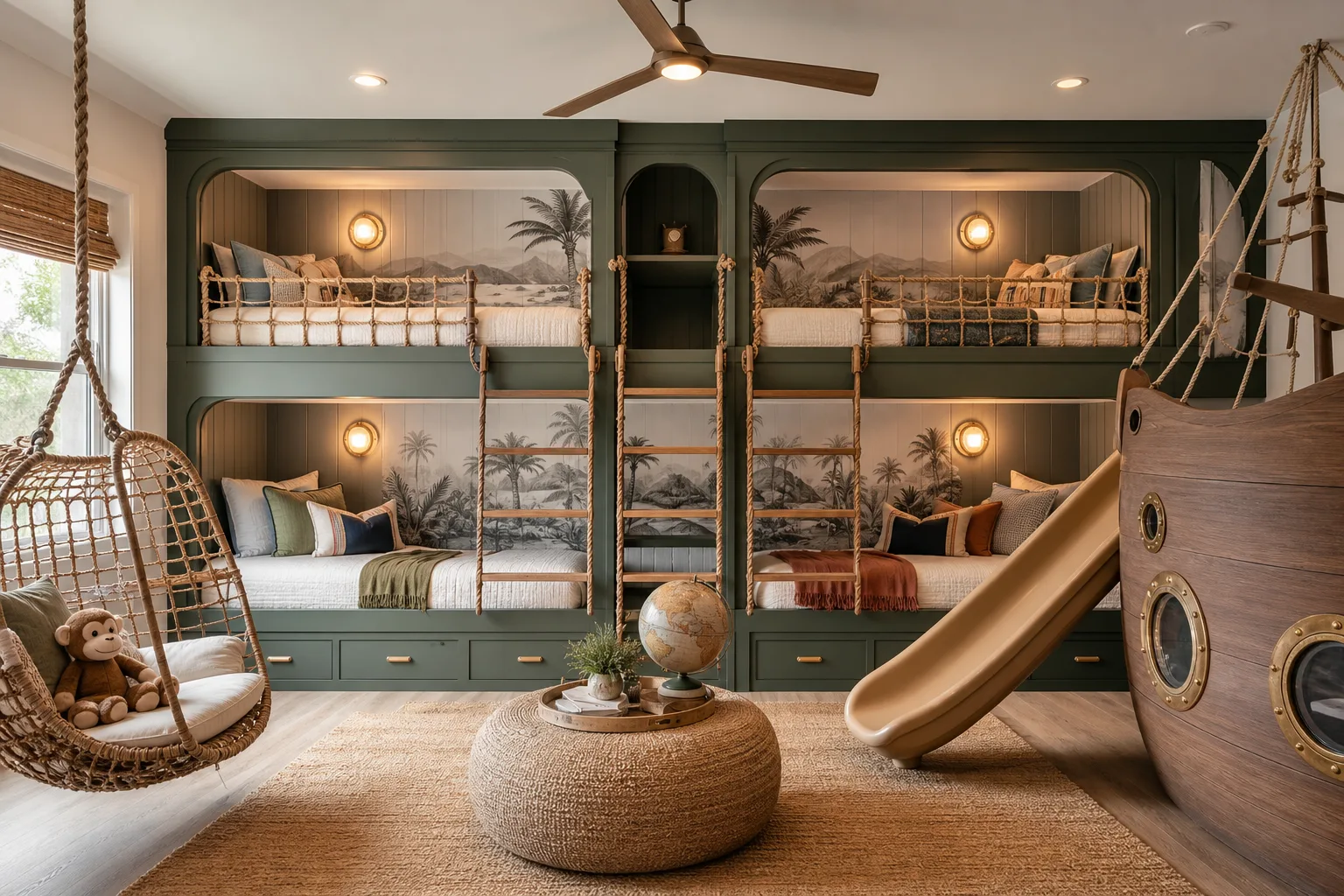
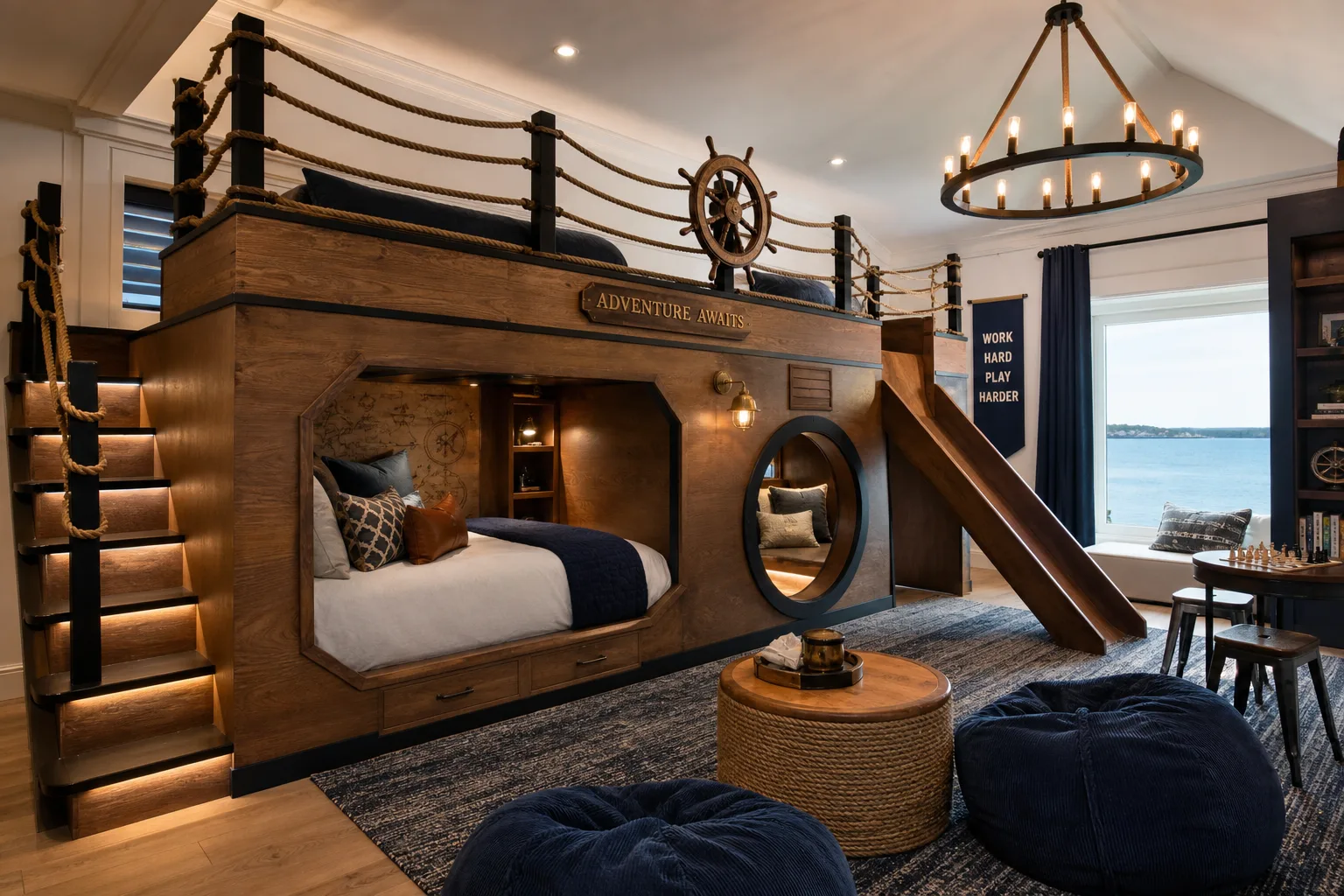
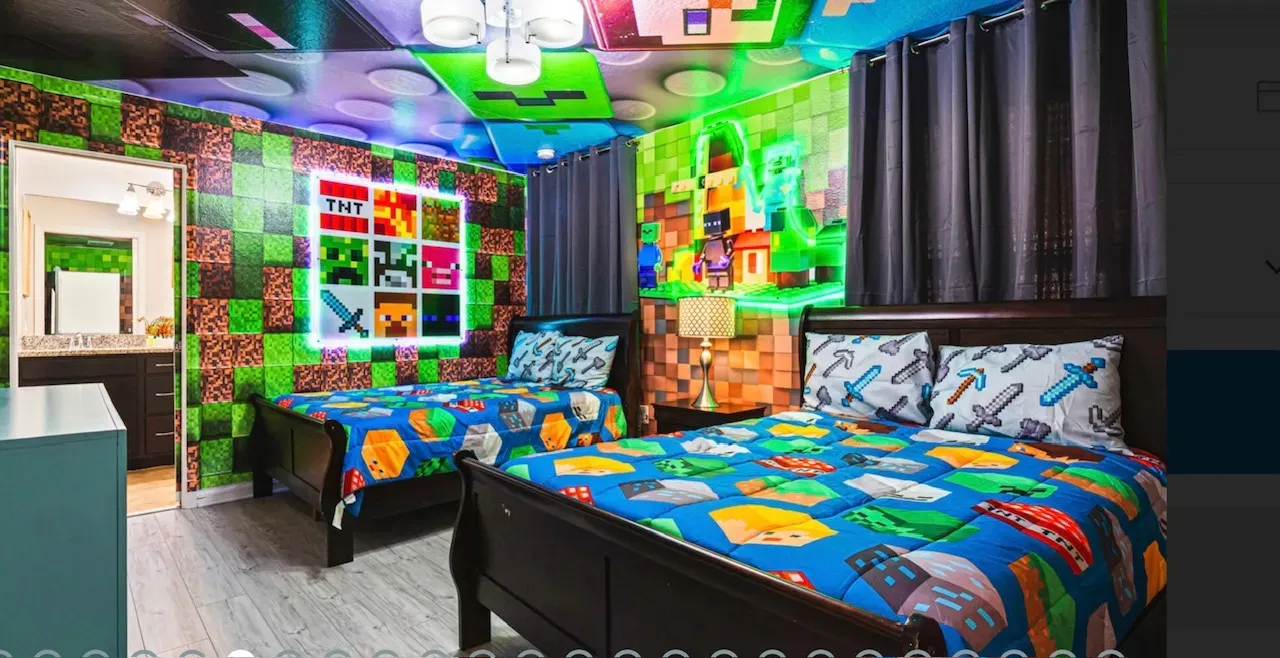
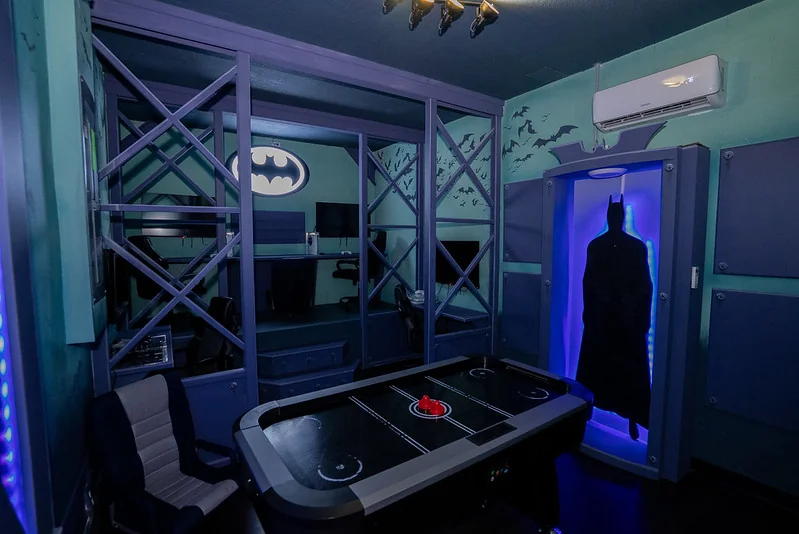
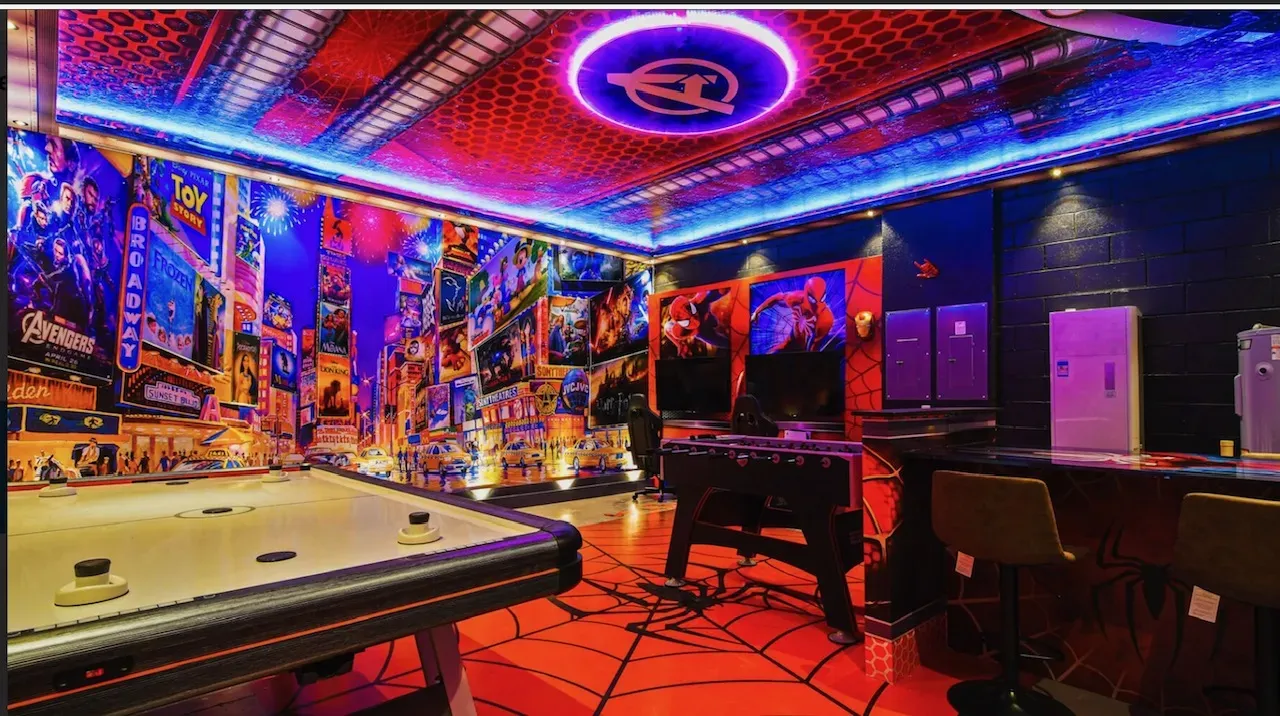
Themed bunk rooms fall into two structurally different cost categories: assembled scope (themed bedding, painted walls, themed decor, freestanding bunks with themed-coordinated finishes) and built-in scope (custom millwork bunks integrated into the room geometry, fabricated photo-prop walls, integrated lighting, ceiling and wall fabrication that becomes part of the room). Assembled scope sits within most launch-ready package planning ranges; built-in scope typically requires full amenity package or Luxury Estate tier ranges. The same theme can be executed at either level — a space-inspired bunk room can be a painted galaxy wall with star-themed bedding and freestanding bunks, or a fabricated rocket-bunk built-in with integrated LED constellations and porthole-fabricated walls. The visual outcome differs substantially; so does the cost driver structure.
Sleep count drives custom fabrication scope
Higher sleep counts (8–12 sleeping positions in a single themed bunk room) almost always require custom fabrication rather than assembled scope. Standard manufactured bunk sets cap at 4–6 sleepers in most product lines; reaching 8–12 sleepers in a single room within reasonable safety geometry usually means custom millwork. The cost differential between a 4-sleeper themed room and a 12-sleeper themed bunk room is not 3x — it is closer to 5–7x because the larger room requires custom millwork, additional structural reinforcement, more complex egress and safety planning, and meaningfully more photo-prop and finish-out work to visually anchor the room.
Materials grade moves cost within fabrication scope
Within custom-fabricated themed scope, the materials grade is the dominant intra-tier cost driver. MDF and paint-grade plywood with applied finishes sits in the lower portion of the fabrication range; hardwood, custom-stained finishes, integrated LED strips, and acrylic photo-prop fabrication move into the upper portion. The same fabricated space-inspired bunk can be executed in paint-grade with applied vinyl decals (lower range) or in hardwood with backlit acrylic constellation panels and integrated motion lighting (upper range). The visual quality and the photographic listing photos quality differ meaningfully; so does the planning range.
Photo-prop volume is an under-budgeted driver
Themed rooms that photograph well in the listing listing photos almost always have heavier photo-prop volume than owners initially budget for. A jungle-inspired bunk room with the basic theme-paint and themed bedding photographs as a kid bedroom with a paint job; the same room with stuffed animals on every bunk, themed wall art at scale, fabricated tree-trunk corner pieces, foliage installations, and themed accent lighting photographs as a destination amenity. The cost differential between basic and photo-ready props is real and meaningful within the package level; under-budgeting this driver consistently produces themed rooms that are not visually competitive against same-floor-plan neighbors in resort communities.
Trademark-safe vs licensed-look variations
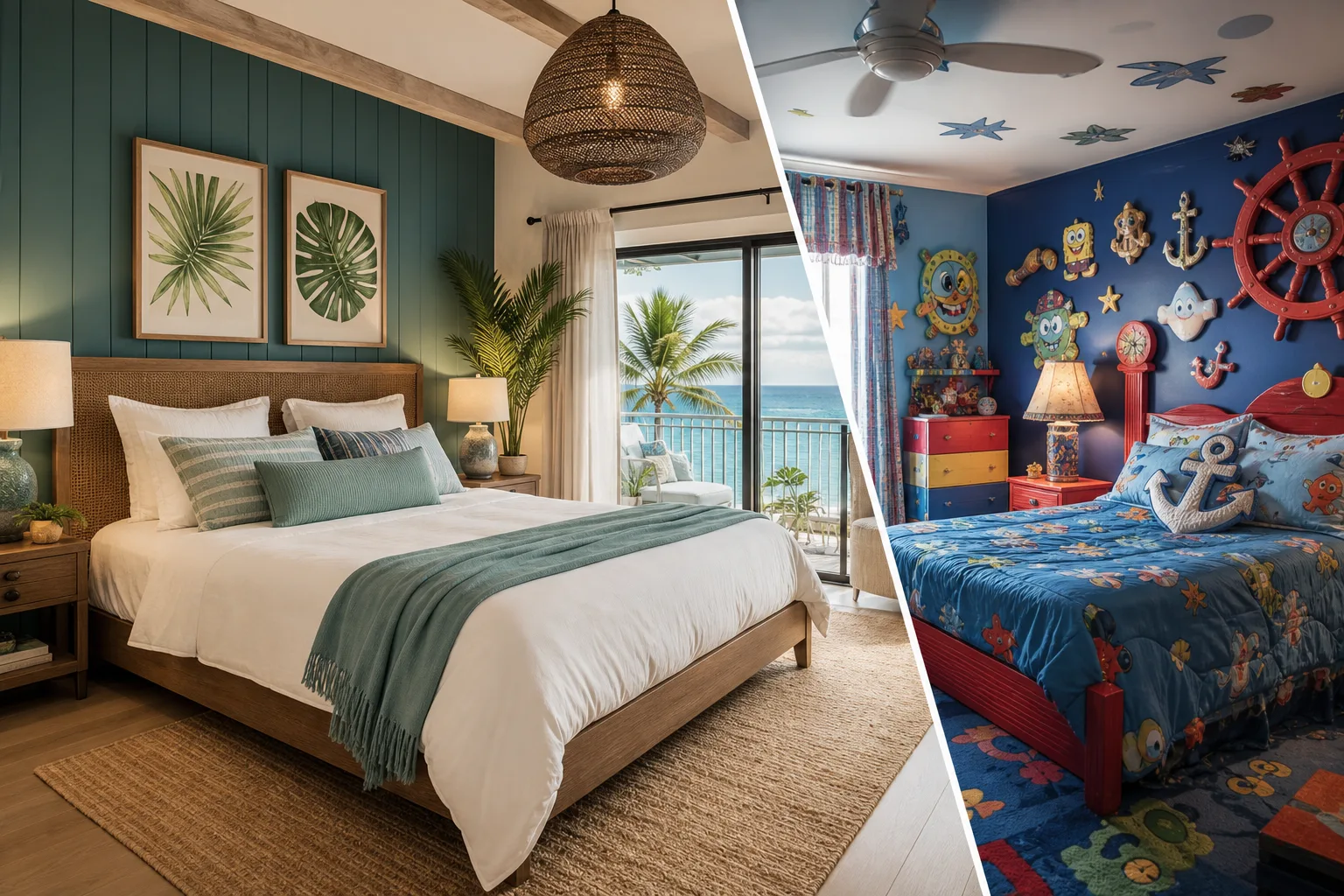
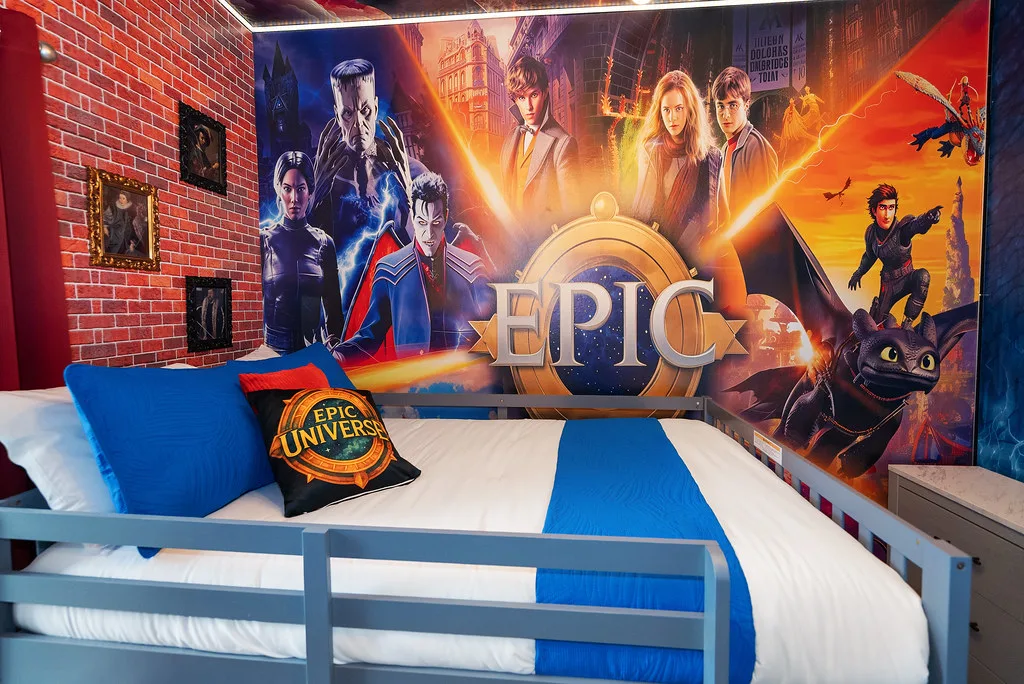
IP-safe themed scope (described elsewhere as inspired-by rather than as a licensed theme reproduction) sometimes costs more than owners expect because the design work creates original visuals rather than reproducing licensed art. Hand-painted murals at higher quality, original character-fabricated photo props, and theme-evocative palette work require more design and selection time than the equivalent commodity-licensed scope. The trade-off is regulatory and brand safety — the licensed-look path carries trademark risk for STR use that the inspired-by path does not. The cost differential is usually a small fraction of total themed-room scope but worth noting as a driver. In practice, that design-time differential runs an extra 3–5 hours of original concept work per room — roughly one added revision cycle — because the team is sketching an original rocket or castle silhouette instead of licensing a pre-approved character sheet. We've seen owners buy printed licensed-character bedding and wall decals directly from retail to skip that step, then pull the room within a year after a platform IP complaint and pay for the inspired-by replacement anyway — spending twice for a room they could have built right once.
Where themed scope phases inside the project
Themed-bunk scope can be installed in the same window as the broader furnishing project (single-install phase) or as a separate Phase 2 install 4–12 weeks after the main launch. Single-window installs cost less in coordination time but compress the design and selection sequence into the broader timeline. Phased Phase 2 installs cost more in coordination but allow themed-scope design to refine against the actual booked guest experience from the first 30–60 days. For Luxury Estate and Mega-Rental scope, phased themed-scope is sometimes the right call to absorb design refinement; for launch-ready package and full amenity package, single-window install is usually cleaner. The most common failure mode with phased themed scope is launching with an empty or generically furnished bunk room in the hero gallery, then reshooting the whole listing once the themed build finishes — that mid-cycle reshoot usually costs more in lost booking momentum than the phased install saved in cash flow. If you do phase it, stage the bunk room with plain matching bedding and leave it out of the first five gallery photos rather than showing an unfinished room next to a finished pool deck.
What moves the themed-room planning range up
Cost drivers pushing toward the higher end of any themed-room tier: custom millwork (vs assembled bunks), higher sleep counts (8–12+ vs 4–6), hardwood and premium materials (vs paint-grade plywood), integrated lighting (LED, fiber-optic, motion-activated), fabricated photo-prop installations at scale, hand-painted murals (vs vinyl decals), full ceiling and wall fabrication (vs paint-only), and original IP-safe design work (vs commodity-licensed scope). At Mega-Rental and Specialty Flagship scope, themed bunk rooms with multiple themes across multiple bunk rooms (one Disney-corridor themed, one sports-themed, one luxury-themed) compound these drivers.
What moves the themed-room planning range down
Cost drivers pulling toward the lower end: standard 4–6 sleeper assembled bunks, paint-grade fabrication with applied finishes (vinyl decals, applied wallpaper, painted murals at standard quality), themed bedding and accessories without custom photo-prop installation, lighting added without integration, and theme palettes that complement rather than dominate the room. A launch-ready package themed bunk room executed cleanly at the lower end of the range can still photograph well in the gallery — it does not match the visual quality of a custom-fabricated build, but it can be the right answer for a property where themed scope is a nice-to-have rather than a competitive necessity.
How FPUSA scopes themed rooms in proposals
Themed scope appears as a discrete line item in our scoped proposals — not folded into bedroom or general furniture totals. The line item includes fabrication scope (assembled vs built-in), materials grade, sleep count, photo-prop scope, lighting scope, and integration time. For full amenity package and higher tier proposals with multiple themed rooms, each themed room has its own scoped line item. Owners reviewing our themed-room scope alongside alternative-vendor proposals can typically identify the cost-driver differences directly: assembled vs built-in, sleep count, materials grade, photo-prop volume. Where alternative proposals fold themed scope into general totals, the comparison usually surfaces material scope gaps.
What to do first this week
Open three same-bedroom-count comps on Airbnb or VRBO and screenshot bunk photos, outdoor dining seats, and primary suite finish. List where your home falls short — that gap list becomes your furnish scope. Send your floor plan for a scoped proposal.
What we see go wrong
- Treating themed scope as a single line item rather than a multi-driver scope — produces proposals that under-cost the fabrication and photo-prop layers.
- Comparing themed-room totals across proposals without confirming assembled vs built-in scope — the comparison ranks by execution mode, not by cost.
- Under-budgeting photo-prop volume — produces themed rooms that photograph as kid bedrooms with theme decor rather than as destination amenities.
- Reaching for 8–12 sleeper counts without budgeting for the custom fabrication that high sleep counts almost always require — produces scope that cannot be delivered within the planning range.
- Defaulting to commodity-licensed scope to save on design work — carries trademark risk for STR use that owners typically discover post-launch.
- Skipping the integration of lighting, fabricated photo-props, and themed accessories — produces themed rooms that the listing carousel does not differentiate from un-themed bunk rooms.
Related Community Guides
Eight Core Services
Turnkey to Themed Rooms — All Under One Roof
Full furniture packages, STR interior design, themed kids suites, game room conversions, property prep, custom bunks, white-glove install, and listing-ready staging — for vacation rentals and second homes across Orlando, Kissimmee, Davenport, and the full Florida STR market.
Frequently Asked Questions
Why does the themed-room planning range vary so much within the same package level?
Because themed-room scope has more cost drivers than any other room type. Assembled vs built-in execution, sleep count, materials grade, photo-prop volume, lighting integration, and original vs commodity design work all move the planning range within a single tier. Two proposals at full amenity package can land at very different points in the tier range depending on these drivers. The driver-level conversation belongs at scope time, not at proposal-comparison time.
Is custom-fabricated themed scope worth the cost differential?
Depends on the property’s neighborhood comps. In Disney-corridor resort communities (Storey Lake, Solara, Windsor Island, ChampionsGate, Windsor at Westside, Windsor Cay, Reunion Resort) where same-floor-plan neighbors all theme aggressively, custom-fabricated scope is often the right call to compete in the listing listing photos. In markets where themed scope is unusual or where the booking audience does not skew family-Disney-trip, assembled themed scope at launch-ready package tier is usually the right call. The decision belongs to the planning framework before the cost driver conversation.
How many sleeping positions can a single themed bunk room support?
Standard manufactured bunk sets cap at 4–6 sleepers within reasonable safety geometry. Higher sleep counts (8–12) almost always require custom millwork that integrates the bunks into the room structure with additional structural reinforcement. Mega-rental and specialty scope sometimes reaches 14–16 sleeping positions in a single themed room; that scope requires full custom design and is meaningfully more expensive than 4–6 sleeper assembled scope.
What is the difference between trademark-safe and licensed-look themed scope?
Trademark-safe (inspired-by) scope uses original design work that evokes a theme without reproducing protected IP — a galaxy-inspired room rather than a Star Wars-licensed room. Licensed-look scope reproduces protected IP visuals; for STR use, this carries trademark and licensing risk that owners typically discover post-launch when they receive a takedown request or cease-and-desist. Trademark-safe scope sometimes costs more in design time but eliminates the IP risk. The legal context is owner-managed, but the scope conversation can address it explicitly.
Should themed-room scope be installed at launch or as a phased Phase 2?
Single-window install at launch is usually the right call for launch-ready package and full amenity package — cleaner project coordination and the themed scope is in the launch listing photos from day one. Phased Phase 2 (4–12 weeks after launch) is sometimes the right call for Luxury Estate and Mega-Rental scope where themed-scope design can refine against actual booked guest experience from the first 30–60 days. The phased path costs more in coordination but produces more refined themed scope.
How does themed-room cost interact with the bedroom-count scope?
A themed bunk room replaces a standard bunk room in the bedroom count — it does not add to the bedroom count. The cost differential is the difference between the standard bunk room scope (at the appropriate tier) and the themed-bunk scope (at the same tier or higher). For an 8BR full amenity package property with one themed bunk room, the themed scope is the standard 8BR bedroom scope plus the themed-bunk uplift, not a new room. The cost-pillar bedroom-count scope and the themed-room uplift are different line items in the proposal.
What should I do first?
Pull three in-community comps with your bedroom count, note bunk, outdoor, and primary suite in the hero photos, then send your floor plan. We match package tier to that comp set before you order furniture.
Is it worth building one themed room now versus waiting to see how the property books first?
If the property sits in a themed-heavy resort community, build it at launch — a bare bunk room in the launch photos costs bookings from day one, and retrofitting later means a reshoot and a second install disruption. If the community is only lightly themed, a single-window install after 60–90 days of booking data lets you match the theme to what guests are actually asking about in messages — a reasonable trade for a property where themed scope is a nice-to-have rather than a competitive requirement.