Vacation Rental Furniture Cost by Bedroom Count
How bedroom count, package level, and amenity setup shape vacation rental furnishing budgets — and why the right number always depends on the property.
Sound familiar?
You're planning a furnishing budget by multiplying bedroom count — but your 5-bedroom in Reunion needs a themed bunk your spreadsheet doesn't have a line for, and the 8-bedroom next door has a game room you're not budgeting for.
In short
- Furniture cost does not scale linearly with bedroom count. The amenity setup catches up to the size tier and compounds the planning range.
- The biggest cost driver is not bedroom count alone. It is the scope of housewares, outdoor furnishing, themed rooms, and game-room amenities the property's market requires to compete.
- Under-spending on bedding, kitchen housewares, and STR-grade upholstery shows up in reviews faster than any other line item.
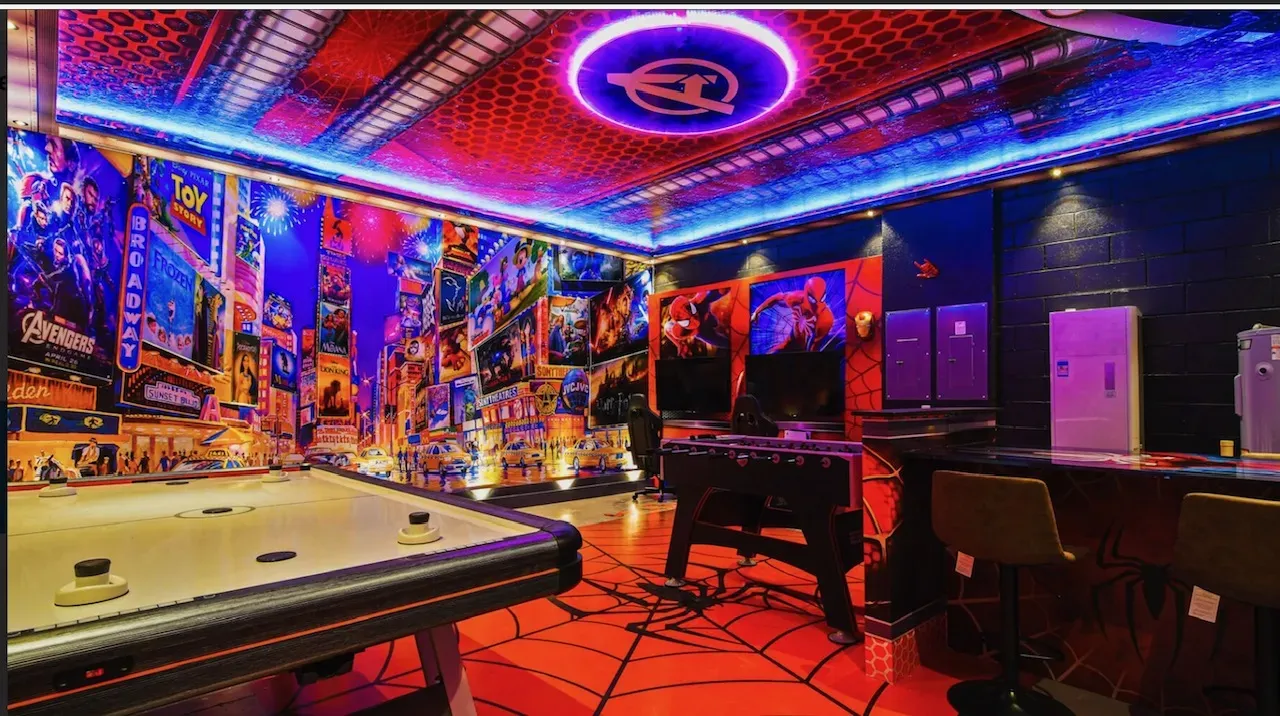
- Themed bunk rooms and game-room conversions are amenity adds at the launch-ready package tier and increasingly table stakes at the full amenity package tier and above in the Disney corridor.
- Turnkey furnishing total cost of ownership is almost always lower than DIY at 4BR and up, even when the sticker reads higher.
- Final pricing requires a scoped proposal — every planning range on this page sizes the conversation, not the quote.
Bedrooms matter for budget math, but amenities matter for who books. A launch-ready package and a full themed-and-game-room build are different conversations — and different price ranges. This guide explains how scope grows from a 4-bedroom condo to an 11-bedroom mega-rental. Final numbers always need a scoped proposal; use the table below to frame the conversation, not to quote yourself.
Planning budget by bedroom count
Use this table to identify which package level your property most likely falls into. The lower end of each package level reflects a baseline launch-ready furnishing scope; the upper end reflects a full amenity build listing competing against fully amenity-equipped neighbors. Where your specific property lands depends on the market it competes in, the floor plan, and the amenity setup the listing needs to match.
These are planning ranges only. Final pricing depends on the property, package scope, furnishings selected, housewares, outdoor needs, themed rooms, game rooms, timeline, and install logistics. Every project is scoped individually before quoting.
| Bedrooms | Typical use case | Scope level | Budget planning notes |
|---|---|---|---|
| 2BR | Urban condo, beach condo, smaller resort condo | Baseline launch scope | Lower planning range. Housewares-heavy; HOA finish guidelines often constrain choices. See condo furniture package planning for scope detail. |
| 3BR | Townhome STR, smaller resort condo, urban townhome | Baseline launch scope | Lower planning range. The third bedroom often becomes a bunk; outdoor scope is the variable. |
| 4BR | Entry-tier vacation rental, smaller family STR | launch-ready package | Mid planning range. Outdoor furnishing becomes a meaningful line. Themed bunk optional but starting to be expected near the Disney corridor. |
| 5BR | Central Florida median vacation rental | launch-ready package | Mid planning range. Themed bunk room is increasingly standard in the Disney corridor. See the 5-bedroom vacation rental package page for the published planning range and scope detail. |
| 6BR | Bridge tier between family rental and group-travel rental | full amenity package scope | Higher planning range. Game room conversation begins; pool deck scope expands. |
| 7BR | Luxury-entry tier, group-travel rental | full amenity package scope | Higher planning range. Game room becoming expected; two themed spaces increasingly common. |
| 8BR | Luxury group-travel and multi-family booking tier | full amenity package scope | Premium full-amenity planning range. Required: game room, two themed spaces, often a theater. See the 8-bedroom vacation rental package page for the published planning range and scope detail. |
| 9-10BR | Resort estate tier | luxury whole-home package | Premium full-amenity planning range. Multi-themed bunks, theater, full outdoor build, premium housewares. |
| 11-12BR | Encore-style mega-rental, group / wedding / corporate retreat | mega-rental package | Custom scoped proposal required. The amenity setup is the listing. |
| 14-15BR | Top-tier mega-rental (rare) | mega-rental package | Custom scoped proposal required. Often phased over multiple install windows. |
What to know
Why bedroom count alone is the wrong way to plan a furnishing budget
The instinct most investors bring is to multiply: take what a 4-bedroom cost, add a fixed percent, and call that the 5-bedroom number. The gap between that assumption and the real planning conversation is the first place a furnishing project goes sideways. Bedroom count drives three things at once — the number of beds and supporting pieces, the advertised sleep capacity (which determines which listings yours competes against in search filters), and the common-area sizing expectation. Each scales faster than the bedroom math suggests. Then the amenity setup compounds on top: at 5BR in the Disney corridor the listing competes against properties with themed bunk rooms; at 7BR+ against properties with game rooms; at 8BR+ against properties with theater rooms. The compounding effect is what catches first-time STR investors when they request a quote.
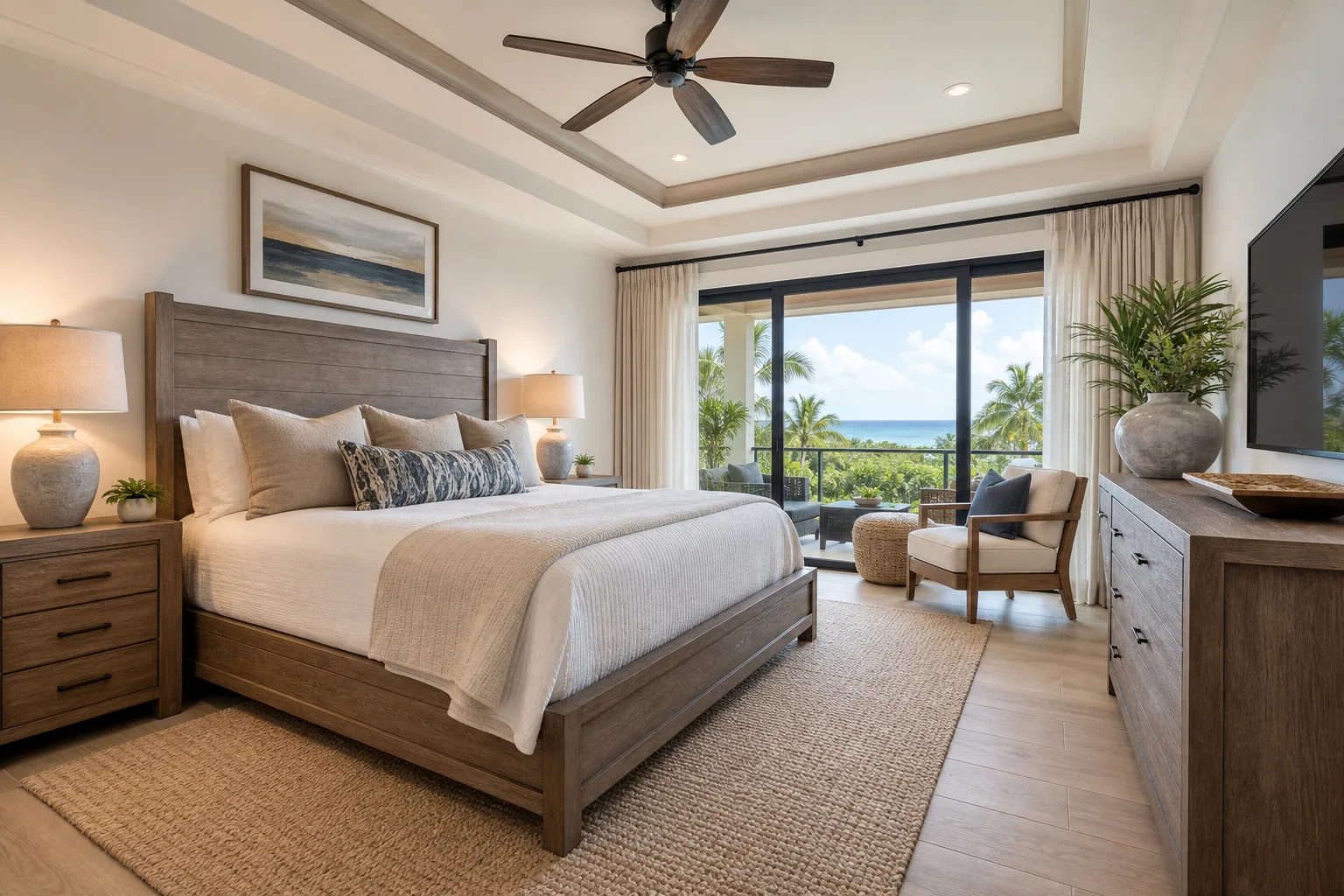
What actually drives the budget (it is not just the bedroom count)
A real furnishing budget breaks across six scope drivers, and each one shifts the planning conversation. Furniture grade — STR-grade upholstery and case goods are built for higher-frequency use and last meaningfully longer than residential equivalents. Housewares depth — kitchen equipment, linens, bedding, small appliances — usually represents a larger share of the budget than first-time investors expect. Outdoor scope — UV-rated cushions and powder-coated frames sized to actual guest capacity, which Florida sun and salt punish year-round. Amenity adds — themed bunk rooms, game-room conversions, theater rooms, outdoor build-outs — each with its own scope and its own planning range. Photography prep and staging — the bridge between furnishing investment and actual booking results. Install logistics — coordinated single-week white-glove installs vs. scattered warehouse pickups. Reading a proposal means reading these six lines. If a quote is materially lower than peers, one of the six is missing or under-scoped, and the gap shows up later.
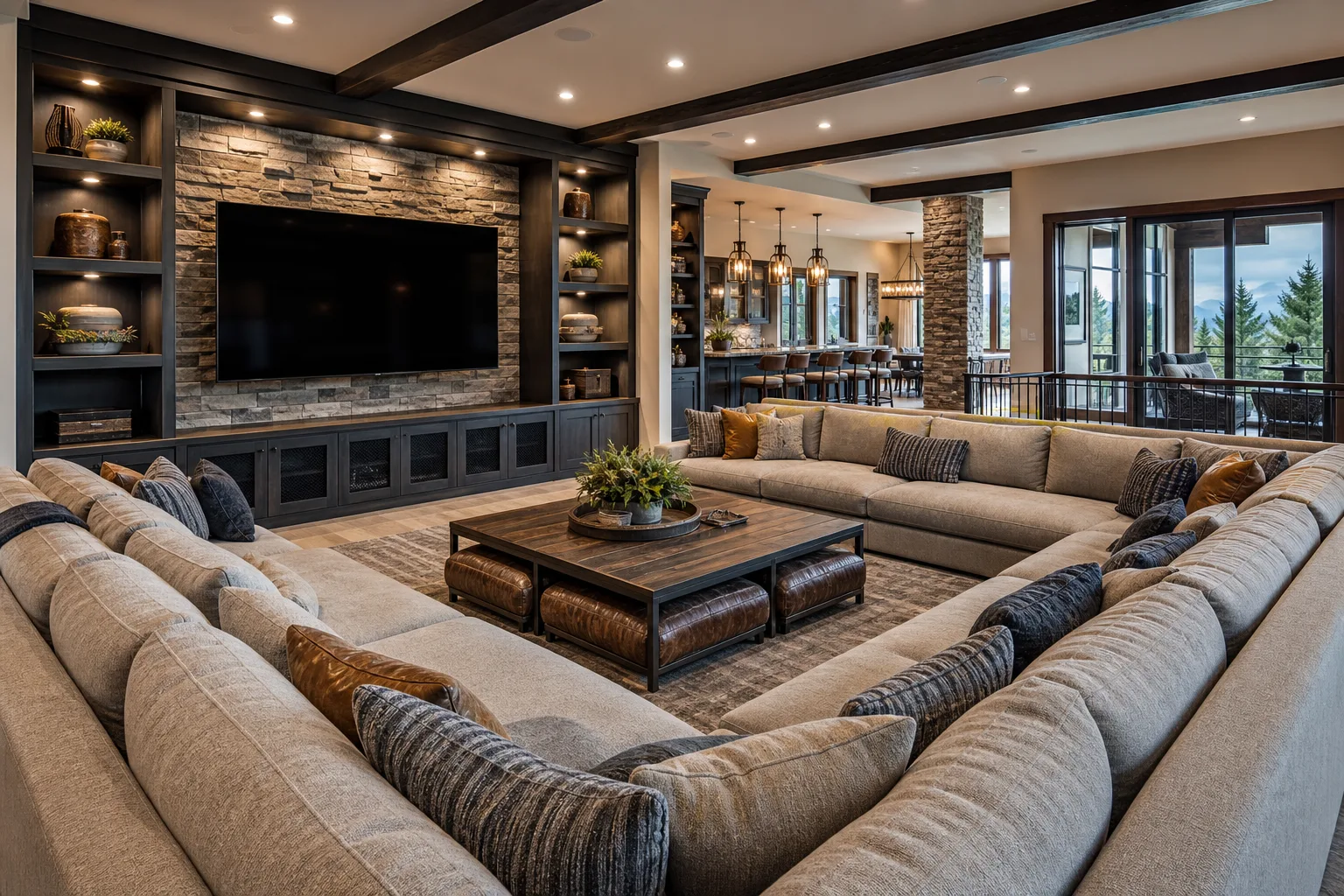
How a 4BR, 5BR, and 8BR are three different businesses
A 4BR rental is the entry tier — the guest is usually a single family booking on price-to-value. The right scope is baseline launch: get the basics correct at STR durability spec and stop there. A 5BR is the Central Florida market median — guest profile shifts to multi-family bookings, sleep capacity now matters in listing-search filters, and themed bunk rooms have shifted from differentiator to expected. The right scope is launch-ready package. An 8BR is a different business entirely — guests are group-travel (multi-family trips, corporate retreats, wedding parties), they filter listings on amenity setup first, and skipping a game room or themed spaces is opting out of the search results that produce 8BR-tier bookings. The right scope is full amenity package. Planning ranges scale faster than bedroom math because each tier is paying for entry into a different market segment, not just additional rooms.
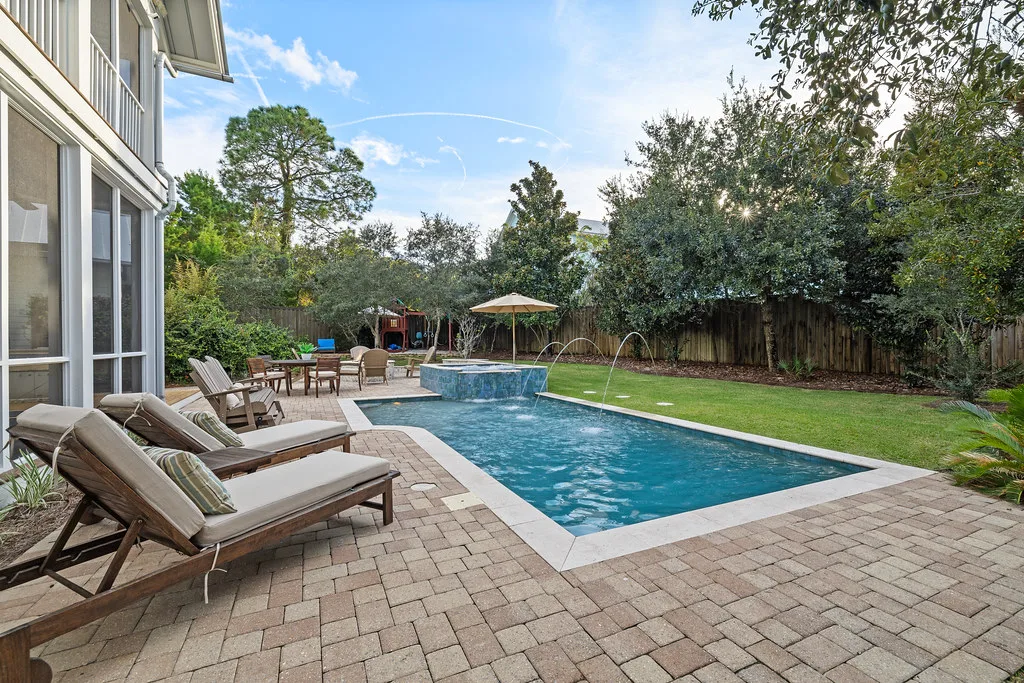
Where investors overspend
The patterns repeat across investor types. Decor and art beyond what the listing photographer actually shoots — wall pieces in rooms that do not appear in the hero listing photos are decoration for the cleaner. Themed primary bedrooms and themed dining rooms — they photograph poorly and depress perceived listing value; theming belongs in bunk rooms and kid spaces. Residential-grade furniture from a familiar retail store — it photographs fine on day one and fails predictably in less than a year of STR turnover. Over-spec on bedrooms that do not photograph — past the point of clean, durable, STR-spec, additional spend on the fifth or sixth bedroom does not move bookings. Five-vendor parallel projects — every additional vendor is one more reason your launch date slips, and your launch date is whichever vendor is slowest. And the most common one: over-investing in visible decor while under-investing in bedding. Guests do not review wall art. They review whether they slept well.
Where investors should not cut corners
There are line items where saving on cost produces a meaningful drop in review scores. Bedding — sheets, pillows, mattress quality, and mattress toppers are the most important line item in any vacation rental budget. A guest who sleeps badly writes a four-star review and does not rebook. Kitchen housewares — vacation rental guests cook more than hotel guests and notice missing tools instantly. An under-scoped kitchen produces guest texts on Friday night and three-star reviews on Sunday morning. STR-grade upholstery — residential fabric fails predictably under STR usage cycles; the math here is one of the most consistent in the budget. Outdoor durability — Florida sun and salt destroy unprotected outdoor furniture quickly, and the savings disappear inside a single year. Professional photography prep — a property furnished but unstaged under-performs its own scope; staging is the bridge between investment and bookings.
How themed rooms and game rooms change the budget
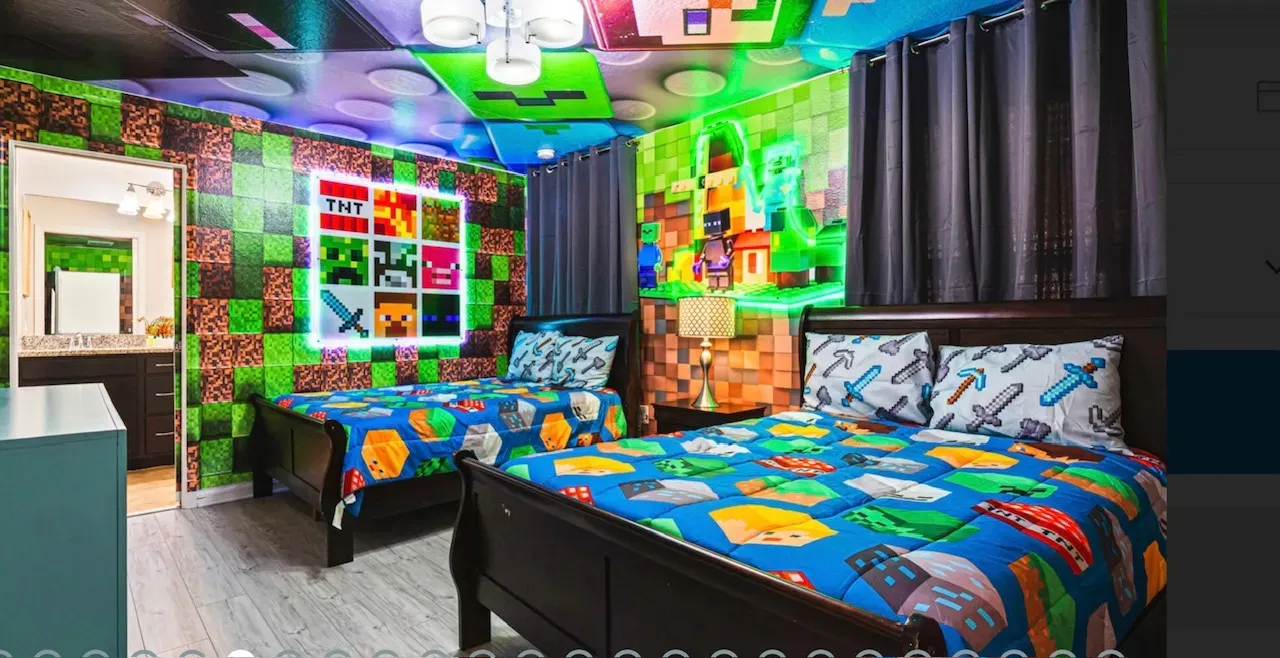
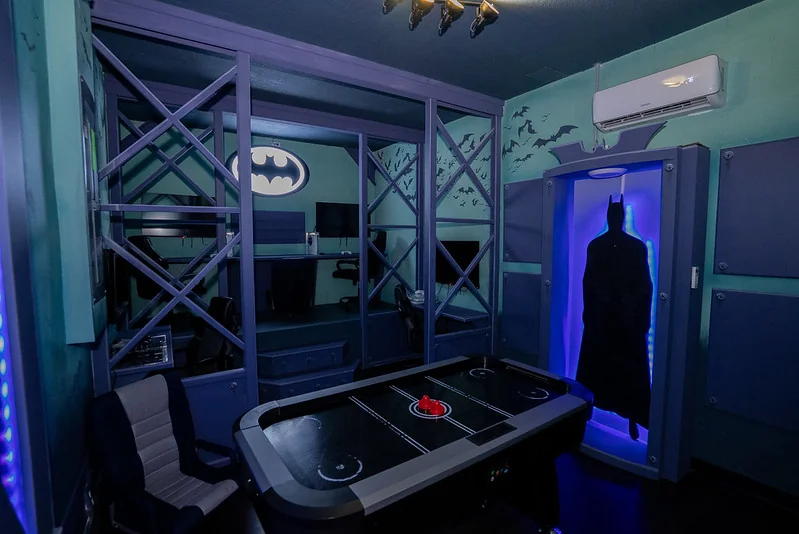
Two amenity adds dominate the planning conversation at the 5BR-and-up tier in Central Florida. A themed bunk room is a scope-add to an existing bedroom — custom bunk build adding additional sleep positions, mural or vinyl wall treatment, themed bedding, lighting tuned for both gameplay and photography. The sleep-count uplift moves the listing into a different neighborhood comps in search filters; that visibility shift is what pays the room back, more than the marginal photo quality. A game-room conversion is partly construction (garage insulation, HVAC, flooring, electrical), partly furnishing, partly equipment. Den conversions skip the construction phase entirely. At 7BR+ in the Disney corridor, a property without a game room is filtered out of group-travel searches before the booker sees the listing. Theater rooms typically appear at 7BR+. For published planning ranges on each amenity, see the themed-rooms and game-room conversion service pages — each amenity is scoped against the property and quoted individually.
Turnkey package vs DIY: the total-cost reality
DIY furnishing genuinely works for smaller properties — 2BR and 3BR condos especially — when the owner has time to manage multiple deliveries, lead times, and photo prep. DIY breaks down at 4BR and gets worse from there. Three things compound. Retail delivery windows scatter across weeks and your launch date becomes whichever vendor is slowest, not whichever is fastest. The failure rate of residential furniture in STR use is high enough that early-replacement costs absorb the original savings within a year or two. And the time cost of running a multi-vendor procurement project has an opportunity cost that out-of-state owners consistently under-estimate. For an investor whose property is sitting empty waiting on the listing date, every week of difference is a week of revenue not generated. The decision usually breaks like this: 2BR–3BR with time, DIY can work; 4BR+, out of state, or tied to a contract / peak-season date, turnkey almost always wins on total cost of ownership.
How amenity scope changes the bedroom tier in practice
Plan against the tier the property is sized for, not the line items. A 5BR project can choose to include a themed bunk and skip the game room. A 6BR usually adds both. A 7BR-and-up project assumes both — and at 8BR, often adds a theater. Reading the planning table above with that in mind: the lower end of each package level is the baseline-clean scope; the upper end is the fully-full amenity scope for that bedroom tier. Where a property lands depends on what the local listing competition has already invested in. A 5BR in a cost-conscious value market can launch successfully at the baseline. A 5BR in a Disney-corridor resort community usually needs to be at the upper end of the launch-ready package scope to compete on photos and amenity setup. The right way to read this page is to identify the package level and then book a scoped proposal — there is no honest fixed price without knowing the property.
The four (really five) types of furnishing project — and where the budget actually lands
Budget depends heavily on whether the project is a basic furnishing package or a full amenity build STR build. A furniture-only scope is very different from a resort-home launch that includes themed rooms, game rooms, outdoor living, and premium housewares. Reading the planning table above through that lens, owners typically fall into one of five project types. (1) Basic furnishing package — a clean, launch-ready scope for budget-conscious owners or smaller properties: full sleep counts, STR-durable upholstery, the houseware kit, no specialty rooms. The lower end of every planning range usually applies here. (2) Full STR launch package — a launch-ready package scope for 4-5BR vacation rentals: stronger design direction, upgraded bedding, expanded outdoor, complete housewares depth, photography-grade staging. The mid planning range typically applies. (3) full amenity package build — a 6-8BR resort home that needs at least one themed bunk room, a game room, expanded outdoor entertaining, and a heavier houseware kit to compete in group-travel searches. The higher planning range applies, and game-room or themed-room scope is quoted as separate phases. (4) Luxury estate build — a 7-10BR luxury property with multiple gathering zones, upgraded bedroom-by-bedroom design, premium materials, outdoor living, theater room, and higher-end guest expectations. Premium full-amenity planning range, with specialty rooms scoped individually. (5) Mega-rental / specialty build — 8BR+ properties (often 10BR+) with custom bunk rooms, multiple themed spaces, theater rooms, full outdoor entertainment, premium housewares, and complex install coordination. Custom scoped proposal required; the amenity setup is the listing. Lower ranges typically apply to basic furniture-only or launch-ready packages. Higher ranges apply when the project includes themed rooms, specialty rooms, game rooms, theater rooms, upgraded outdoor spaces, premium bedding, premium housewares, custom bunk rooms, stronger design direction, larger properties, resort-community competition, faster launch timelines, or complex logistics. Final pricing requires a scoped proposal based on the property, bedroom count, amenity plan, housewares depth, outdoor areas, specialty rooms, and install timeline.
How FPUSA scopes the right package for your property
We do not sell a fixed price list. We scope a project against the property, the bedroom count, the market it competes in, and the goals the owner is actually trying to hit. The consultation walks through four conversations: the property (where, what floor plan, what the existing space allows for), the market (the neighborhood comps varies meaningfully across Orlando, Kissimmee, Davenport, and the coastal markets), the budget allocation (given the property and market, where does the dollar produce the most return — themed bunk, game room, primary-suite upgrade), and the timing (when does the property need to be live, how does the install window land against the booking calendar). The output is a scoped proposal with line items the owner can read, planning ranges that match the conversation, and a defined install timeline. The reason most of our owners do not need a second furnishing project a year later is that the first one was scoped correctly.
What to do first this week
Open three same-bedroom-count comps on Airbnb or VRBO and screenshot bunk photos, outdoor dining seats, and primary suite finish. List where your home falls short — that gap list becomes your furnish scope. Get a scoped proposal for your specific property. We size planning ranges against the property, bedroom count, market, and amenity goals, then deliver an itemized quote against the actual scope.
What we see go wrong
- Multiplying instead of tier-shifting — treating a 6BR like a 5BR with a fixed percent added. The amenity setup shifts at every package level; the planning conversation needs to shift with it.
- Spending the bedding budget on art. Wall decor is the least impactful line item in a furnishing budget; bedding, kitchen, and upholstery are the highest.
- Buying residential-grade furniture from a familiar retail store. It photographs fine on day one and fails before the first replacement cycle. STR-grade is not optional at the performance-STR scope and above.
- Theming rooms that should not be themed. Primary suites, dining rooms, and kitchens photograph worse when themed. Themed scope belongs in bunk rooms and kid suites.
- Skipping the game room at 7BR+. A property in the full amenity package tier without a game room gets filtered out of group-travel searches before the booker sees the listing.
- Under-scoping housewares to save money. A 5BR with a half-stocked kitchen produces guest texts on Friday night and three-star reviews on Sunday morning.
- Running five vendors in parallel. Each one is a separate path to a delayed launch date. Single-source coordination is meaningfully cheaper once you total the delays.
- Cutting outdoor furniture durability. Florida sun destroys non-UV-rated cushions quickly — the savings appear and disappear inside a single year.
- Launching without photography prep. A furnished but unstaged property under-performs its own scope. Staging is the bridge between investment and bookings.
- Optimizing for the lowest sticker price. Total cost of ownership over the first two to three years is the number that matters, and the lowest sticker rarely produces it.
Related Community Guides
Eight Core Services
Turnkey to Themed Rooms — All Under One Roof
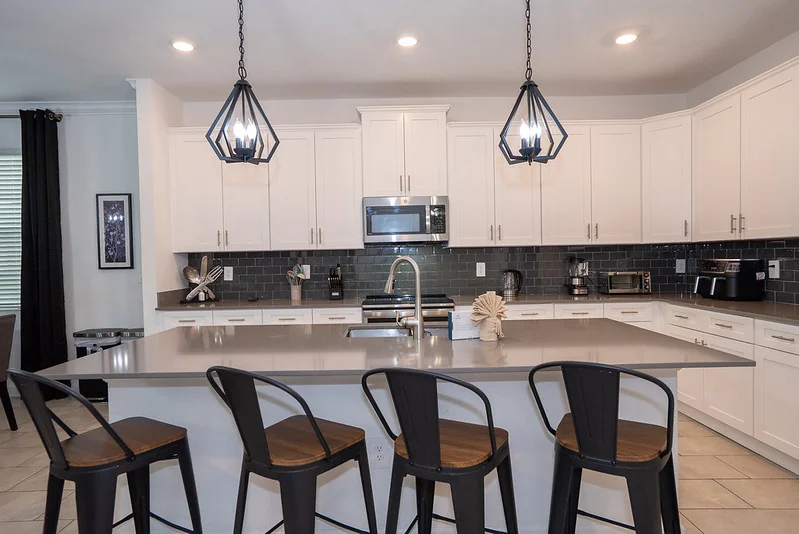
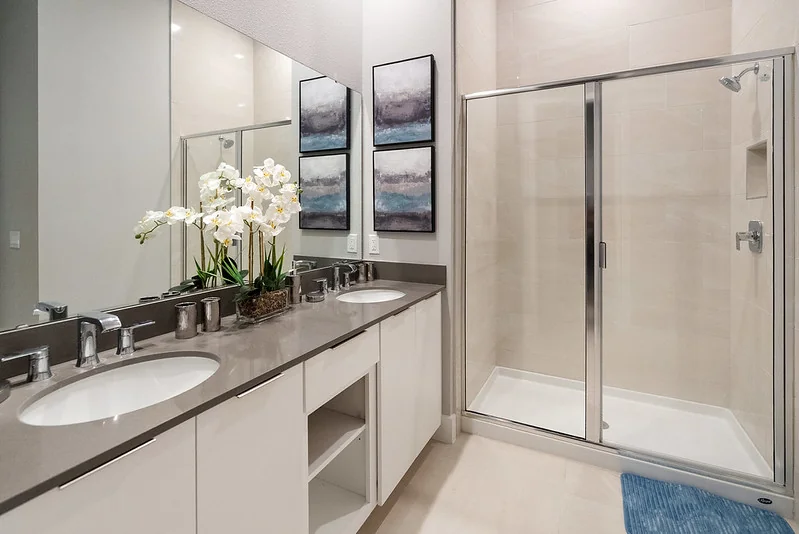
Full furniture packages, STR interior design, themed kids suites, game room conversions, property prep, custom bunks, white-glove install, and listing-ready staging — for vacation rentals and second homes across Orlando, Kissimmee, Davenport, and the full Florida STR market.
Frequently Asked Questions
What is the planning range for a 5-bedroom Florida vacation rental?
A 5-bedroom Central Florida vacation rental typically falls in the launch-ready package level. Planning ranges depend heavily on the market, the floor plan, and whether the property needs to launch with a themed bunk room and a competitive outdoor build. For published planning ranges and scope detail, see our 5-bedroom vacation rental package page and the Florida vacation rental furnishing program. Final pricing depends on the property, package scope, furnishings selected, housewares, outdoor needs, themed rooms, game rooms, timeline, and install logistics — and is confirmed through a scoped proposal.
What is the planning range for an 8-bedroom vacation rental?
An 8-bedroom Central Florida vacation rental typically falls in the full amenity package level. At this tier the budget is roughly half furniture, half amenity — a game room conversion, two themed spaces, and often a theater room are usually required to compete in group-travel search filters. For published planning ranges and scope detail, see our 8-bedroom vacation rental package page. Construction work like garage-to-game-room conversions is coordinated as a separate phase and quoted separately.
What is included in a typical turnkey furniture package?
A turnkey package covers furniture for every room (bedrooms, common spaces, outdoor), housewares (kitchen equipment, linens, bedding, small appliances), decor and art tuned to the listing photo shot list, photography styling, and a coordinated white-glove install. What is usually excluded: construction work like garage conversions, custom murals beyond the in-scope work, AV installations for theater rooms, and HOA-driven custom finishes. Construction-adjacent scope is coordinated as a separate phase.
Why is the planning range so wide at each bedroom tier?
Because the project type matters as much as the bedroom count. The lower end of each planning range typically reflects a launch-ready furniture-only package — full sleep counts, STR-durable upholstery, the houseware kit, no specialty rooms. The upper end reflects a full amenity build build with themed bunk rooms, game room, theater, premium outdoor, custom bunks, and premium housewares — closer to a luxury or mega-rental specialty build. A 5BR in a cost-conscious community lands at the lower end with a clean baseline; a 5BR in a Disney-corridor resort community with a themed bunk, full outdoor build, luxury-tier bedding, and design-driven photography lands at the upper end. Both are legitimate 5BR projects; they are built for different neighborhood comps. Final pricing requires a scoped proposal that captures the specific property, amenity plan, and goals.
How much of the budget is housewares vs furniture?
It varies by property and package level, but housewares — kitchen equipment, linens for the full bed count, towel sets, bedding upgrades, small appliances, decor, and art — is consistently larger than first-time investors expect. Housewares is the most common under-scoped line in a self-managed project and the most common source of "missing-item" guest complaints. A scoped proposal breaks out housewares as a distinct line item against the property's actual guest capacity.
Should I add a themed bunk room or a game room first?
It depends on the property size and the market. At the launch-ready package scope (5BR) in the Disney corridor, themed bunk rooms add more bookings per dollar than game rooms because the listing-search competition already includes themed-bunk listings. At the full amenity package scope (7BR+) in the same market, game rooms become required because group-travel filters explicitly include them. At 8BR+ you usually want both. Outside the Disney corridor (Tampa, Miami, Naples), themed bunks pay back less and game rooms shift to being a clear differentiator rather than a requirement.
How long does the furnishing process take?
For a fully-scoped launch-ready package project (5BR) with no construction phase, two to six weeks from contract to live listing is typical. full amenity package scope projects (8BR with game room, theater, themed spaces) usually run six to ten weeks, with garage conversions adding several weeks of construction phase ahead of the furnishing install. We schedule against the owner's target launch date and back-calculate the procurement and install windows. Final timeline depends on amenity scope and install logistics.
What is the difference between STR-grade and regular furniture?
STR-grade furniture is built for higher-frequency use, with commercial-spec fabrics, reinforced frames, and finishes that survive repeated professional cleaning. Visually, on day one, it is often indistinguishable from a comparable residential piece. The difference shows up later in the replacement cycle, when residential pieces are failing and the STR-grade equivalents are still photo-ready. STR-grade is part of the launch-ready package scope and above.
Can FPUSA work with out-of-state owners?
Yes — many of our clients are out-of-state buyers or remote owners. The consultation, scope review, sign-off, and project management run remotely with photo- and video-based check-ins. We coordinate with closing dates, contractors, and listing photographers so the owner does not need to be on site for the install.
What should I do first?
Pull three in-community comps with your bedroom count, note bunk, outdoor, and primary suite in the hero photos, then send your floor plan. We match package tier to that comp set before you order furniture.
Should I hire a general interior designer instead of a company that specializes in vacation rentals?
A general interior designer optimizes for how a home looks; an STR furnishing company scopes for how it holds up under 40–80 guest cycles a year and how it needs to photograph for Airbnb search. General designers often spec residential-grade fabrics and one-off pieces that are hard to replace fast when something breaks mid-season. If you already have a designer relationship you trust, ask them to spec to STR-durability standards — otherwise a dedicated STR team already has the vetted vendor list and replacement pipeline built in.