How Furniture Affects Vacation Rental Bookings
Better furniture doesn't magically raise occupancy. It works through filters, photos, reviews, and rebooks — here's the chain in plain terms.
Sound familiar?
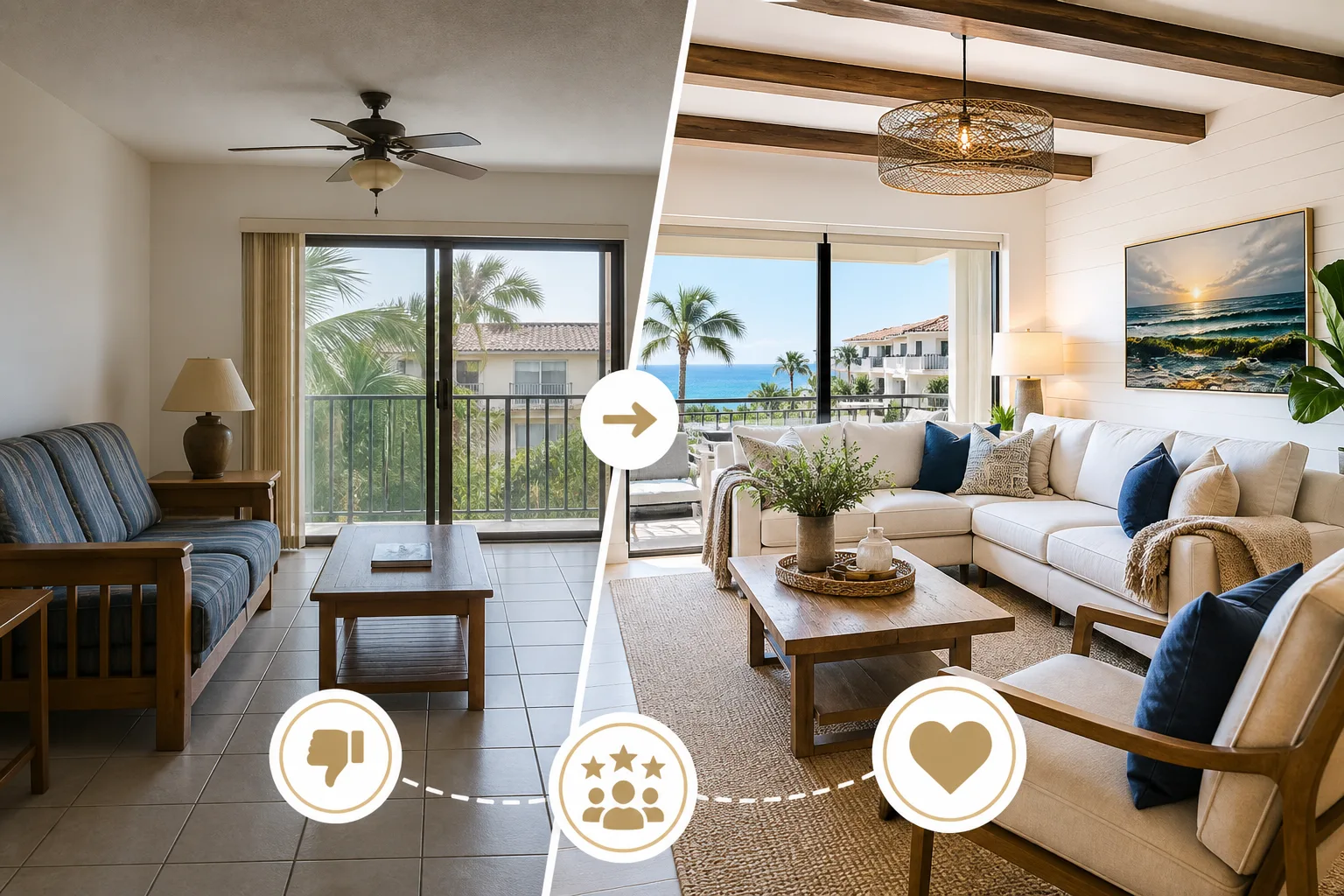
You know better furniture should mean more bookings, but you can't explain how when your partner asks why the sofa budget is $4,000 instead of $1,200. Without a clear chain from furniture to revenue, every scope decision feels like a guess.
In short
- Furniture moves bookings through a specific chain — search filter eligibility, hero-photo click-through, review-cycle quality, repeat-booking — not through aesthetic quality in the abstract.
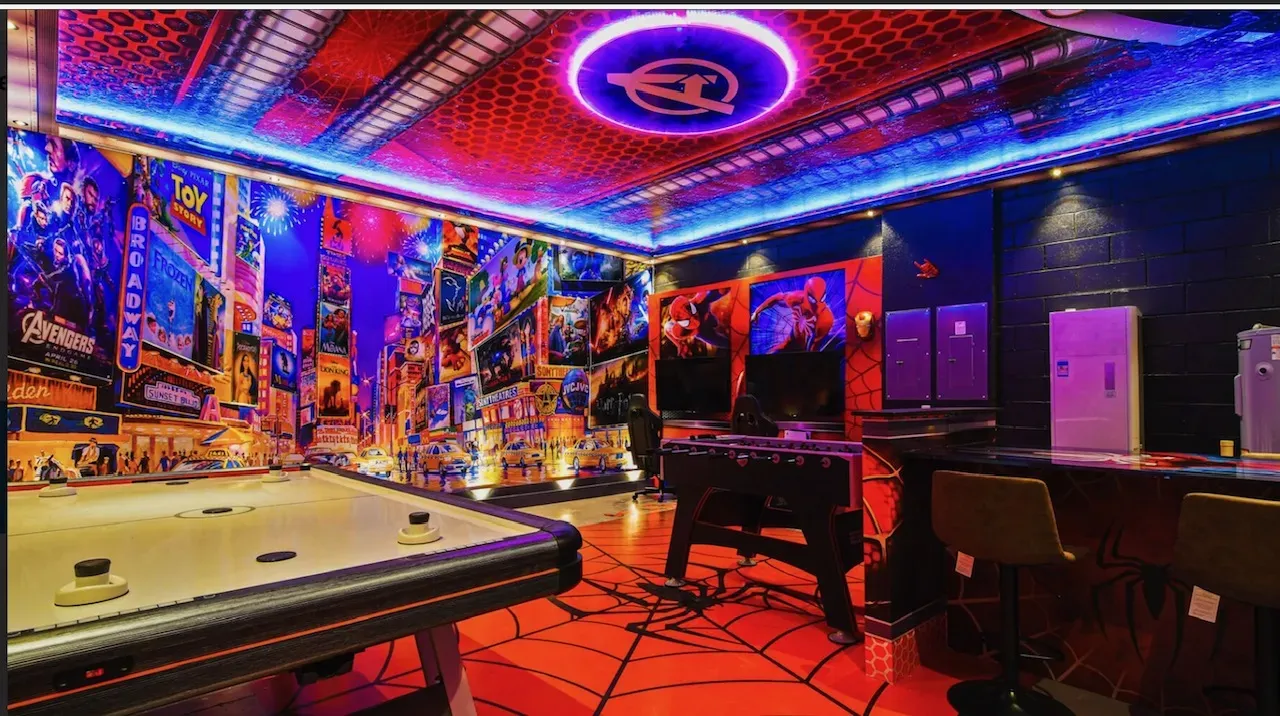
- Amenity-scope decisions (themed bunk, game room, outdoor entertaining) often move bookings more than across-the-board furniture-spec upgrades.
- Hero-photo composition is the dominant differentiator inside any Airbnb filters. Residential-spec furniture often photographs as residential and loses.
- Review-cycle signals — bedding quality, houseware completeness, durability — compound over the first 12 months and protect (or erode) listing ranking.
- The single most damaging budget mistake is cutting amenity-scope furnishing or bedding to save short-term money. Those cuts cost more in lost bookings inside the first booking season.
- Monday action: compare your listing to three comps on bunk, outdoor, and primary suite before signing a furniture PO.
Furniture doesn't book guests because it's pretty. It works in a sequence: Airbnb filters decide if you show up at all, hero photos decide if anyone clicks, the stay decides the review, and the review decides if you keep ranking. This is how we explain that sequence to owners — and where STR-grade spec actually matters versus residential furniture.
What to know
Filters: do you appear in the search at all?
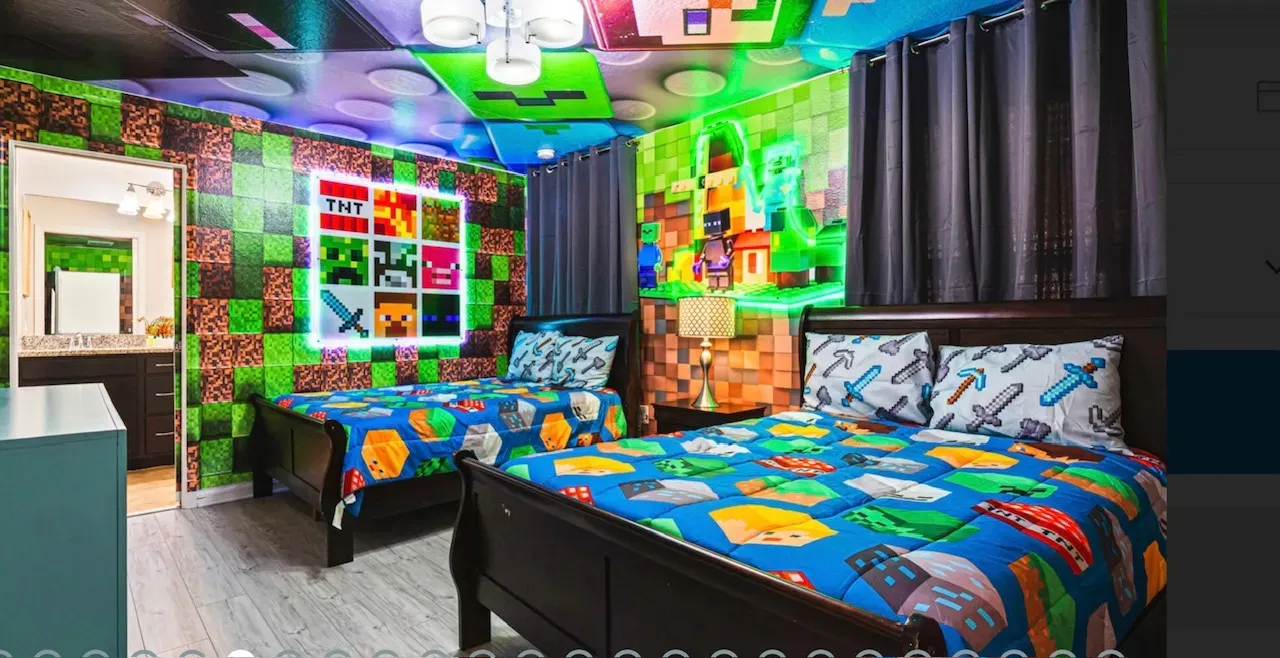
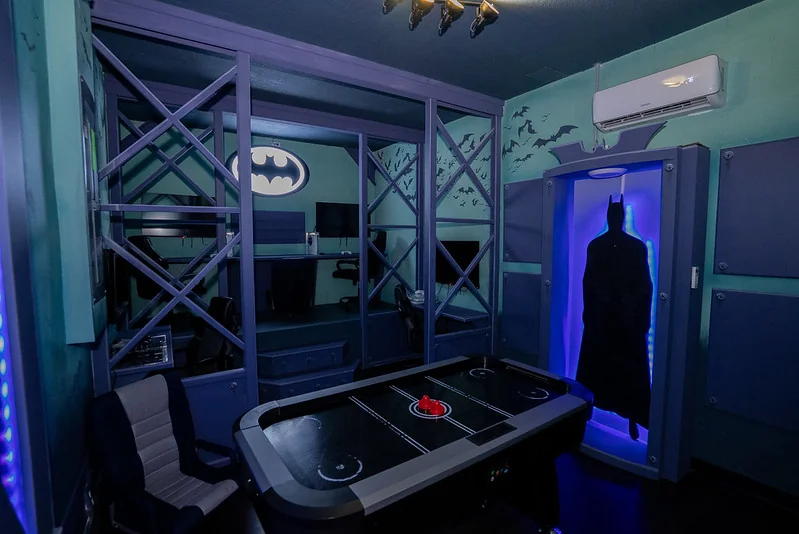
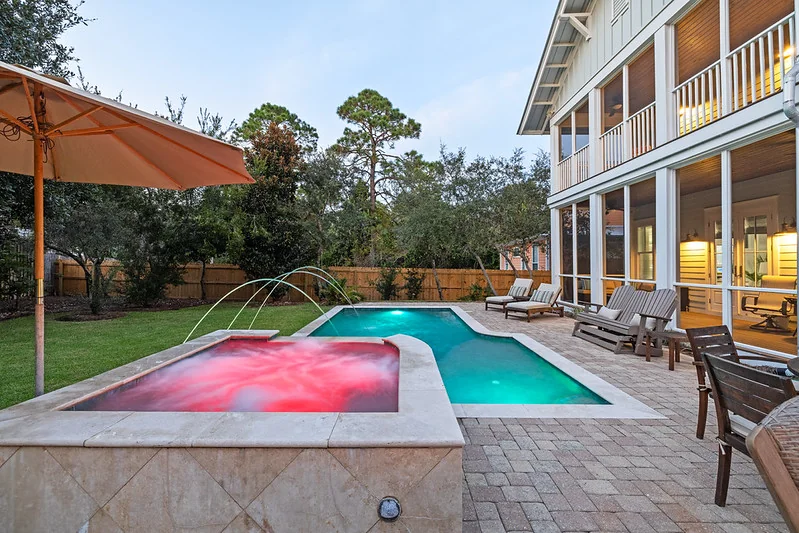
Most guests filter before they browse — pool, sleeps 12, themed room, game room. Those filters map to real furniture: the bunk bed, the pool loungers, the arcade corner. A 5-bedroom near Disney without a themed bunk never shows up for families who tick "kids' room." An 8-bedroom without a real game setup misses group-travel filters. You're not picking a vibe; you're picking which searches you qualify for.
Hero photos: do they click your listing?
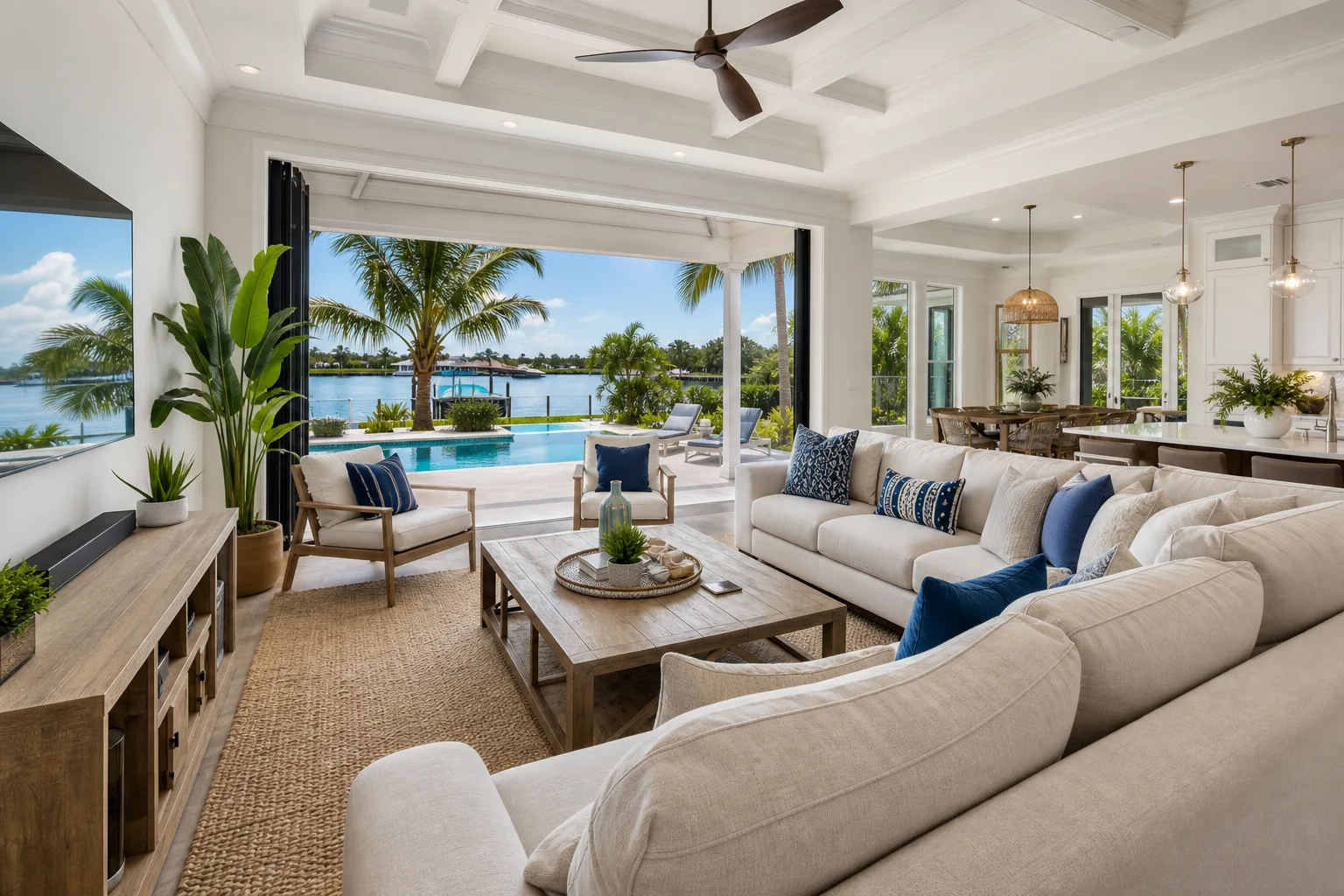
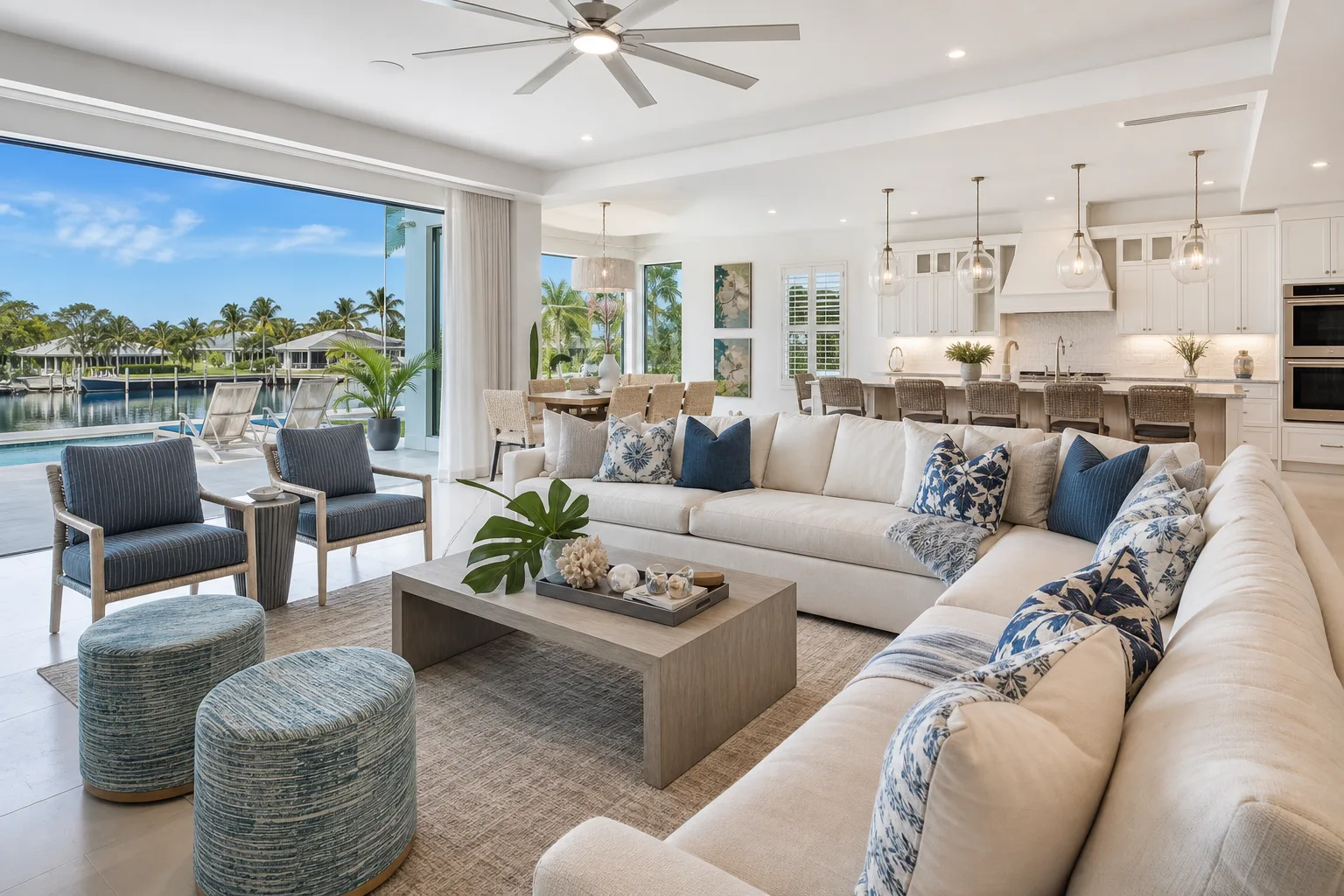
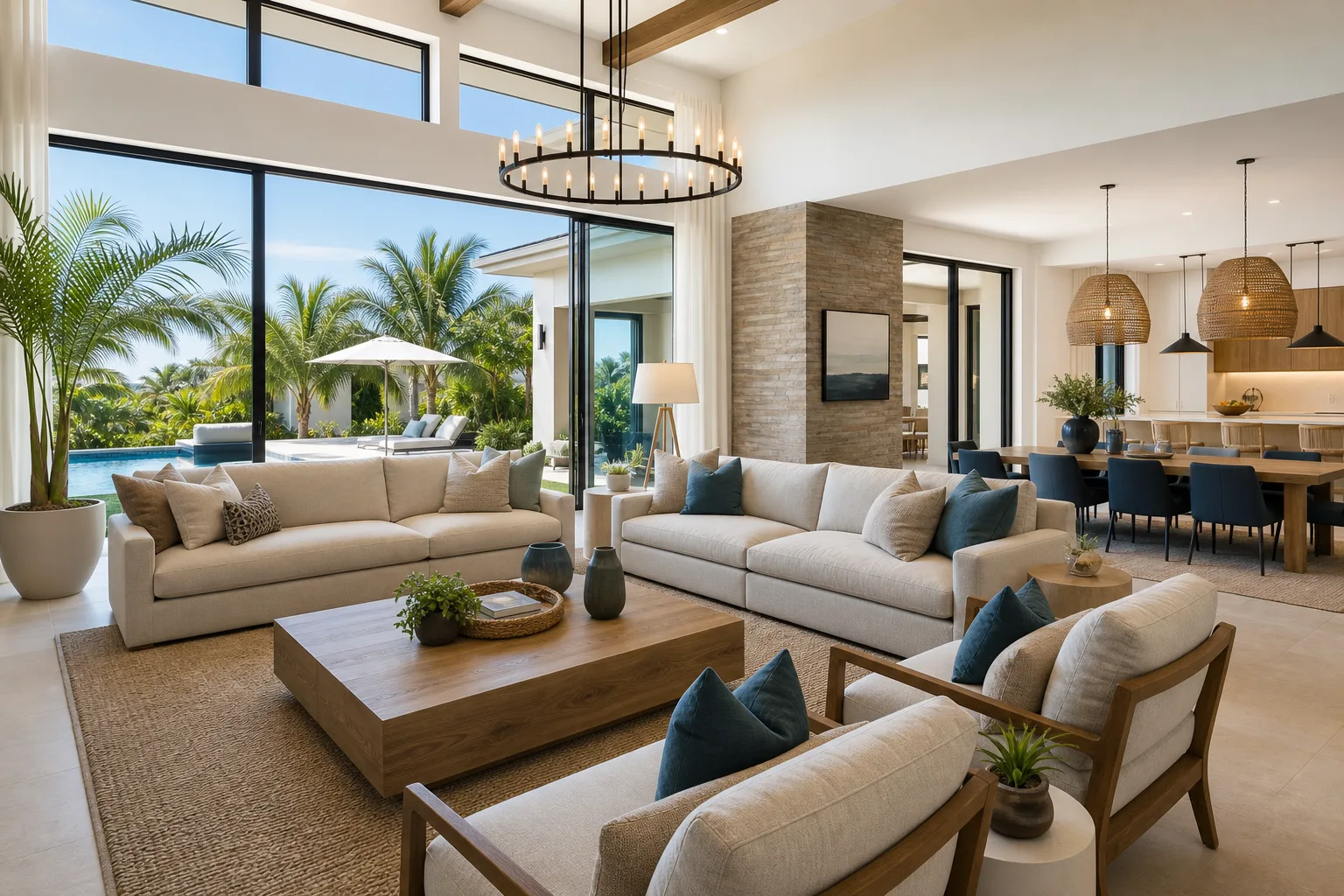
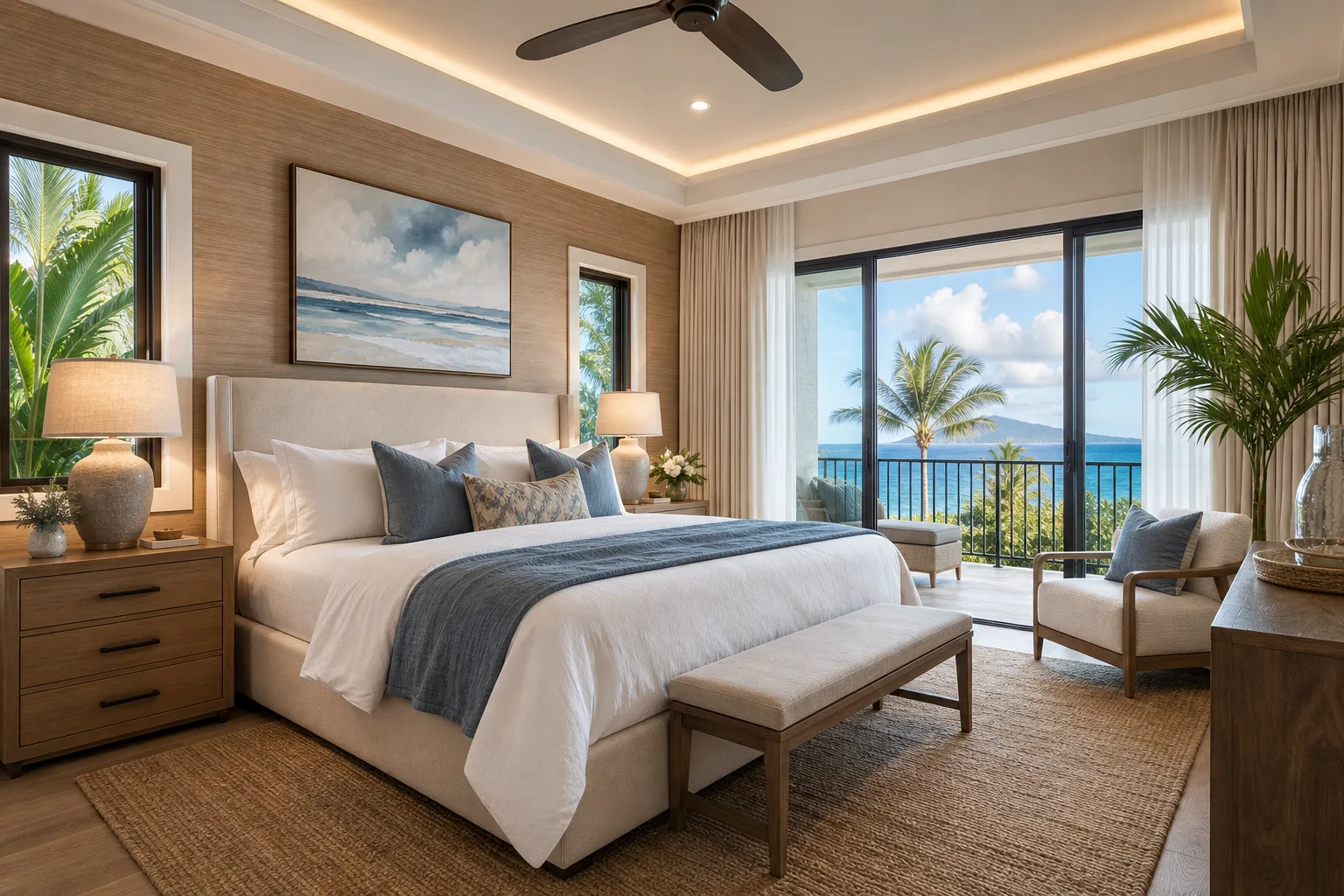
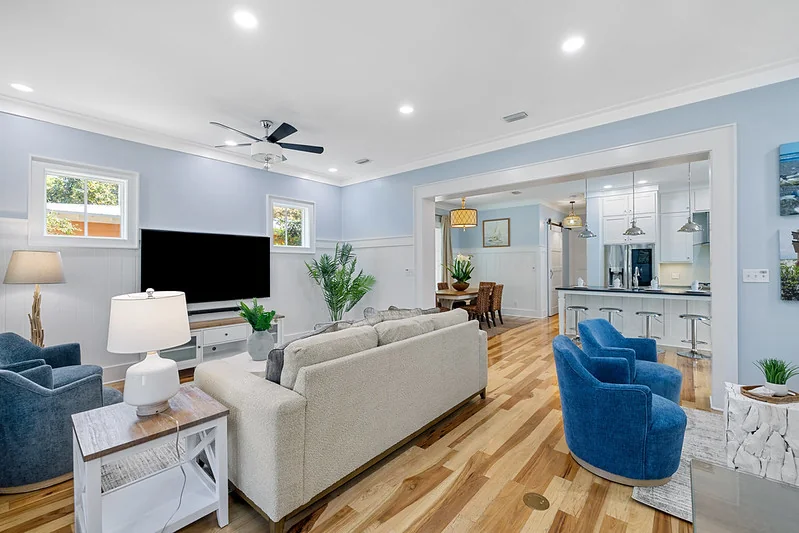
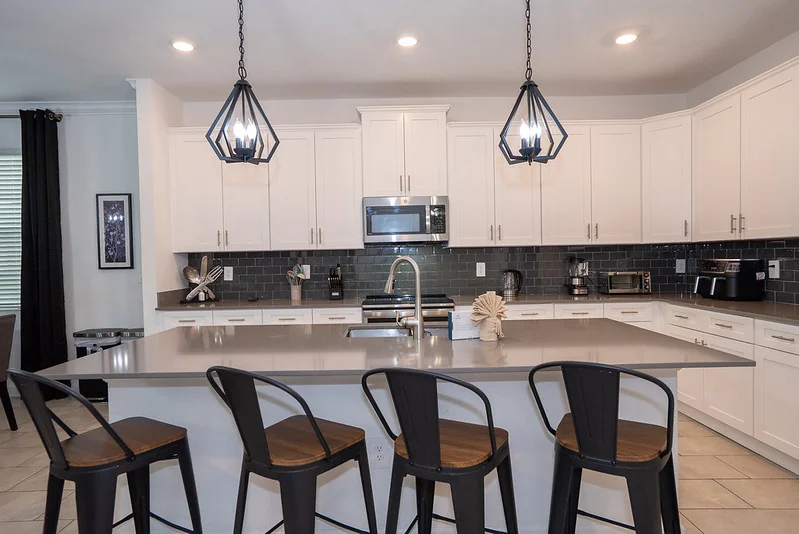
Once you're in the results, you're shoulder-to-shoulder with the same floor plan next door. The first three photos win the click. Scale matters — a sofa that looks tiny in a great room reads cheap at thumbnail size. So does staging: resort-style seating beats "we assembled this from three stores." We spec living rooms for how they look at phone-screen size, not how they look when you're standing in the room.
Detail photos: do they still book after the click?
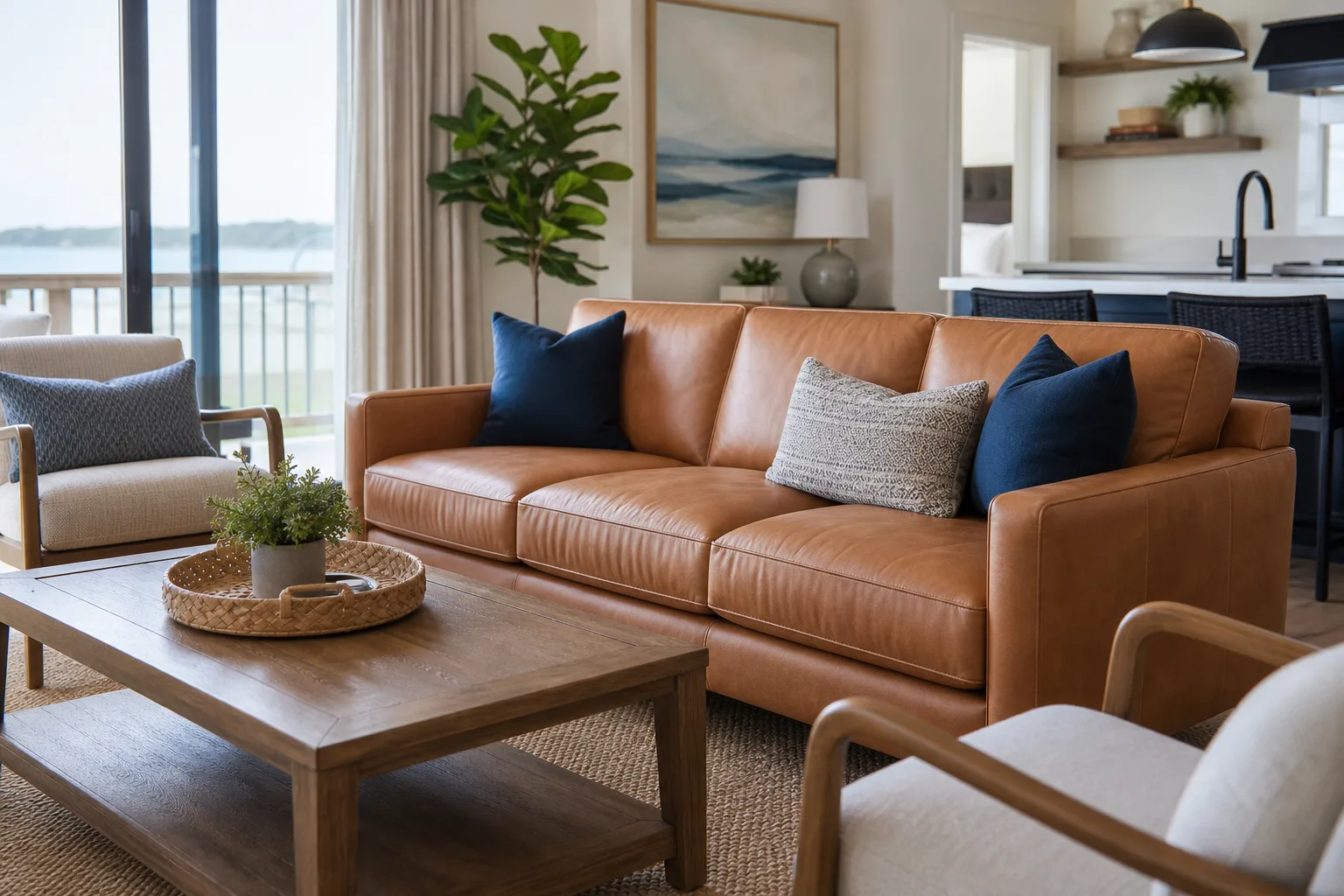
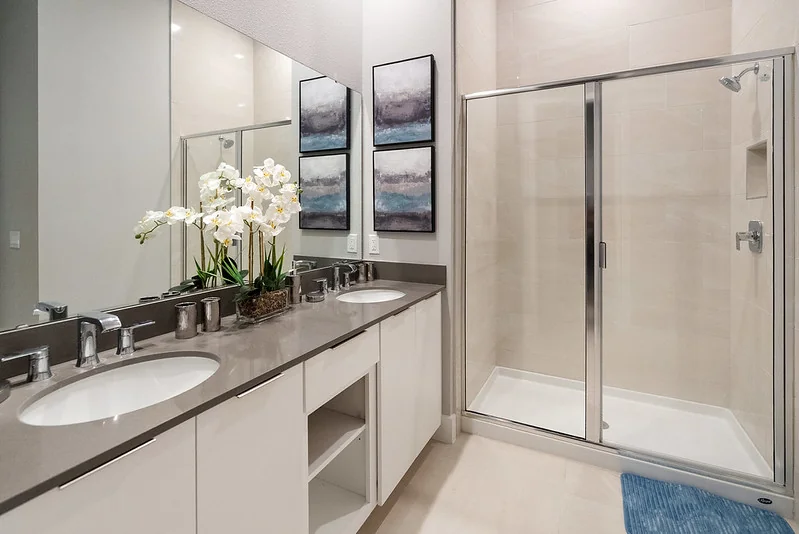
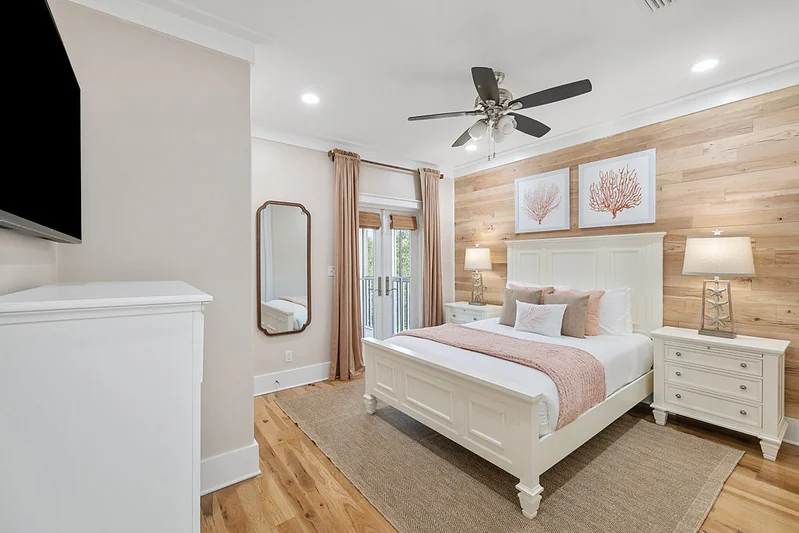
After the hero, guests scroll fast — primary suite, bunk close-up, outdoor dining, kitchen. Bedding that looked fine as a thumbnail reads cheap full-screen. A dining table sized for six in a sleeps-12 house looks wrong in photo #7. We spec every angle in the gallery, not just the cover shot.
Amenity photos: one picture closes the booking
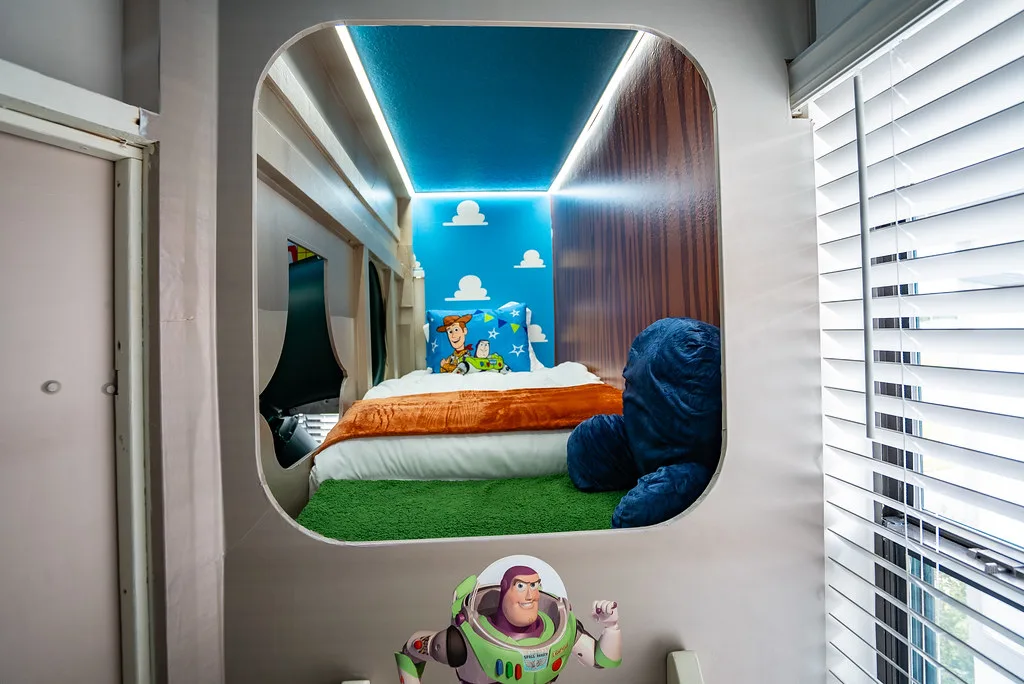
Families often book on the bunk-room photo alone. Group trips book on the game room. Wedding parties book on outdoor seating capacity. A stock bunk in a plain kids' room loses to a themed bunk with real millwork. A garage with one pool table loses to arcade plus lounge. The filter gets you seen; the amenity photo gets you booked. We've watched two identical Storey Lake floor plans split noticeably in occupancy over exactly one photo — the themed bunk close-up, with nothing else different in the listing.
Reviews: what keeps you ranking after launch
Platforms weight recent ratings heavily. Cheap bedding shows up as sleep complaints. Missing wine openers and undersized towel sets trigger the 3-star "missing items" reviews we see constantly in resort corridors. Upholstery and outdoor pieces that stain or fray hurt condition scores by month six. Same photos, weaker spec — you slide in search within the first season.
Rebooks: the quiet revenue line
Hero photos win the first stay. Bedding, towels, and a kitchen that actually works win the second. Repeat guests skip the platform fee and often book direct — harder to track in analytics, obvious on the calendar. We don't cut those line items to fund prettier living rooms. A guest who books direct the second time won't show up as a data point in your Airbnb dashboard, but they show up as a name you recognize on next spring's calendar — and they tell other families in their group chat before those families ever open the app.
Same floor plan as everyone else? Furniture is the breakout
Storey Lake, Windsor, ChampionsGate — dozens of identical layouts per community. The listings that pull ahead have the themed bunk, the game room, the outdoor setup worth photographing. The ones that don't race to the bottom on nightly rate. After you've spent real money on furniture, that's the outcome you're trying to avoid.
How we scope against this chain
When we quote a property, we walk this sequence with you: which filters do you need to hit, what should the hero photo accomplish against your neighbors, which amenity photos carry the booking (bunk, game room, outdoor), and where bedding and housewares protect reviews. Every line item ties back to one of those steps — not to "make it look nice." If an item on your quote doesn't map to filters, photos, or reviews, we cut it before you ever see the number — that discipline is why our proposals often run leaner than a general interior designer's at a similar bedroom count.
What to do first this week
Open three same-bedroom-count comps on Airbnb or VRBO and screenshot bunk photos, outdoor dining seats, and primary suite finish. List where your home falls short — that gap list becomes your furnish scope. Want furniture scoped to how bookings actually work? Send your listing URL — we'll map the proposal to filters, photos, and reviews.
What we see go wrong
- Optimizing for the owner’s taste instead of the listing’s search-and-photo performance — vacation rental furnishing is a marketing decision, not an interior design decision.
- Selecting hero-photo furniture that photographs as residential rather than resort — the listing then competes against same-floor-plan neighbors that look styled.
- Skipping the amenity-specific scope (themed bunk, game room, outdoor entertaining) — the listing exits the Airbnb filters entirely.
- Cutting bedding and houseware quality to save budget — the savings cost the listing through the review cycle inside the first six months.
- Ignoring repeat-booking signals — the budget that wins a first booking is not the same budget that wins the second booking from the same family.
- Treating photography prep as optional — under-staged listings under-perform their own furnishing scope by a meaningful margin.
- Buying furniture and photographing on the same week — staging, accessorizing, and photo prep is a distinct phase that gets compressed at the end of DIY launches and produces weak listing photos.
Related Community Guides
Eight Core Services
Turnkey to Themed Rooms — All Under One Roof
Full furniture packages, STR interior design, themed kids suites, game room conversions, property prep, custom bunks, white-glove install, and listing-ready staging — for vacation rentals and second homes across Orlando, Kissimmee, Davenport, and the full Florida STR market.
Frequently Asked Questions
Does better furniture actually produce more bookings?
Yes, but not directly — it produces more bookings through the chain of search filter eligibility, hero-photo click-through, review-cycle quality, and repeat-booking. Furniture is a lever on each of those, not a single button that produces bookings. The scoping question for any project is which links in that chain the property needs to win on, and where the budget produces the strongest signal at each link.
Which furniture decisions move bookings the most?
In Central Florida specifically, the amenity-scope decisions move bookings the most — themed bunk rooms, game-room scope, outdoor entertaining capacity. Those decisions determine whether the listing is in the Airbnb filters at all. Inside search results, hero-photo composition and bedding quality are the what matters most decisions. The themed-rooms and game-room-conversion service pages walk through scope and planning ranges for those specific amenity scopes.
How do I know if my furniture is hurting my bookings?
Three signals to look for. First, look at your listing’s impression-to-click ratio in the Airbnb or VRBO host dashboard — low click-through usually points to hero-photo problems, which point to furniture-composition problems. Second, look at your three-star review pattern — bedding complaints, missing-item complaints, and condition complaints all point to specific furniture-spec problems. Third, look at your listing position relative to same-floor-plan neighbors — if you are losing position to neighbors with similar pricing, the differentiation is happening through their amenity-scope furnishing decisions.
Is professional photography enough to fix weak furniture?
No. Photography can stage and compose any room well, but it cannot fix scale issues, undersized dining sets, residential-grade pieces that read as cheap at full screen, or amenity-scope absence. The photography decision and the furnishing decision are sequential — furniture first, photography second. Properties that try to fix weak furnishing through photography end up with hero shots that work and detail-page shots that lose the booking.
How does this affect the furnishing budget I should plan for?
It usually shifts the budget toward amenity-scope decisions (themed bunk, game room, outdoor entertaining) and away from spec-uniform furniture-everything decisions. A modest amenity-scope add in the right place often outperforms a more expensive across-the-board furniture upgrade. The vacation rental furniture cost pillar walks through how package level and amenity decisions interact with bedroom count.
What should I do first?
Pull three in-community comps with your bedroom count, note bunk, outdoor, and primary suite in the hero photos, then send your floor plan. We match package tier to that comp set before you order furniture.
My furniture is already solid, but I'm still not booking well — what else could be going on?
If the amenity scope and photos are strong but bookings still lag, look outside furniture: pricing relative to same-floor-plan comps, minimum-stay rules that are too restrictive for your market, and how fast your property manager responds to guest messages before booking. Furniture controls whether you show up in filters and whether guests click and rebook — it doesn't control pricing strategy or response time.