Game Room vs Themed Room for a Vacation Rental
When the 5BR or 6BR budget supports one major amenity but not both — the decision framework for game room vs themed bunk room, organized by booking audience and neighborhood comps.
Sound familiar?
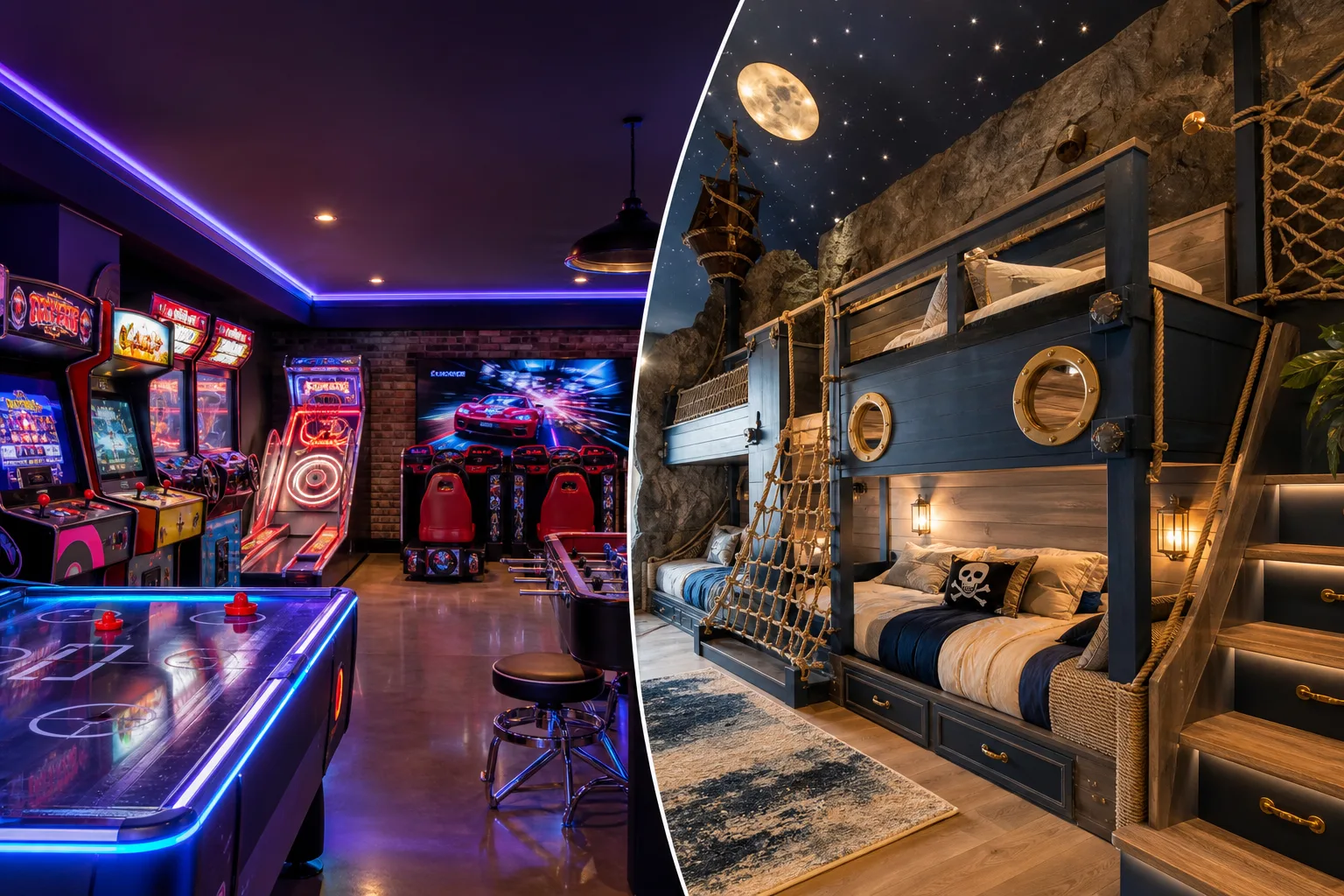
At 5BR and 6BR scope in Central Florida resort communities, the amenity setup budget often supports one major amenity but not both — and the decision between game room scope and themed bunk room scope is a binding investment choice with real listing photos and booking-audience consequences. Owners who default to "both, at lower package levels" usually produce two undersized amenities that compete weakly with same-floor-plan competitors who chose one and built it well. Owners who pick the wrong single amenity for their property’s booking-audience profile build an asset that does not target the audience they need to book.
In short
- The game-room-vs-themed-room decision applies at 5BR-6BR scope where budget supports one major amenity but not both. At 7BR+ scope, both become the standard amenity expectation.
- Booking-audience profile is the primary decision factor — family-Disney-trip-with-young-children favors themed bunk; family-Disney-trip-with-teenagers, group-travel, and adult-and-couples-travel favor game room. Competitive-set context and convertible-space layout are secondary factors that sometimes override the audience signal.
- Package tier discipline matters more than amenity count — one Standard Resort or full amenity package amenity outperforms two launch-ready package amenities at the same total budget. The "do one well" approach usually wins at 5BR-6BR scope.
- Competitive-set analysis at the front of the project is the prevention pattern — pull same-floor-plan listing photoss in the resort community and identify the amenity baseline before committing scope. The amenity that differentiates against competitors often wins against the amenity that matches the baseline.
- Convertible-space inventory sometimes makes the decision before audience or competitive-set factors apply — garage conversions favor game-room scope, bonus rooms and lofts favor themed-bunk scope, dens depend on dimensions.
This is a decision-framework page, not an advocacy page. Both amenities work; they target different bookers and serve different listing photos positions. This guide walks through the decision factors — booking-audience profile, package tier positioning, competitive-set context, convertible-space layout — and explains when each amenity wins. At 8BR+ Luxury Estate and Mega-Rental scope, the question rarely applies (the amenity setup typically includes both); at 5BR-6BR launch-ready package and full amenity package, the question is one of the most important commercial decisions in the property scope. The themed-bunk-room planning guide and the game room conversion cost planning guide cover each amenity individually; this guide covers the choice between them.
What to know
When the question applies (and when it does not)
The game-room-vs-themed-room decision applies in a specific package tier band. (1) Below 5BR — both amenities are usually too scope-heavy for the property positioning. A 3BR-4BR launch-ready package is better served by upgraded primary suites, premium bedding, photo-ready styling across the standard bedrooms, and basic outdoor staging. Adding game-room or themed-bunk scope at 4BR rarely produces the booking-conversion lift that justifies the investment. (2) 5BR full amenity package — the decision applies most directly. Most 5BR properties have one convertible space (often the bonus room or a den) that can become either a game room or a themed bunk room but not both. Budget at this package level usually supports one major amenity at Standard scope or Performance scope, plus base whole-house furnishing. (3) 6BR full amenity package — the decision still applies but sometimes the property has two convertible spaces (bonus room plus loft, or den plus bonus room) that support both amenities. The decision shifts from "which one" to "which one at full scope and which one at lighter scope." (4) 7BR+ scope — the question rarely applies because the amenity expectation at this package level includes both. Skipping either is usually a package tier mistake against same-floor-plan competitors. (5) 8BR+ Luxury Estate and Mega-Rental — the question never applies; the standard amenity setup includes 2 themed bunk rooms plus a game room plus often theater room and media room. This guide focuses on the 5BR-6BR band where the decision is binding and meaningful.
What each amenity actually contributes to bookings
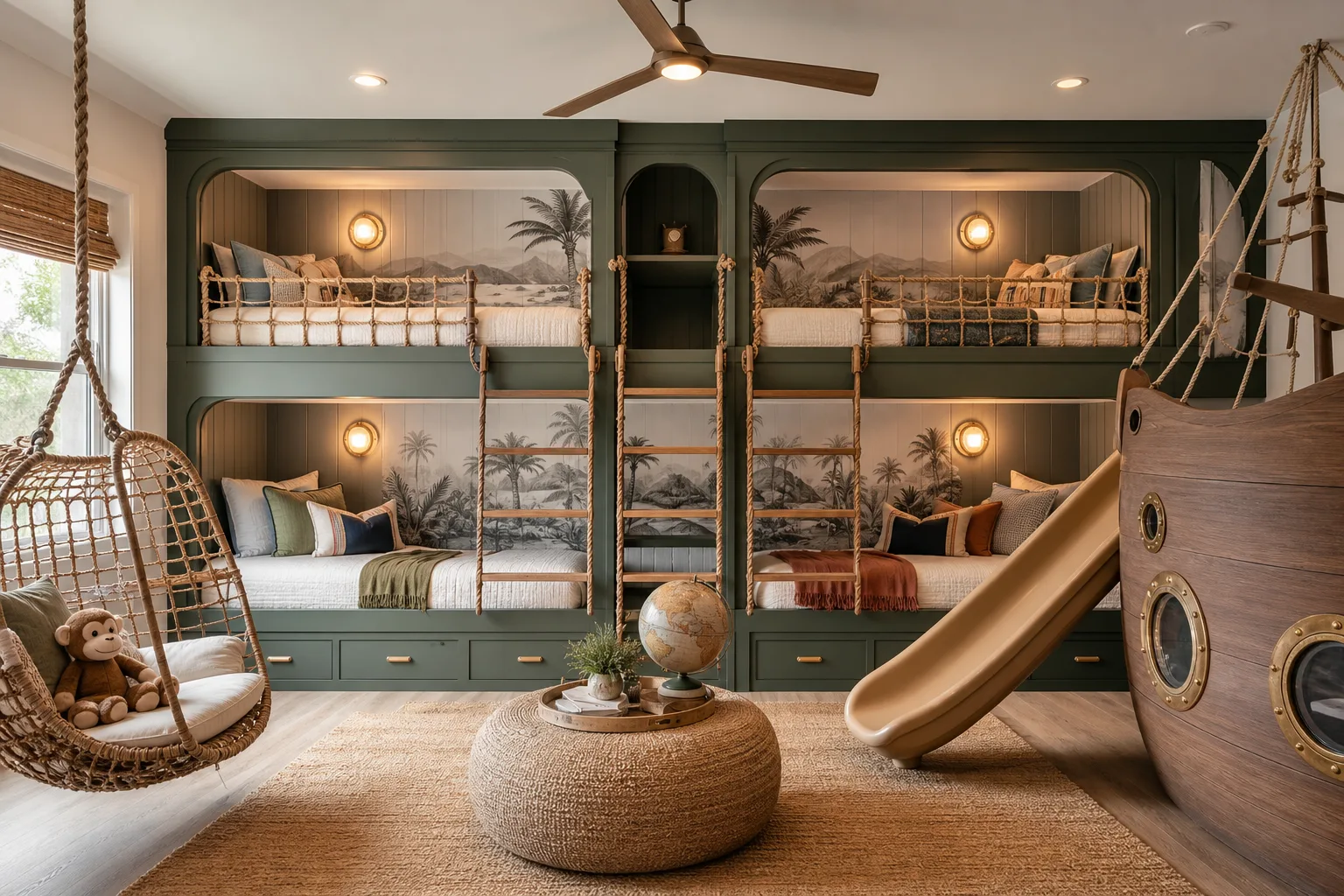
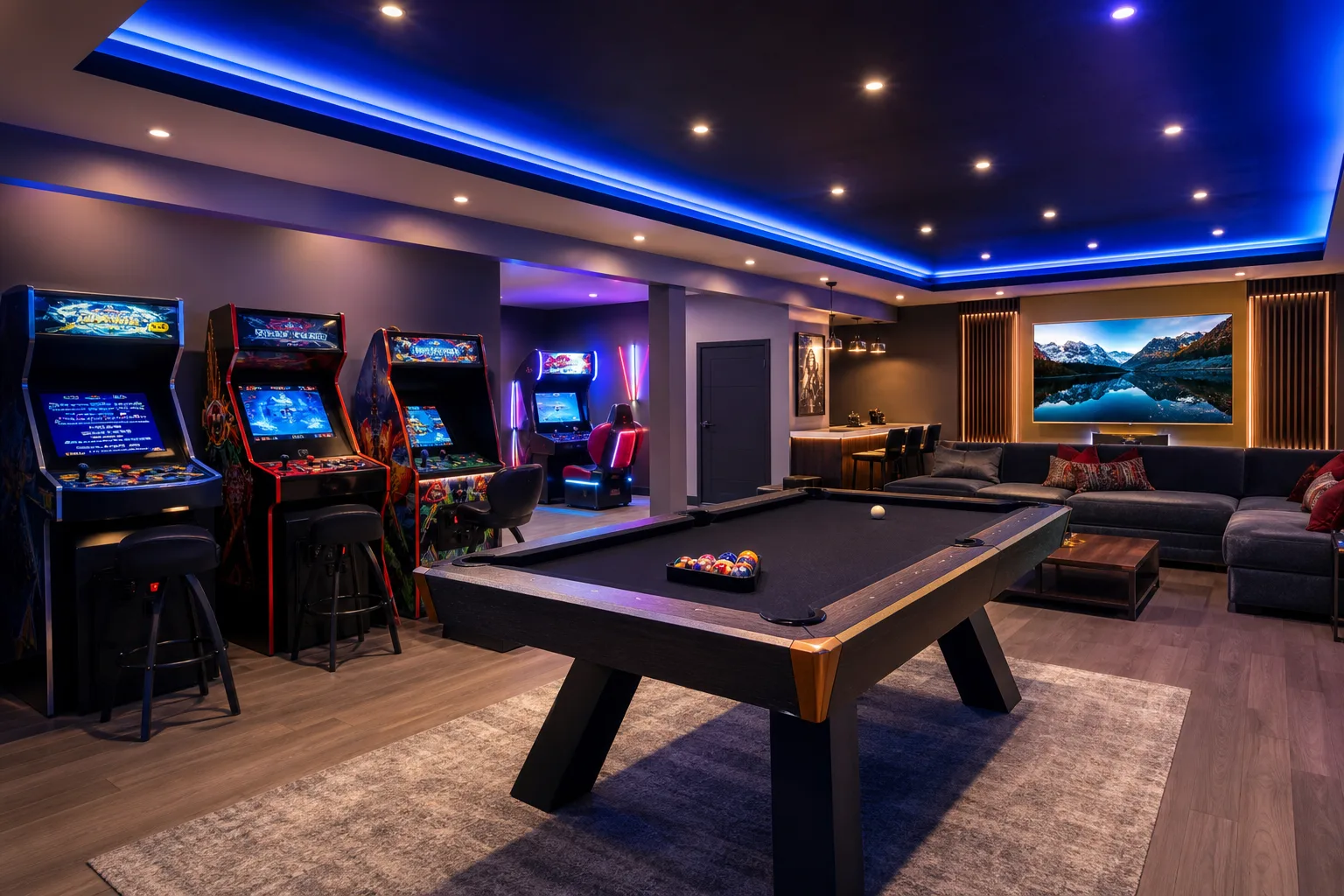
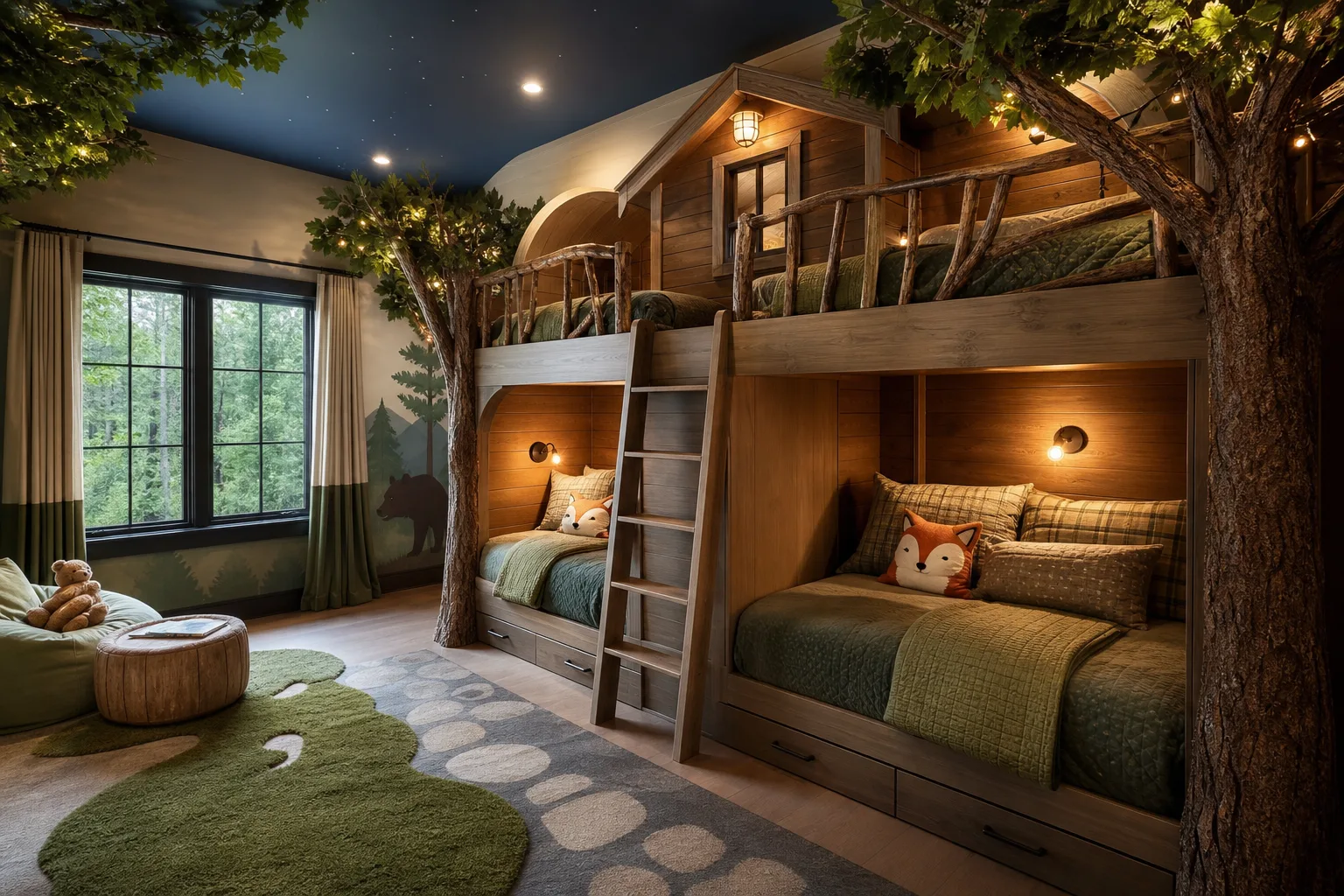
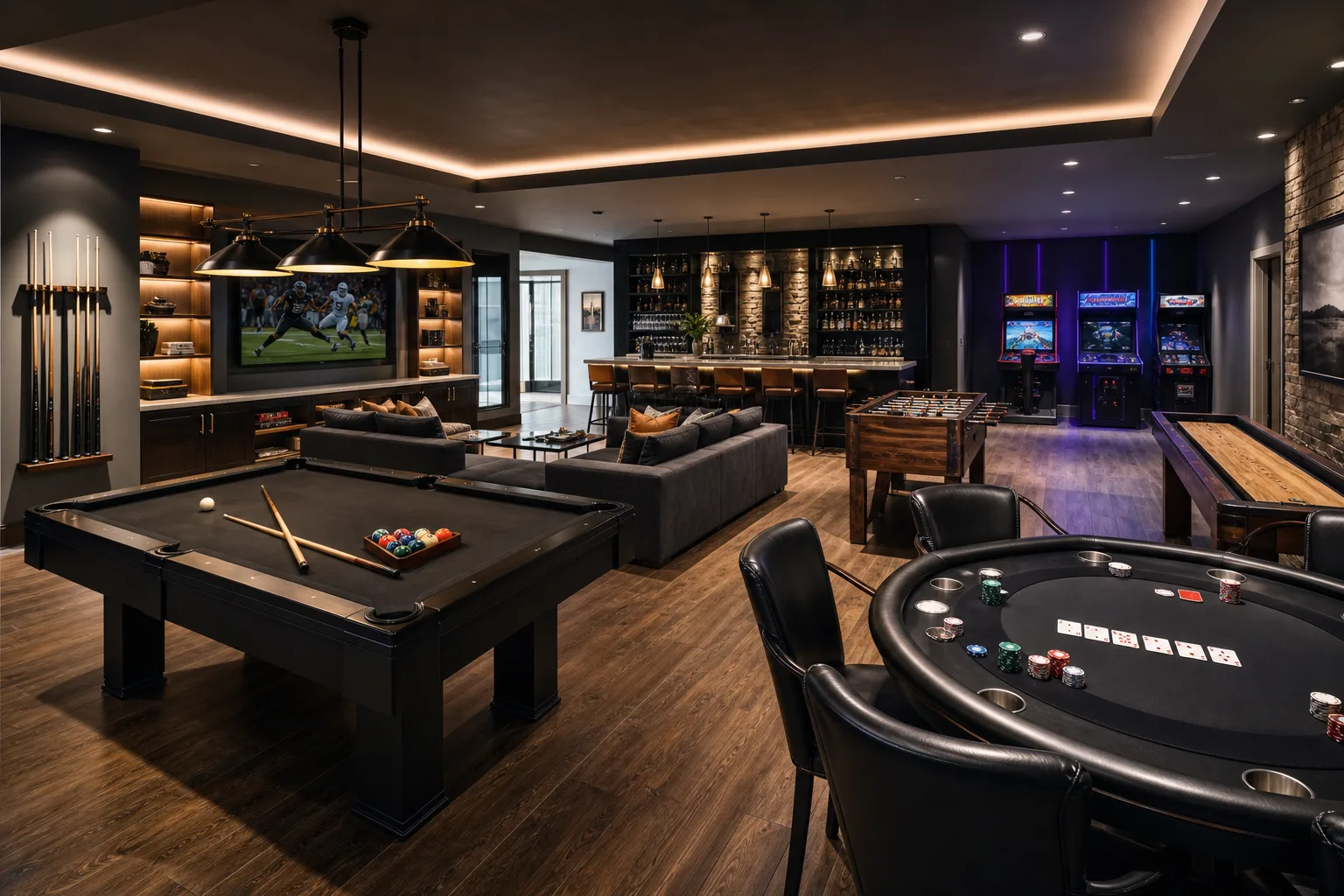
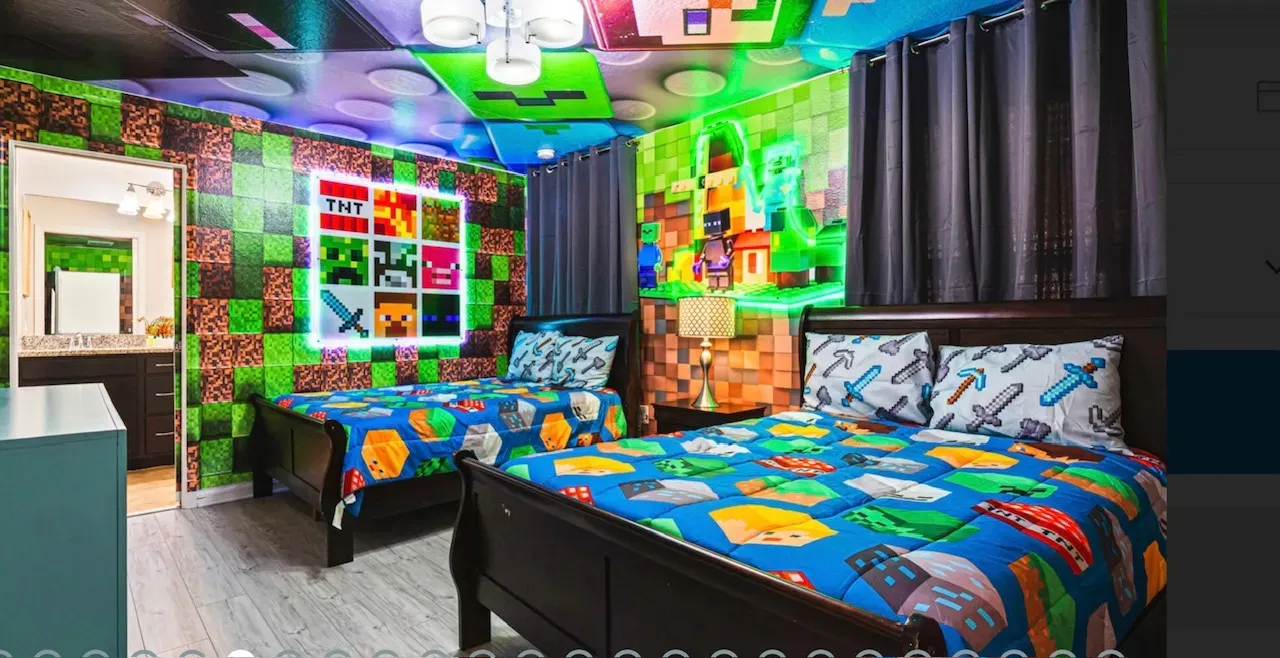
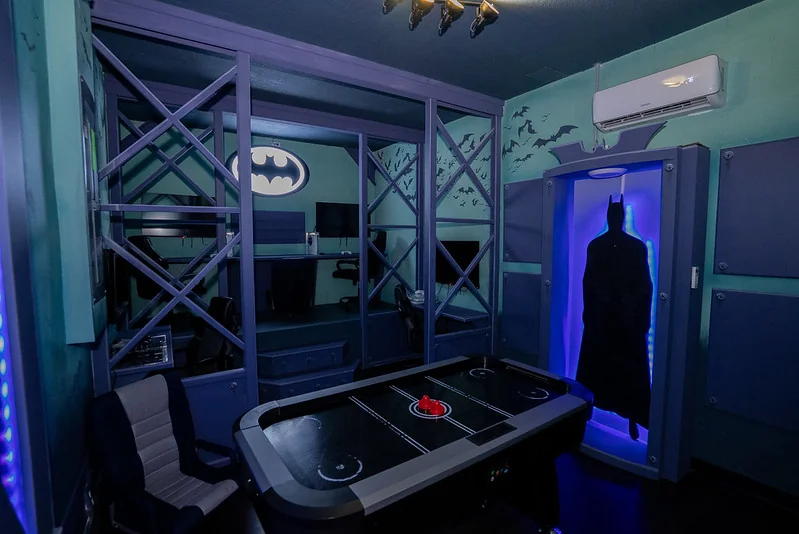
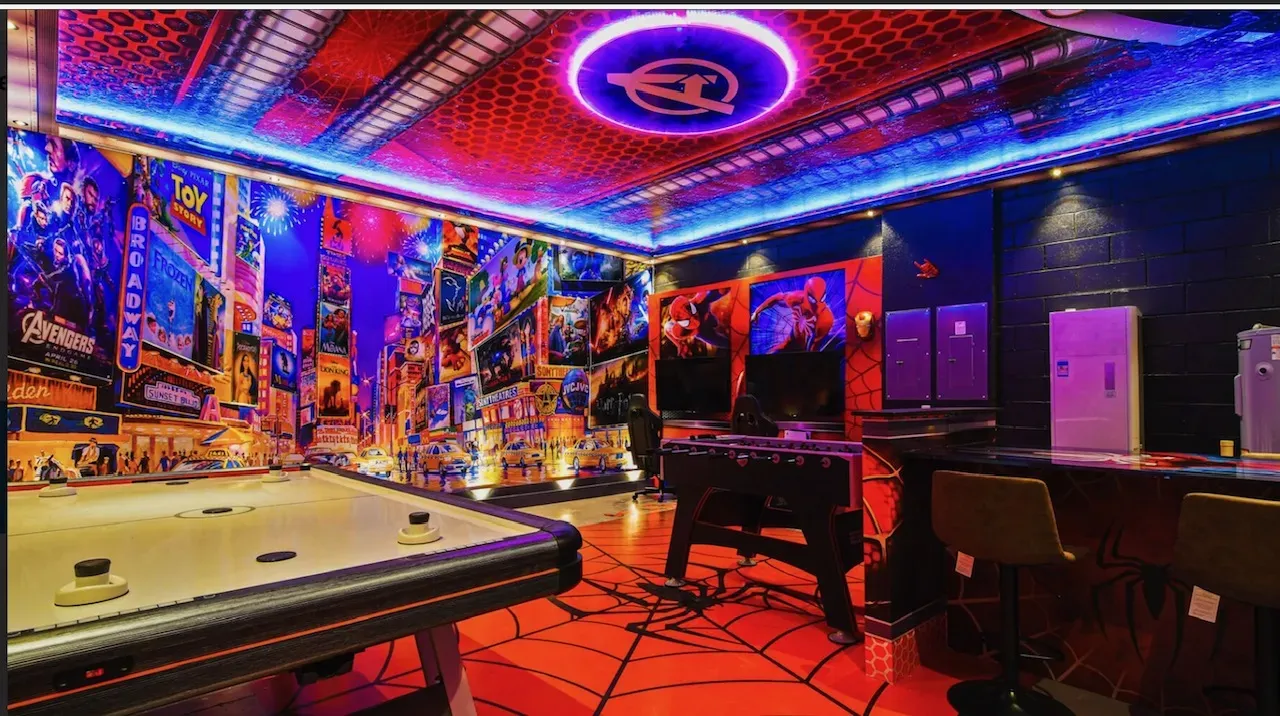
The two amenities target different booking-audience profiles and produce different listing photos signals. Game room contribution: (1) Carousel slot — produces a distinct game-room composition photo (slot 3-5 in most listing photoss). (2) Search-filter eligibility — many family-Disney-trip and group-travel filters include "game room" or "entertainment room" as a filter criterion. (3) Booking-audience appeal — broad demographic appeal (kids, teens, adults), strongest for family-Disney-trip and group-travel-with-teenagers audiences. (4) Operational profile — moderate maintenance burden (arcade pieces need quarterly inspection, table games need wear-management), real construction-side scope (HVAC, electrical, flooring) if a conversion is required. Themed bunk room contribution: (1) Carousel slot — produces the strongest single gallery photo for the family-Disney-trip audience (typically slot 2 or 3 in listing photoss at family-Disney-trip properties). (2) Search-filter eligibility — themed-room filters in some platforms; otherwise the themed bunk is a search-decision differentiator rather than a filter criterion. (3) Booking-audience appeal — strongest for family-Disney-trip with young children, second strongest for mixed-audience family travel, weaker for adult-and-couples-travel and group-travel-without-children audiences. (4) Operational profile — moderate maintenance (themed elements wear, refresh cycle every 12-18 months), low construction-side scope (mostly a furnishing-and-finish build, not HVAC or electrical work).
Decision factor 1 — booking-audience profile
The single most important decision factor. (1) Family-Disney-trip with young children primary audience — themed bunk room usually wins. The themed photo is the strongest single listing photos signal for parents booking the Disney trip; the themed-room search-decision differentiator pulls bookings against same-floor-plan properties without themed scope. Game room is a secondary amenity at this audience profile. (2) Family-Disney-trip with teenagers / mixed-age family travel — game room usually wins. The game room is the amenity that occupies teenagers during the property downtime hours; family-mixed-age groups value the game-room photo more than the themed-bunk photo when teenagers are in the booking party. (3) Group-travel-with-teenagers (sports tournaments, school trips, large family reunions) — game room wins. Group-travel audiences value entertainment amenities over themed sleep spaces; the game room is the listing amenity appeal at this audience profile. (4) Adult-and-couples-travel — game room or pool-table-anchored room wins. Themed bunk rooms reduce the listing’s appeal to adult-only or couples-travel audiences. (5) Mixed audience (no single primary) — usually game room wins because of broader demographic appeal, but themed bunk can work at 5BR-6BR resort properties where the family-Disney-trip audience drives the majority of bookings even if not the only audience.
Decision factor 2 — package tier positioning
Package level influences which amenity produces the strongest investment return. (1) launch-ready package (5BR budget-conscious) — themed bunk usually wins. The themed-bunk scope can be delivered at the lighter launch-ready package tier and still produce strong gallery impact (the themed signal carries even at lower-detail tiers). Game room scope at Lite Garage Conversion tier reads as cost-cut and rarely justifies the investment at this scope. (2) full amenity package (5BR-6BR) — depends more on the booking-audience factor. At family-Disney-trip primary, themed bunk wins; at mixed or game-room-favoring audiences, game room wins. Both amenities work at the full amenity package tier; the booking-audience factor is the binding constraint. (3) Luxury Estate scope and above (7BR+) — the question rarely applies; the amenity setup includes both, and the decision shifts to which one is built first in a phased build.
Decision factor 3 — competitive-set context
What same-floor-plan neighbors built matters more than owners usually account for. (1) Resort communities where most same-floor-plan competitors built themed bunks — game room becomes the differentiator. The themed-bunk amenity is amenity setup baseline at the property level; the game room is the gallery signal that distinguishes the property. (2) Resort communities where most same-floor-plan competitors built game rooms — themed bunk becomes the differentiator. The reverse pattern. (3) Resort communities where same-floor-plan competitors built neither — either amenity wins as a differentiator. The first property in a community to build the amenity captures the gallery-differentiator value; subsequent properties have to compete on package tier discipline rather than amenity novelty. (4) Resort communities where same-floor-plan competitors built both — the property without both reads as under-full-amenity regardless of which one it picks. This signals the property is in a neighborhood comps that has moved into 8BR+ Luxury Estate amenity expectations and may need to either upgrade to both or accept the under-full-amenity positioning. Competitive-set analysis at the front of the project is the prevention pattern — pull the same-floor-plan listing photoss in the resort community and identify the amenity baseline before committing scope.
Decision factor 4 — convertible-space layout
The property’s convertible-space inventory sometimes makes the decision before the audience or competitive-set factors apply. (1) Garage as the only convertible space — game room usually wins. Garage conversions are well-suited to game-room scope (HVAC and electrical work, floor leveling, soundproofing — all standard garage-conversion work); they are less well-suited to themed bunk scope because the converted garage rarely meets the bed-count and natural-light expectations of a primary bunk room. (2) Bonus room or loft as the convertible space — themed bunk usually wins. Bonus rooms and lofts are well-suited to themed bunk scope (already climate-controlled, already finished, often with natural light); they can become game rooms but the construction-side scope is lighter and the room often photographs better as a themed bunk than as a game room. (3) Den as the convertible space — depends on dimensions. Larger dens (oversized) can support either; smaller dens favor themed bunk scope because the bed-count footprint fits better than the arcade-piece footprint. (4) Multiple convertible spaces (bonus room plus loft, garage plus den) — both amenities can be built but the budget often supports only one at full scope. The decision then returns to booking-audience and competitive-set factors.
The "do one well" vs "do both modestly" question
Owners considering the "do both modestly" path usually under-perform compared to owners who do one well. Three reasons. (1) Package tier discipline matters more than amenity count — a single Standard Resort scope themed bunk room outperforms two launch-ready package amenities (game room plus themed bunk both at lower tier). The listing photo impact of one strong amenity exceeds the impact of two undersized amenities. (2) Operational complexity compounds — running both amenities at lower package level means two operational maintenance protocols, two refresh cycles, two sets of contractor relationships, two budget line items. The compounding operational burden often exceeds what the property manager can sustain. (3) Carousel-architecture weakness — two undersized amenities produce two weak gallery slots; one strong amenity plus deferred amenity scope (added in Phase 2 after launch) produces one strong slot now and a stronger amenity setup later. The phased approach usually wins. The exception: properties where the convertible-space inventory clearly supports both amenities and the budget actually does support both at appropriate package level (often at the upper end of 6BR full amenity package where the property has multiple convertible spaces and stronger budget headroom). At that package level, "do both" can work — but it is genuinely both at scope, not both at lower tier.
How FPUSA scopes the game-room-vs-themed-room decision
Our consultation for the 5BR-6BR amenity decision walks through (a) booking-audience profile — what booking audience is the property targeting, and which amenity aligns with that audience, (b) competitive-set analysis — pull the same-floor-plan listing photoss in the resort community, identify the amenity baseline, decide whether the property should match the baseline or differentiate against it, (c) convertible-space inventory — which convertible space can become which amenity, and what construction-side scope each conversion requires, (d) package tier targeting — what package level is appropriate for the budget headroom, and which amenity at that package level produces the strongest listing photos signal, (e) phased-build planning if applicable — Phase 1 with the strongest single amenity, Phase 2 with the second amenity if the property eventually expands into the higher package level. The output is a scoped proposal with the recommended amenity decision, the package tier targeting for that amenity, the construction-side scope where required, and a Phase 2 planning path if the budget eventually supports both. The game room conversion cost planning guide covers game-room package levels; the themed-bunk-room planning guide covers themed-bunk package levels. Final pricing requires a scoped proposal.
What we see go wrong
- Defaulting to "both at lower package level" without analyzing the booking-audience and competitive-set factors — usually produces two undersized amenities that compete weakly with same-floor-plan competitors who chose one and built it well.
- Picking the wrong amenity for the booking-audience profile — themed bunk at adult-and-couples-travel properties (reduces appeal), game room at family-Disney-trip-with-young-children-only properties (listing photos signal is weaker than themed bunk for this audience).
- Ignoring competitive-set context — building the same amenity that all same-floor-plan competitors built without differentiation, or skipping the amenity that all same-floor-plan competitors built without compensating.
- Selecting an amenity that does not match the convertible-space inventory — themed bunk in a converted garage (rarely meets bed-count and natural-light expectations), game room in a small den (insufficient footprint for arcade-piece layout and cue clearance).
- Underestimating the operational complexity of running both amenities — two maintenance protocols, two refresh cycles, two contractor relationships compound the operational burden beyond what most 5BR property managers sustain.
- Skipping the competitive-set analysis at the front of the project — the same-floor-plan listing photoss in the resort community contain the answer to "what does the amenity baseline look like in my neighborhood comps," and that answer should inform the amenity decision.
- Choosing the amenity based on owner preference rather than booking-audience profile — owners who personally prefer game rooms sometimes build them at family-Disney-trip-primary properties where themed bunk would produce stronger gallery impact, and vice versa.
Related Community Guides
Eight Core Services
Turnkey to Themed Rooms — All Under One Roof
Full furniture packages, STR interior design, themed kids suites, game room conversions, property prep, custom bunks, white-glove install, and listing-ready staging — for vacation rentals and second homes across Orlando, Kissimmee, Davenport, and the full Florida STR market.
Frequently Asked Questions
If I can only build one major amenity at my 5BR vacation rental, which one should I pick?
Depends primarily on the booking-audience profile. Family-Disney-trip with young children primary audience — themed bunk usually wins. Family-Disney-trip with teenagers, group-travel, or mixed-age family travel — game room usually wins. Adult-and-couples-travel primary — game room or pool-table-anchored room. Competitive-set context matters too — if same-floor-plan competitors all built one amenity, the differentiator value of the other amenity sometimes shifts the decision. The convertible-space inventory is a secondary constraint that can override the audience and competitive-set factors when the available space clearly favors one amenity over the other.
Can I build both a game room and a themed bunk room at 5BR scope?
Usually no at most 5BR properties because the convertible-space inventory and budget headroom only support one at the appropriate package level. Owners who try to build both at 5BR typically end up with two undersized amenities at launch-ready package, which compete weakly with same-floor-plan competitors who built one at Standard Resort or full amenity package. The "do one well" approach usually outperforms the "do both modestly" approach at 5BR scope. At 6BR scope with multiple convertible spaces and stronger budget headroom, building both becomes more viable.
How do I know which amenity my booking audience prefers?
Three signal sources. (1) Listing-platform audience filters — when prospective guests search Vrbo, Airbnb, and other platforms, what filters do they apply? Themed-room filters and game-room filters appear at different rates by audience segment. (2) Resort community demographic — Disney-adjacent communities (ChampionsGate, Reunion Resort, Solara, Storey Lake, Windsor Cay, Veranda Palms) skew family-Disney-trip-primary; communities further from Disney (Lake County, parts of Polk County) sometimes skew toward broader family and group-travel mix. (3) Property amenity baseline in the resort community — what amenities do the top-performing same-floor-plan properties in the community include? That answer reflects what bookers in the community actually book. The competitive-set analysis at the front of the project surfaces this.
What happens if I pick the wrong amenity at 5BR scope?
Recovery is possible but expensive. The wrong-amenity property usually shows up as a listing photos weakness against same-floor-plan competitors and as a booking-conversion gap that does not close with nightly-rate adjustments. The recovery path is to either add the second amenity (Phase 2 build that expands into full amenity package) or accept the under-full-amenity positioning and price accordingly. The lower-effort recovery is to add a smaller version of the missing amenity — a corner-conversion themed reading nook in a property that built only a game room, or a single multicade plus claw machine in a corner of a property that built only a themed bunk. Neither is ideal but both can partially close the gallery gap.
At what package level do I need both a game room and a themed bunk room?
At 7BR+ scope in most Central Florida resort communities, both amenities are part of the standard amenity expectation. Properties at 7BR+ scope that skip either amenity usually read as under-full-amenity against same-floor-plan competitors and exit search filters that expect amenity depth at that bedroom count. At 8BR+ Luxury Estate scope, the standard amenity setup includes two themed bunk rooms plus a game room plus often theater room and outdoor amenity. At 5BR-6BR scope, the question is binding (pick one or build both at appropriate package level where the property supports it); above 7BR scope, both becomes the standard expectation.