Furnishing After Closing
A post-close decision sequence for buyers who did not pre-plan furnishing — what to do day 1, week 1, month 1 after closing. The compression-pattern that follows post-close furnishing and how to manage it cleanly.
Sound familiar?
Most STR investor and owner-occupant buyers in Florida close on the property before they have engaged a furnishing vendor. The post-close window is then a compressed sequence: keys in hand, no furniture, a launch target or move-in date already on the calendar, and a furnishing-scope conversation that needs to compress 60–90 days of decisions into 30–60 days at best. This guide is for buyers in that compression pattern — the post-close decision sequence that recovers the launch date as cleanly as possible.
In short
- Post-close compression patterns require 8–16 weeks close-to-first-booking depending on package level. Faster is possible only with phased install or package tier reduction.
- First 72 hours post-close are triage, not scope decisions. Engage the furnishing vendor by end of week 1 for the scope conversation with realistic timeline disclosure.
- Phased install (launch-ready at the launch target, phased amenity setup add 8–16 weeks later) is a strategic option, not a fallback compromise. Use it when the launch-window booking value is high.
- Vendors that pressure for same-week scope signature post-close are routing risk back to the buyer. Operational discipline includes realistic timeline disclosure during the scope conversation.
- Owner-occupant compression patterns run the same package tier discipline as investor compression patterns. The timing pressure is softer but the scope decisions matter equally for long-term quality.
Pre-close furnishing planning is the cleanest path — we cover that in the new-construction buyer guide and the realtor-client packages page. But the reality is that most buyers do not engage a furnishing vendor until after close. This guide is for the post-close compression pattern: what to do day 1, week 1, month 1 after closing if furnishing scope is not yet locked. The goal is to recover the launch date or move-in target as cleanly as possible without forcing scope decisions you will regret in month 6.
What to know
Day 1–3 post-close: triage, not scope decisions
The first 72 hours after close should be triage, not scope decisions. Confirm the property is in the condition you expected at close (final walkthrough findings, any deferred punch items from the seller). Confirm utilities, HOA accounts, insurance, and listing-platform timing for STR launches. Identify the launch-date or move-in target and how much window you have between close and that target. Do not sign a furnishing-scope proposal in the first 72 hours after close — you do not yet have the property context, the launch target clarity, or the package tier reasoning needed to scope well. Furnishing vendors who pressure for a same-week signature are routing risk back to you.

Day 4–7: scope conversation with realistic timeline
Engage a furnishing vendor for the scope conversation by end of week 1 post-close at the latest. The scope conversation needs the property context (you can give the vendor measurements, photos, and the floor plan), the launch target (the calendar date you committed to), and the package tier indication (launch-ready package, full amenity package, etc.). At week 1 post-close, the vendor can give you a realistic procurement-and-install timeline that maps back to the launch target. If the timeline does not fit the launch target, the conversation pivots to either adjusting the launch target by 2–4 weeks or compressing scope to a phased install (launch-ready scope at week 4–6, themed-bunk and amenity scope as a phased Phase 2 install at week 8–10).
Week 2–3: signed scope and procurement start
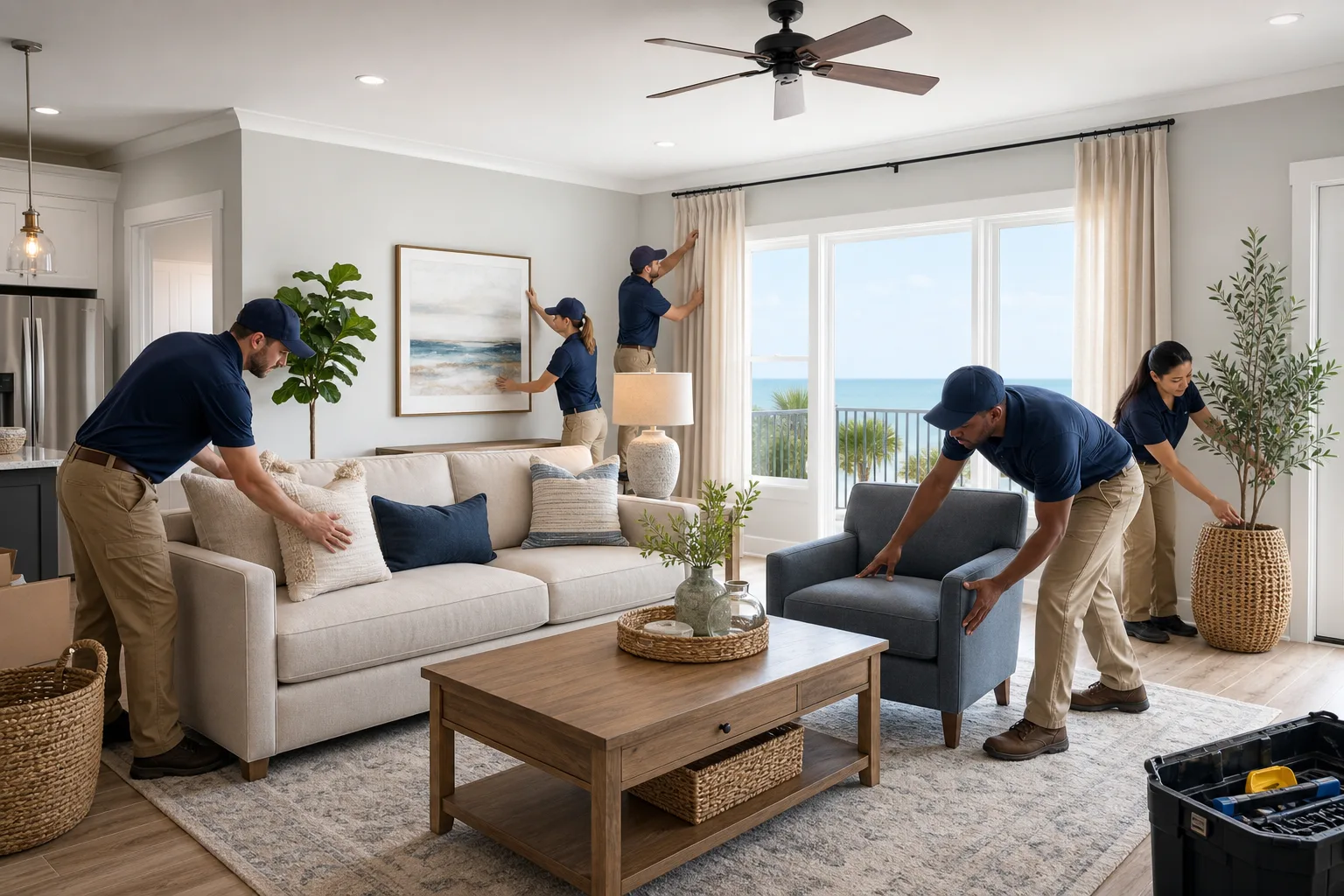
Signed scope by end of week 2 post-close is the cleanest compression-pattern recovery point. Procurement starts immediately. Design and selection approvals run in parallel across weeks 2–3. Install-window scheduling locks for week 5–7 at the earliest depending on procurement velocity and the package tier. PM partner onboarding (if applicable) starts in this window. Listing-platform account setup starts in this window. Photographer booking happens in this window. The week 2–3 sprint is the highest-density decision window in the entire compression pattern; treat it as such operationally.
Week 4–6: install window and launch sequencing
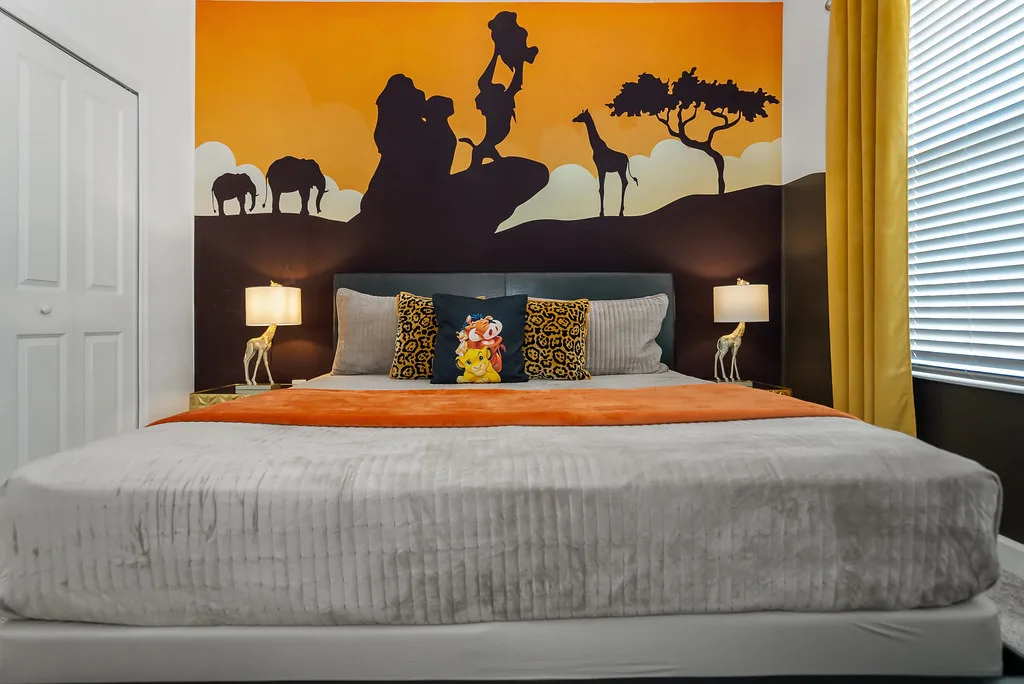
Install runs in weeks 4–7 depending on package level and procurement variability. The 2–3 day install runs with on-site closeout and documentation. Photography happens install-complete-plus-one-day. Listing goes live within 5–10 days after photography. First booking typically lands within 5–14 days of listing going live. Total compression-pattern timeline from close to first booking runs 8–12 weeks for launch-ready package, 10–14 weeks for full amenity package, 12–16 weeks for Luxury Estate. Compressing below these ranges typically requires phased install or package tier reduction.
When to phase the install vs slip the launch date
The decision between phased install and launch-date slippage depends on which constraint is harder to move. If the launch target maps to a specific booking-platform window (Spring Break, summer peak, Christmas-corridor), and the booking-platform window has high revenue value, phase the install and accept Phase 1 (launch-ready scope) at the launch target, with Phase 2 (themed-bunk, game-room, amenity scope) following 8–16 weeks later. If the launch target is flexible (next available booking window, family move-in season), slip the launch target by 2–4 weeks to fit the full scope in a single install window. Phasing produces an in-market property faster but requires re-photography after Phase 2; slipping produces a fully-scoped launch but loses the original launch-window booking revenue.
Owner-occupant compression vs investor compression
Owner-occupant post-close compression typically runs less aggressively than investor compression. The move-in target is usually a family-vacation window or a relocation timing, not a hard booking-platform window. Phased install rarely applies (you cannot live in a property with phased scope easily). Owner-occupant compression patterns usually run 8–10 weeks close-to-move-in for launch-ready package-equivalent residential scope and 10–14 weeks for fully-furnished homes with multi-zone living and full housewares. The package tier conversation is the same as investor compression; the timing pressure is typically softer.
How FPUSA handles post-close compression patterns
Post-close compression projects are common in our project mix. The operational pattern: we treat the scope conversation as the first 72 hours of project work, not as a sales conversation; we surface phased-install and timeline-recovery options early; we run procurement at the velocity the package level and supply chain support, not at the rushed-promise velocity that produces install-week surprises. Owners coming out of compression patterns usually rate the operational discipline (timeline clarity, scope transparency, phased-install structure where applicable) higher than the install execution itself — because the compression conversation is where post-close anxiety lives, and the operational discipline is what resolves it.
What we see go wrong
- Signing a furnishing-scope proposal in the first 72 hours after close — you do not yet have the property context, launch target clarity, or package tier reasoning needed to scope well.
- Engaging furnishing vendors who pressure for same-week signature — they are routing risk back to you. Vendors that propose scope conversation with realistic timeline disclosure are working operational discipline cleanly.
- Treating phased install as a fallback compromise rather than a strategic option — phased install is the right call when the launch-platform window has high revenue value and the property cannot fully scope in time.
- Skipping the package tier conversation in the compression pattern — defaulting to launch-ready scope “to fit the timeline” produces under-scoped properties competing for the wrong guests at lower nightly rates than the property could command.
- Owner-occupant buyers treating compression patterns as an investor problem — the timing pressure is softer but the package tier discipline is the same. Under-scoping a residential home produces visible quality degradation faster than investors expect.
- Booking the photographer or the PM partner at install week rather than at week 2–3 in the compression sequence — these are the same decision-slip points as the standard launch checklist, compressed into a tighter window.
- Compressing the install window below realistic procurement velocity — produces placeholder furniture in the photos that undermine the entire post-close launch.
Related Community Guides
Eight Core Services
Turnkey to Themed Rooms — All Under One Roof
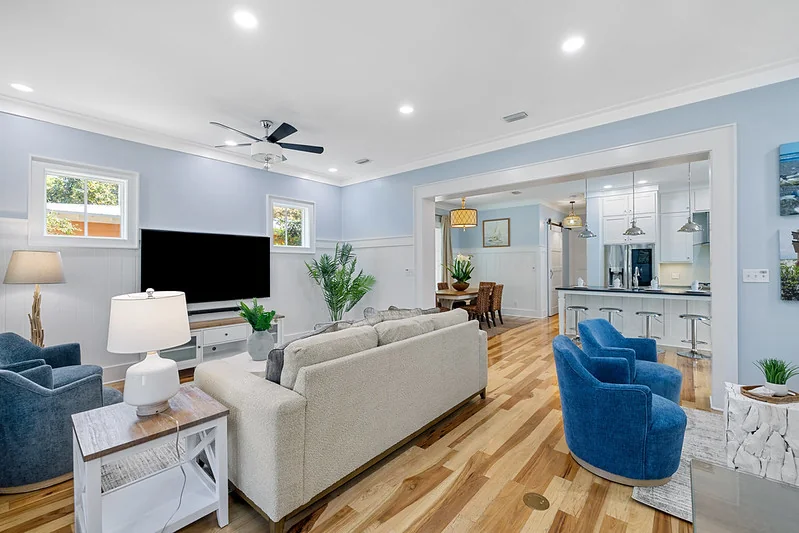
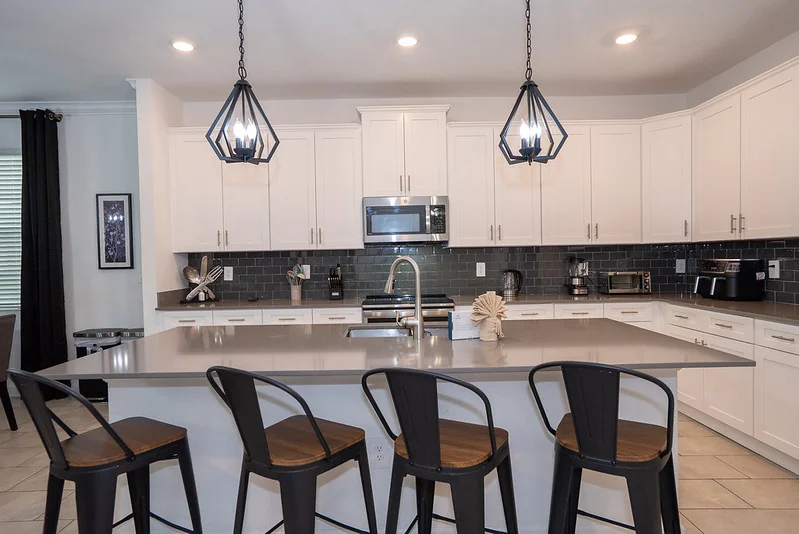
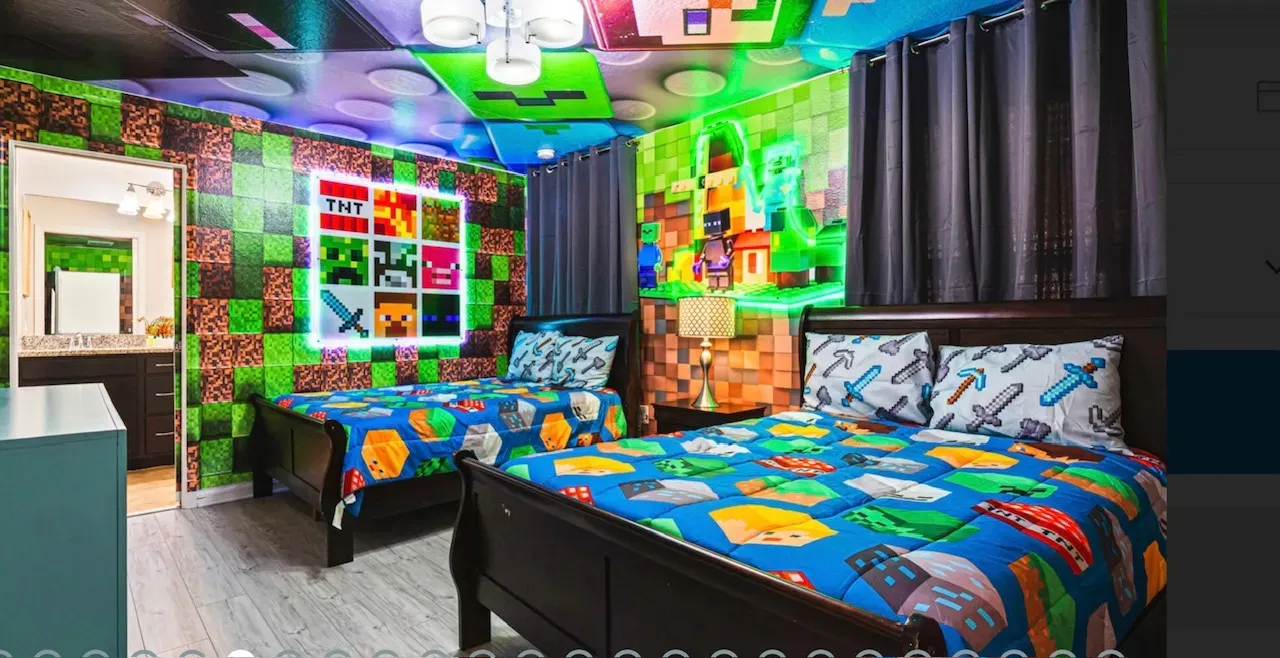
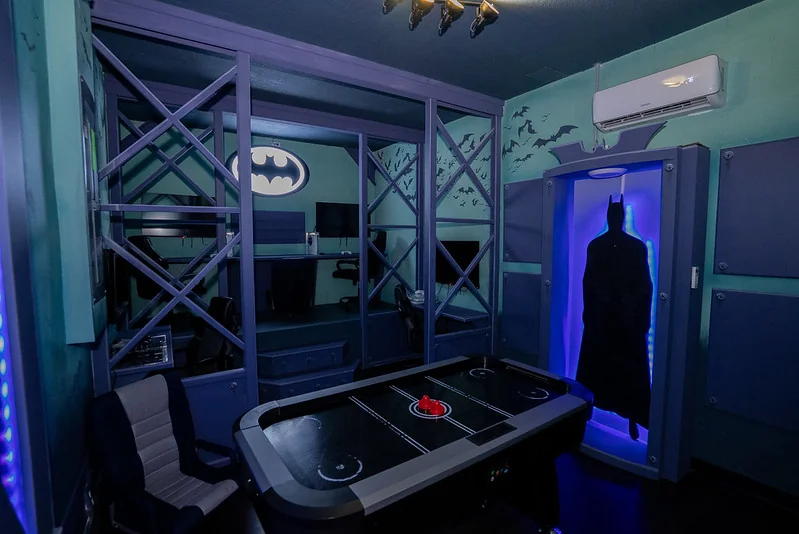
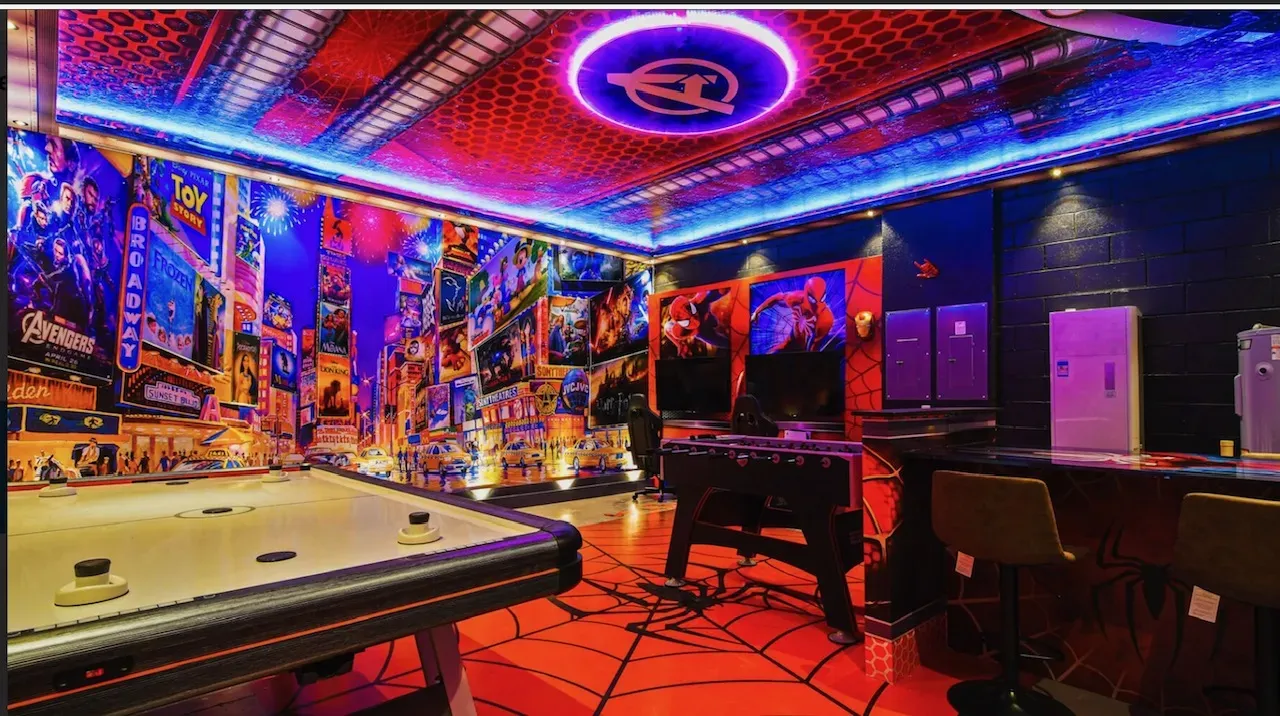
Full furniture packages, STR interior design, themed kids suites, game room conversions, property prep, custom bunks, white-glove install, and listing-ready staging — for vacation rentals and second homes across Orlando, Kissimmee, Davenport, and the full Florida STR market.
Frequently Asked Questions
How quickly can I launch a vacation rental if I close today and have not yet engaged a furnishing vendor?
launch-ready package at 3–6BR typically lands 8–12 weeks close-to-first-booking under tight compression. full amenity package lands 10–14 weeks. Luxury Estate scope lands 12–16 weeks. Mega-Rental and Specialty Flagship scope realistically requires 16–20 weeks even under compression. Faster than these ranges is possible only with phased install (launch-ready scope at week 4–6 with phased amenity setup add later) or package tier reduction.
Should I take launch-ready scope to hit the launch date, or wait and take launch-ready package or full amenity package?
Depends on the launch-window value. If the launch target maps to a high-revenue booking window (Spring Break, summer peak, Christmas-corridor), phase the install: launch-ready scope at the launch target, then phased Phase 2 amenity setup add 8–16 weeks later. If the launch target is flexible, take the full scope in a single install window and slip the launch date by 2–4 weeks. The phased-install path produces an in-market property faster but requires re-photography after Phase 2; the slipped-launch path produces a fully-scoped launch but loses the original launch-window booking revenue.
What should I do in the first 72 hours after closing if I have not yet engaged a furnishing vendor?
Triage, not scope decisions. Confirm property condition, utility setup, HOA and insurance, listing-platform timing. Identify the launch-date or move-in target. Do not sign a furnishing-scope proposal in the first 72 hours; you do not yet have the context needed to scope well. Engage a furnishing vendor for the scope conversation by end of week 1 post-close.
What if the property has existing seller-supplied furniture I might want to keep?
Inventory it and assess condition during the first week post-close. Some seller-supplied furniture (decorative items, certain accent pieces, art) integrates cleanly into a new furnishing scope and reduces the project planning range. Most STR-significant items (sectionals, dining sets, bedroom furniture, outdoor) typically need replacement for either durability spec (performance fabrics for STR use) or design-palette consistency. Flag the inventory at the scope conversation; the vendor will give you a clear keep/replace recommendation.
Should I delay first booking to wait for the full scope, or launch with launch-ready and upgrade later?
Almost always launch with launch-ready and upgrade later if the launch-window value is meaningful. The booking revenue from the high-value window often covers the cost differential of phased install vs full scope. The exception is if the property is competing at full amenity package level where a launch-ready scope would compete at a meaningfully lower nightly tier — in that case, slip the launch date and scope fully. The trade-off is real and property-specific.
How does post-close compression differ for owner-occupant buyers?
The timing pressure is typically softer (move-in target is family-vacation or relocation timing, not a hard booking-platform window) and phased install rarely applies (you cannot live in a property with phased scope easily). Owner-occupant compression patterns run 8–10 weeks close-to-move-in for launch-ready package-equivalent residential scope and 10–14 weeks for fully-furnished homes with multi-zone living and full housewares. The package tier discipline is the same; the operational pressure is softer.