Outdoor Furniture Budget Planning
A cost-driver framework for outdoor furniture scope in vacation rentals — climate-grade materials, package level outdoor expectations, hurricane logistics, replacement cadence, and the budget decisions that drive 5-year cost.
Sound familiar?
Outdoor furniture is the most variable-cost line item in Florida vacation rental furnishing scope. Owners comparing outdoor furniture proposals routinely see planning ranges that differ by 3–4x for what looks like the same outdoor scope. The reason is that outdoor furniture has more cost drivers than any other furniture category — climate-grade material spec, frame material, fabric class, hurricane storage logistics, and the package level outdoor expectation at the property’s positioning level — and most proposals do not surface them explicitly.
In short
- Climate-grade material spec is the dominant outdoor furniture cost driver. Residential-grade fails in 12–24 months in Florida; performance-grade is the working STR baseline.
- Outdoor cushion fabric is a separate line item from outdoor furniture frames. Indoor-grade fabric on outdoor furniture is a 6–12 month product in Florida sun.
- Package tier outdoor expectations vary markedly — covered lanai with seating set at Launch-Ready, zoned outdoor entertaining at full amenity package, multi-zone outdoor at Mega-Rental.
- Hurricane storage logistics affect the furniture-selection conversation in Florida. Storage capacity and storm-prep logistics belong in the scope conversation.
- Outdoor housewares (outdoor dining service, pool towels, beach gear) are a separate scope from outdoor furniture and belong in the houseware-package conversation.
This is a cost-driver framework for outdoor furniture budget planning across Florida vacation rental package levels. The outdoor entertainment space planning guide covers the amenity-build conversation (pool deck staging, lanai layout, fire pit zones, photo-readiness); this post covers what drives the outdoor budget itself — materials, package level expectations, hurricane logistics, and the 5-year cost decisions most proposals ignore. Final pricing requires a scoped proposal.
What to know
Climate-grade material spec is the dominant cost driver
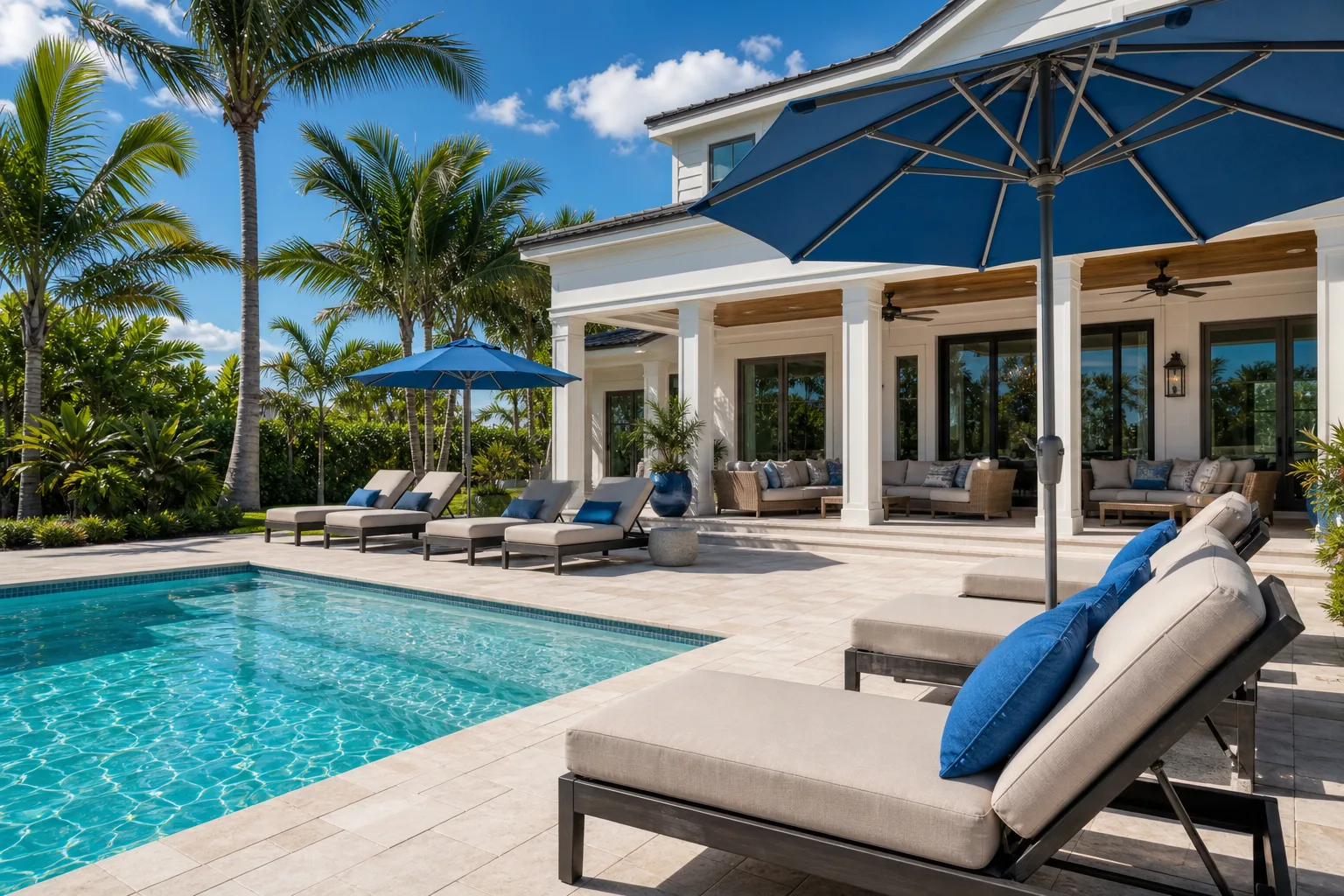
Outdoor furniture spec varies more by climate-grade rating than by any other variable. Residential-grade outdoor furniture (powder-coated steel, basic woven resin, indoor-grade cushions repurposed for outdoor use) is the lowest-cost tier but fails in Florida sun, salt, and humidity within 12–24 months. Performance-grade outdoor furniture (commercial-grade aluminum, marine-grade poly resin, outdoor-rated cushion fabric like Sunbrella or equivalent, UV-stabilized frame coatings) is the working STR baseline. Hospitality-grade outdoor furniture (commercial hotel-spec frames, premium woven materials, designer-trade outdoor fabrics, premium cushion fill) sits at Luxury Estate scope. The cost differential between residential-grade and hospitality-grade outdoor furniture for the same outdoor footprint is typically 3–5x — but the 5-year cost is often inverted because residential-grade fails inside the warranty window of hospitality-grade product.

Frame material decisions inside performance-grade scope
Within performance-grade outdoor furniture, the frame material moves the planning range. Commercial-grade aluminum frames are corrosion-resistant and lightweight (the working STR standard for most Florida markets). Poly-resin frames (HDPE) handle sun and salt aggressively well, weigh more, sit at premium-performance pricing. Teak and hardwood frames carry the highest premium and need seasonal sealing/maintenance — worth the cost for properties where the design direction justifies the natural-material aesthetic, often inappropriate for owner-managed properties without dedicated maintenance scope. Wicker and resin-weave frames vary widely in quality — commercial-grade resin weave handles Florida well, residential-grade resin weave is a 12–18 month product.
Cushion fabric class is a separate cost line item
Outdoor cushion fabric is a discrete cost driver from the furniture frame. Indoor-grade fabric on outdoor furniture is a 6–12 month product in Florida sun. Standard outdoor-rated fabric (mid-tier outdoor solids) is a 24–36 month product. Premium outdoor performance fabric (Sunbrella, Perennials, Crypton equivalent in outdoor weight) is a 4–6 year product. Designer-trade outdoor fabrics carry the longest replacement cycles. The fabric class also affects the cushion-fill spec — premium outdoor fabrics typically pair with premium cushion fill (closed-cell foam with drainage, marine-grade cushion construction), commodity fabrics typically pair with commodity fills. The full fabric-and-fill spec is the cushion-system cost; line items that only quote the fabric usually under-scope the fill.
Package tier outdoor expectations differ markedly
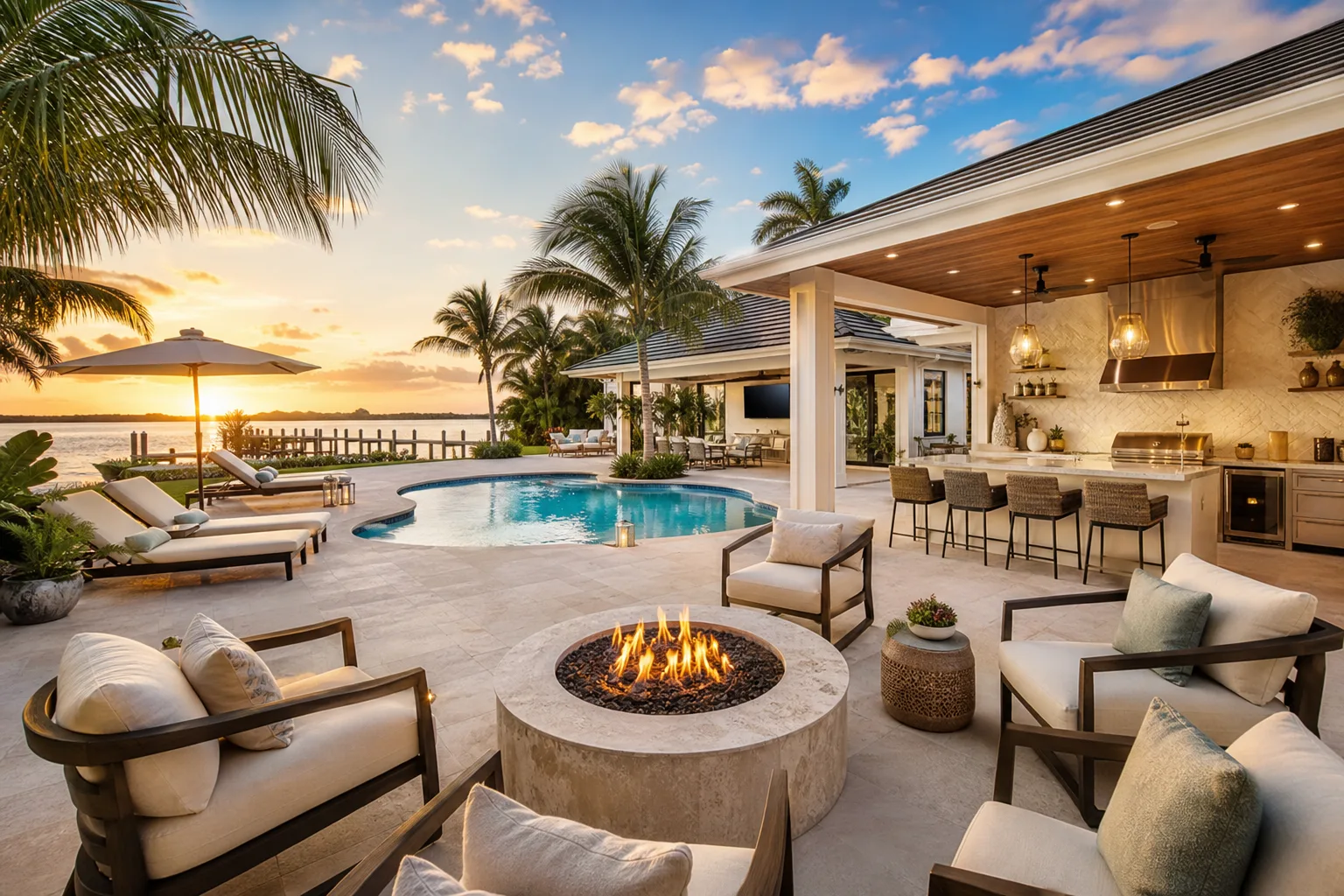
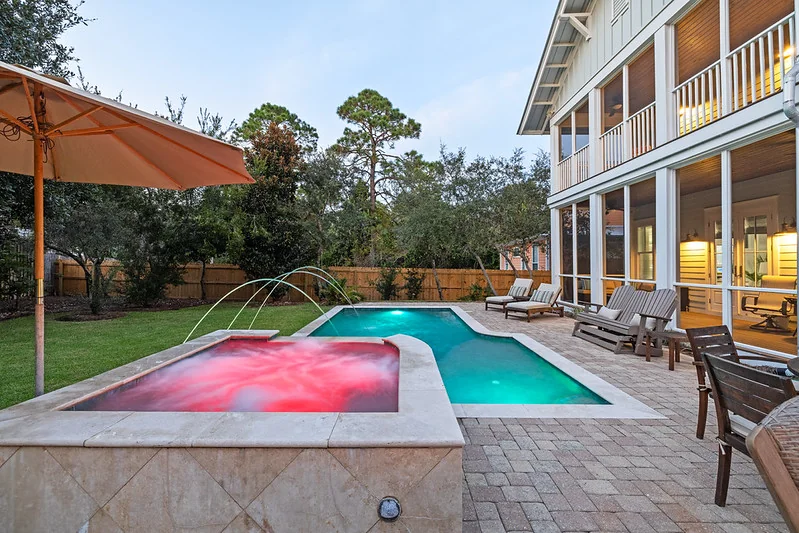
Outdoor scope expectations scale with the property’s package level. Launch-Ready scope: covered lanai with seating set, basic outdoor dining (4–6 chairs), pool-deck loungers (where applicable). launch-ready package: full lanai furnishing with sectional and dining, pool-deck loungers with side tables, optional fire-feature seating. full amenity package: zoned outdoor entertaining (dining zone + lounge zone + pool zone), outdoor TV under covered area, fire feature with surround seating, summer-kitchen integration. Luxury Estate scope: hospitality-grade across all zones, designer-trade outdoor selections, premium fire features, full outdoor entertainment infrastructure. Mega-Rental scope: multi-zone outdoor entertaining at scale, multiple lounge clusters, expanded dining capacity, sometimes secondary outdoor zones (poolside cabana, courtyard, side yard). The package level match is what determines whether the outdoor planning range hits the right point for the property’s neighborhood comps.

Hurricane storage logistics affect outdoor cost
Florida outdoor furniture has a hurricane-logistics dimension that owners outside Florida typically miss. Outdoor cushions need indoor storage during hurricane season threats (June–November); some properties have lanai-adjacent storage built in, some need garage or pool-shed storage capacity. Lightweight outdoor furniture (aluminum frames, woven plastic) is portable enough for indoor relocation during hurricane warnings; heavier furniture (teak, wrought-iron, stone-base) typically rides out storms in place and accepts the wear. The storage logistics affect the furniture-selection conversation — properties without indoor storage capacity sometimes need outdoor selections that tolerate hurricane exposure better. Storage logistics also affect operational cost — PM-managed properties usually include hurricane-prep moves; self-managed properties either need owner-side coordination or contract storm-prep service.
Outdoor housewares are a separate scope from outdoor furniture
Outdoor furniture (loungers, dining sets, sectionals, side tables) and outdoor housewares (outdoor dining service, pool towels, beach gear, outdoor entertaining accessories) are separate scope conversations. Outdoor housewares appear in the houseware-package scope, not the outdoor furniture scope. Owners scoping outdoor entertaining sometimes skip the outdoor-housewares conversation entirely and end up with a beautifully furnished outdoor space that cannot actually be used for outdoor dining because there is no dining service to put on the table. The houseware-package planning post covers the outdoor-housewares side of the conversation. We've walked into more than one 8-bedroom villa with a striking 12-seat outdoor dining table and zero outdoor-rated plates, cups, or serving pieces in the house — the owner had budgeted the entire outdoor line as furniture and never circled back to what actually goes on the table. Confirm the outdoor-housewares line appears in your proposal by name before you sign; if it isn't listed, ask directly whether it's included or priced as a separate add.
What moves the outdoor furniture planning range up
Cost drivers pushing toward the higher end of any tier: hospitality-grade frame materials (hotel-spec aluminum, commercial-grade poly resin, premium teak), designer-trade outdoor fabrics (Sunbrella designer collection, Perennials, designer-trade outdoor selections), zoned outdoor entertaining at scale (multiple lounge clusters, multi-zone dining), fire-feature integration (built-in fire pits, fire tables, fire-bowl features), outdoor TV and entertainment infrastructure, summer-kitchen scope (where applicable), and storm-rated outdoor selections at coastal or hurricane-exposure properties. At Luxury Estate and Mega-Rental scope, these drivers can move the outdoor planning range 60–100% within the tier itself.
What moves the outdoor furniture planning range down
Cost drivers pulling toward the lower end: performance-grade commercial aluminum frames (vs hospitality-grade teak or commercial poly resin), mid-tier outdoor fabric (vs designer-trade), single-zone outdoor scope (lanai only, no separate pool-deck or fire-feature scope), no outdoor TV or entertainment infrastructure, no built-in fire features, and standard storm-prep logistics (vs storm-rated outdoor selections). A launch-ready package outdoor furniture package executed cleanly at the lower end of the range can still photograph well and compete in most Florida STR markets — it does not match the visual quality of a Luxury Estate outdoor zone, but it is the right answer for properties where outdoor scope is part of the amenity setup rather than the amenity setup’s anchor.
How FPUSA scopes outdoor furniture in proposals
Outdoor furniture appears as a discrete line item in our scoped proposals with explicit climate-grade rating, frame-material spec, fabric class and fill spec, zone designation (lanai / pool deck / fire feature / dining / lounge), and package level alignment. Hurricane-storage logistics are confirmed in the scope conversation. Outdoor TV and entertainment infrastructure scope is broken out separately. For Luxury Estate and Mega-Rental properties with multi-zone outdoor scope, each zone has its own scoped line item. Owners reviewing our outdoor scope alongside alternative-vendor proposals can typically identify the climate-grade rating and fabric-class differences directly — the most common alternative-proposal gap is residential-grade fabric specified for outdoor use. Peak hurricane-season ordering (June through November) also affects lead time — commercial-grade aluminum frames and Sunbrella-class fabric can run longer backorder windows during storm season as coastal markets across the Southeast compete for the same manufacturers, so an outdoor line item quoted in July or August often carries a wider delivery window than the same order placed in February.
What to do first this week
Open three same-bedroom-count comps on Airbnb or VRBO and screenshot bunk photos, outdoor dining seats, and primary suite finish. List where your home falls short — that gap list becomes your furnish scope. Send your floor plan for a scoped proposal.
What we see go wrong
- Accepting residential-grade outdoor furniture spec on Florida STR properties — fails inside 12–24 months and produces a 5-year cost meaningfully higher than performance-grade product.
- Quoting outdoor furniture with indoor-grade cushion fabric — cushion fabric is a 6–12 month product in Florida sun and the replacement runs absorb the original savings within the first year.
- Treating outdoor furniture as a single line item rather than frame + cushion-system + zone + accessories — obscures the cost drivers and almost always under-scopes the cushion-system.
- Skipping the hurricane-storage logistics conversation — produces properties with outdoor furniture that cannot be stored during hurricane season threats or that requires emergency owner-coordinated relocation.
- Folding outdoor TV and entertainment infrastructure into general outdoor furniture scope — obscures the integration cost (mounting, weatherproofing, audio, lighting) and produces install-week scope discovery.
- Skipping the outdoor-housewares conversation — produces beautifully furnished outdoor spaces that cannot host outdoor dining because there is no outdoor dining service.
- Defaulting to teak frames in owner-managed properties without dedicated maintenance scope — produces premium-investment outdoor furniture that ages poorly without seasonal sealing/maintenance.
Related Community Guides
Eight Core Services
Turnkey to Themed Rooms — All Under One Roof
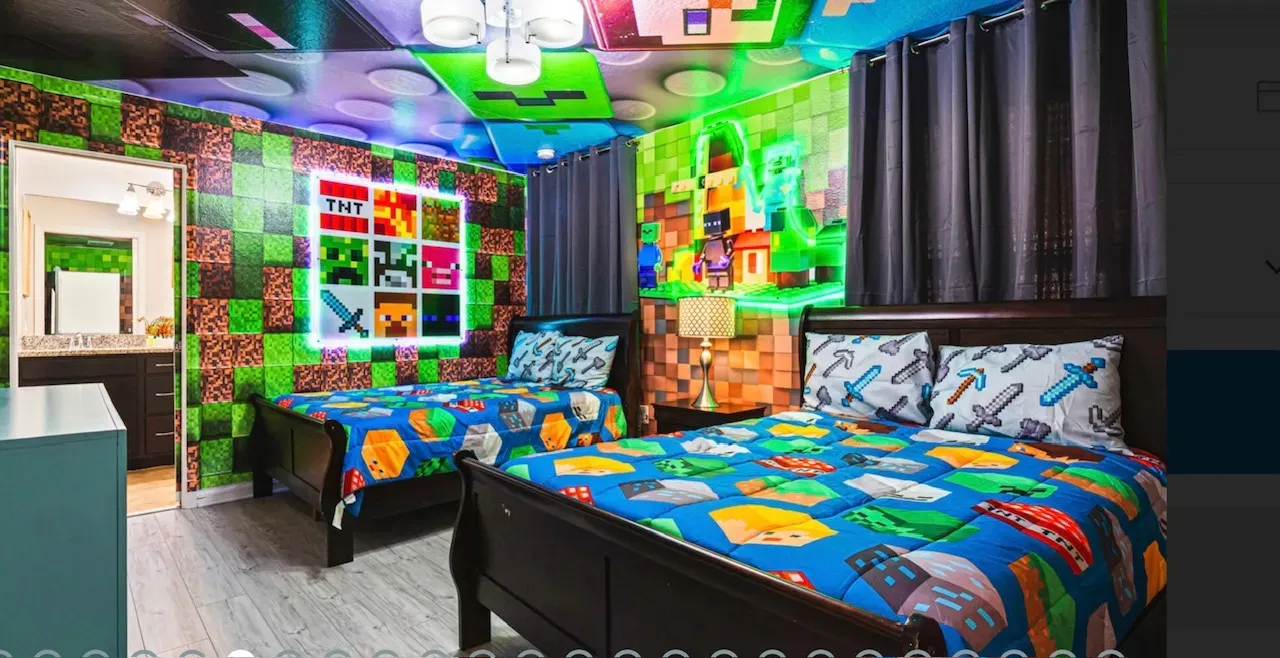
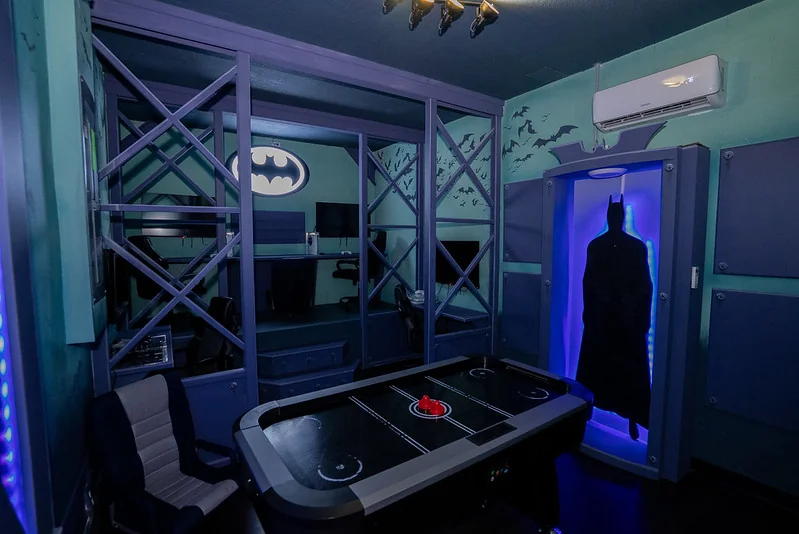
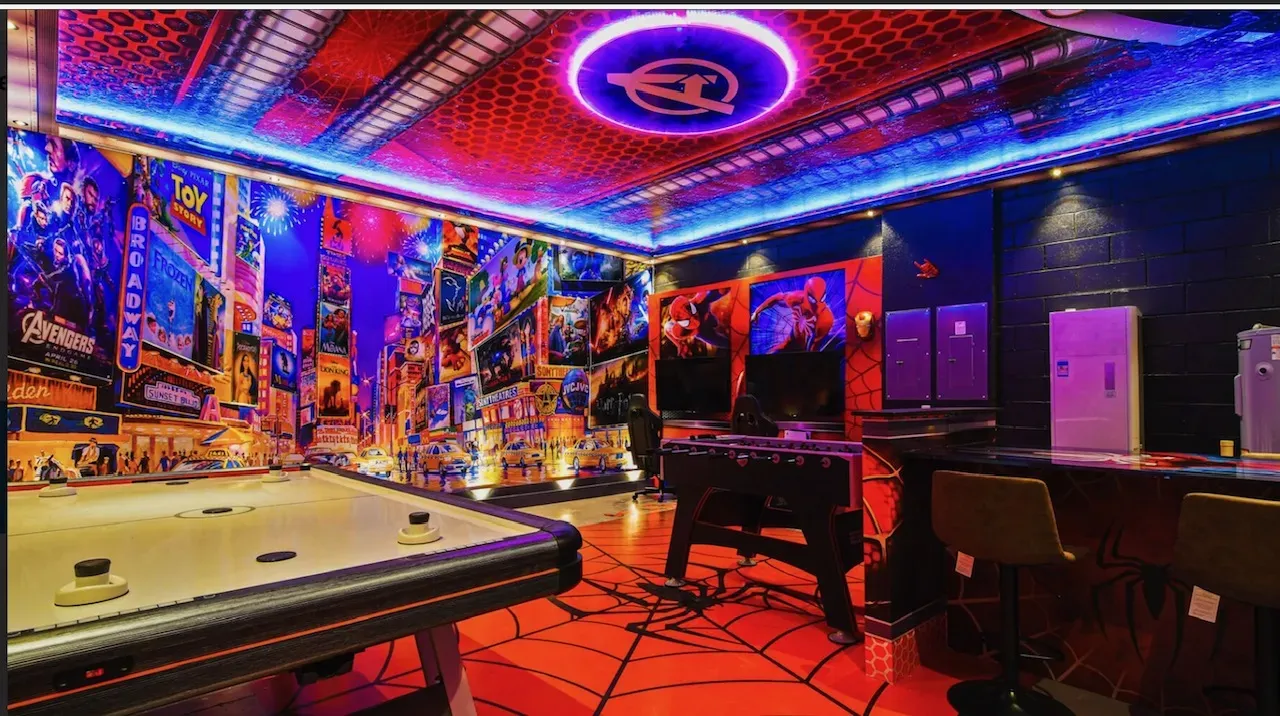
Full furniture packages, STR interior design, themed kids suites, game room conversions, property prep, custom bunks, white-glove install, and listing-ready staging — for vacation rentals and second homes across Orlando, Kissimmee, Davenport, and the full Florida STR market.
Frequently Asked Questions
How long does residential-grade outdoor furniture actually last in Florida?
Residential-grade outdoor furniture (powder-coated steel, basic woven resin, indoor-grade cushions used outdoors) typically fails in Florida sun, salt, and humidity within 12–24 months. Frame finishes oxidize, cushion fabrics fade and fail, woven materials break down. The 5-year cost of residential-grade outdoor furniture in Florida STR use is meaningfully higher than performance-grade product because of replacement cycles and the review-quality cost of visibly-aged outdoor furniture in the listing listing photos.
What is the cost differential between performance-grade and hospitality-grade outdoor furniture?
Typically 1.5–2x within the same scope (same zones, same coverage). Performance-grade is the working STR baseline (commercial-grade aluminum, marine-grade poly resin, Sunbrella-class outdoor fabric). Hospitality-grade adds commercial hotel-spec frames, designer-trade outdoor selections, premium cushion construction. The cost differential is real; the 5-year cost differential is smaller because hospitality-grade product has longer replacement cycles and stronger residual value.
How does package level outdoor expectation interact with the property’s neighborhood comps?
Same as indoor package level conversation — the outdoor package level should match the property’s neighborhood comps positioning. A 5BR full amenity package property in a Disney-corridor resort community needs zoned outdoor entertaining to compete against same-floor-plan neighbors; a 3BR launch-ready package condo needs covered lanai with seating set to meet the search-filter baseline. Under-scoping outdoor scope at the competitive-set level produces properties that compete for a lower guest tier than they could.
Do I need hurricane-rated outdoor furniture in Florida?
Depends on the property location and storage capacity. Coastal and hurricane-exposure properties benefit from outdoor selections that tolerate hurricane exposure better (heavier frames, stone bases, secured anchoring) when indoor storage capacity is limited. Inland properties with garage or storage-shed capacity for cushion and lightweight-furniture relocation can use standard performance-grade outdoor furniture with storm-prep logistics. The storage-logistics conversation belongs at the scope conversation, not at the first hurricane warning of the season.
Should I budget for outdoor furniture replacement during the first 5 years?
Yes for performance-grade scope; less for hospitality-grade scope. Performance-grade outdoor frames typically run 5–7 years in Florida STR use; performance-grade cushions run 3–5 years. A realistic 5-year outdoor furniture replacement budget for performance-grade scope is 25–40% of the initial outdoor furniture investment, concentrated in years 3–5. Hospitality-grade scope typically runs longer replacement cycles and lower replacement budgets within the 5-year window.
How does outdoor scope interact with the cost pillar?
Outdoor scope is one of the cost drivers in the main cost pillar’s package level framework — properties with expanded outdoor scope sit higher in their tier range than properties with covered-lanai-only scope. The cost pillar covers cost-by-bedroom-count; this post covers what drives the outdoor furniture line item specifically within that bedroom-count scope. The two pieces are complementary.
What should I do first?
Pull three in-community comps with your bedroom count, note bunk, outdoor, and primary suite in the hero photos, then send your floor plan. We match package tier to that comp set before you order furniture.
I'm launching in six weeks — can outdoor furniture actually arrive and be installed that fast?
Usually, if you stay in performance-grade aluminum and HDPE frames with standard in-stock fabric and order within the first week of scoping. Designer-trade fabrics, teak, and any custom fire-feature build routinely need 10-plus weeks, so on a tight timeline, standard performance-grade product in stock colors is the realistic choice, not a compromise.