Outdoor Entertainment Space for an Airbnb
Outdoor amenity is the most under-built layer in Central Florida STR scope — pool deck staging, lanai furniture, fire pit zones, screen enclosure, hurricane planning, and the listing photo impact.
Sound familiar?
Outdoor amenity is the layer most Central Florida STR owners under-build. Two patterns dominate. Pattern one: residential-grade outdoor furniture from a big-box retailer that fades, fails, and stains within a single Florida summer — the gallery by month six shows a different property than the gallery from month one. Pattern two: a sparse pool deck with four loungers and a forgettable dining set, no fire pit, no outdoor TV, no lanai zone, and a screen enclosure that looks utilitarian rather than designed — which leaves the outdoor amenity layer producing none of the listing photo impact it should.
In short
- Outdoor amenity is the most under-built layer in Central Florida STR scope — owners think indoor first, the durability gap is invisible in the showroom, and photography ambition for outdoor space is usually too low.
- Pool deck staging follows three zones (lounger row, dining set, sun-shade staging) and each produces a distinct listing photos photo. The lanai sectional is usually the strongest single outdoor composition.
- Material durability matters — commercial-grade aluminum with powder coat, teak hardwood, commercial resin wicker, and Sunbrella fabric are STR-grade. Residential-grade outdoor furniture from big-box retailers fails within a single Florida summer.
- Fire pit zones, outdoor TVs, and outdoor lighting compound the listing amenity appeal beyond pool deck staging — and each fits at a specific package level (fire pit standard at 6BR+ full amenity package, outdoor TV standard at 7BR+ scope, premium outdoor lighting standard at 8BR+ Luxury Estate).
- Hurricane planning and outdoor cleaning protocol are operational scope that protects the outdoor investment. Properties without documented protocols rebuild outdoor scope more frequently than properties with documented protocols. Construction-side details (screen enclosure structure, outdoor electrical, fire feature gas lines) require verification with licensed local trades and the property’s community management.
Central Florida STR outdoor space is high-stakes amenity territory. Guests pick properties in part on the pool-and-lanai photos in the gallery; the property that builds the outdoor layer well outperforms its same-floor-plan neighbors on conversion; the property that under-builds it loses the booking before the inside photos even load. This guide covers the outdoor entertainment layer specifically — pool deck staging, lanai furniture, fire pit zones, outdoor TV scope, screen enclosure integration, and the hurricane-planning operational layer that residential-grade content always skips. **Construction details below (screen enclosure structure, outdoor electrical, pool barrier requirements) are typical for Central Florida residential properties but vary by community, county, and Florida building code; specific requirements must be verified with licensed local trades and the community management.**
What to know
Why outdoor amenity is the most-under-built layer in Central Florida STR scope
Three reasons outdoor amenity gets under-built. (1) Owners think indoor first — bedrooms get scoped, themed rooms get scoped, game room and theater scope get scoped, and outdoor scope shows up as a budget afterthought. By the time outdoor scope is addressed, the budget has been spent and the outdoor layer gets the residential-grade big-box treatment. (2) The durability gap is invisible in the showroom — outdoor furniture looks great when it ships. The Florida UV degradation, summer humidity, hurricane-season storage requirements, and chlorine exposure from the pool deck only show up at month six or month twelve. By then the gallery has been live for half a year. (3) Photography ambition for outdoor space is usually too low — pool deck photos are often taken from one angle with default sun positioning, no styled foreground, and no lanai or fire pit zone framing. The same pool deck shot styled correctly produces a different listing impact. The opportunity: outdoor amenity is where listing amenity appeal compounds most efficiently against same-floor-plan neighbors who under-built theirs.
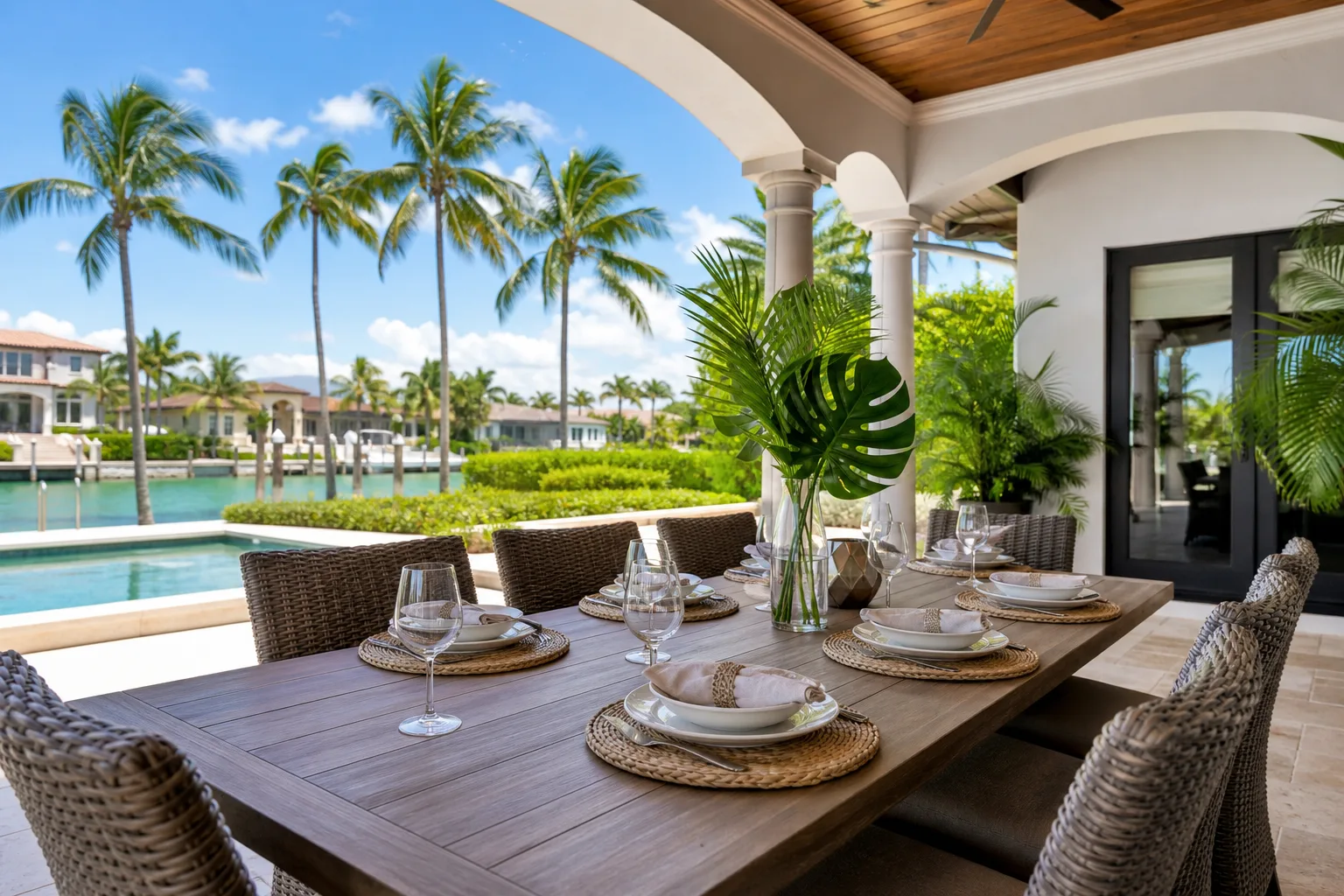
Pool deck zones — lounger row, dining set, sun-shade staging
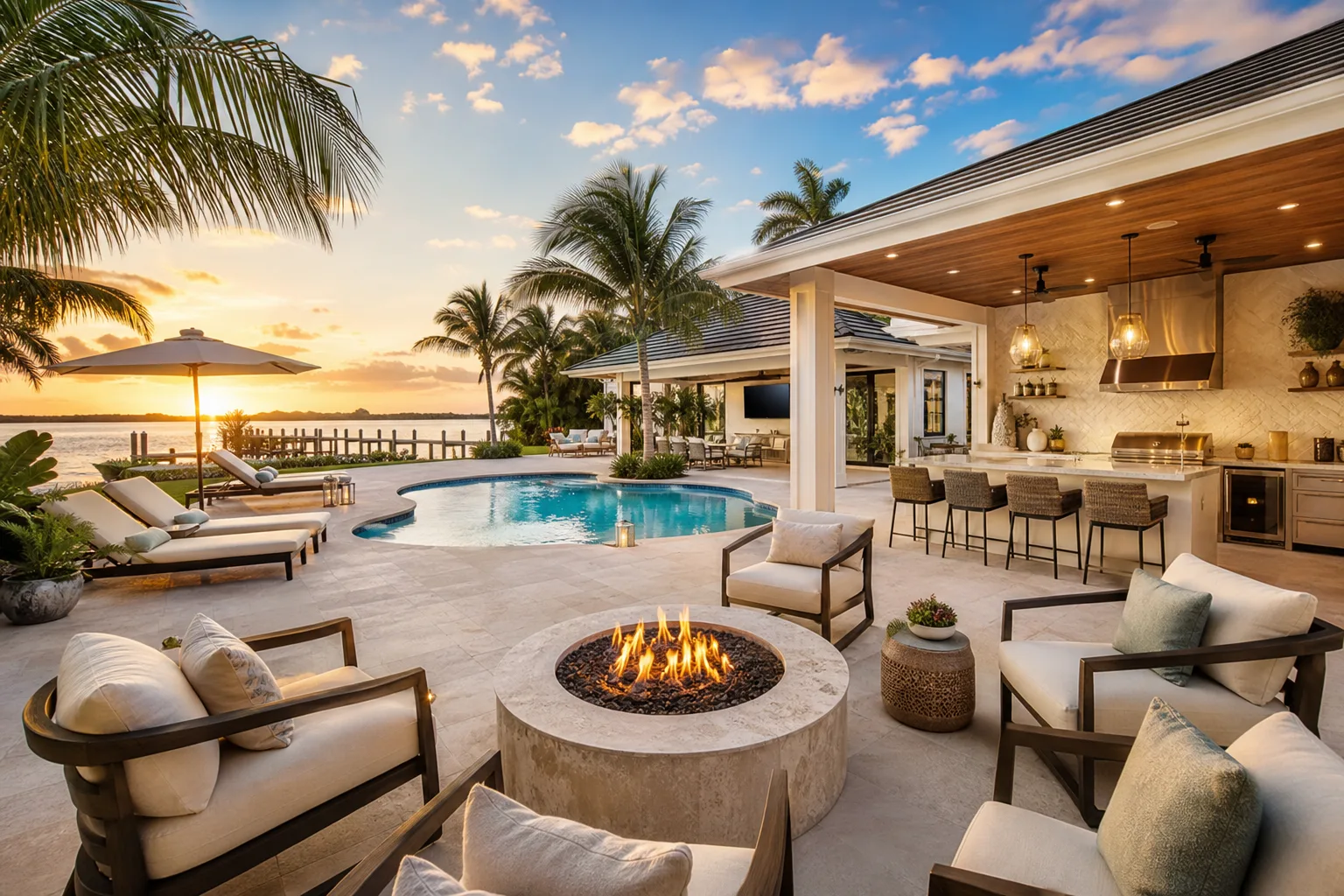
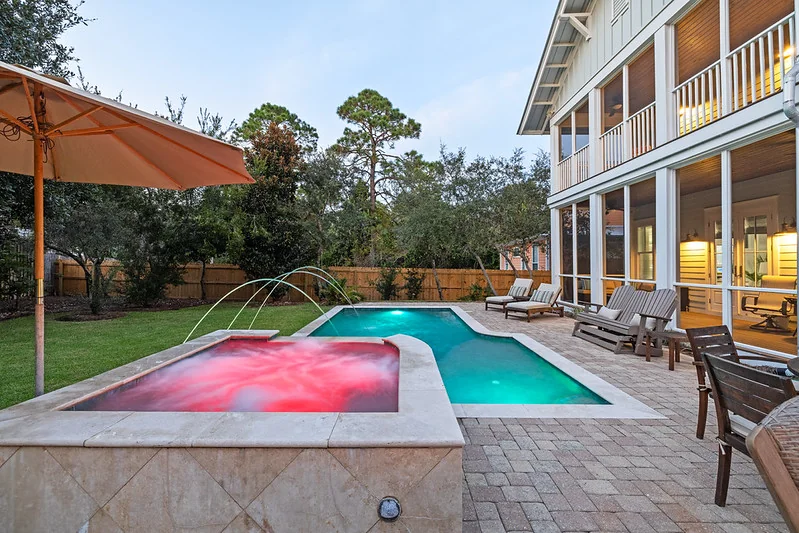
Pool deck staging follows three zones that need separate scoping. (1) Lounger row — the primary photographic anchor in pool deck shots. Standard scope: 4-6 commercial-grade pool loungers (aluminum frame with quick-dry sling or commercial-grade resin wicker with Sunbrella cushion), positioned along the pool edge or facing the pool from across the deck. Avoid: cheap aluminum residential loungers that bend under guest weight, plastic-frame loungers that yellow in Florida UV. (2) Outdoor dining set — table seating 8-12 for 5BR-6BR scope, 10-14 for 7BR-8BR, sometimes split across two tables at Mega-Rental scope. Commercial-grade aluminum or teak base with Sunbrella umbrella shade or a permanent shade structure overhead. The dining set is the second-strongest pool deck photo subject after the lounger row. (3) Sun-shade staging — umbrellas, pergolas, or attached lanai shade. Florida summer sun makes unshaded pool decks unusable for several midday hours; properties without shade options photograph well but produce review-cycle complaints about heat. Removable umbrella systems with quick-deploy hardware are the standard pattern; permanent shade structures (pergola, attached patio cover) at 8BR+ Luxury Estate and Mega-Rental scope where the deck supports the structure. Each zone produces a distinct listing photos photo — the pool deck’s listing amenity appeal is the sum of all three zones photographed cleanly.
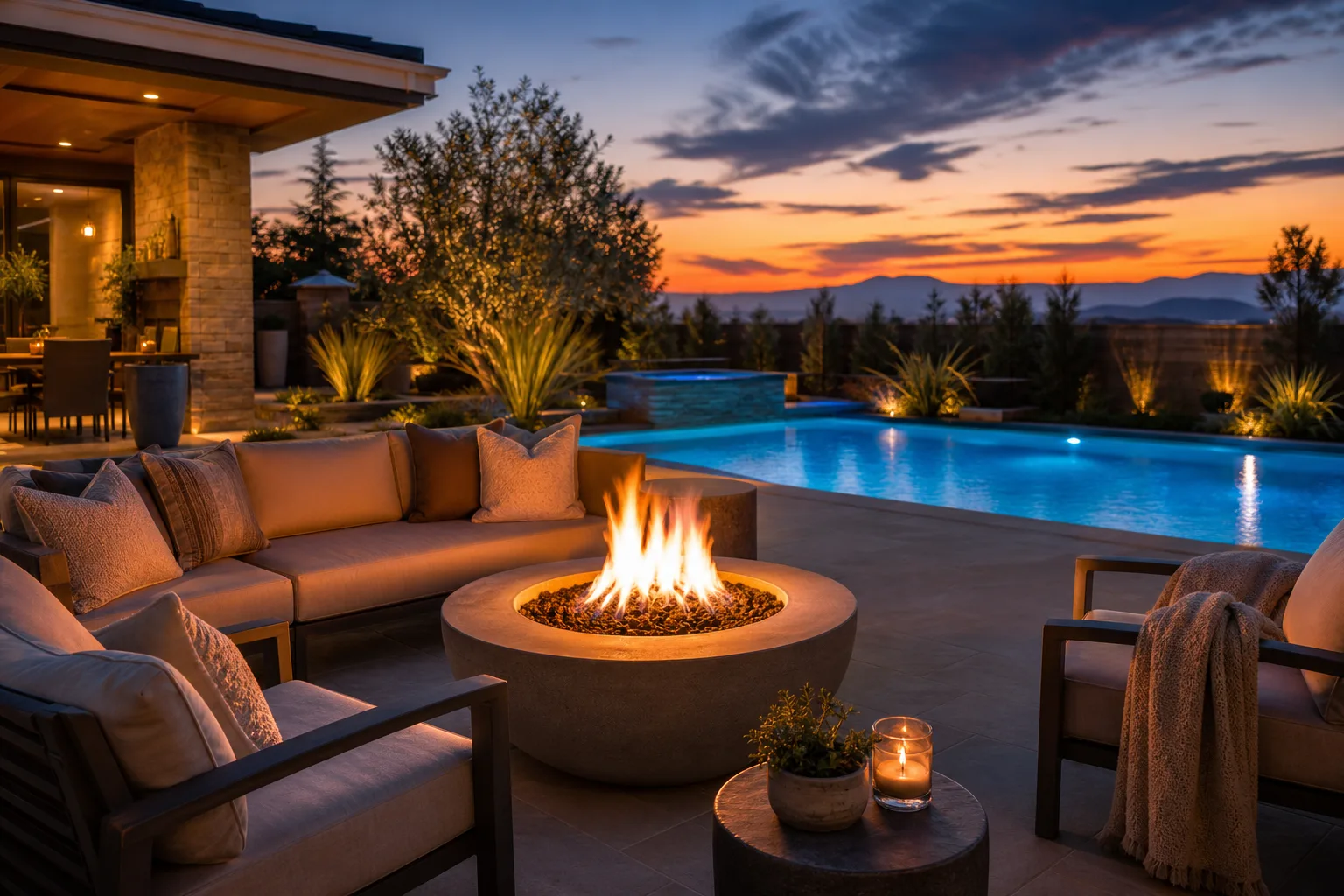
Outdoor furniture durability — what actually survives Florida
Five materials dominate STR outdoor furniture; the durability profile is meaningfully different. (1) Commercial-grade aluminum with powder coat — best overall STR durability, lightweight enough for hurricane-storage relocation, UV-stable for years, available in commercial styling that photographs as upscale. The standard frame material for STR pool loungers and dining sets. (2) Teak hardwood — premium aesthetic, photographs as luxury, requires periodic oil treatment or accepts a silver patina, heavy (hurricane-storage requires more labor), longest lifespan among the options. Standard at 8BR+ Luxury Estate scope. (3) Commercial-grade resin wicker — durable polypropylene wicker over aluminum frame, weather-resistant, available in modern styling. Good middle-tier choice for lanai sectional and lounge sets. Avoid: residential-grade plastic wicker that fades and brittles within a season. (4) Sunbrella fabric (or equivalent solution-dyed acrylic) — the cushion and umbrella fabric standard. UV-stable, mildew-resistant, machine-washable. Residential outdoor fabric brittles and fades visibly within one Florida summer. (5) Powder-coated steel — used in some commercial fire pit and accent furniture pieces; heavier than aluminum and slightly more rust-prone in coastal conditions but acceptable. Avoid: untreated steel, cast iron, untreated wood (pine, fir), residential vinyl mesh sling fabric (different from commercial-grade quick-dry sling).
Lanai zone — the under-photographed amenity space
The lanai is the covered patio area under the screen enclosure roof or attached covered patio. Often the strongest outdoor photo composition in the property but routinely under-furnished. Standard lanai scope: (1) Outdoor sectional — deep-seating L-shape or U-shape sectional with Sunbrella cushions, sized to the lanai footprint, facing either the pool or the outdoor TV (if scoped). The lanai sectional is the hero listing photo for outdoor space at most Central Florida resort-community STRs. (2) Coffee table or low-profile center table — outdoor-rated, scaled to the sectional, sometimes with integrated fire feature at 8BR+ Luxury Estate scope. (3) Side tables flanking the sectional — outdoor-rated material, supports beverage and decor staging. (4) Outdoor lighting layer — string lights, lanterns, or integrated under-screen lighting that photographs warmly at golden hour. The lighting layer transforms the lanai from "covered patio" to "designed evening space" in the gallery. (5) Outdoor area rug — UV-stable, mildew-resistant outdoor rug under the sectional. The rug anchors the lanai composition the way an indoor rug anchors a living room composition. Properties that skip the rug photograph as half-finished outdoor space.
Fire pit zones — the seasonal amenity that compounds with the lanai
Fire pit zones extend the outdoor amenity into evening and shoulder-season use. Three patterns. (1) Permanent gas fire pit — propane or natural-gas fed, masonry surround, integrated into the deck or lanai layout. Highest scope cost, longest install timeline (gas-line work requires licensed contractor), highest photographic impact. **Gas-line work and fire feature installation must be verified against local building code and require licensed contractor scope; specific requirements vary by jurisdiction.** (2) Standalone gas fire pit table — propane-tank-fed (tank concealed in the base), portable enough to relocate for hurricane storage, lower scope cost, faster install, common at 5BR-7BR full amenity package. (3) LED flame-effect fire pit — no actual flame (LED light effect under glass beads), no gas-line requirement, lowest operational risk and lowest insurance exposure. Photographs convincingly in evening shots. Some property managers prefer this option to reduce guest fire risk and liability. The fire pit zone usually pairs with 4-6 outdoor seating chairs (Adirondack-style or modern outdoor chairs with Sunbrella cushions) arranged around the fire pit at conversation distance. The composition produces a distinct evening-shot listing photos photo that adds to the amenity setup.
Outdoor TV — when it fits, when it does not
Outdoor TVs are a frequently mis-scoped amenity. Three considerations. (1) Indoor TV under cover vs purpose-built outdoor TV — most lanai installations under full roof cover can use a properly-sized indoor TV positioned to avoid direct rain and Florida humidity exposure, but the lifespan is shortened and the warranty may be voided by manufacturers. Purpose-built outdoor TVs (rated for outdoor temperature swings, humidity, and UV) are more expensive but designed for the conditions. **Outdoor electrical for outdoor TVs requires GFCI-protected weatherproof outlet installation by a licensed electrician; specific outdoor electrical code requirements vary by jurisdiction.** (2) Placement and viewing — most outdoor TVs end up under-watched because the lanai use pattern favors conversation and pool activity over screen viewing. The listing amenity appeal in the gallery is real, but operationally the TV often runs less than the indoor media room TV. (3) Glare and sun-direction — outdoor TVs facing direct afternoon sun glare visibly; lanai TVs positioned against the wall opposite the sun direction perform better. Specification: 65-75 inch purpose-built outdoor TV at most installations, weatherproof outdoor speaker setup for the audio (the TV’s built-in speakers are usually inadequate against ambient outdoor sound). Best at 7BR+ full amenity package and above where the lanai sectional layout supports the viewing geometry.
Screen enclosure, drainage, and the operational layer most owners skip
The screen enclosure (pool cage) and pool deck drainage are the construction layer underneath the outdoor furniture and amenity scope. Most Central Florida STR pool decks include a screen enclosure as standard; the enclosure quality varies meaningfully. (1) Screen enclosure structure — aluminum frame with screen panels, attached to the property structure. Older enclosures (10+ years) often need re-screening or structural inspection; hurricane-cycle stress accumulates over time. **Hurricane-rated screen enclosure requirements vary by Florida building code era and must be verified against the property’s permit history and the current Florida Building Code for the specific jurisdiction.** (2) Deck drainage — Florida pool decks should drain away from the property foundation and toward the deck edges with appropriate slope. Standing water on the deck after rain produces both photo issues (visible puddles) and operational issues (slip risk, algae growth on the deck surface). (3) Outdoor cleaning protocol — the pool deck and lanai require cleaning between every guest turnover (debris removal, cushion wipe-down, dining-table wipe, umbrella inspection). The cleaning crew should have a standardized outdoor checklist that runs in parallel with indoor turnover; properties that treat outdoor cleaning as an afterthought accumulate visible wear (cushion staining, lanai-floor debris, umbrella mildew) that depresses the listing photos refresh cycle.
Hurricane planning — the operational scope that protects the outdoor investment
Central Florida is in active hurricane territory and outdoor furniture investment depends on hurricane-cycle operational planning. The protocol most STRs need but few document. (1) Storage location — designated indoor storage for outdoor cushions, umbrellas, lightweight outdoor furniture, and decor items. Typical locations: garage (if not converted to game room), laundry room, designated storage closet. (2) Tie-down hardware — for furniture too heavy to relocate, ground-anchor tie-down hardware rated for hurricane wind speeds. Some pool decks have permanent anchor points installed during the deck construction; others require retrofit ground anchors. (3) Activation trigger — most operational protocols activate at the National Hurricane Center declaration of a tropical storm or hurricane watch affecting the Central Florida area, with the storage and tie-down work completed 24-48 hours before the projected impact window. (4) Property manager responsibility — the protocol should be owned by the property manager with the cleaning crew or a dedicated storm-prep crew as the execution layer. Properties without a documented hurricane protocol lose outdoor furniture inventory in every active hurricane season and rebuild outdoor scope more frequently than properties with documented protocols. **Specific hurricane-preparation requirements may vary by insurance carrier policy and community management rules and should be confirmed with the property’s insurance and HOA.**
What we see go wrong
- Residential-grade big-box outdoor furniture as the primary pool deck and lanai scope — fades, fails, and stains within a single Florida summer. The listing photos by month six shows a degraded property.
- Skipping the lanai sectional and outdoor rug — leaves the strongest outdoor photo composition under-furnished. The lanai is the hero listing photo for outdoor space at most Central Florida resort STRs.
- No sun-shade staging on the pool deck — Florida summer sun makes unshaded decks unusable for several midday hours; properties without shade produce review-cycle complaints about heat exposure.
- Residential outdoor fabric (non-Sunbrella) on cushions and umbrellas — brittles and fades visibly within one Florida summer. Solution-dyed acrylic (Sunbrella or equivalent) is non-optional for STR use.
- Indoor TV mounted on lanai without protection or rated outdoor placement — humidity and temperature swings shorten lifespan and may void manufacturer warranty. Purpose-built outdoor TV is the standard at 7BR+ scope.
- No hurricane protocol documented — outdoor furniture inventory disappears in every active hurricane season and the outdoor scope gets rebuilt repeatedly. Documented protocol with storage location and tie-down hardware is the operational standard.
- Pool deck drainage neglected — standing water produces both photo issues (visible puddles) and operational issues (slip risk, algae growth). Drainage should be verified at the property assessment.
- Outdoor cleaning treated as an afterthought in the turnover protocol — visible wear (cushion staining, debris, umbrella mildew) accumulates and depresses the gallery refresh.
Related Community Guides
Eight Core Services
Turnkey to Themed Rooms — All Under One Roof
Full furniture packages, STR interior design, themed kids suites, game room conversions, property prep, custom bunks, white-glove install, and listing-ready staging — for vacation rentals and second homes across Orlando, Kissimmee, Davenport, and the full Florida STR market.
Frequently Asked Questions
How much of the STR amenity setup budget should outdoor scope take?
At Central Florida resort-community properties, outdoor amenity scope is typically a meaningful share of the total amenity setup budget — sometimes 15-25% of the overall furnishing-and-amenity project depending on bedroom count, deck size, and whether the scope includes premium elements like a permanent fire pit, outdoor TV, or pergola. Higher shares apply at 8BR+ Luxury Estate and Mega-Rental scope where the outdoor layer is one of three or four amenity setup pillars (alongside themed bunks, game room, theater room). Final pricing requires a scoped proposal because outdoor scope is highly property-specific.
What outdoor furniture material lasts longest in Florida STR use?
Commercial-grade aluminum with powder coat is the best overall STR durability — lightweight enough for hurricane-storage relocation, UV-stable for years, available in commercial styling that photographs as upscale. Teak hardwood is a premium alternative at 8BR+ Luxury Estate scope (longest lifespan, requires periodic oil or accepts silver patina, heavier for hurricane storage). Commercial-grade resin wicker over aluminum frame is a good middle-tier choice for lanai sectional and lounge sets. Cushion and umbrella fabric must be Sunbrella or equivalent solution-dyed acrylic — residential outdoor fabric brittles within one Florida summer.
Do I need an outdoor TV on the lanai?
At 7BR+ full amenity package and above, an outdoor TV is a meaningful listing amenity appeal in the gallery even if guests use it less than the indoor media-room TV operationally. Specification: 65-75 inch purpose-built outdoor TV (rated for outdoor temperature swings, humidity, and UV), weatherproof outdoor speaker setup, GFCI-protected weatherproof electrical (must be installed by a licensed electrician), positioned to avoid direct afternoon sun glare. At 5BR-6BR launch-ready package and full amenity package, the outdoor TV is often deferred in favor of other outdoor scope (better lanai sectional, fire pit zone, premium dining set) that produces higher photo impact.
How does the hurricane protocol work for outdoor furniture?
The protocol most STRs need: designated indoor storage for outdoor cushions, umbrellas, and lightweight outdoor furniture (typically garage, laundry room, or storage closet); tie-down hardware for furniture too heavy to relocate (ground-anchor hardware rated for hurricane wind speeds); activation trigger at the National Hurricane Center declaration of a tropical storm or hurricane watch affecting the Central Florida area; property-manager-owned execution with cleaning crew or dedicated storm-prep crew as the execution layer; completion of storage and tie-down work 24-48 hours before the projected impact window. Specific hurricane-preparation requirements may vary by insurance carrier policy and community management rules and should be confirmed with the property’s insurance and HOA.
Is the screen enclosure (pool cage) considered part of the outdoor amenity scope?
The screen enclosure is typically existing infrastructure on Central Florida resort-community properties and is not usually rebuilt as part of the furnishing scope. The outdoor amenity scope assumes a functional enclosure and adds the furniture-and-amenity layer (pool deck staging, lanai furniture, fire pit zone, outdoor TV, lighting). If the enclosure has visible damage, re-screening needs, or structural issues, those are construction-side line items that require separate licensed-contractor scope. Hurricane-rated screen enclosure requirements vary by Florida building code era and must be verified against the property’s permit history and the current Florida Building Code for the specific jurisdiction.