Mega-Rental Furnishing Guide
Ten bedrooms and up at Encore or Reunion — guests book the house as the trip. Theater rows, four bunks, outdoor clusters, and ops closer to a small hotel than a single STR.
Sound familiar?
You bought a 12-bedroom Encore estate and scoped it like a luxury 8-bedroom — one bunk, bonus-room theater, lanai for twelve. Reunion and Windsor guests at this tier book the house as the vacation. They don't leave for parks every day. The property has to carry a full week of meals, movies, and hangouts — with ops closer to a small hotel than a single STR.
In short
- Mega-rental is a destination-property hospitality category — not a larger luxury villa. The property IS the trip, not basecamp for the trip.
- Multi-themed bunk strategy (three or four themed rooms diversified across the gallery) is a mega-rental differentiator that does not appear in smaller luxury-villa scope.
- A real theater build (motorized recliner rows, projector or large-format LED, acoustic treatment) is mega-rental baseline. A converted bonus room with a TV reads as full amenity package in the gallery.
- Multi-zone outdoor clusters (primary lounge, dining cluster, bar cluster, pool-area cluster, secondary gathering zone) replace the single-composition outdoor scope of smaller vacation rentals.
- Operational infrastructure (PM partnership, cleaning-crew scale, doubled-and-tripled linen inventory, documented houseware verification) is non-negotiable. Single-property self-managed mega-rentals rarely produce sustainable operational quality.
- Monday action: compare your listing to three comps on bunk, outdoor, and primary suite before signing a furniture PO.
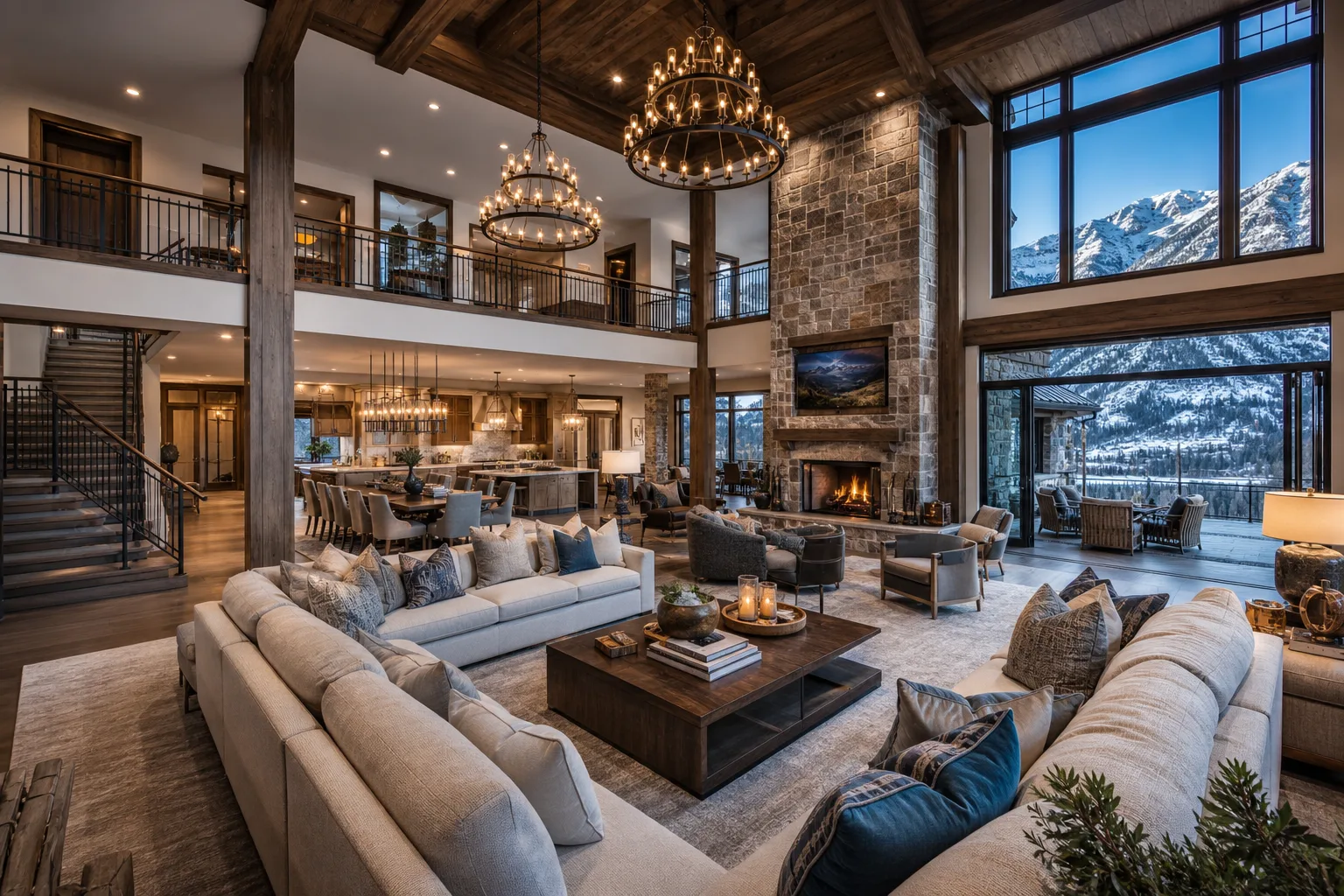
Ten bedrooms and up at Encore, Reunion, or Windsor Island are destination properties — guests eat, gather, and entertain on site. That means great room seating for 25+, three or four distinct themed bunks, a real theater, multi-zone outdoor, and housewares sized for 24 place settings. Install runs 12–18 weeks when custom work is involved. No fixed pricing here; these decisions shape every mega-rental we scope.
What to know
Mega-rental is its own category
Ten and fourteen bedrooms both sit in mega-rental territory, but you don't scale up linearly from a 6-bedroom. Eighteen to twenty-eight guests stay a week and mostly don't leave — meals, movie nights, pool time, and adult hangouts all happen on property. Scope has to carry a full hospitality week, not just beds plus a game-room corner. A property that jumps from an 8-bedroom full amenity package straight to a 12-bedroom mega-rental without rethinking the operational model usually discovers the gap at the first back-to-back holiday booking, when the cleaning crew that handled the 8-bedroom smoothly can't turn the mega-rental in the same window.
What a flagship build includes
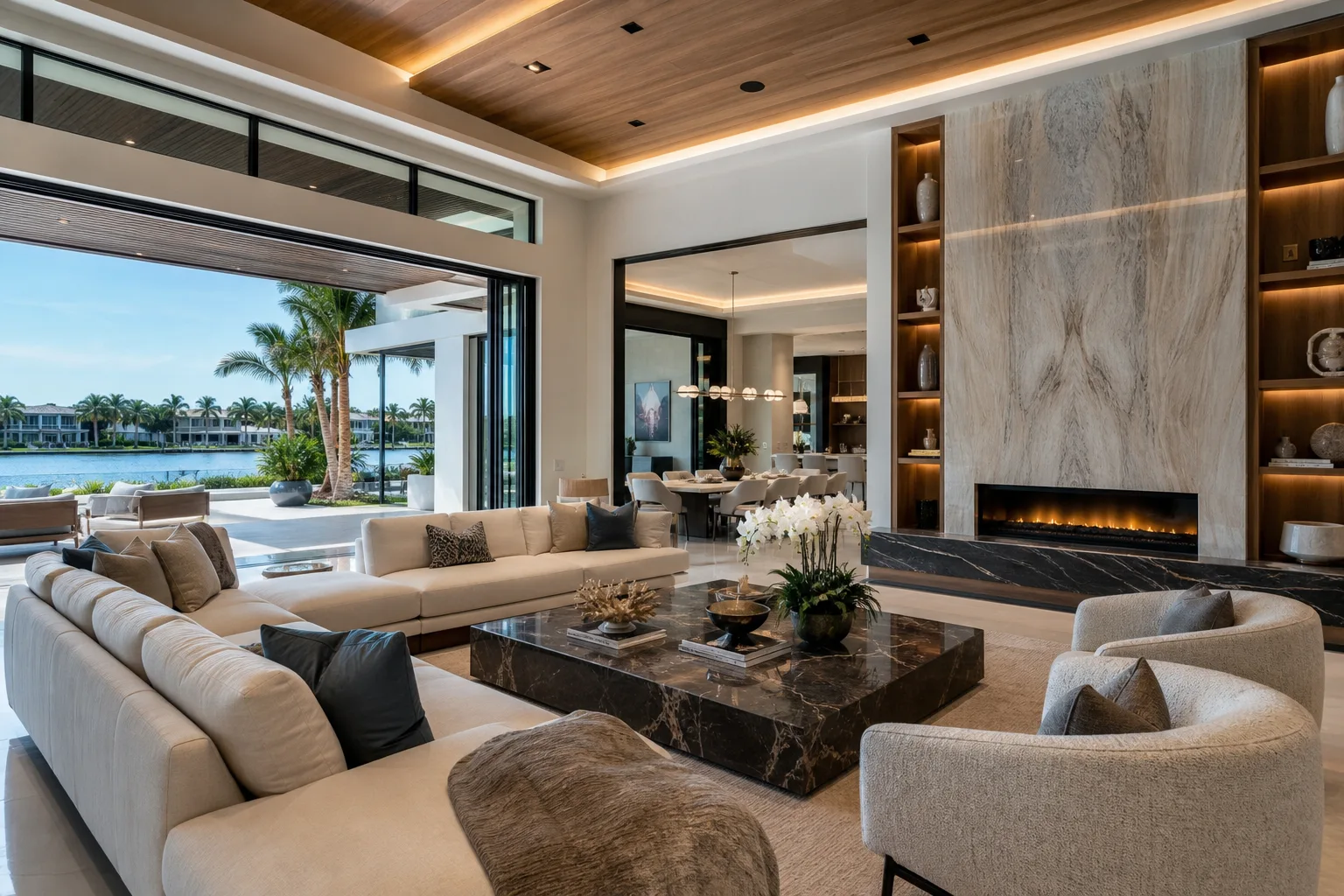
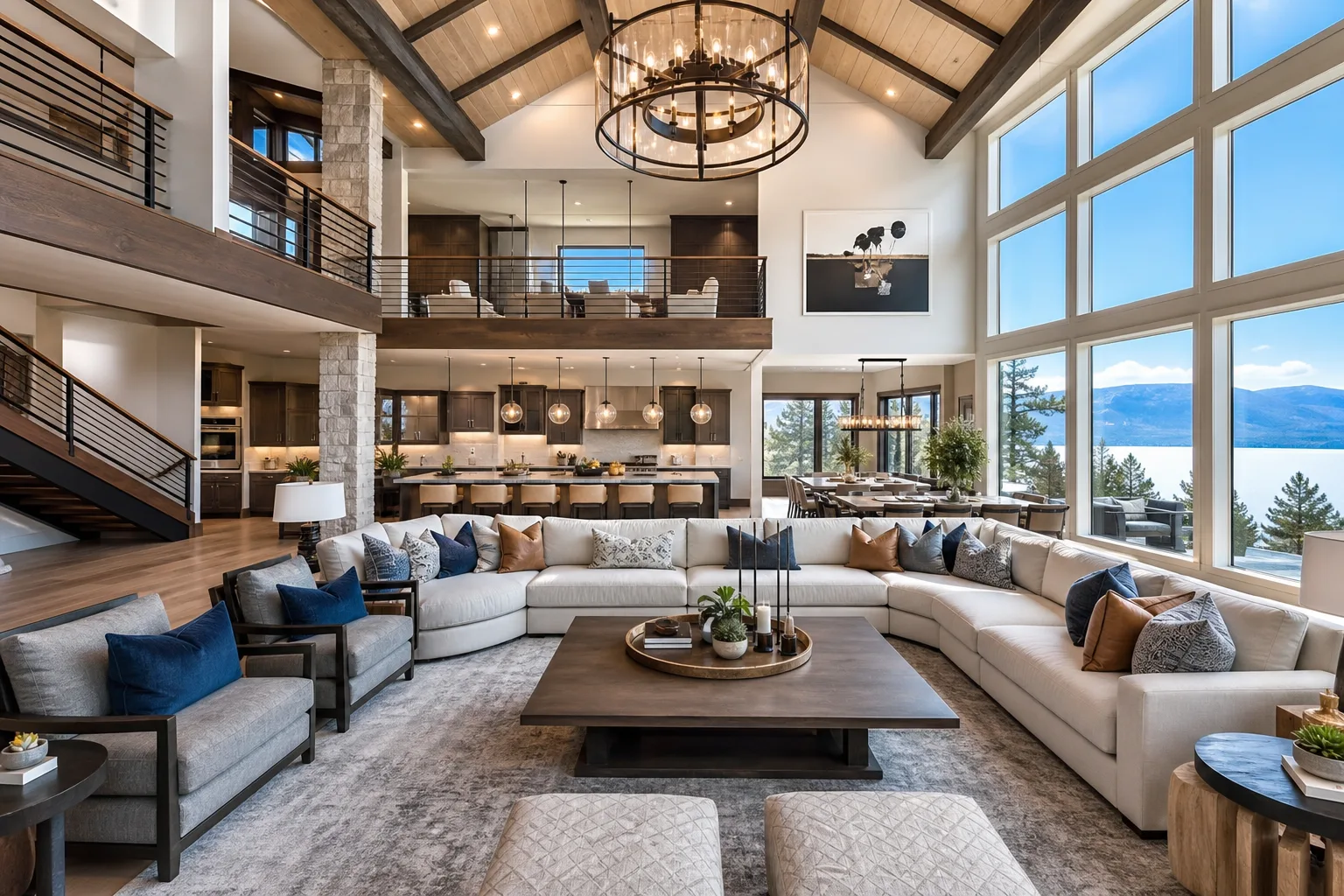
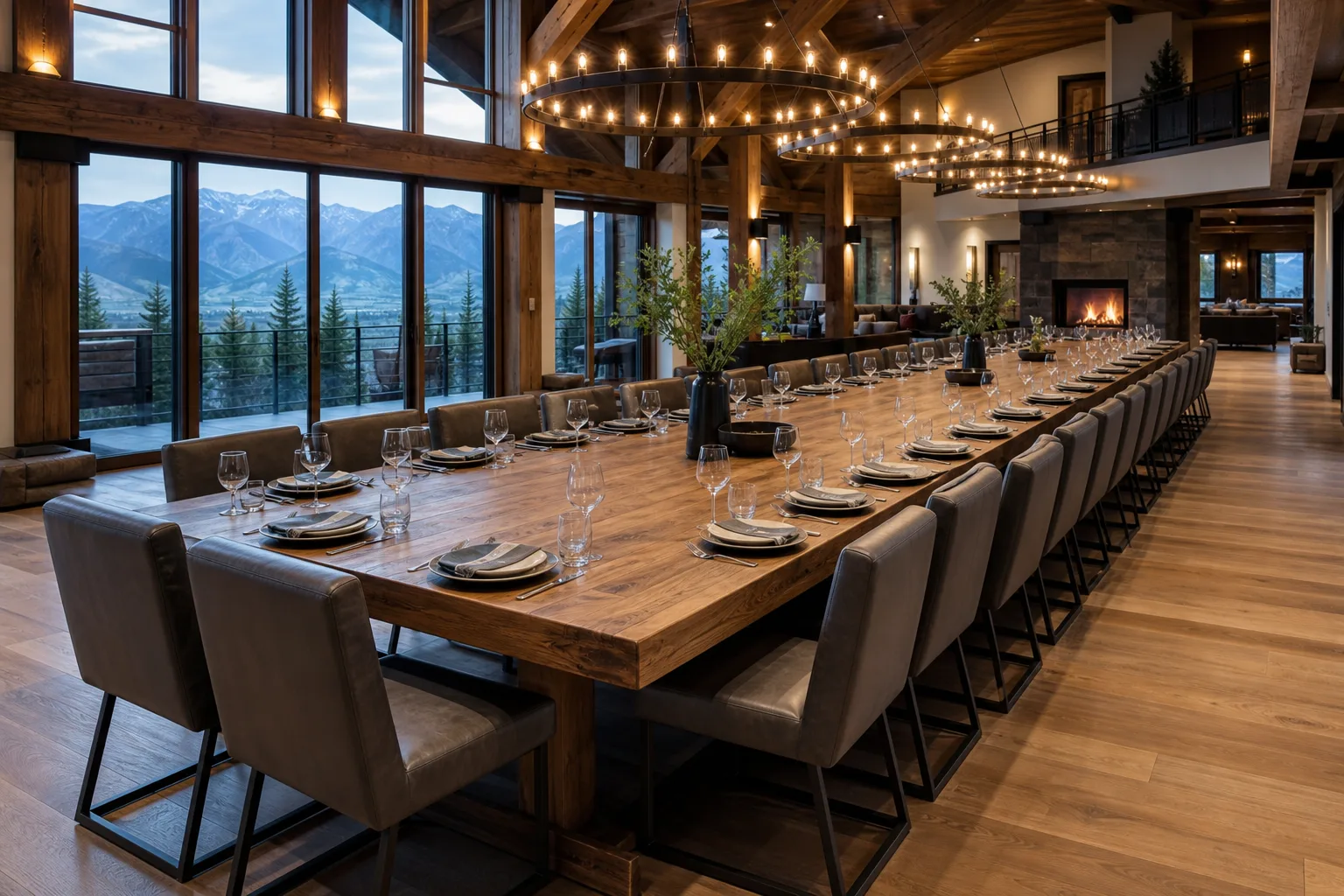
Great room for 25+, a second lounge, dining for 16–20 seated, real theater with acoustic treatment, full game room with arcade and tables, three or four themed bunks (each its own hero photo), and outdoor split into lounge, dining, bar, and pool clusters with fire feature. The floor here is closer to a small resort packed into one house than a maxed-out 8-bedroom package.
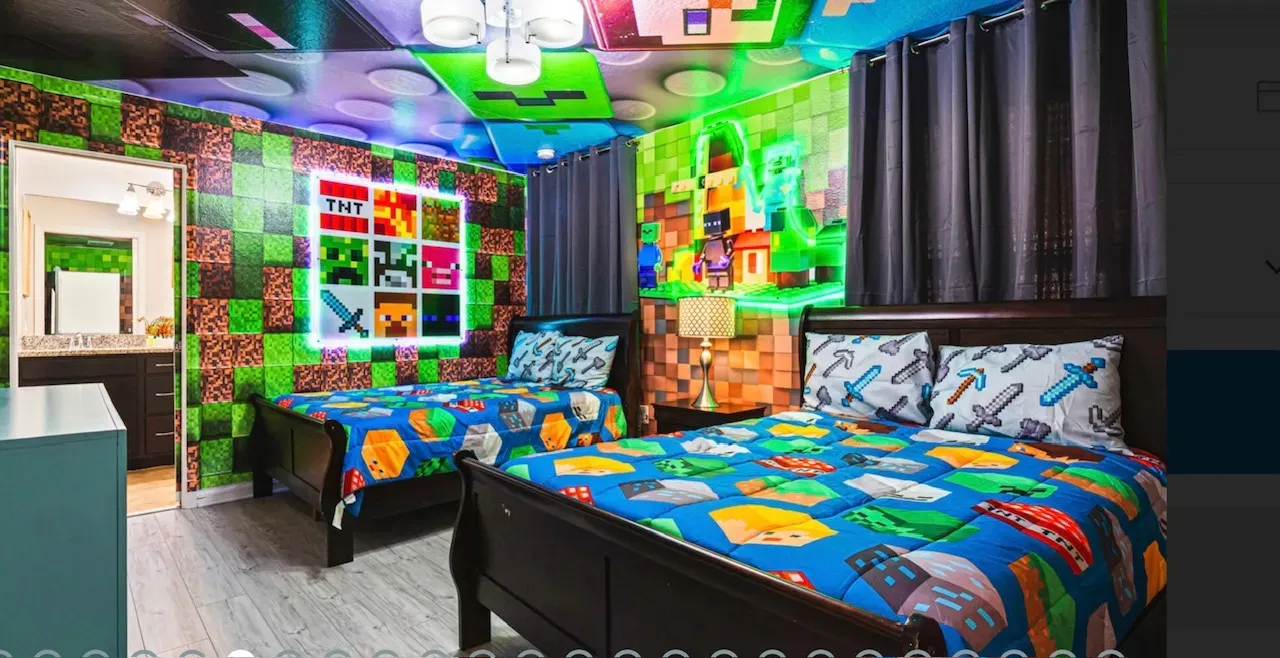
Three or four bunks, four distinct photos
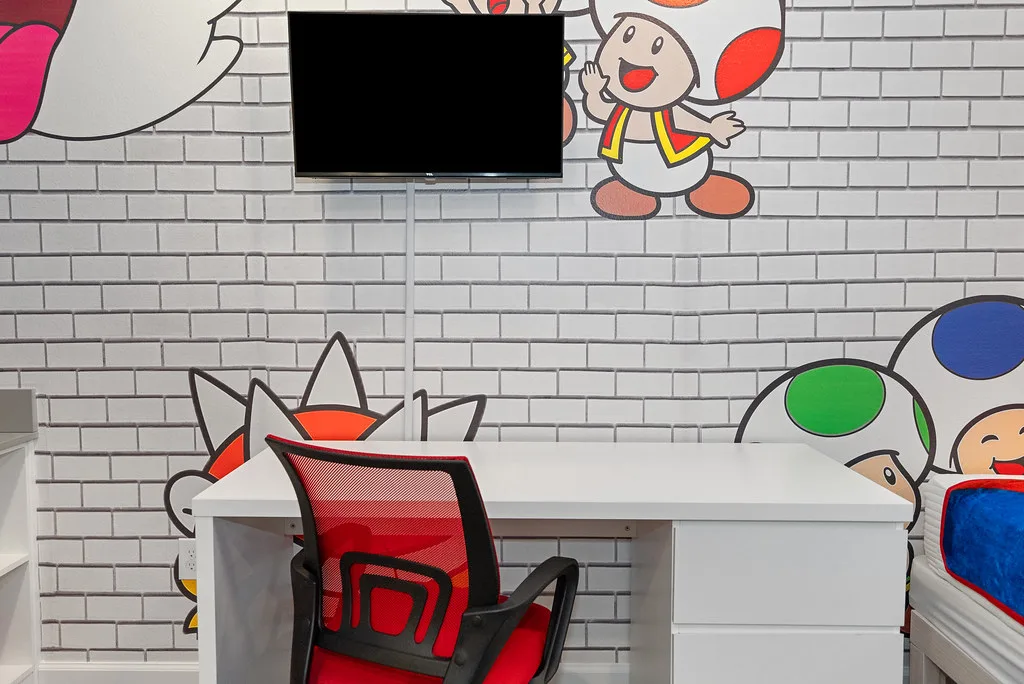
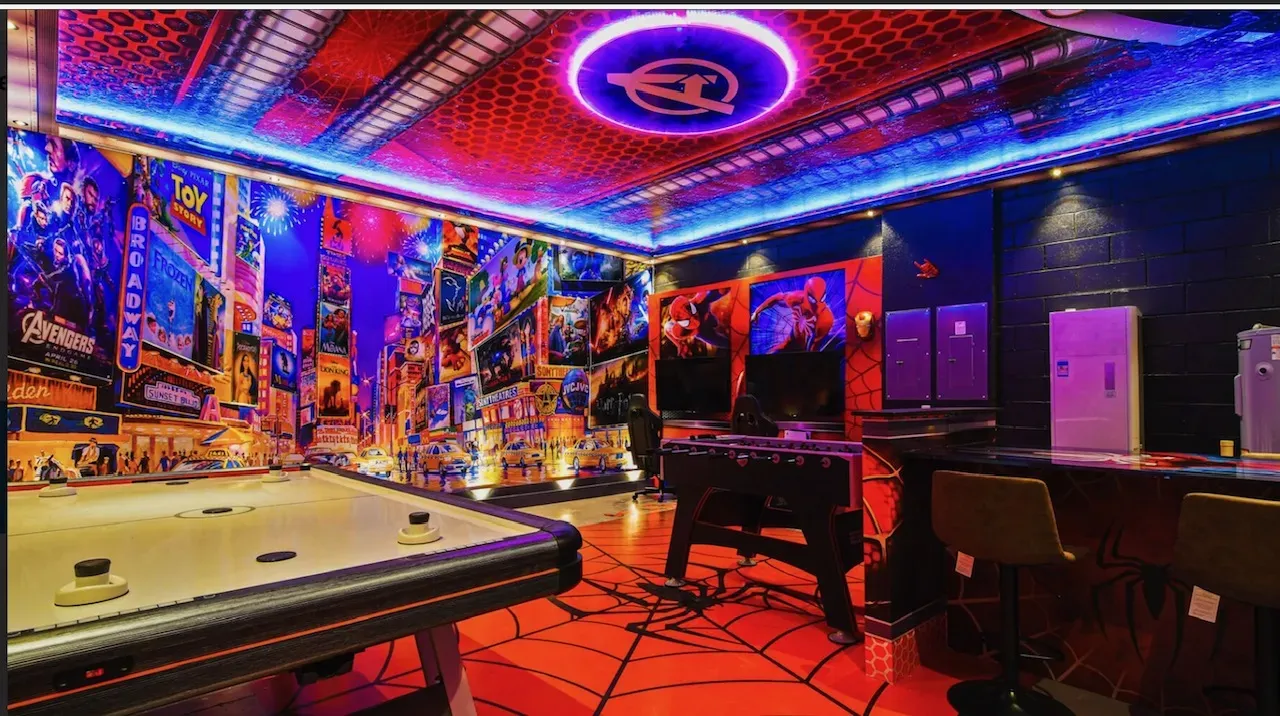
Mega-rentals usually run three or four themed bunks — adventure for littles, sports for older kids, space for teens, princess for younger girls — each sleeping four to six and photographed as its own hero shot. The question isn't whether to add bunks; it's how to vary themes so four scroll-stoppers don't look like the same room repainted. Vary more than the wall art — shift the ceiling treatment, the lighting color temperature, and the flooring or rug choice room to room. Four bunks with the same white walls and a different mural each still read as one room to a scrolling guest; four bunks with genuinely different lighting and floor treatments read as four separate experiences worth booking around.
Full theater builds, not theater-rooms
At full amenity package, a theater room is a converted bonus room with theater seating, a large TV, and basic acoustic treatment. At mega-rental scope, the theater build is a real theater room: motorized recliner seating arranged in proper theater rows (typically 8–12 seats minimum), an actual projector-and-screen setup or large-format LED display, dedicated acoustic treatment on walls and ceiling, dimmable theater-grade lighting, a snack bar or concession-zone composition, and a real popcorn machine. The mega-rental theater hero shot in the listing photos is one of the highest-impact bookings drivers at this scale — multi-family bookings evaluate the theater build before bedroom count for an entire category of group-travel decisions (family-movie-night planning is part of the trip).
Multi-zone outdoor entertainment clusters
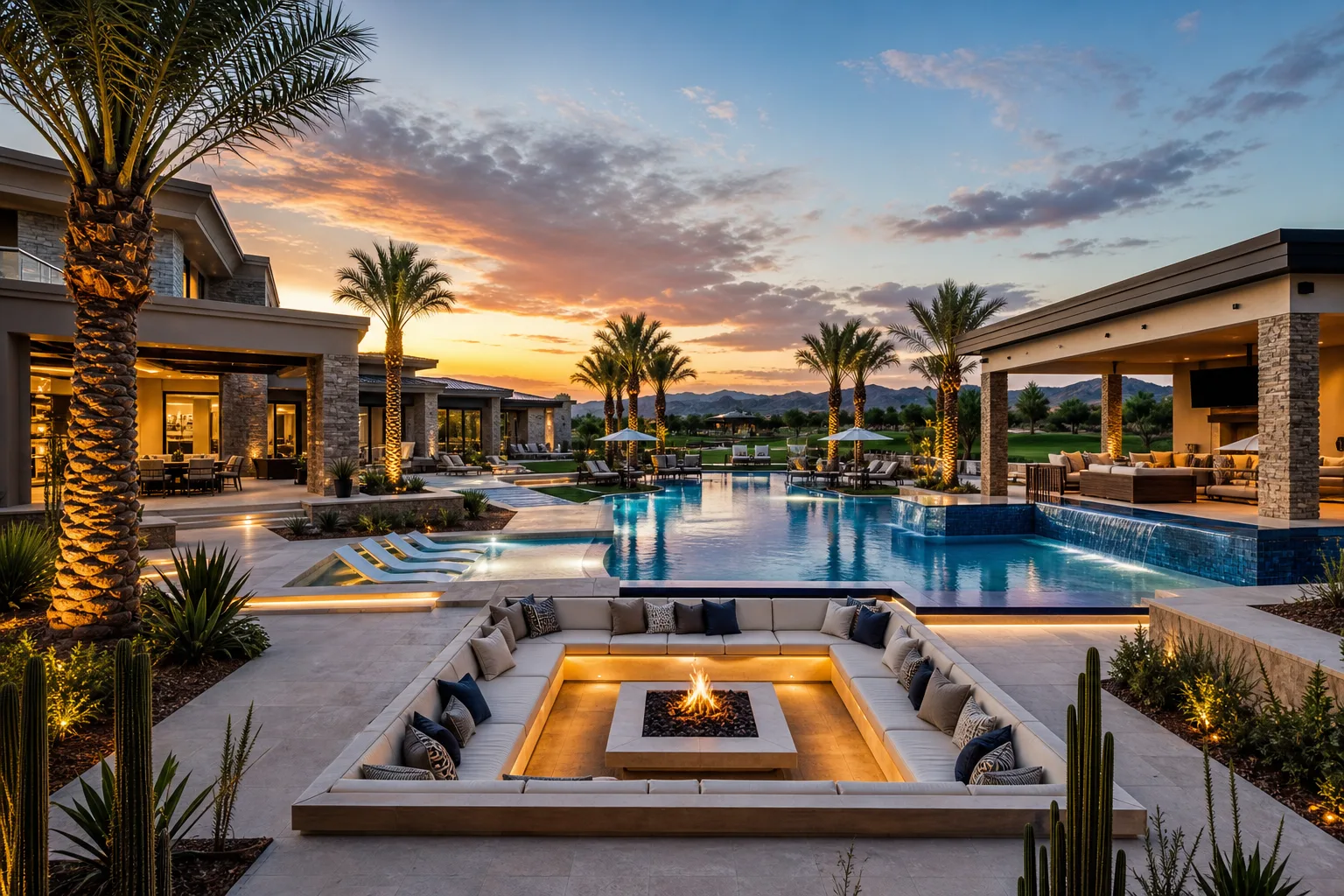
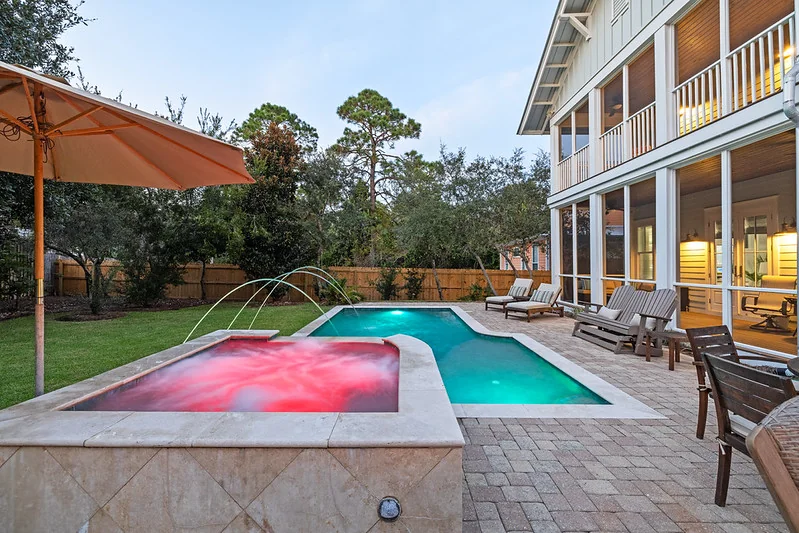
At smaller vacation-rental scale, the outdoor zone is a single composition (lanai or pool deck with seating, dining, and grill). At mega-rental scale, the outdoor zone is a multi-cluster entertainment environment: a primary lounge cluster around a fire feature, a dining cluster sized for 16+ guests with proper outdoor dining furniture, a bar cluster with bar-height counter and proper bar stools, a pool-area lounge cluster with photogenic loungers and shade structures, a secondary outdoor gathering zone (tiki bar, swim-up bar, swing-and-hammock cluster, or themed pavilion), and dedicated photography composition that produces multiple distinct outdoor hero shots in the gallery. The outdoor scope at mega-rental scale is consistently the largest single hero listing photo cluster on the listing.
Commercial-grade housewares at mega-rental scale
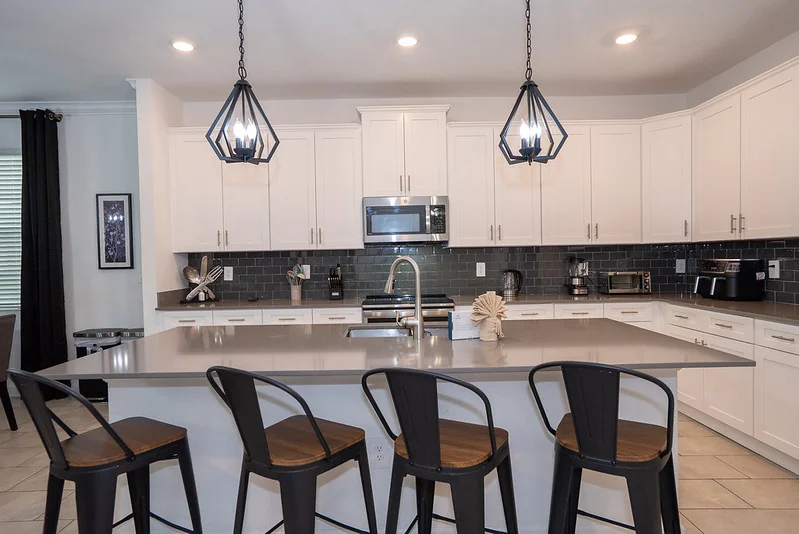
The houseware kit at mega-rental scale steps into territory that residential housewares specifications cannot reach. The kitchen runs commercial-grade cookware with kit-doubling on high-use items (skillets, sheet pans, mixing bowls). The dining serveware sizes to 24+ place settings with the kit-doubling required for back-to-back week-long bookings. Linen inventory runs at 2.5x to 3x the bed count (not the usual 2x) to absorb the longer turnover cycles and the high-volume laundry stress. Bath supplies run at hotel-grade GSM specifications across multiple bathrooms. Cleaning supplies, paper goods, and consumables run at restaurant-supply-house volume rather than residential-grocery volume. Mega-rental owners who under-spec the houseware kit consistently produce the worst class of negative reviews at this scale (running out of cookware or linens mid-stay).
Custom fabrication and trade-only specialty work
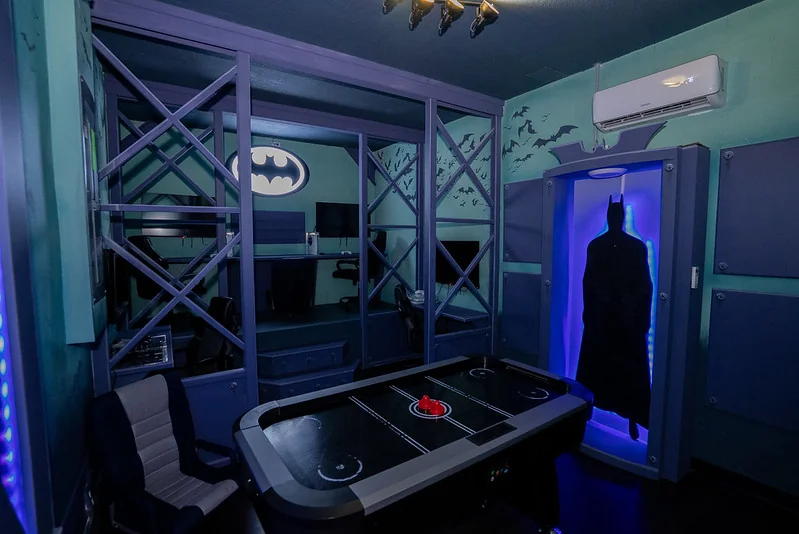
A mega-rental scope routinely includes specialty fabrication that does not exist in retail catalogs: custom-fabricated themed bunk-room architecture with integrated lighting and storage, designer-trade procurement on case-goods, custom-built dining and gathering pieces sized to the actual room dimensions, statement architectural lighting fixtures from trade-only houses, integrated millwork tying the furnishing to the architectural shell, and sometimes custom-built outdoor structures (tiki bars, pavilions, themed pool-area features). These elements lengthen the install timeline to 12–18 weeks from signed scope, require pre-install coordination on dimensions, electrical specifications, and structural integration, and shift the project management model entirely from “deliver and place” to “coordinate multiple vendor streams across multiple trades to a common install window.”
Operational infrastructure at mega-rental scale
A mega-rental property cannot operate on the typical owner-operated or single-PM model. The turnover at full 22–26 guest capacity takes 8–12 hours, requires a 4–6 person cleaning crew, and stresses the linen inventory to a level that doubled-kit specifications and dedicated commercial laundry partnerships become non-negotiable. The booking management runs across multiple platforms with mega-rental-tier pricing discipline (a single mid-week shortage at peak season is a five-figure revenue event). The houseware-kit verification runs as a documented inventory process rather than a checklist. The property management partnership is typically a dedicated mega-rental PM or an in-house operations lead, not a standard residential STR PM. Single-property self-managed mega-rentals exist but are exceptionally rare. The operational economics rarely work without portfolio-operation infrastructure behind the property.
How FPUSA scopes mega-rental projects
A mega-rental scope conversation runs through five filters: the property fundamentals (floor plan suitability for full specialty-flagship scope, lot suitability for multi-zone outdoor cluster, community context), the specialty flagship scope architecture (specialty rooms as floor, custom fabrication plan, designer-trade procurement plan, multi-themed bunk strategy), the houseware-and-linen kit at mega-rental specifications (commercial-grade cookware, doubled-and-tripled linen inventory, restaurant-supply paper-goods volume), the install logistics (12–18 week timeline, multi-vendor coordination, white-glove placement and staging), and the operational infrastructure plan (PM partnership, cleaning crew, linen-service partnership). The output is a Mega-Rental or Specialty Flagship scope proposal with the full vendor-coordination plan and the operational-infrastructure recommendations. We do not run mega-rental projects on the standard luxury-villa template — the scope category is genuinely larger.
What to do first this week
Open three same-bedroom-count comps on Airbnb or VRBO and screenshot bunk photos, outdoor dining seats, and primary suite finish. List where your home falls short — that gap list becomes your furnish scope. Building a mega-rental? Send address and bedroom count — we'll scope game room, theater, and outdoor together.
What we see go wrong
- Treating mega-rental as “a bigger luxury villa” — the scope category is structurally different. Mega-rental requires multi-zone gathering, multi-themed bunk strategy, full theater build, and multi-cluster outdoor that smaller luxury villas do not.
- Skipping themed bunks to save budget — mega-rentals need three or four distinct bunk hero shots; cutting to one or two drops you out of the destination-property scroll.
- Building a converted-bonus-room theater instead of a real theater room — the mega-rental audience evaluates the theater hero shot before bedroom count for family-movie-night-driven booking decisions.
- Under-spec housewares (single-set linens, residential cookware, undersized dining serveware) — the mega-rental operational reality cycles housewares faster than smaller properties, and under-spec produces the worst class of negative reviews at this scale.
- Outdoor scope built as a single composition instead of multi-zone clusters — the outdoor scope is the largest hero listing photo cluster on a mega-rental listing, and single-cluster outdoor competes against luxury-villa comps that have already moved to multi-cluster.
- Self-managed mega-rental without PM partnership or dedicated operations lead — single-property self-managed mega-rentals rarely produce sustainable operational quality, and the operational quality drives the review cycle that drives the booking cycle.
- Compressing the install timeline below 12 weeks — placeholder furniture in the gallery for the mega-rental-tier audience produces the worst class of listing strategy outcome.
Related Community Guides
Eight Core Services
Turnkey to Themed Rooms — All Under One Roof
Full furniture packages, STR interior design, themed kids suites, game room conversions, property prep, custom bunks, white-glove install, and listing-ready staging — for vacation rentals and second homes across Orlando, Kissimmee, Davenport, and the full Florida STR market.
Frequently Asked Questions
What package level does mega-rental fall under?
Mega-Rental and Specialty Flagship — the top two tiers of the FPUSA scope ladder. Luxury Estate sits below mega-rental scope; Mega-Rental is the standard mega-rental tier for 10BR–12BR destination flagships; Specialty Flagship is reserved for 12BR+ properties with multiple custom-built specialty zones (themed gathering areas, full outdoor pavilions, custom architectural fabrication beyond the standard scope). Final pricing depends on the property, the scope, the custom-fabrication components, and the install logistics — confirmed through a scoped proposal.
How long does a mega-rental furnishing project take?
Most mega-rental projects run 12–18 weeks from signed scope to install-complete. The timeline is driven by the custom-fabrication and designer-trade procurement components, which at mega-rental scale include multiple themed bunk-room builds, statement architectural lighting, custom dining and gathering pieces, integrated millwork, and sometimes custom outdoor structures. The install window itself is typically 3–4 weeks of coordinated placement across multiple vendor streams. Owners attempting to compress the timeline below 10 weeks routinely end up with placeholder furniture in the listing photos — which loses the mega-rental positioning entirely.
How many themed bunk rooms does a mega-rental typically include?
Most mega-rental builds include three or four themed bunk rooms, each photographing as a distinct hero shot in the gallery and each appealing to a different segment of the multi-family kid group. A common mix runs an adventure or storybook theme for younger kids, a sports theme for older kids, a space or sci-fi theme for teens and tweens, and a princess or storybook theme for younger girls — each room sized differently, lit differently, and styled differently to read as four distinct experiences in the gallery rather than four variations on the same room.
Does a mega-rental need a real theater room or is a converted bonus room enough?
A real theater room is the mega-rental baseline. Motorized recliner seating in proper theater rows (8–12 seats minimum), an actual projector-and-screen or large-format LED setup, dedicated acoustic treatment, dimmable theater-grade lighting, snack-bar or concession composition. The mega-rental audience evaluates the theater build before bedroom count for an entire category of family-movie-night-driven booking decisions. A converted bonus room with a couch and TV reads as full amenity package in the gallery and loses the mega-rental positioning the rest of the project was built for.
Can a 10BR property be furnished at sub-mega-rental scope (Luxury Estate or full amenity package) and still book successfully?
Yes — but the listing positioning shifts. A 10BR scoped at Luxury Estate level captures the upper end of the family-vacation-rental booking pool with strong amenity setup, but it does not compete in the destination-property mega-rental booking pool. The audience economics differ: destination-property bookings are higher per-reservation values, longer average stays, and stronger audience-loyalty patterns (repeat family reunions, anniversary milestone trips). Under-scoping a 10BR to Luxury Estate captures the family-vacation upper tier; full mega-rental scope captures the destination-property tier. Both can be sound investments; the cleanest decision factor is which booking-audience economics match the investor’s portfolio strategy.
Do I need a property manager for a mega-rental?
Almost always, yes. Mega-rental properties at full 22–26 guest capacity require 8–12 hour turnovers with a 4–6 person cleaning crew, doubled-and-tripled linen inventory to prevent shortages during back-to-back high-season bookings, commercial laundry partnership, multi-platform booking management with mega-rental-tier pricing discipline, and documented houseware-kit verification. Single-property self-managed mega-rentals exist but are exceptionally rare. Most successful mega-rental owners we work with either operate through a dedicated mega-rental PM partnership or have an in-house operations lead managing the property as part of a portfolio.
What should I do first?
Pull three in-community comps with your bedroom count, note bunk, outdoor, and primary suite in the hero photos, then send your floor plan. We match package tier to that comp set before you order furniture.
What if I invest in the full mega-rental scope and it doesn't attract enough group bookings to justify the cost?
The risk is real if the property fundamentals don't support the positioning — mega-rental scope on a floor plan without the gathering-zone square footage or the right community context won't out-earn a well-executed Luxury Estate build on the same house. That's why the scope conversation starts with property fundamentals, not the furniture list: if the floor plan and lot genuinely support a destination-property audience, the mega-rental scope is what lets you compete for those higher-value, longer-stay bookings at all. If it doesn't, we'll tell you before you spend mega-rental money on a Luxury Estate house.