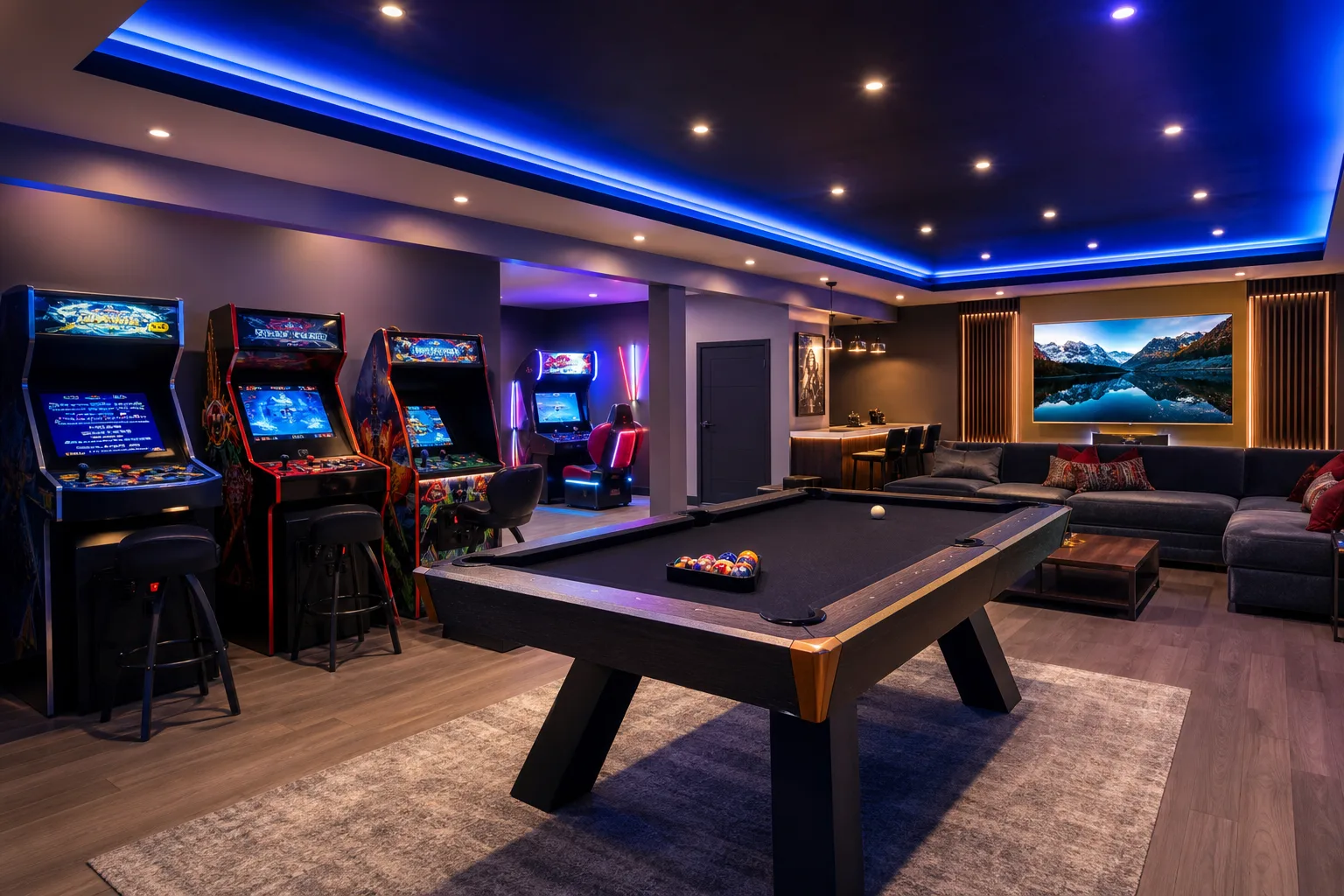
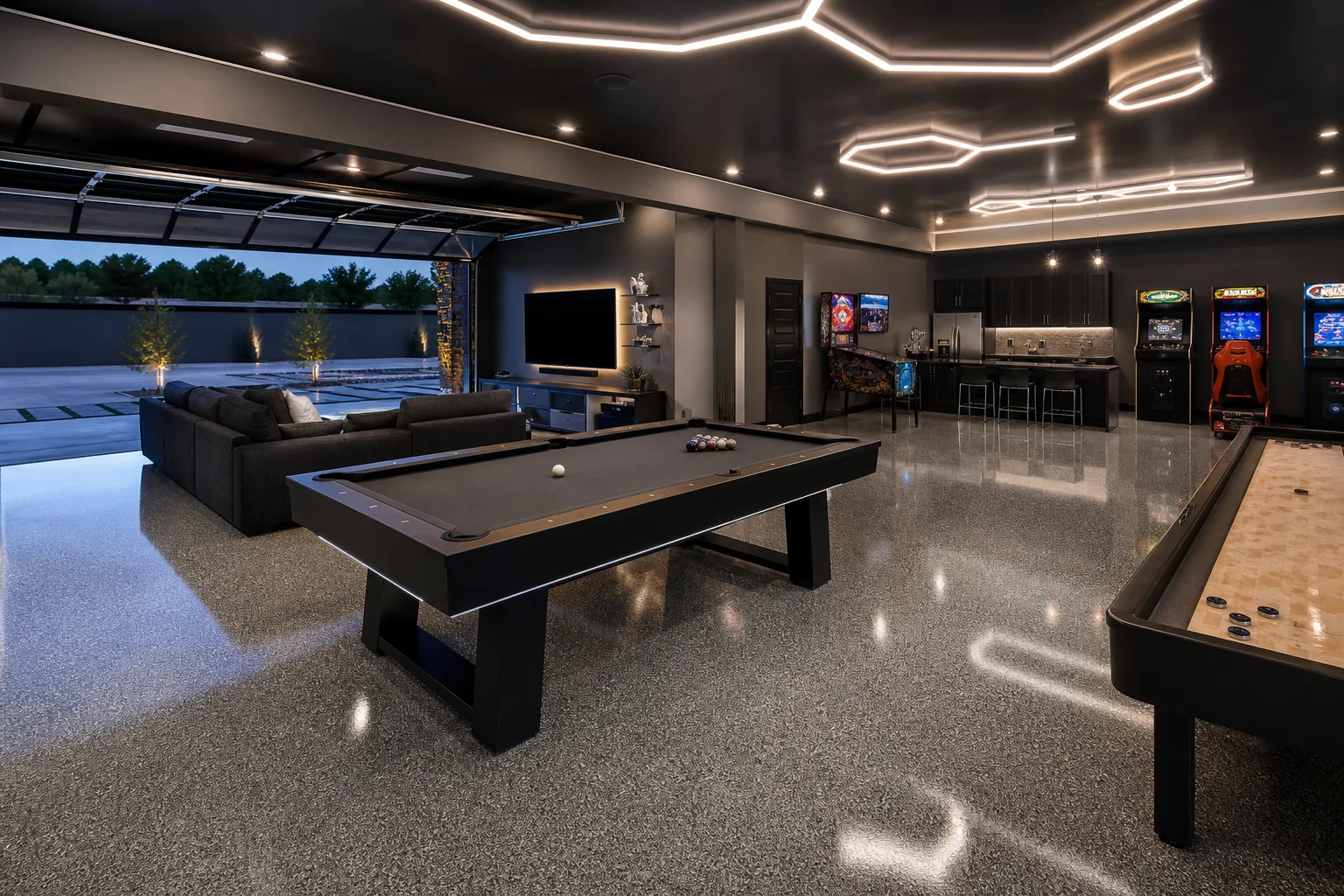
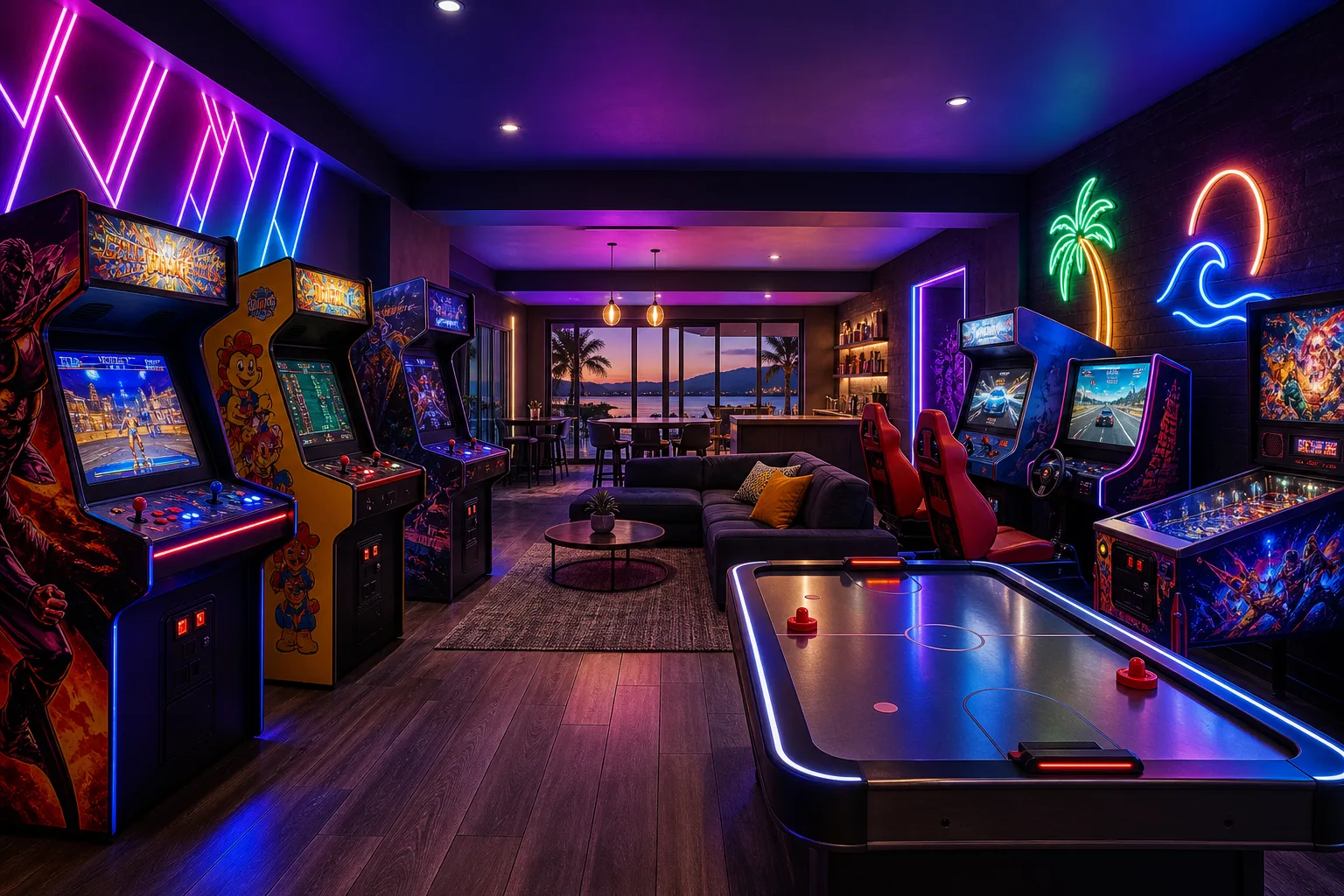
Game Room Mistakes in STRs
Wrong package level, residential arcade cabinets, bad layout — eight mistakes that turn your game room into a review liability.
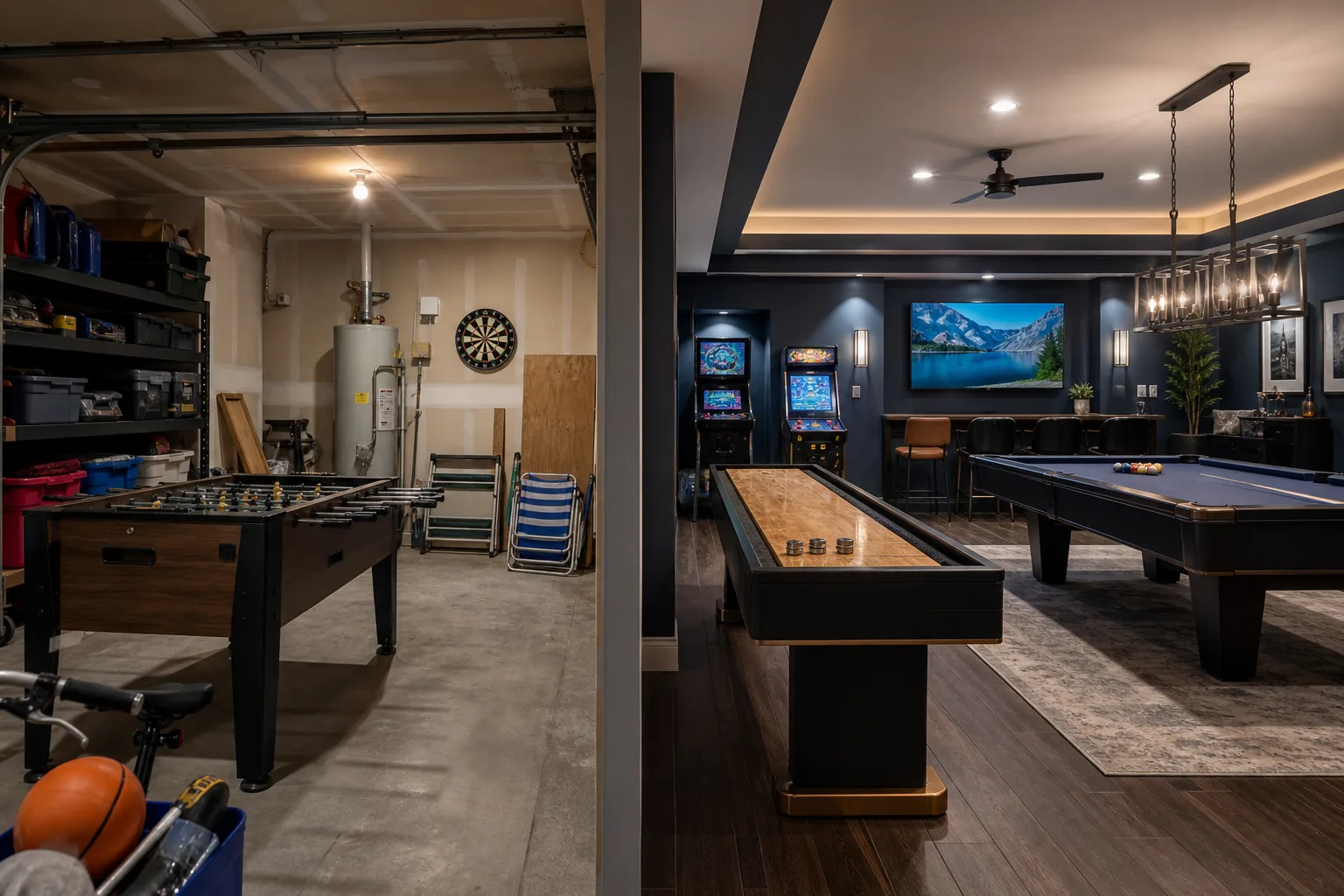
Sound familiar?
Your game room looked great at launch — but by year two the joysticks stick, the pool felt is stained, and guests mention it in three-star reviews while neighbors with commercial-grade setups book ahead of you. None of these failures required a bad contractor or a huge budget miss — most trace back to one of eight predictable mistakes made in the first month of scoping.
In short
- Game-room mistakes are expensive in a specific way — they often do not show up until 12-18 months into operating life, by which point they are already baked into the operating budget and the next refresh cycle has to absorb them.
- The eight mistake categories: package tier mismatch, residential-grade equipment, wrong arcade-piece selection, layout errors, soundproofing and HVAC under-spec, photo staging failures, operational maintenance neglect, HOA and permit oversights.
- Package tier discipline at the front of the project is the prevention pattern for the most expensive mistakes — building Luxury Estate scope at 8BR property, Standard Resort at 6BR-7BR, Lite Garage Conversion at 5BR with the appropriate equipment grade and themed staging for each tier.
- HOA review and permit clearance belong at the front of the project, before any construction scope is committed. Discovering restrictions mid-build is more expensive than front-loading the review.
- Operational maintenance protocol with documented inspection cadence and contractor relationships for piece-specific service work protects the game-room investment across booking-season cycles. Properties without a documented protocol degrade visibly faster than properties with one.
- Monday action: compare your listing to three comps on bunk, outdoor, and primary suite before signing a furniture PO.
We see the same eight game room failures on Central Florida STR installs — wrong package level for bedroom count, residential arcade cabinets, bad layout, weak photos, skipped maintenance. Each one shows up in reviews before it shows up in your P&L. Most are cheaper to catch during scoping than to fix after guests start mentioning them.
What to know
Package level mismatched to bedroom count
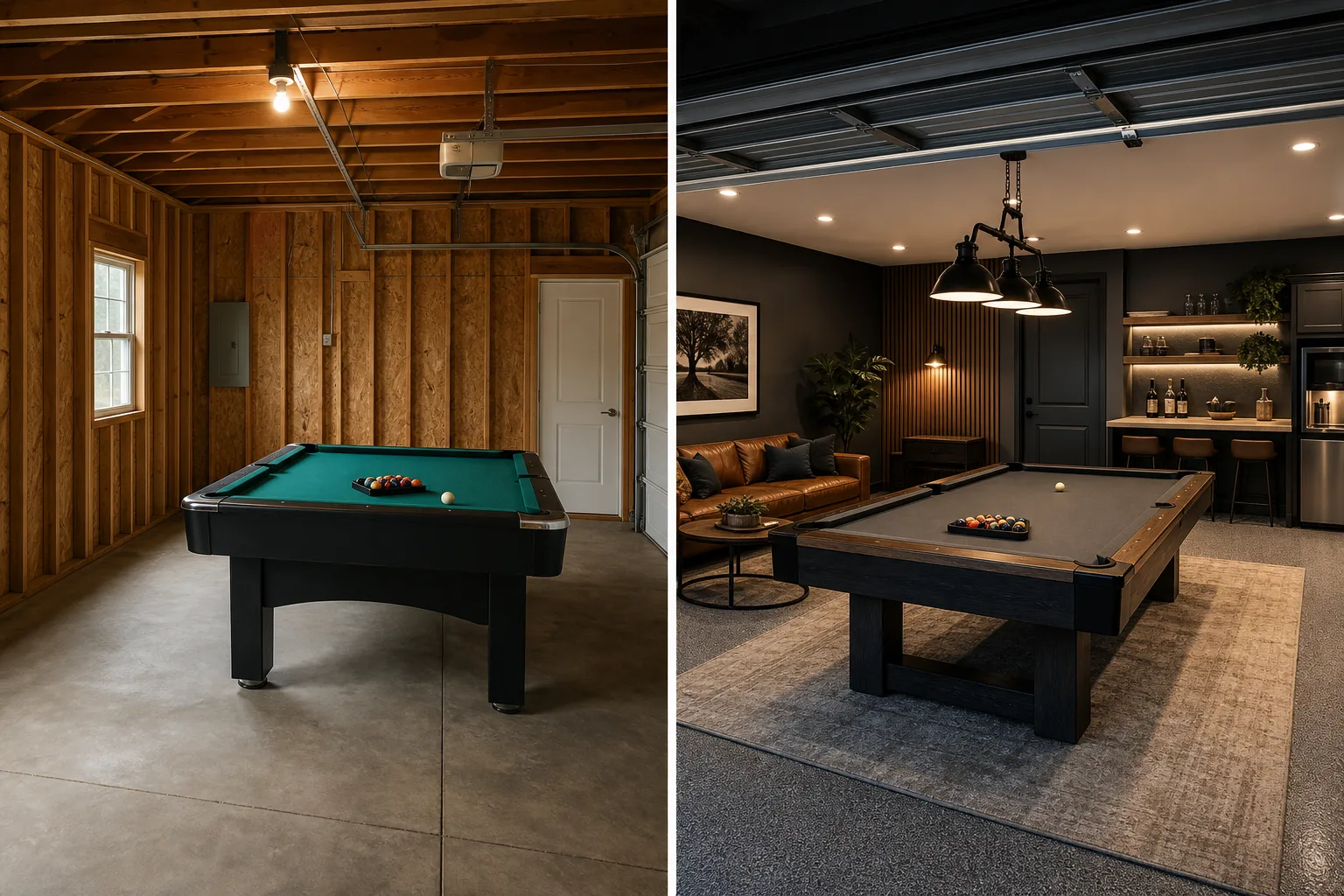
The most common game-room mistake at Central Florida resort STRs: building Lite Garage Conversion scope at 8BR Luxury Estate property, or Luxury Estate scope at 4BR launch-ready package property. Both directions fail. Lite scope at 8BR package tier: the game room reads as cost-cut in the gallery against same-floor-plan neighbors with Luxury Estate game-room scope, the property exits search filters that expect amenity depth at 8BR, and the nightly-rate ceiling compresses. Luxury scope at 4BR package tier: the game-room investment never returns because the property is not competing in a market segment where the amenity tier produces nightly-rate uplift. Operational signal — listing photos comparison against same-floor-plan competitors shows the property’s game-room photo as the weakest amenity shot, or the highest amenity scope in the property does not produce the booking-conversion lift the budget assumed. Prevention: package tier discipline at the front of the project. The game room conversion service page and the game room conversion cost planning guide cover package tier composition by bedroom count.
Residential arcade and pool tables from big-box stores
Owners buying arcade machines, pool tables, and table games from big-box consumer-retail channels or general online retailers consistently underestimate the durability gap. Residential-grade multicades have pressboard cabinets and plastic-microswitch joysticks that fail predictably under STR turnover. Residential-grade pool tables have slatron or MDF playing surfaces that warp under Florida humidity. Residential foosball tables have hollow rod bearings that wear in months. Operational signal — equipment shows visible wear (cabinet edge damage, joystick stickiness, felt nap separation, foosball rod sticking) within the first 12 months. Recovery: replace residential-grade pieces with commercial-grade equivalents at the next refresh cycle. Prevention: spec discipline at the front of the project — commercial-grade construction (steel-frame multicades with Sanwa or Seimitsu microswitches, true 1-inch slate pool tables with K-66 cushion rubber, commercial foosball tables with sealed bearings). The arcade room ideas guide and the pool table room guide cover commercial-grade spec.
Arcade pieces that don't match your guests
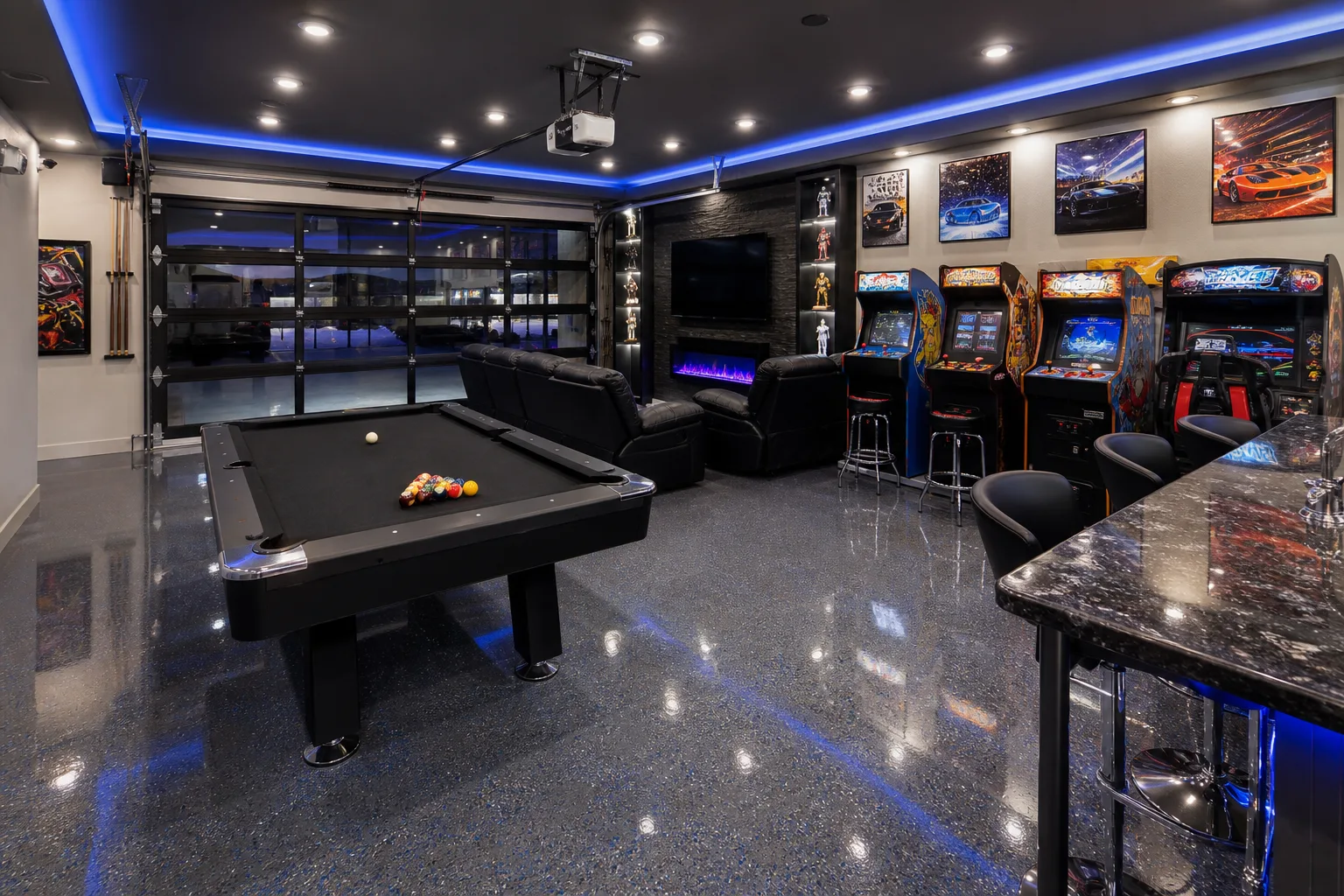
Game-room mistakes often trace to arcade-piece selection that does not match the property’s booking-audience profile. Examples: pinball machines as the primary arcade piece at properties without commercial-grade pinball service contracts (maintenance burden compounds, pieces spend more time out of service than in); coin-pusher and ticket-game pieces in STR settings (require restocking cadence cleaning crews cannot sustain); arcade-shooter pieces at family-Disney-trip properties (audience mismatch); claw machines skipped at family-rental properties where they would be the strongest secondary photo composition. Operational signal — guest review feedback mentions specific pieces as "broken," "not working," or by absence ("expected more variety"); cleaning crew flags repeated maintenance on specific pieces; certain pieces have visibly low engagement at the photo refresh cycle. Recovery: replace mismatched pieces at the next refresh cycle with audience-aligned alternatives. Prevention: arcade-piece selection consultation that matches piece category (multicade, claw, skee-ball, specialty) to booking-audience profile (family-Disney-trip, group-travel, mixed). The arcade room ideas guide covers piece selection by audience.

Layout and clearance errors
Layout mistakes show up as photo composition issues and guest-experience problems. The most common patterns: pool table installed in a room with insufficient cue clearance (guests cannot complete a clean cue stroke without backing into adjacent furniture or walls); arcade pieces installed against walls where the cabinet outlet placement requires visible extension cords running across the floor; lounge seating positioned facing the wrong direction for the room’s natural sightlines; table games (foosball, air hockey) positioned where the active-play motion zone overlaps walking traffic to the room exit. Operational signal — guest reviews mention "cramped" or "awkward" layout; photo composition shows obvious clearance issues; cleaning crew reports recurring furniture movement to access pieces. Recovery: layout adjustments at the next furnishing refresh, sometimes requiring construction work (relocating outlets, repositioning fixed elements). Prevention: layout drawing as part of the scoped proposal, with cue-clearance verification for pool tables, outlet-position confirmation for arcade pieces, and traffic-flow planning for the room. The pool table room guide and the garage-to-game-room conversion playbook cover layout patterns.
Soundproofing and HVAC under-spec
Two construction-side mistakes that show up only after guest use begins. Soundproofing under-spec: the game room shares a wall with an adjacent bedroom and arcade-machine attract-mode, pool-ball clatter, and TV audio carry through standard residential wall construction. Operational signal — guest reviews mention "could hear arcades from the bedroom" or "game room noise during quiet hours." HVAC under-spec: the converted garage or den runs hot or humid because the HVAC tie-in did not size the additional load correctly, or the dedicated mini-split was undersized for the room volume. Operational signal — guest reviews mention "room was too hot during the day," or arcade machine cabinets show humidity damage at the 12-18 month mark. Recovery: soundproofing retrofit (sound-dampening insulation added to shared walls, sometimes with a second drywall layer) and HVAC upgrade (capacity addition or dedicated system upgrade), both requiring construction-side work mid-property-life. Prevention: soundproofing and HVAC spec verified by licensed contractors at the front of the project. The garage-to-game-room conversion playbook covers construction-side scope and the verification language that should appear in every scoped proposal.
Photo staging failures
The game-room photo is the listing photos slot that represents the entire amenity in the booking-decision moment. Photo staging mistakes consistently weaken the gallery impact. Common patterns: arcade screens off during the shoot (read as "machines are broken"); lounge zone unstyled with no throw pillows, decor, or composition layer (reads as "ran out of budget"); cool-white uniform lighting across the room (flattens the temperature contrast between warm room ambient and cool cabinet screens); cables visible on the floor (reads as "installation day, not guest-ready"); white walls with no themed accent (flat composition behind colorful arcade pieces); shot from an awkward angle that does not capture the room as a coherent amenity. Operational signal — the game-room photo in the gallery has lower engagement (image-zoom interactions, time spent on the gallery slot) than other amenity slots; the property’s listing reads as "fully-furnished" but not "gallery-ready" against same-floor-plan competitors. Recovery: photo refresh with proper staging and photographer briefing, often at the next scheduled listing photos update. Prevention: photographer briefing at the front of the build that specifies lighting setup, screen-on composition, staging layer, and shot angles. The themed-room photo strategy guide covers photographer-briefing principles that apply to game-room composition.
No maintenance protocol for the cleaning crew
Game-room operational maintenance is the line item most owners under-budget. Arcade machines need quarterly inspection (joystick health, button responsiveness, screen calibration); pool tables need re-felting at the 24-36 month mark; foosball tables need rod-grip refresh and bearing checks; claw machines need monthly prize restock; specialty pieces (air hockey, basketball arcade, dance-pad) need piece-specific maintenance cadence. Properties without a documented maintenance protocol accumulate visible wear faster than properties with documented protocols, and the listing photos game-room photo deteriorates correspondingly. Operational signal — guest reviews mention specific pieces as "broken" or "not working"; the game room visibly degrades between photo refreshes; the cleaning crew flags maintenance items inconsistently. Recovery: build the maintenance protocol with the property manager, including inspection cadence, contractor relationships for piece-specific service work, and operating-budget line items for replacement parts and felt material. Prevention: operational handoff at the end of the install phase, with a documented maintenance protocol, contractor references for arcade service work, and a one-year operational review cycle with the property owner. The game room conversion cost planning guide covers operational scope.
HOA and permit oversights
Construction-side game-room mistakes that show up as HOA citations or permit-compliance issues after the build is complete. Common patterns: garage door removed without HOA approval (community citation, sometimes forces partial rebuild); electrical work or HVAC additions completed without permits (county-level enforcement at property sale or refinance, sometimes during property-management inspection cycles); structural changes (insulation, drywall, ceiling) without permit clearance (similar enforcement risk); rental-platform compliance (some communities restrict short-term rental amenity additions in HOA bylaws). Operational signal — community management notification of citation; county-level enforcement letter at refinance, sale, or insurance renewal; rental-platform listing flagged for community-rule violation. Recovery path varies — sometimes the work can be permitted retroactively (with inspection and corrective work); sometimes it requires partial rebuild; sometimes it requires reverting changes. All paths are more expensive than front-loading the HOA-and-permit review. Prevention: HOA review and permit clearance at the front of the project, before any construction scope is committed. **HOA and permit requirements vary by community, jurisdiction, and Florida building code and must be verified with the property’s community management and the local building department.** The garage-to-game-room conversion playbook covers HOA and permit review as the first step of the construction sequence.
What to do first this week
Open three same-bedroom-count comps on Airbnb or VRBO and screenshot bunk photos, outdoor dining seats, and primary suite finish. List where your home falls short — that gap list becomes your furnish scope. Game room underperforming? Send address and what's failing — we'll scope recovery or a clean rebuild.
What we see go wrong
- Package level mismatched to bedroom count — Lite scope at 8BR property (cost-cut signal) or Luxury scope at 4BR property (investment does not return).
- Residential-grade equipment from consumer-retail channels — visible wear within 12 months, durability gap shows up in turnover.
- Arcade-piece selection that does not match the booking-audience profile — pinball without service contracts, coin-pusher pieces in STR settings, audience-mismatched specialty pieces.
- Layout errors — insufficient cue clearance for pool tables, visible extension cords, lounge facing the wrong direction, table games in walking-traffic zones.
- Soundproofing under-spec — game-room audio carries through residential walls into adjacent bedrooms.
- HVAC under-spec — converted garage runs hot or humid because the HVAC scope was sized residentially rather than for guest-occupied amenity room load.
- Photo staging failures — arcade screens off, lounge unstyled, cool-white lighting, visible cables, no themed accent wall.
- Operational maintenance neglect — no documented protocol, inconsistent inspection cadence, no contractor relationships for piece-specific service work.
- HOA and permit oversights — garage door removed without approval, electrical or HVAC work without permits, structural changes without clearance.
Related Community Guides
Eight Core Services
Turnkey to Themed Rooms — All Under One Roof
Full furniture packages, STR interior design, themed kids suites, game room conversions, property prep, custom bunks, white-glove install, and listing-ready staging — for vacation rentals and second homes across Orlando, Kissimmee, Davenport, and the full Florida STR market.
Frequently Asked Questions
What is the most expensive game-room mistake to recover from?
Usually package tier mismatched to bedroom count — building Lite scope at 8BR Luxury Estate property, then needing to rebuild to Luxury Estate scope after the listing photos comparison reveals the cost-cut signal. The recovery involves additional construction work (often expanding the convertible space, adding HVAC and electrical capacity for upgraded equipment), additional furnishing scope (replacing residential-grade or undersized pieces), and a photo refresh. The combined recovery cost can exceed the original build cost. HOA and permit oversights are sometimes more expensive in extreme cases (partial rebuild required), but package tier mistakes are more common and consistently more expensive than owners expect.
How do I know if my existing game room has a package tier mismatch?
Listing listing photos comparison against same-floor-plan competitors is the primary signal. Pull the gallery photos from 3-5 same-floor-plan properties in the same resort community at the same bedroom count, compare the game-room photos side by side. If your photo reads as visibly under-furnished (smaller, simpler, fewer arcade pieces, less themed staging) and your nightly rate is compressed against those competitors, the package tier mismatch is the likely cause. Booking-conversion data is the secondary signal — if your conversion rate against listing impressions is below the resort-community average and the amenity setup is the visible gallery weakness, package tier mismatch is a likely contributor.
Can I recover from buying residential-grade arcade machines without replacing them all?
Sometimes — depends on the wear pattern. If the pieces are still functioning but starting to show cabinet wear or joystick degradation, sometimes a commercial-grade refurbishment (replacing residential joysticks with Sanwa or Seimitsu commercial-grade microswitches, refinishing cabinet edges) can extend the operational life by a season or two. If the pieces have failed mechanically (display issues, board failures, structural damage), replacement is the standard recovery path. The decision usually depends on the total inventory replacement cost vs the refurbishment cost and whether the refurbishment maintains the listing photos visual quality.
How often should the game room photo refresh?
Every 24-36 months at typical STR cycles, sometimes more often if the amenity setup changes (new arcade pieces added, themed wall updated, lounge layer refreshed) or if a mistake is being corrected in the gallery composition. Properties with Luxury Estate scope game rooms can sometimes extend the refresh cycle to 36-48 months if the underlying inventory is photographing cleanly; properties with Standard Resort scope or residential-grade equipment usually need the 24-month cadence because the underlying pieces deteriorate visibly faster. The themed-room photo strategy guide covers the broader photo-refresh strategy for amenity rooms.
What is the right operational maintenance protocol for an STR game room?
Quarterly inspection (joystick health, button responsiveness, screen calibration, table-game mechanical health, claw machine restock and interior cleaning, lighting fixture inspection, lounge zone wear check). Annual deep service (arcade machine board diagnostics, pool table re-leveling check and felt inspection, foosball rod-bearing replacement as needed). 24-36 month refresh cycle (pool table felt replacement, arcade machine refurbishment as needed, themed wall touch-up or refresh). The protocol should be documented in the property manager handoff with contractor references for piece-specific service work. The cleaning crew handles inspection-level maintenance; deeper service work is contracted to commercial arcade-service providers.
What should I do first?
Pull three in-community comps with your bedroom count, note bunk, outdoor, and primary suite in the hero photos, then send your floor plan. We match package tier to that comp set before you order furniture.
Is it ever cheaper to just remove an underperforming game room instead of fixing it?
Rarely, for STRs already in a themed-and-amenity-heavy resort community — the convertible space usually still needs some amenity to fill the gallery slot competitors are covering with their own game room or theater room, so removal alone doesn't solve the underlying gallery gap. In the rare cases where removal makes sense, it's usually because the property's target booking audience shifted entirely (repositioning toward couples or business travel, for example), not because the game room itself failed. Before removing it, run the same diagnostic you'd run on an underperforming themed room — check whether the failure is actually equipment or staging (cheap fix) rather than audience mismatch (the only scenario where removal is the right call).