Arcade Room Ideas for Vacation Rentals
Practical arcade-room ideas for STR properties — multicade cabinets, claw machines, skee-ball, layout patterns, age-range targeting, and photo-ready staging. What actually goes in the room.
Sound familiar?
Most "arcade room ideas" content reads as inspiration without selection logic — twelve arcade cabinet photos, no answer to "which one should I actually buy for a 5BR Disney-corridor STR." The decision is less obvious than it looks. Arcade pieces have meaningfully different durability profiles, maintenance burdens, photography impact, and age-range appeal, and the wrong selection at the front of the project costs both budget and listing photo impact.
In short
- Arcade-piece selection is a commercial decision tied to bedroom count, booking audience, and listing-photo composition — not a personal preference. Multicade, claw machine, skee-ball, and specialty pieces each have different commercial behavior.
- Commercial-grade construction (steel-frame multicades, commercial microswitches, regulation-length skee-ball alleys) is non-optional for STR use. Residential-grade pieces fail predictably under guest use and produce visible listing-photo wear inside the first booking season.
- Generic-vintage cabinet artwork is the trademark-safe pattern — character-branded multicades carry platform-flagging exposure on photos that generic-art alternatives avoid.
- Layout patterns scale with bedroom count: 5BR Lite — single multicade + claw + one table game; 6BR-7BR Standard — two arcade pieces + 1-2 table games + lounge; 8BR+ Luxury / Mega-Rental — zoned multi-piece build with sight lines for multiple listing photos.
- Photo-ready staging requires warm room ambient lighting against cool cabinet-screen light (temperature contrast carries the photo), arcade screens powered on with attract-mode running, styled lounge zone, themed accent wall, cleared floor. Empty arcade-room photos read as "ran out of budget."
This guide covers piece-selection logic for STR arcade rooms — what to actually buy and why, organized by bedroom-count tier and booking-audience profile. The garage-to-game-room conversion playbook covers the construction sequence underneath; the game room conversion cost planning guide covers package levels and budget drivers; this guide covers the furnishing layer — what goes in the room once the construction phase finishes. Trademark note: we use generic descriptors (multicade cabinets, claw machines, skee-ball alleys, classic-game-library setups) rather than specific licensed-arcade-game titles, because most original arcade IP is actively enforced by current rights-holders and listing-photo display of trademarked arcade artwork carries platform-takedown risk.
What to know
The four arcade-piece categories that move STR bookings
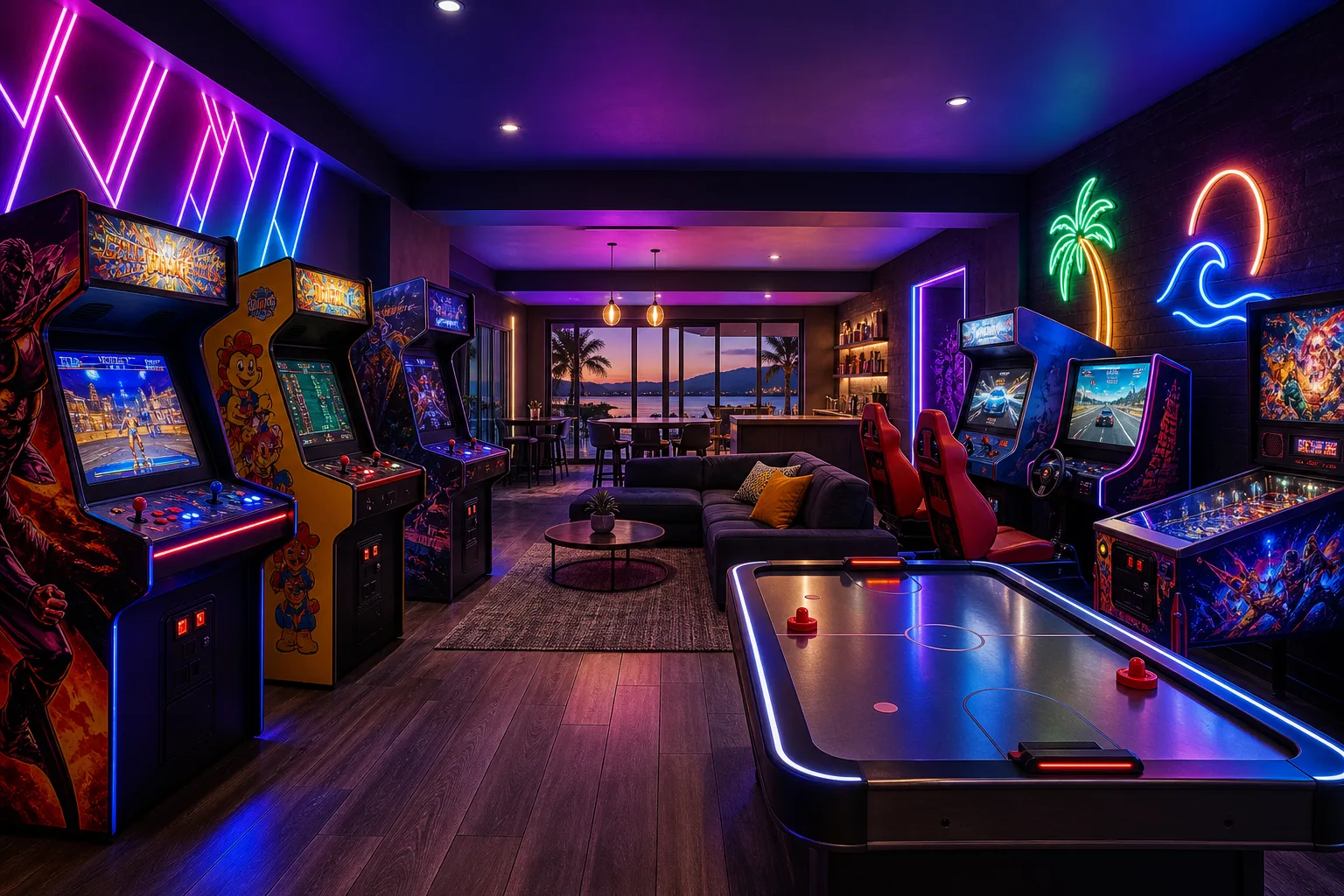
Arcade pieces for STR use fall into four categories with different commercial behavior. (1) Multicade cabinets — single physical cabinet running a curated library of classic-era arcade titles. Highest dollar-per-photo impact at lower package levels because one cabinet anchors the room. Common spec: 60-game or 412-game multicade with original-style cabinet artwork (not specific licensed-character art). (2) Claw machines — high photography impact, strong nostalgia signal in family-travel booking, low ongoing maintenance burden. Best paired as the secondary arcade piece in 5BR-7BR builds. (3) Skee-ball alleys — physical-skill game, broad demographic appeal, photographs as a wide horizontal element that anchors the room differently from vertical arcade cabinets. Standard in 6BR+ resort game rooms. (4) Specialty arcade pieces — air hockey, basketball arcade, dance-pad games, classic table-top arcade. Higher build-out cost and higher maintenance per piece. Best at 8BR+ where the amenity setup supports multiple specialty pieces. Theme-piece selection compounds with bedroom-count tier; the cost planning guide covers tier-by-tier amenity setup composition.
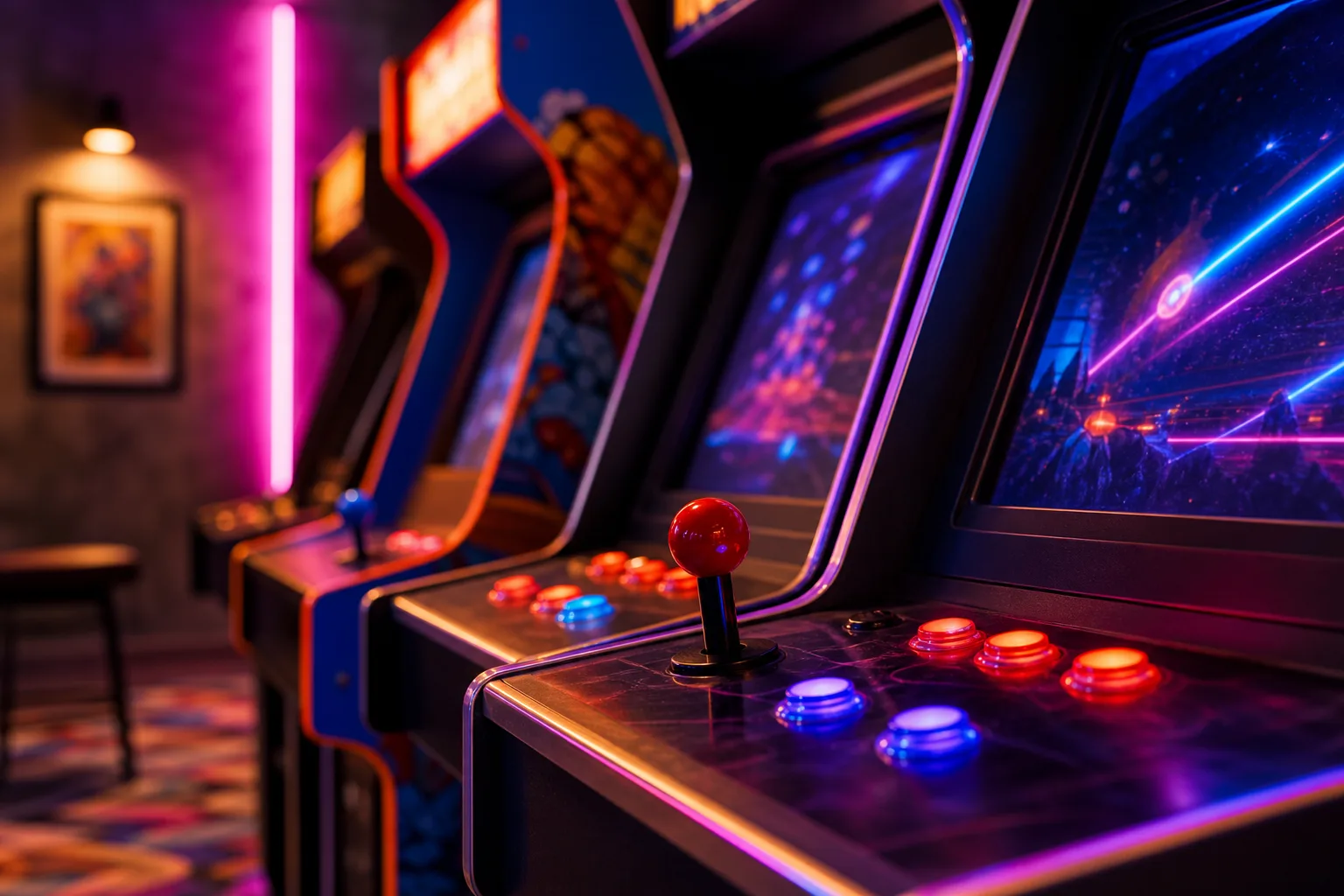
Multicade selection — what actually matters
Not all multicade cabinets perform equally in STR use. The selection criteria we work to: (1) Cabinet construction — commercial-grade plywood and laminate construction with steel-frame internal supports, not residential-grade pressboard. Residential-grade multicades develop visible wear at the cabinet edges and joystick mounting within the first booking season. (2) Joystick and button quality — commercial-grade microswitches rated for several million actuations (Sanwa, Seimitsu, or equivalent commercial spec), not residential-grade plastic switches that fail predictably under enthusiastic kid use. (3) Display — modern LCD (24-26 inches) with classic 4:3 aspect display capability for accurate retro-game presentation. CRT displays look nostalgic but break and are not field-serviceable. (4) Game library — curated set of 50-100 classic-era titles is the sweet spot; very-large-library multicades (500+ games) often include unlicensed and poorly-emulated titles that contribute nothing to guest experience. (5) Cabinet artwork — generic vintage arcade artwork (starburst graphics, geometric patterns, retro typography) rather than artwork referencing specific licensed game characters or franchises. The "branded character cabinet" multicades photograph well but carry trademark exposure that the generic-art alternatives do not.
Claw machines — the underrated photo piece
Claw machines are the most under-selected arcade piece in STR builds because owners default to "kid-themed novelty" thinking rather than "listing-photo amenity" thinking. Three reasons claw machines outperform in STR settings: (1) They photograph at full color saturation and pull the eye in the listing photos — the colorful interior visible through clear acrylic carries the photo at thumbnail size where multicades sometimes flatten. (2) They have very low maintenance burden — no joysticks or buttons to wear out, no game-library updates needed, no software issues. The prize-stocking workflow is simple and the cleaning crew can handle it in turnover. (3) They serve the same nostalgia signal as multicade cabinets but for a broader age range (toddler through teenager). Selection criteria: standard 6-cubic-foot commercial cabinet, LED interior lighting rated for continuous operation, prize-stocking access door that locks, free-play setting (coin mechanism disabled for STR use). Stock prizes from the same supplier consistently; mixed-source prize layers photograph poorly. Most claw machines in 5BR-7BR STR builds are stocked with plush toys and small kid-targeted items that the cleaning crew restocks during turnover.
Skee-ball alleys — the wide horizontal anchor
Skee-ball alleys are the wide horizontal element that anchors the room differently from vertical arcade cabinets. The piece sits in front of the wall, occupies real footprint (typically 10 feet long, 2-3 feet wide), and produces a distinct listing-photo composition. STR-grade skee-ball alleys are commercial pieces — residential-grade alternatives are rare and the durability gap is large. Selection criteria: 10-foot regulation-length alley (not the 6-foot tabletop variants which look toy-like in listing photos), commercial scoring electronics with ticket-dispense disabled for STR use, steel-frame construction rated for adult-weight use. Skee-ball ramps wear at the launching zone after about 18-24 months of regular STR use; we spec replacement-ramp inserts from the supplier so refresh is a 30-minute swap rather than a full piece replacement. Skee-ball alleys are typically the standard amenity setup addition at 6BR+ resort game rooms; 5BR scope rarely justifies the footprint unless the convertible space is unusually large.
Specialty arcade pieces — when each one fits
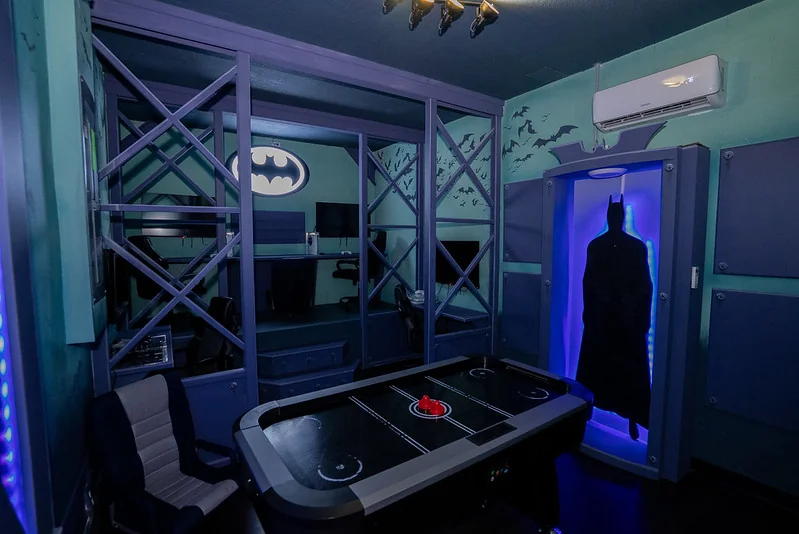
Specialty pieces extend the amenity plan at 8BR+ scope and rarely fit at 5BR-7BR. The most-common specialty pieces and where they fit: (1) Air hockey — broadest-demographic specialty piece, good photo composition (large flat surface in the foreground anchor position), moderate maintenance (puck and paddle replacement is cheap). Standard at 7BR+. (2) Basketball arcade (Pop-A-Shot style commercial cabinet) — high-energy piece, strong photo signal for sports-travel audiences. Standard at 6BR+ in tournament-corridor properties. (3) Pinball machines — high nostalgia signal, high maintenance burden (regular service required, parts can be hard to source, manufacturer-specific service knowledge needed). Recommend against for most STR builds unless the owner has commercial pinball experience or budget for a dedicated arcade service contract. (4) Dance-pad games — high photo impact, but pads wear quickly under enthusiastic adult use and the audio is loud enough to require soundproofing scope. Standard at 8BR+ with appropriate acoustic treatment. (5) Coin-pusher and ticket-game pieces — recommend against; require constant prize and coin restocking that cleaning crews struggle to sustain.
Layout patterns by bedroom count
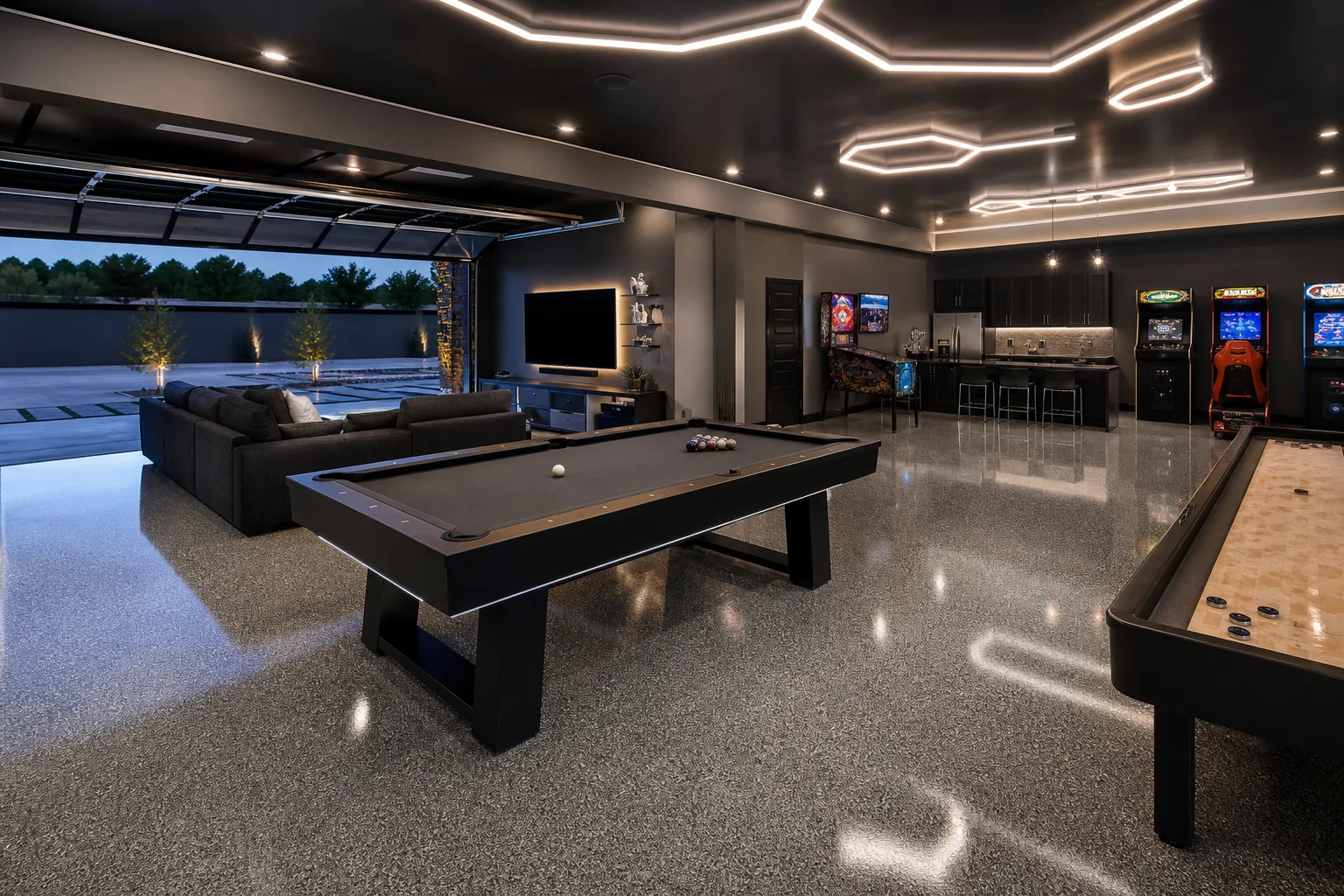
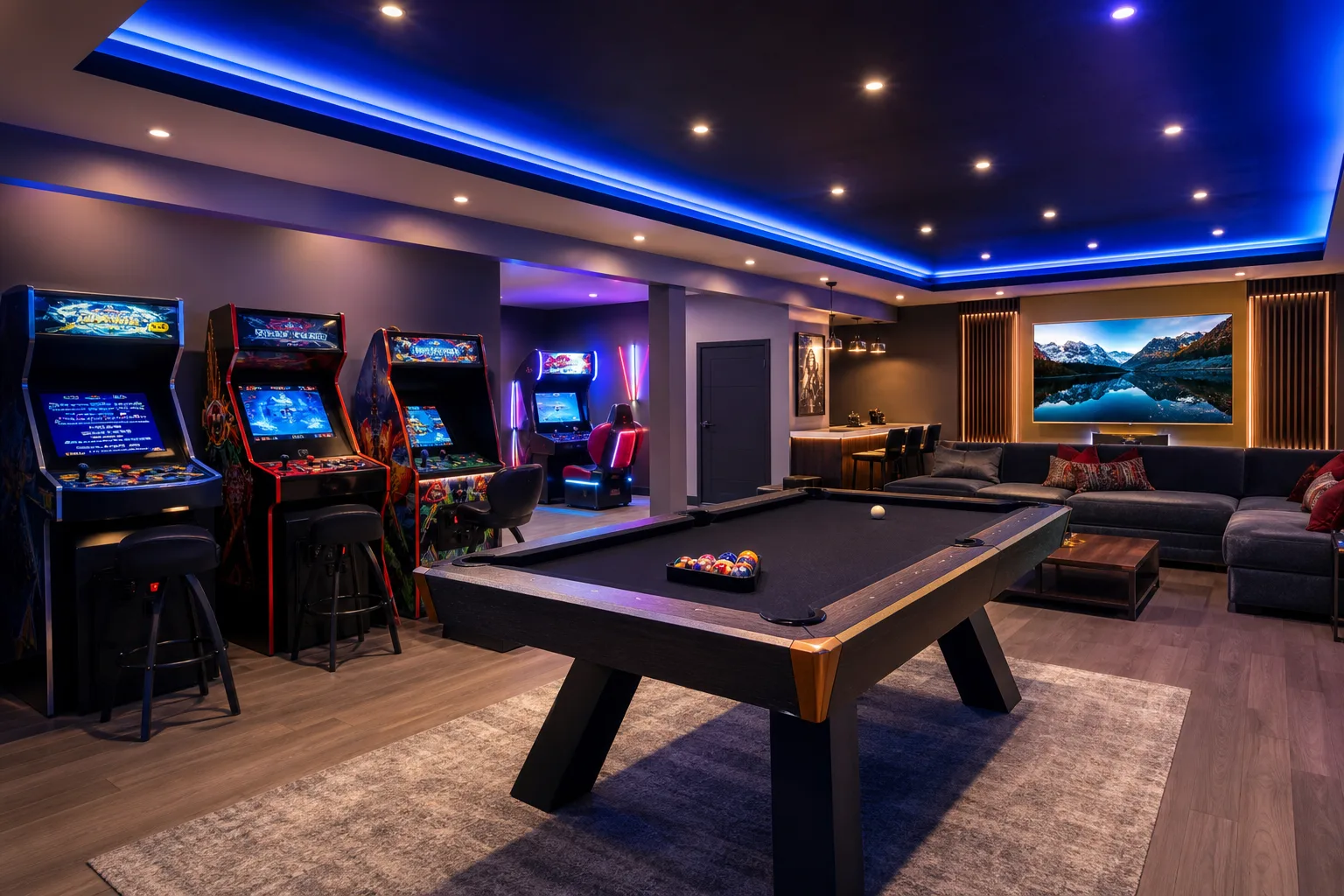
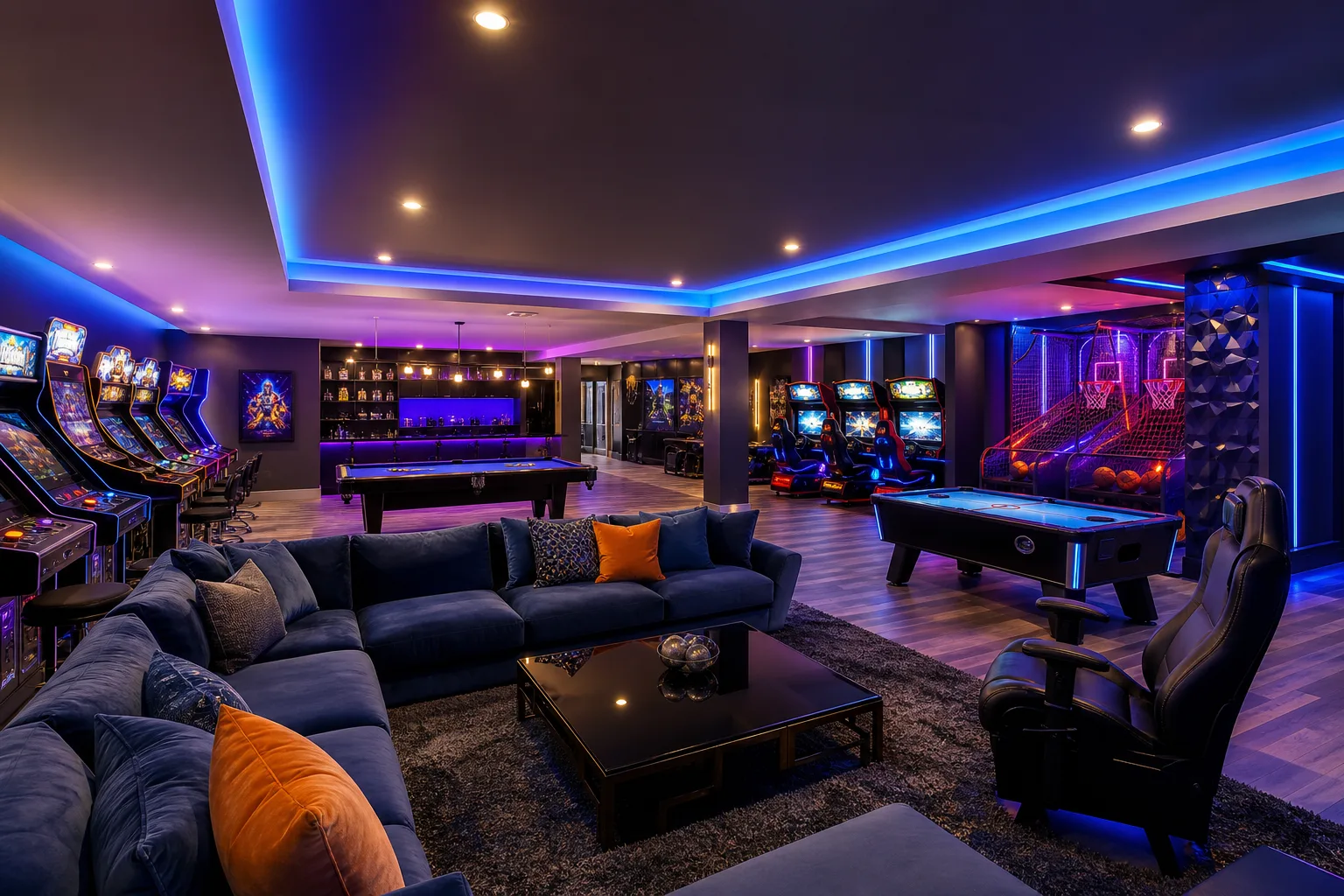
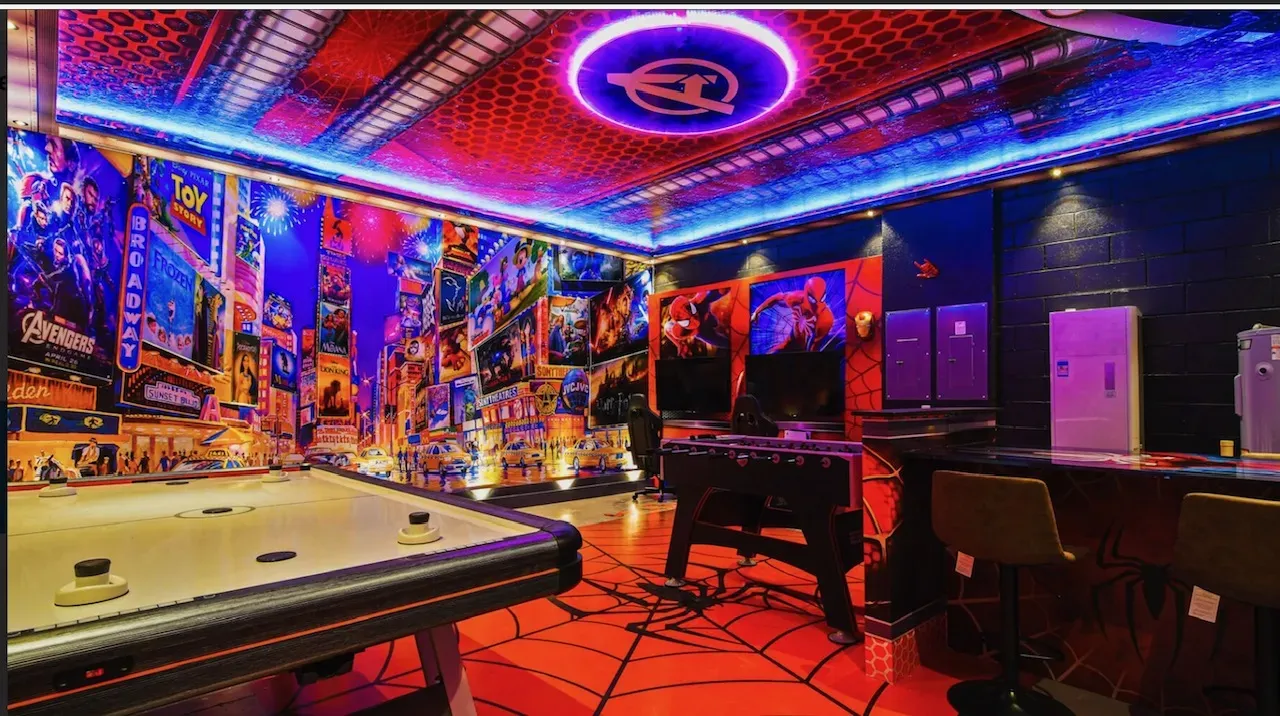
Arcade-room layout follows three patterns sized to the converted space and bedroom-count tier. (1) 5BR Lite Garage Conversion — single multicade + one claw machine + one table game (pool or foosball) + lounge seating for 4-6 + smart TV. Layout: arcade pieces against the wall opposite the room entry; lounge seating facing the TV; table game centered in the remaining footprint. (2) 6BR-7BR Standard Resort Game Room — two arcade pieces (multicade + claw or multicade + skee-ball) + one or two table games + larger lounge zone + smart TV + themed wall element. Layout: arcade pieces along the long wall; table games in the central zone; lounge seating against the entry-side wall facing the TV. (3) 8BR+ Luxury Estate or Mega-Rental — multi-zone build with three-plus arcade pieces, two-plus table games, dedicated lounge and bar staging, themed wall treatment, premium lighting. Layout: zoned by activity — arcade zone, table-game zone, lounge zone, bar zone — with sight lines that produce multiple distinct listing photos photos from the same room. The game room conversion service page walks through package levels; this guide covers the layout patterns each tier uses.
Photo-ready staging for arcade rooms
Arcade rooms photograph differently from themed bedrooms and require different staging. Key staging decisions: (1) Lighting — arcade rooms photograph best under warm-temperature ceiling lighting (2700K-3000K) paired with the cool light from arcade cabinet screens and claw machine interiors. The temperature contrast is the visual story; uniformly cool-white lighting flattens it. (2) Arcade screens active during the shoot — every multicade and claw machine should be powered on and displaying attract-mode graphics during photography. Dark screens read as "machines are broken" in the gallery. (3) Lounge zone staged — throw pillows on the lounge seating, a styled drink tray on the side table, a single curated game piece (controller, retro game cartridge as decor) on the lounge ottoman. Empty lounge zones read as "we ran out of budget." (4) Wall treatment — even at Lite tier, one accent wall with themed treatment (painted color block, vinyl-decal accent, framed retro-arcade art) anchors the photo. White walls behind colorful arcade pieces produce a flat composition. (5) Floor cleared — no cables visible, no temporary equipment on the floor. Arcade rooms with visible cabling read as residential rec room rather than STR amenity. The themed-room photo strategy guide covers the photographer briefing principles that apply to arcade rooms too.
How FPUSA scopes arcade-piece selection
Our arcade-room consultations walk through (a) bedroom-count tier and competitive-set arcade scope (what same-floor-plan neighbors include), (b) booking-audience profile (family-Disney-trip favors multicade-and-claw; sports-travel favors specialty pieces like basketball arcade and air hockey; mixed-audience favors broad-demographic combinations), (c) convertible-space dimensions and layout viability for each piece, (d) photography plan for the room as a hero listing photo, (e) operational planning for restocking, maintenance, and refresh cadence. The output is a scoped proposal with each arcade piece line-itemed (model, supplier, commercial-grade spec, installation, free-play configuration where applicable) and a layout drawing for the converted space. Final pricing depends on piece selection and source supplier; planning-range guidance is on the game room conversion service page. The game room conversion cost planning guide covers what moves the budget up or down within each package level.
What we see go wrong
- Buying residential-grade multicades from consumer-retail channels — visible cabinet wear and joystick failure inside the first booking season.
- Selecting multicades with licensed-character artwork on the cabinet (specific arcade-game heroes, named retro-game franchise art) — trademark exposure and listing-photo flagging risk that generic-art alternatives avoid.
- Pinball machines as the primary arcade piece without commercial-grade service plan — maintenance burden compounds, machines spend more time out of service than in.
- Coin-pusher and ticket-game pieces in STR settings — require restocking cadence cleaning crews cannot sustain.
- Empty lounge zones in arcade-room photos — reads as "ran out of budget" and depresses the hero listing photo.
- Cool-white uniform lighting in arcade rooms — flattens the temperature contrast between warm room ambient and cool cabinet screens. The arcade-room photo story depends on the contrast.
- Skee-ball alleys at 5BR scope where the convertible space cannot absorb the 10-foot footprint — the piece works at 6BR+ Standard Resort scope and above, not at Lite conversions.
- Skipping the layout drawing in the scoped proposal — arcade pieces arriving without a confirmed layout get installed against the wrong walls and need to be moved during the photo-prep phase.
Related Community Guides
Eight Core Services
Turnkey to Themed Rooms — All Under One Roof
Full furniture packages, STR interior design, themed kids suites, game room conversions, property prep, custom bunks, white-glove install, and listing-ready staging — for vacation rentals and second homes across Orlando, Kissimmee, Davenport, and the full Florida STR market.
Frequently Asked Questions
Can FPUSA install Pac-Man, Donkey Kong, or other licensed arcade games?
We install commercial-grade multicade cabinets running curated libraries of classic-era arcade titles with generic-vintage cabinet artwork. The licensing landscape for original arcade IP is actively enforced by current rights-holders; multicade cabinets sold through commercial suppliers usually include emulation of classic titles under various licensing arrangements (or in some cases without clear licensing). The cabinets we coordinate are sourced from suppliers whose licensing position we vet, and we use generic vintage cabinet artwork rather than character-branded artwork to avoid platform-flagging exposure on listing photos. The arcade piece reads as authentic retro arcade without referencing specific licensed-game artwork.
Are claw machines worth the scope cost in a 5BR STR?
Usually yes — claw machines have very low ongoing maintenance burden, high listing-photo impact, and broad-demographic appeal (toddler through teenager). At 5BR Lite Garage Conversion scope, the standard pattern is one multicade plus one claw machine plus one table game plus lounge seating. The two arcade pieces work harder for the gallery than a single multicade alone would, and the claw machine’s low maintenance profile offsets the higher upfront scope cost.
How does arcade-piece selection interact with themed-room scope?
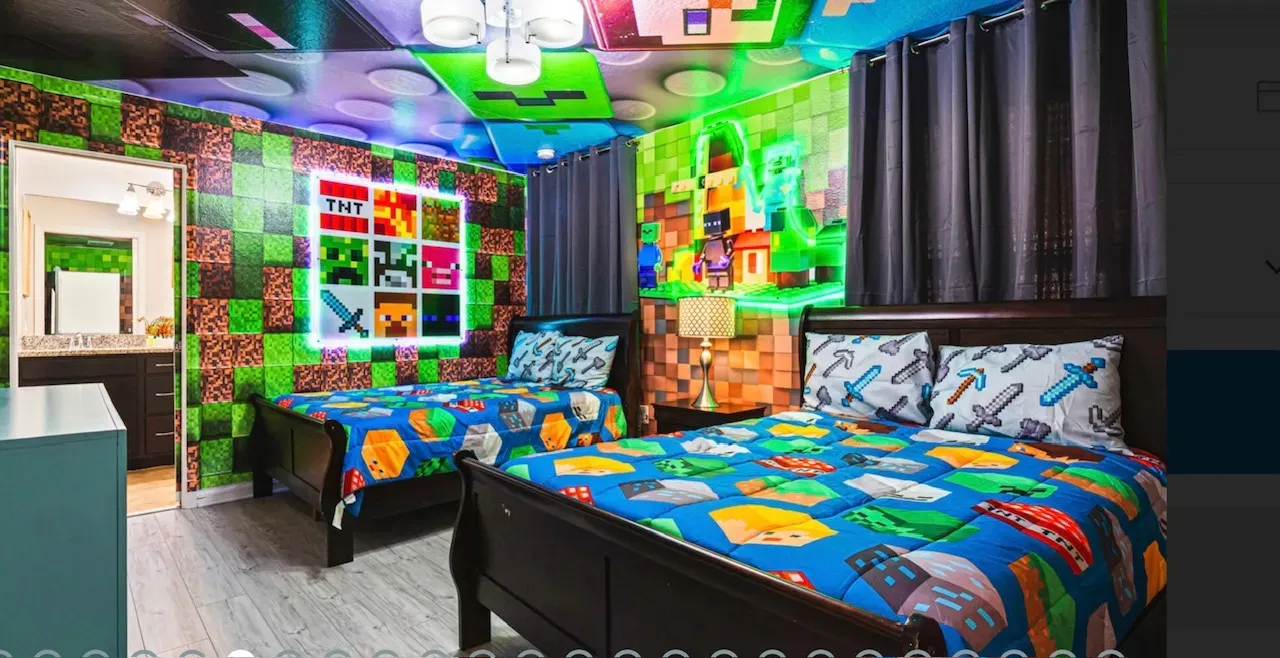
Themed bunk scope (princess, superhero, space, sports, jungle) and arcade-room scope are complementary amenities in 6BR+ properties — both contribute to the listing amenity appeal that group-travel and family-Disney-trip bookers filter for. Specific theme types pair more naturally with specific arcade pieces: superhero or space themed bunks pair with classic-multicade and basketball-arcade pieces; princess themed bunks pair with claw machine and skee-ball; sports themed bunks pair with basketball arcade and air hockey. The themed-bunk-room planning guide covers theme selection by booking audience.
What is the difference between a "multicade" and a real classic arcade cabinet?
A classic arcade cabinet is the original 1980s-era physical hardware running one specific game. A multicade is a modern reproduction cabinet running emulation software with a curated library of classic-era games. For STR use, multicades are almost always the right choice — classic original cabinets are expensive, hard to maintain (parts hard to source, displays use CRT technology that is hard to service), and run one game per cabinet which limits guest engagement. Multicades give guests access to a curated library of 50-100 classic titles in one cabinet with modern serviceable components. The visual presentation is comparable when the cabinet artwork is well-chosen.
How often do arcade pieces need maintenance?
Maintenance cadence by piece type: Multicade cabinets — quarterly inspection (joystick health, button responsiveness, screen calibration), annual deep service. Claw machines — monthly prize restock during turnover, quarterly cleaning of the interior glass and prize-staging area, annual mechanical inspection. Skee-ball alleys — quarterly inspection (ramp wear, scoring electronics), ramp-insert replacement every 18-24 months. Specialty pieces (air hockey, basketball arcade) — quarterly inspection, piece-specific replacement parts as wear emerges. Pinball machines — monthly inspection at minimum, often more. The cleaning crew should be able to handle inspection-level maintenance; deeper service work is contracted to commercial arcade-service providers. The game room conversion cost planning guide covers operational budget for arcade maintenance.