Furnish a Florida STR Before Peak
Disney corridor, Gulf Coast, and Miami condos need different scope — and different budgets. Here's the closing-to-photos sequence we run for Florida STR launches.
Sound familiar?
Searching "how to furnish a Florida vacation rental" returns generic national content that ignores the real differences between a Disney-corridor villa, a Gulf Coast beach house, and a Miami urban condo — differences that directly affect what guests expect, what they'll pay, and what furnishing budget you need.
In short
- Florida's three STR regions (Central FL, Coastal, South FL) require different furnishing priorities — know your market before spending
- Accurate 2026 mid-tier furnishing costs: $25,000–$38,000 for a 5BR; online averages are typically 30–50% below actual 2026 pricing
- Turnkey packages are the standard for Florida STR investors — DIY appears cheaper until you factor freight, time, and design mistakes
- A complete houseware kit for a 5BR Florida rental costs $1,500–$2,500 and is what separates 4-star from 5-star guest reviews
- Florida-specific requirements (humidity-rated materials, pool safety compliance, HOA rules, coastal outdoor standards) are not covered in generic national furnishing guides
- Remote furnishing is the norm in Florida — 60%+ of investors are out-of-state and good providers have fully developed remote engagement processes
Florida is the largest short-term rental market in the United States. But "Florida" covers wildly different guest profiles: families driving to Disney who need themed bunk rooms and private pools; beach vacationers who want coastal design and outdoor showers; business travelers and snowbirds who want clean, functional spaces near Miami or Tampa. Furnishing one correctly and furnishing another correctly require different strategies, different budgets, and different priorities. This guide covers all of them — with specific numbers, real trade-offs, and the information you need to make the right call for your specific property.
What to know
Understand your regional market before spending a dollar
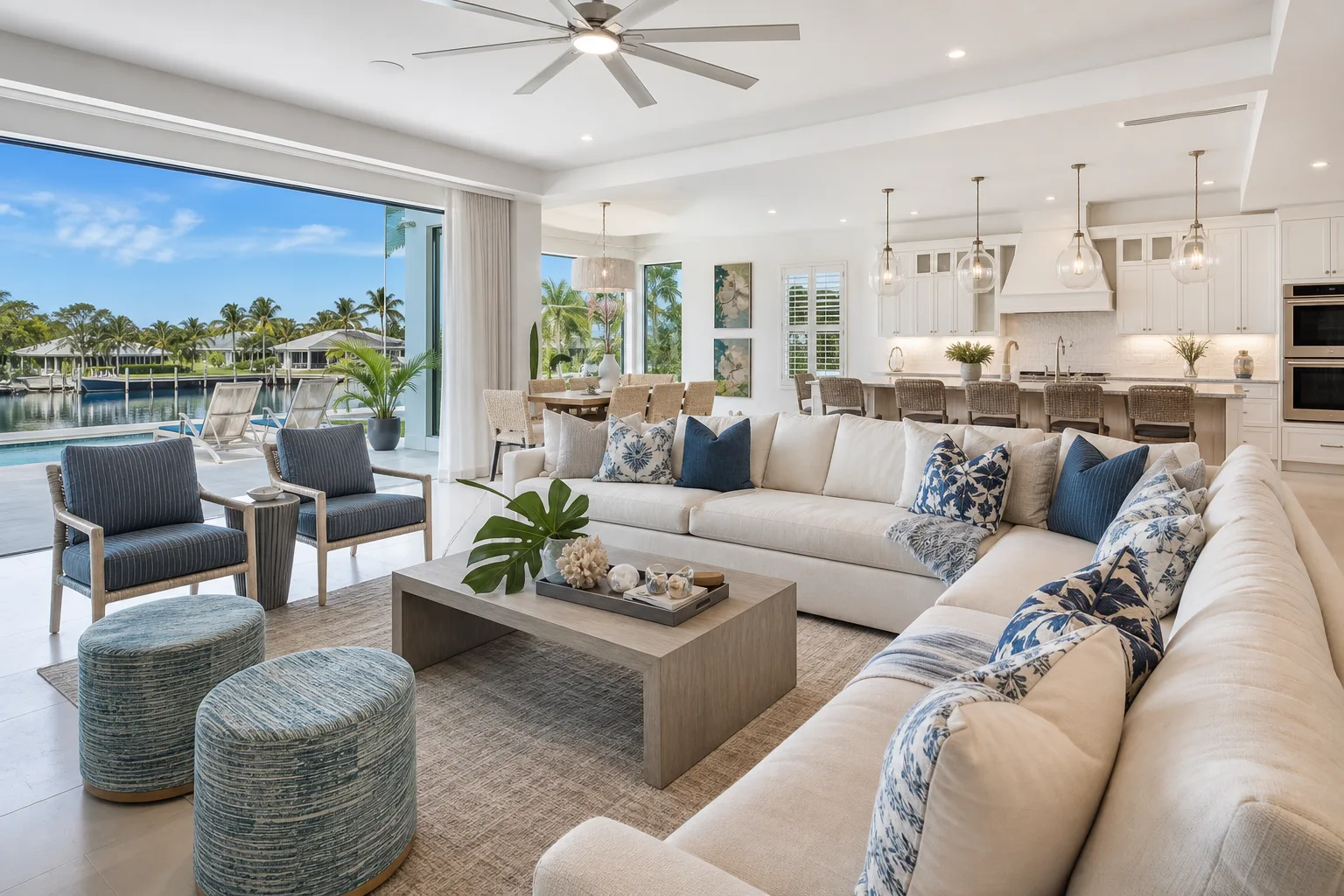
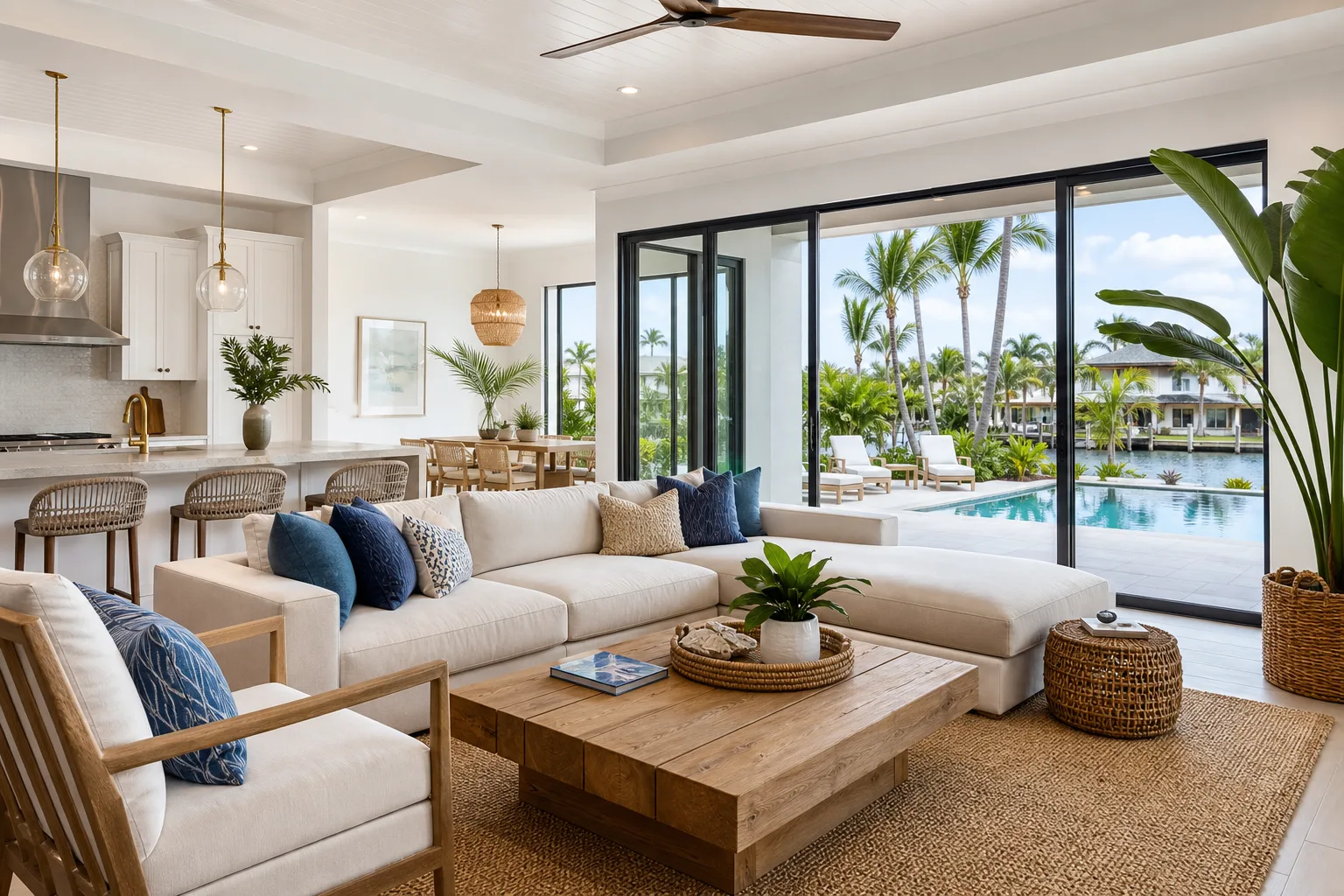
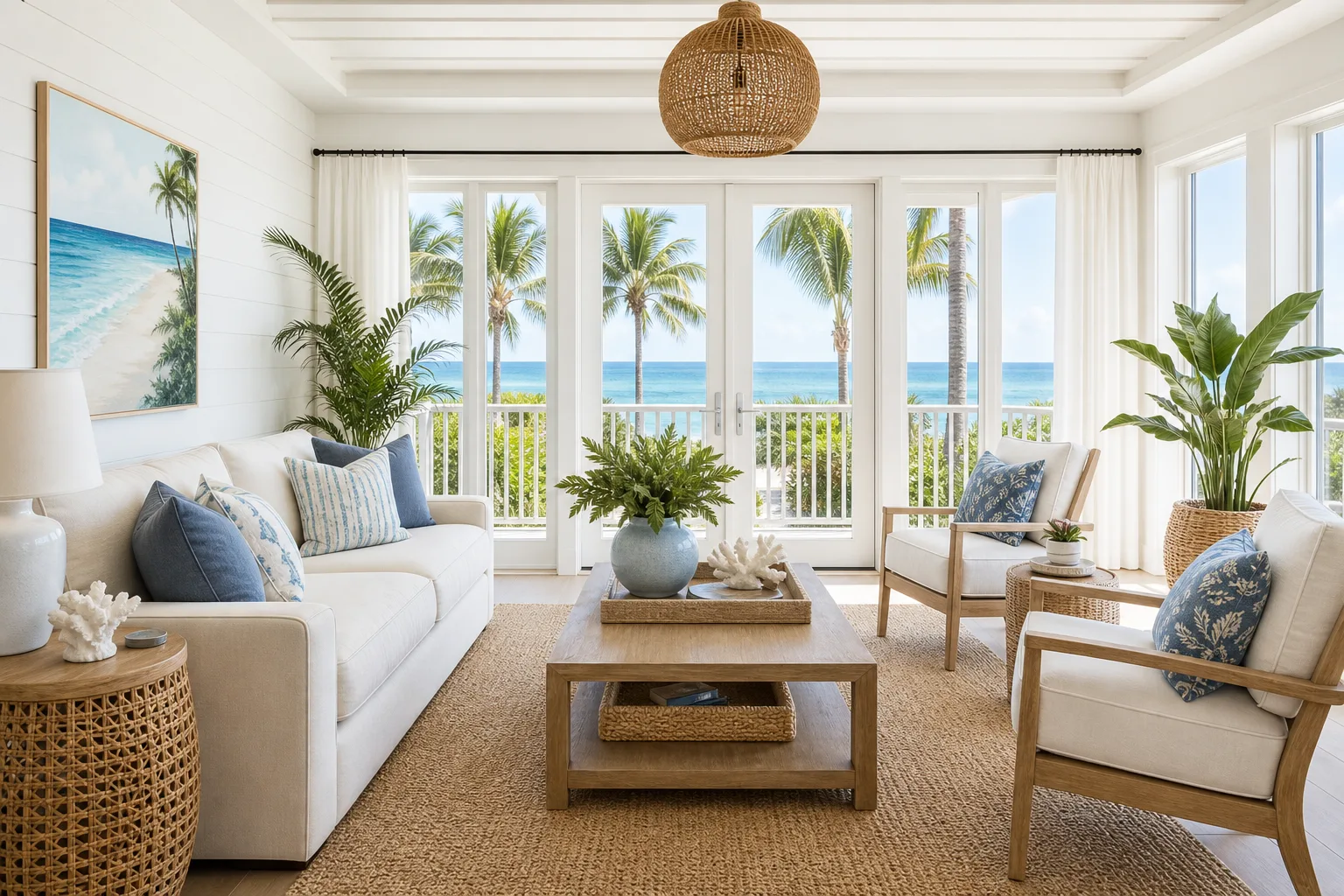
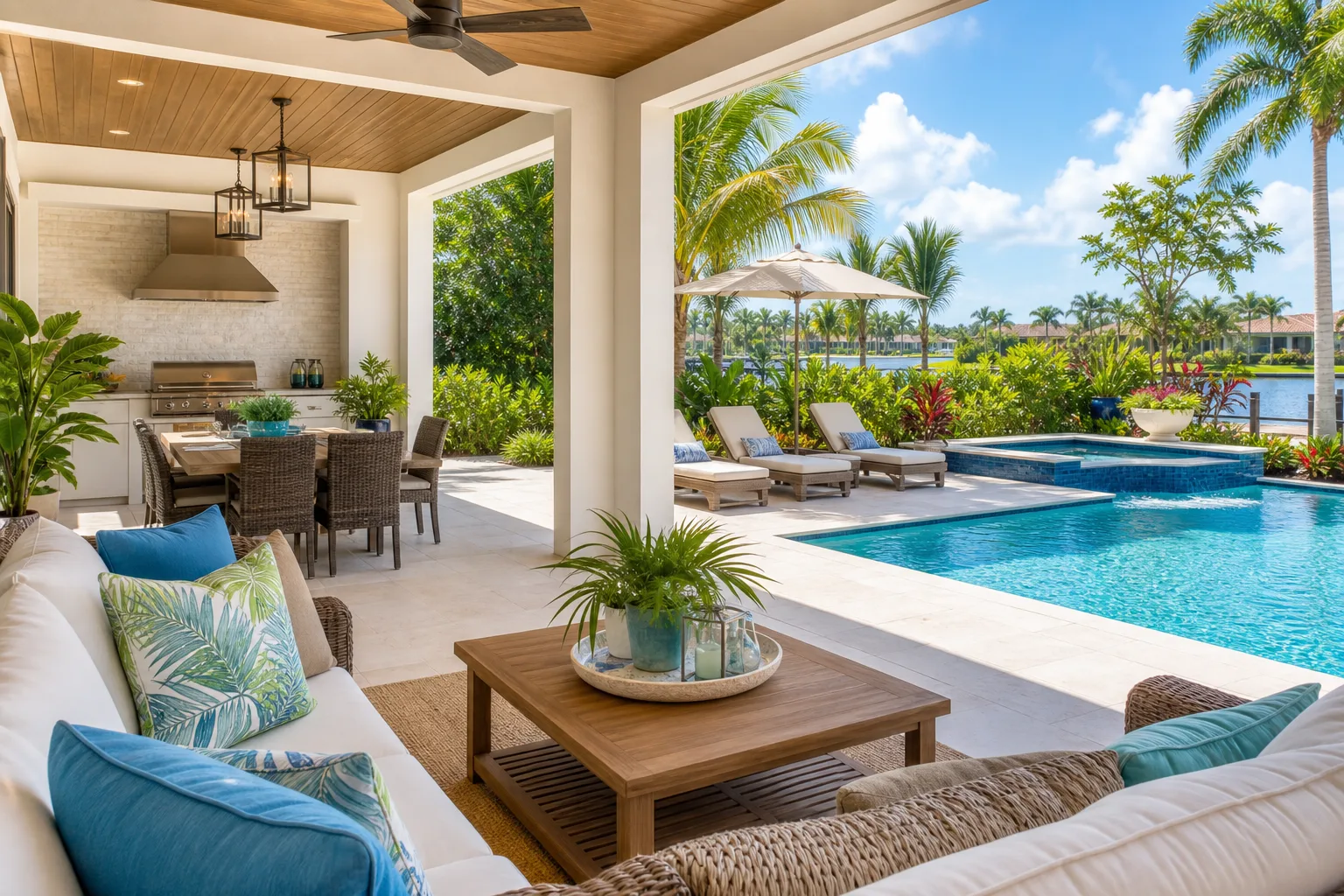
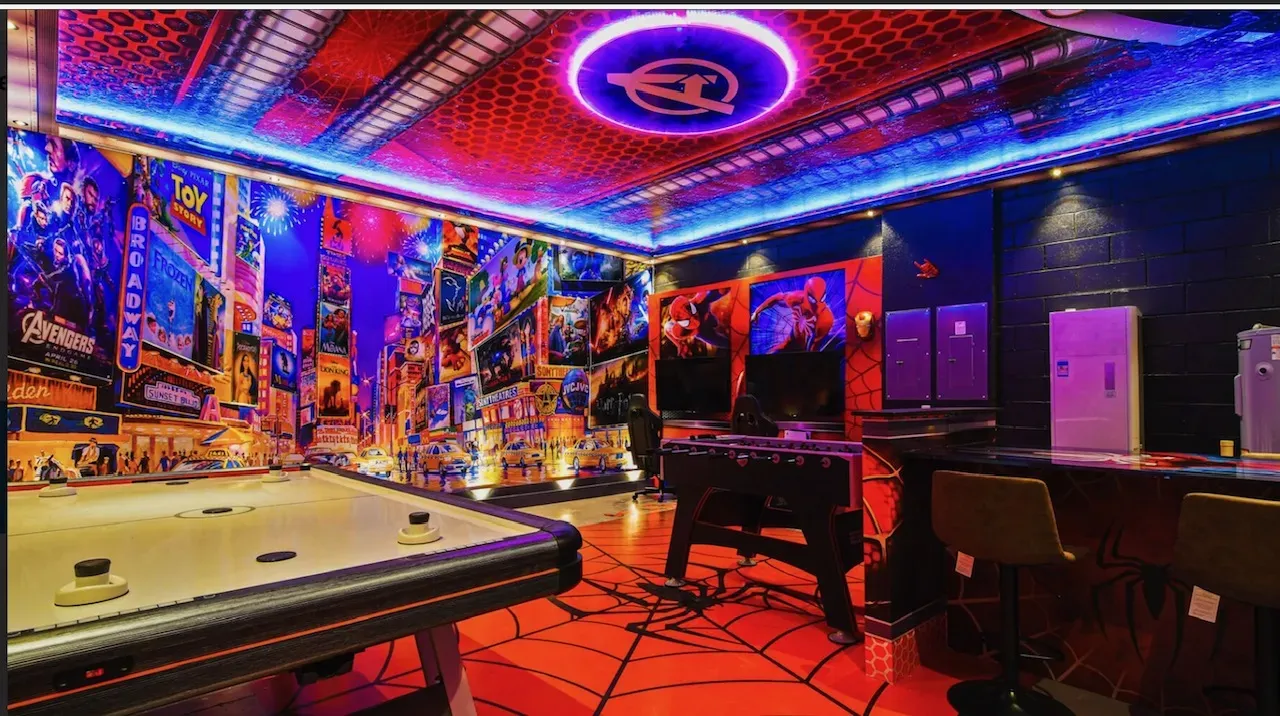
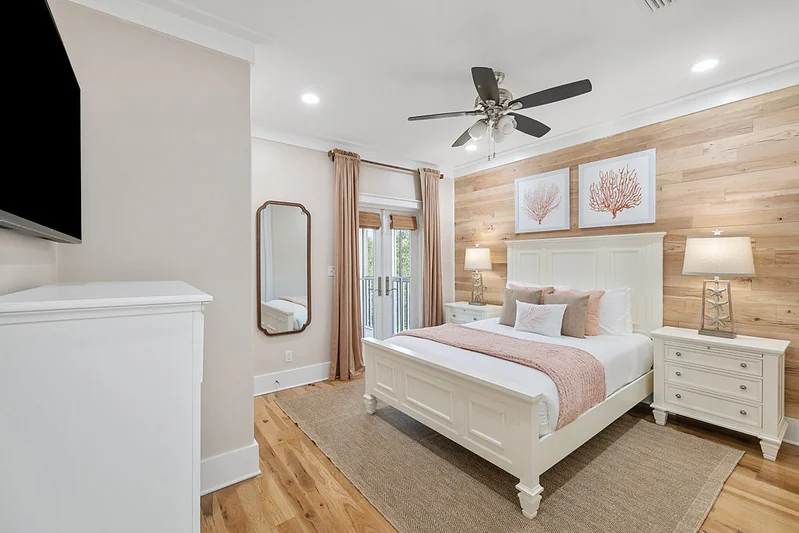
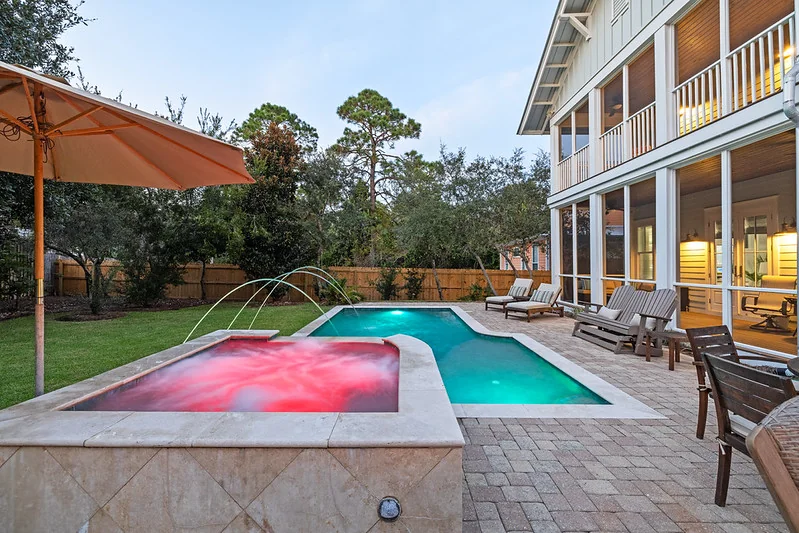
Florida's three major STR markets have distinct guest profiles that should drive every furnishing decision. Central Florida (Orlando / Kissimmee / Davenport): Primarily families visiting Disney, Universal, and SeaWorld. Average group size 6–10. Must-haves: themed bunk rooms, private pool, game room, STR-grade furniture that survives 60–80 guest cycles per year. Budget 10–15% extra for outdoor furniture — the private pool is the #1 booking driver. Coastal Florida (Gulf Coast, Space Coast, Florida Panhandle): Mix of families and couples seeking beach access. Must-haves: coastal-inspired design, dedicated beach/pool gear storage, outdoor shower, durable weather-resistant outdoor furniture. Guests heavily photograph ocean-facing decks and pools — outdoor investment is non-negotiable. South Florida (Miami, Fort Lauderdale, Palm Beach): Broader mix of domestic and international leisure travelers, corporate travelers, event attendees. Guests expect higher design quality and hotel-like finishes. Urban condos: clean, modern, minimal. Waterfront homes: luxury appointments. Furnished rentals competing with boutique hotels here need design that photographs at that level.
Use accurate budget ranges — not what the internet tells you
Most online guides underestimate real Florida STR furnishing costs by 30–50% because they cite national averages from 2020–2022 before supply chain inflation. Accurate 2026 Florida figures: 2BR condo: $9,000–$16,000. 3BR townhome/home: $14,000–$23,000. 4BR home: $20,000–$30,000. 5BR home: $25,000–$38,000. 6BR home: $32,000–$50,000. 7–8BR villa: $42,000–$65,000. 9–10BR luxury villa: $60,000–$95,000+. These are complete package costs covering furniture, art, accessories, bedding, and a standard houseware kit. They do NOT include: professional photography ($500–$1,200), outdoor furniture if not specified ($2,500–$5,000 for a pool area), themed rooms ($3,500–$8,000 each), or window treatments ($600–$2,000). Budget a 10–15% contingency on top of any quoted figure.
Know the difference between turnkey and DIY — and when each is right
Turnkey furniture packages — where a specialized provider handles design, procurement, delivery, assembly, and installation — are the standard for serious STR investors in Florida, not the premium option. Here's why: A 5-bedroom Orlando vacation rental DIY project requires sourcing 200+ items from multiple vendors, coordinating LTL freight deliveries, managing assembly labor, and making 50+ design decisions across furniture, art, textiles, and accessories — typically 80–120 hours of personal time. The true all-in cost (including your time, freight premiums, and design mistakes that require repurchase) routinely exceeds a turnkey package price by 20–40%. DIY makes sense if you have interior design experience specific to STR properties, you are local to the property, you can commit 120+ hours to the project, and you have trade pricing with furniture vendors. If fewer than three of those apply, turnkey is almost certainly the better outcome at a lower true cost. Hybrid approaches — professional package for living room, primary suite, and themed rooms; DIY for secondary bedrooms — capture 80–90% of the benefit at 75–85% of full package cost and work well for investors with partial local access.
What your houseware kit must include (the complete list)
A complete houseware kit for a 5-bedroom, 10-guest Florida vacation rental covers: Kitchen: 12 dinner plates, 12 bowls, 12 glasses, 12 mugs, 12 flatware sets, 8qt pot, medium pot, large and medium skillets, baking sheet, casserole dish, colander, full utensil set (spatulas, ladle, can opener, corkscrew, vegetable peeler, grater, cutting boards ×2, chef and paring knives, kitchen scissors), coffee maker with filters, toaster, blender. Bathrooms: 2 bath towels + 1 hand towel + 1 washcloth per guest at max occupancy, 4+ bath mats, hair dryer in each bathroom, extra toilet paper (2 rolls per bathroom per night of avg booking), travel toiletry starter pack, hand soap at every sink. Bedrooms: 2 full sheet sets per bed, 4 pillows per queen/king, duvet with washable cover, light blanket, bedside charging station, alarm clock, blackout curtains (essential in Florida). Outdoor/pool: 1 pool towel per guest (separate from bath towels), chaise lounges with cushions (1 per max guest), shade umbrella, grill with tools, patio dining set (seats max occupancy), pool floats. Laundry/cleaning: detergent, dryer sheets, stain remover, iron + ironing board, vacuum, mop, cleaning supplies, dishwasher pods, garbage bags. Welcome kit: coffee + filters, starter soap/TP, WiFi credentials displayed, house manual binder, local restaurant/activity recommendations. Total cost for this kit: $1,500–$2,500 depending on quality tier.
Florida-specific furnishing considerations you won't find in national guides
Humidity and climate: Florida's humidity accelerates damage to particleboard furniture, unsealed wood, and certain fabric upholstery. Specify commercial-grade or solid hardwood frames; avoid furniture with visible MDF edges or unsealed back panels. Outdoor furniture must be explicitly rated for marine or coastal environments if within 5 miles of saltwater. Pool area safety: Florida pool regulations for STRs vary by county but generally require pool barriers, self-closing gates, and posted safety notices. Your furnishing provider should flag these requirements — a pool area that fails inspection delays your listing launch. HOA rules: Most Central Florida resort communities (Windsor, Solara, Storey Lake, ChampionsGate, etc.) have specific rules about exterior furniture, décor, signage, and sometimes interior paint colors visible from common areas. Review CC&Rs before finalizing outdoor furniture or any exterior-facing design choices. Florida sales tax: STR furniture purchases in Florida may qualify for business use exemption depending on how your property is structured. Consult your CPA — this can save 6–7% on large purchases. Turnover durability: Florida STRs average 45–75 guest cycles per year (vs. 20–30 for typical residential use). Consumer retail furniture degrades visually within 12–18 months at this intensity. STR-grade furniture with commercial-weight fabrics and reinforced frames maintains listing photo quality for 5–7 years under the same use.
How to evaluate a Florida furnishing company
Not all turnkey furnishing providers are the same. Florida-specific questions to ask any vendor: (1) How many vacation rental properties have you furnished in Florida, specifically? General interior design experience does not transfer to STR requirements. Request a portfolio of completed vacation rental homes in your target market. (2) What is your typical timeline from consultation to installation-complete? Reputable Florida STR providers target 2–6 weeks for properties under 6 bedrooms. Answers of "8–12 weeks" or "it depends" without specifics are warning signs. (3) Do you handle out-of-state clients? Over 60% of Florida STR investors live out of state. A provider without a remote client process will create delays and communication problems. (4) What does your installation include? At minimum: delivery coordination, assembly, art hanging, accessory placement, bed making, and post-installation walkthrough documentation. Providers who "drop and go" leave you with unassembled furniture and a delayed photography timeline. (5) What is your post-installation support policy? Damage during shipping, wrong items, and installation corrections are inevitable. Understand the process and timeline before you commit. (6) Can you provide references from other STR owners — not just residential clients — in communities similar to yours? Speaking with two or three investors who've worked with the vendor is the most reliable due diligence you can do.
What to do first this week
Open three same-bedroom-count comps on Airbnb or VRBO and screenshot bunk photos, outdoor dining seats, and primary suite finish. List where your home falls short — that gap list becomes your furnish scope. Out-of-state and need the full furnish handled remotely? Send your address — we'll quote itemized with 2026 pricing.
What we see go wrong
- Budgeting for an average-occupancy property when Florida STRs run at maximum occupancy during peak season
- Buying outdoor furniture without verifying it is rated for Florida's UV exposure, humidity, and (for coastal properties) salt air
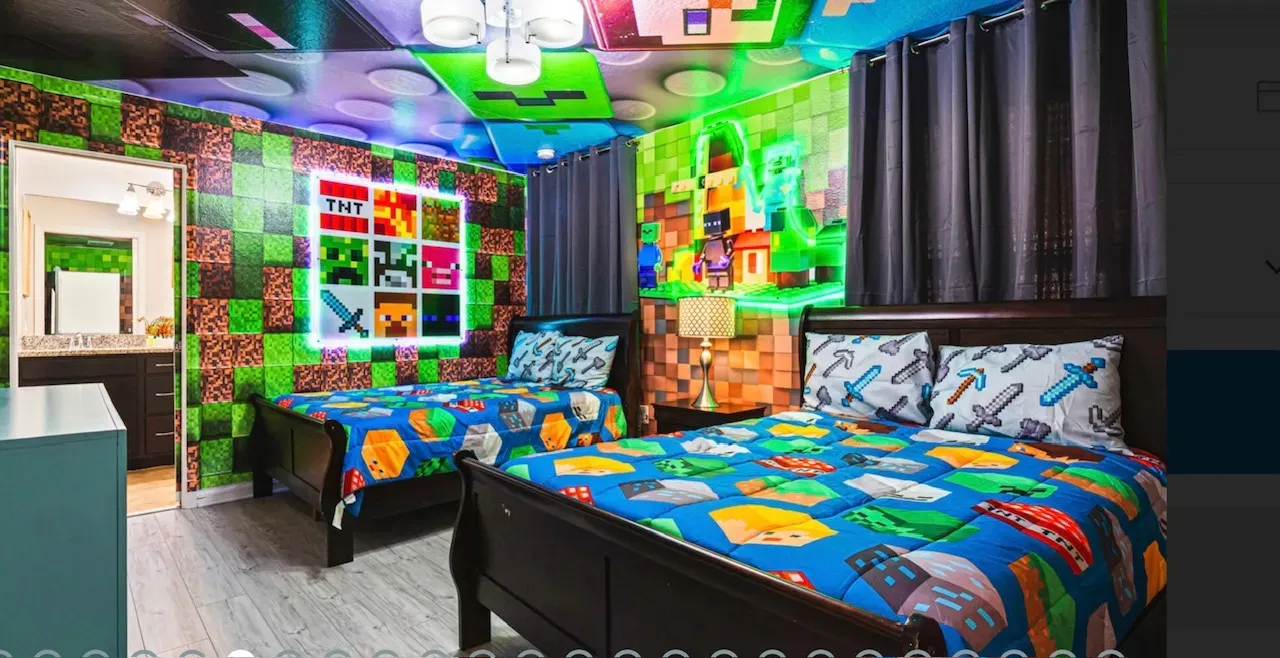
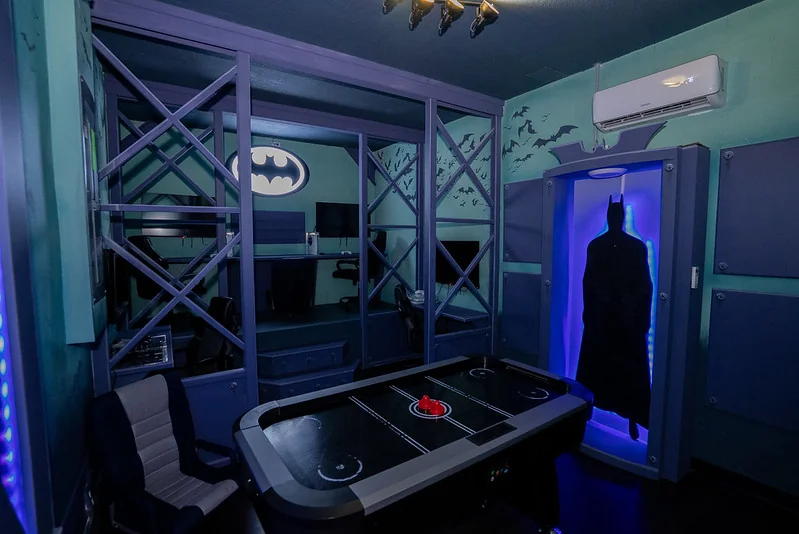
- Skipping themed rooms in Orlando-area properties where they are the primary booking differentiator
- Using online "average" furnishing cost figures from 2020–2022 without adjusting for 2025–2026 pricing
- Hiring a general interior designer instead of a vacation-rental-specific furnishing provider — beautiful results that fail STR durability requirements
- Not reviewing HOA/CC&Rs before ordering outdoor furniture or making design commitments
- Launching the listing before professional photography is complete — phone photos permanently disadvantage a property in Airbnb and VRBO ranking
Related Community Guides
Eight Core Services
Turnkey to Themed Rooms — All Under One Roof
Full furniture packages, STR interior design, themed kids suites, game room conversions, property prep, custom bunks, white-glove install, and listing-ready staging — for vacation rentals and second homes across Orlando, Kissimmee, Davenport, and the full Florida STR market.
Frequently Asked Questions
How much does it cost to furnish a vacation rental in Florida in 2026?
A complete mid-tier furnishing package for a 5-bedroom Florida vacation rental costs $25,000–$38,000 in 2026, including furniture, art, accessories, bedding, and a houseware kit. Smaller 2–3 bedroom properties run $9,000–$23,000; larger 7–10 bedroom luxury villas run $42,000–$95,000+. Add 10–15% contingency, plus separate budgets for professional photography ($500–$1,200), outdoor furniture if not included ($2,500–$5,000), and themed rooms ($3,500–$8,000 each).
What's the difference between furnishing a beach house vs. a Disney-area rental?
Disney-area (Central Florida) rentals prioritize: themed bunk rooms, game rooms, private pools with full outdoor furnishing, and durability for 60–80 guest cycles/year. Beach rentals prioritize: coastal-inspired design, outdoor shower, weather-resistant outdoor furniture, dedicated beach gear storage, and ocean-facing photography opportunities. Budget ranges are similar, but allocation priorities differ significantly — themed rooms matter far more in the Orlando corridor; outdoor living space quality matters more in coastal markets.
Is it worth using a turnkey furnishing service in Florida vs. furnishing it myself?
For most Florida STR investors — especially out-of-state owners, first-time STR buyers, and anyone with a specific launch date — turnkey is the better outcome at a lower true cost when you factor in your time (80–120 hours for a 5BR DIY project), freight logistics, design mistakes that require repurchase, and opportunity cost of every delayed launch day. DIY is viable for local investors with STR-specific design experience who can commit the hours. A hybrid approach (professional for hero rooms, DIY for secondary bedrooms) is the best value middle ground.
How long does it take to furnish a Florida vacation rental?
With a professional furnishing partner, the timeline from initial consultation to installation-complete is typically 2–6 weeks for properties under 6 bedrooms. New construction where orders are placed pre-closing can compress this to 3–4 weeks. DIY projects average 10–16 weeks due to multi-vendor coordination, freight scheduling, and assembly logistics. Every week of delay is roughly $700–$2,500 in lost booking revenue depending on property size and season.
Do I need to be in Florida to furnish my vacation rental there?
No. Over 60% of Florida STR investors are out-of-state, and reputable furnishing providers have established remote client processes. A full remote engagement involves a video consultation (45–60 minutes), digital design approval with product photos and room layouts, coordinated installation while you're elsewhere, and a post-installation video walkthrough before your first guest. Your total time commitment is 3–5 hours spread over 3–4 weeks — no travel required.
What furniture materials hold up best in Florida's climate?
For indoor STR use: solid hardwood or commercial-grade engineered wood frames (avoid exposed MDF/particleboard edges that absorb humidity), performance fabrics rated for high-traffic commercial use (Crypton, Sunbrella indoor, or equivalent), and powder-coated or stainless metal hardware. For outdoor/pool areas within 5 miles of saltwater: marine-grade stainless steel, powder-coated aluminum, all-weather wicker with UV-stabilized synthetic resin, and Sunbrella or equivalent solution-dyed acrylic cushion fabric. Teak is the premium outdoor option — it naturally resists humidity, UV, and salt air — but requires periodic maintenance.
What should I do first?
Pull three in-community comps with your bedroom count, note bunk, outdoor, and primary suite in the hero photos, then send your floor plan. We match package tier to that comp set before you order furniture.
My retail furniture is already failing faster than expected — do I have to replace everything, or can I do a partial upgrade?
A partial upgrade is usually the right call. A furnishing partner can walk the property (in person or via photos) and flag what's failing versus what still meets STR standards — sofas, dining chairs, and outdoor cushions typically go first, while case goods like dressers and bed frames often have more life left. Replacing the highest-wear items first usually solves the review complaints at a fraction of a full refurnish, and you can phase the rest in over the following year.