4-Bedroom vs 5-Bedroom Vacation Rental Investment
Four bedrooms or five? The wrong pick costs you bookings or margin. Here's who books each tier in Central Florida and what changes in the furnishing plan.
Sound familiar?
You're torn between a 4-bedroom and a 5-bedroom in the same resort community. The 5-bedroom costs more, but everyone says themed bunks only pay off at five beds. You need a straight answer before you write the offer.
In short
- The 4BR vs 5BR decision is a market-positioning decision, not a square-footage decision. Different guest profiles, different guest types, different amenity expectations.
- A 4BR often runs lighter operationally — smaller cleaning crew, simpler houseware kit, less laundry volume per turnover.
- A 5-bedroom opens the full amenity package — themed bunk, game corner, upgraded outdoor — that 4-bedrooms rarely need.
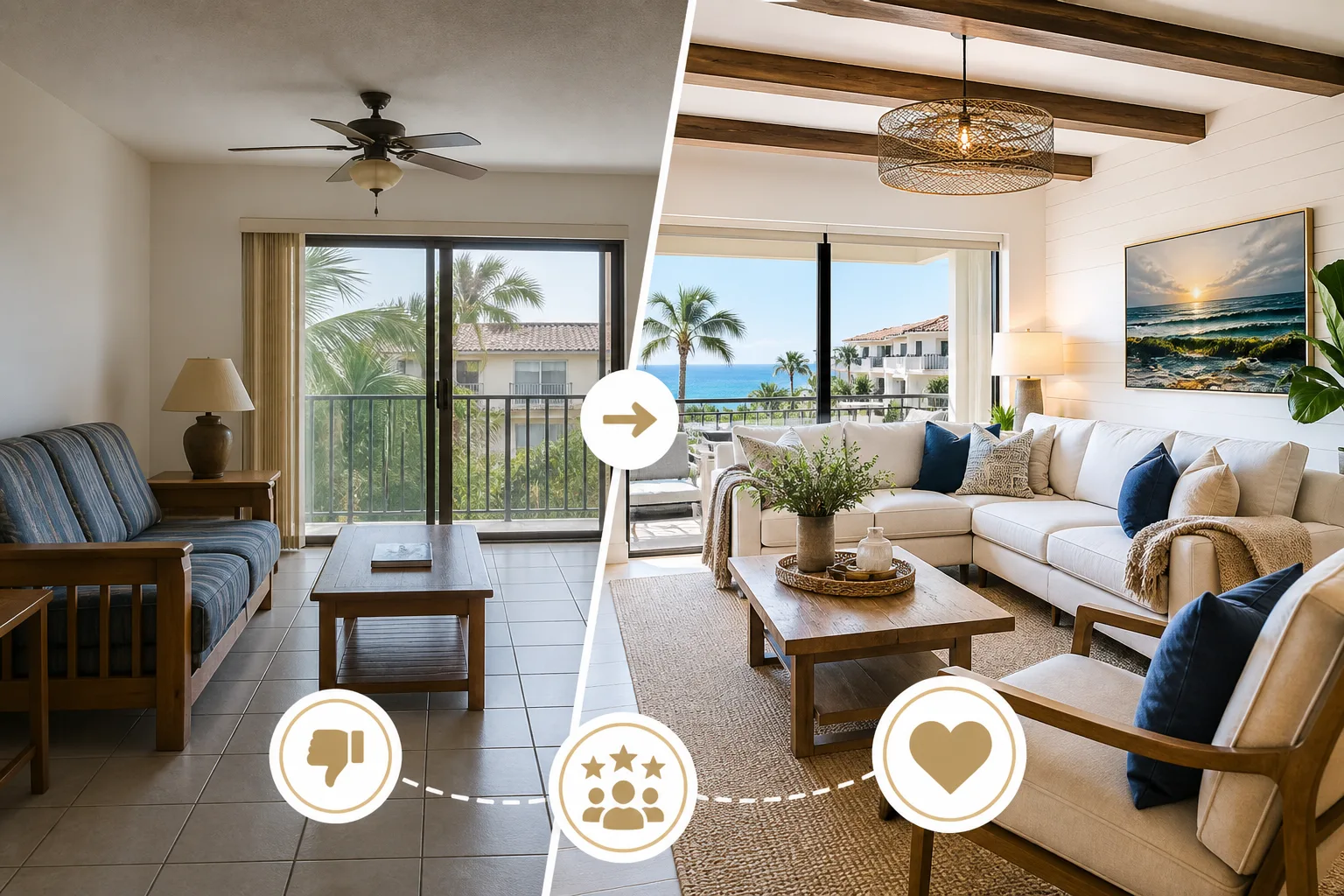
- A sharp 4-bedroom beats a sloppy 5-bedroom. Beds get you into search results; furnishing wins the click.
- First-time STR investors are often better served by a strong 4BR; experienced operators can go straight to 5BR or 6BR. Location and floor plan matter more than bedroom count alone.
- Monday action: compare your listing to three comps on bunk, outdoor, and primary suite before signing a furniture PO.
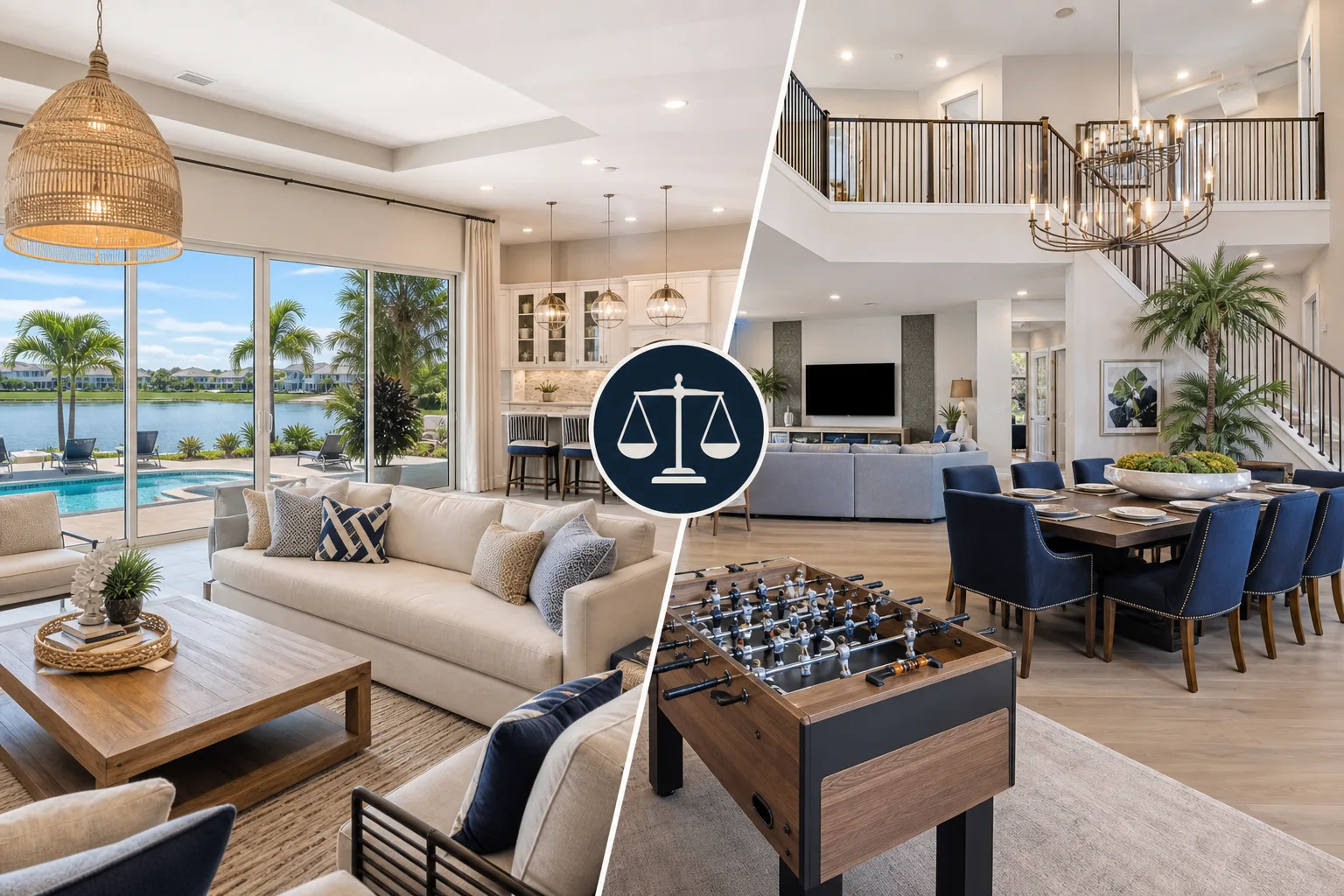
This isn't a square-footage debate. A 4-bedroom pulls smaller multi-family trips and tighter budgets. A 5-bedroom is what Disney families filter for when they need the themed bunk and the bigger dining table. Below is how we help owners decide — and what changes in the furnishing plan either way. We won't quote revenue projections; those are property-specific.
What to consider
Start with who you want to host
Most buyers compare price per bedroom and lot size. That gets you a house, not a strategy. Ask four things first: who should book this place, what nightly rate you're aiming at, what the floor plan can actually support (themed bunk? game room?), and how much turnover work you want to run. Answers diverge fast between 4BR and 5BR in the Disney corridor. A 4-bedroom competing on price only needs to beat other 4-bedrooms on cleanliness and basic amenities. A 5-bedroom two doors down chasing the same family-reunion guest needs the themed bunk and bigger dining table just to get a fair look. Write down your target guest before you tour the next house — it tells you which floor plan and amenity list you actually need, instead of falling for whichever house shows better in person.
When a 4-bedroom is the right buy
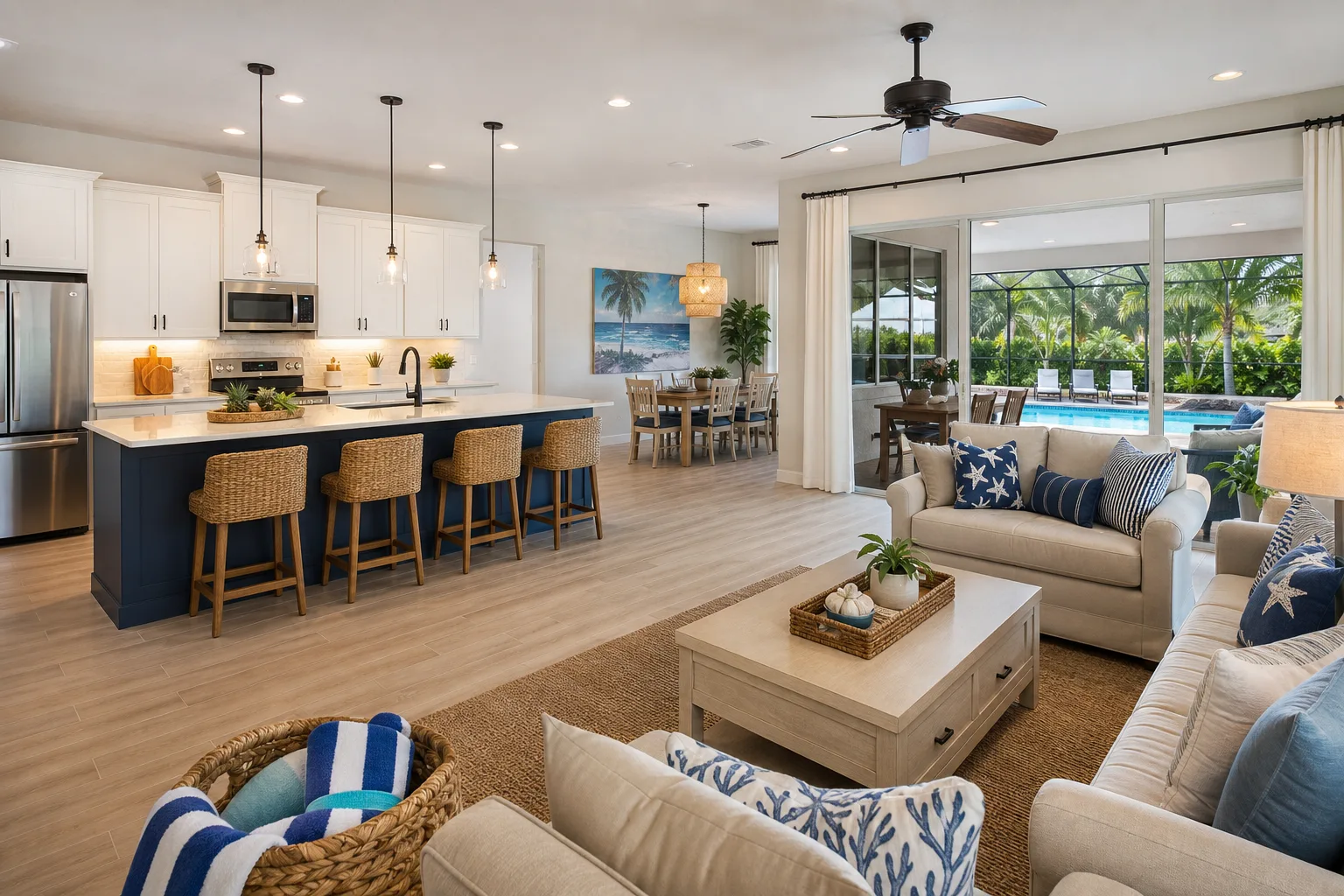
A 4-bedroom sits below the corridor median and fits smaller multi-family trips, one-couple-with-kids stays, and guests watching the nightly rate. Operations are lighter: smaller cleans, smaller houseware kit, lower utilities and taxes. Furnishing is usually a launch-ready package — full STR setup, maybe one themed bunk if the comps demand it. For a first STR, a well-run 4-bedroom is often the smarter learning property before you step up to five or six beds.
When a 5-bedroom is the right buy
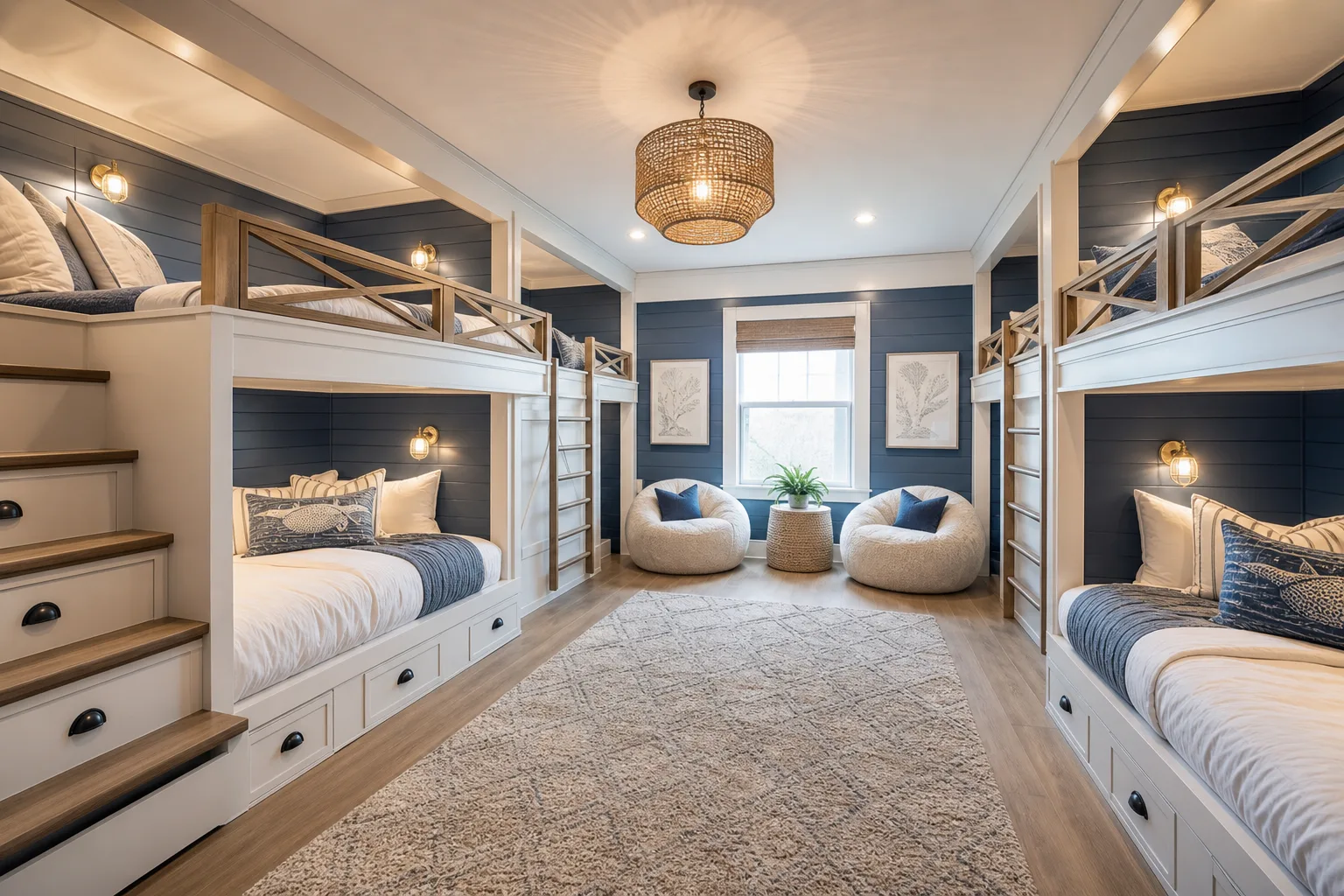
Five bedrooms is the Central Florida median for family Disney trips. Guests expect a themed bunk, room for a game-room corner, and outdoor seating that matches sleep count. Furnishing lands between launch-ready and full amenity package — most corridor 5-bedrooms we scope include a themed bunk and upgraded pool deck. You also tap peak weeks (Spring Break, summer, holidays) at rates that 4-bedrooms struggle to justify.
The guest-profile difference is the deciding variable
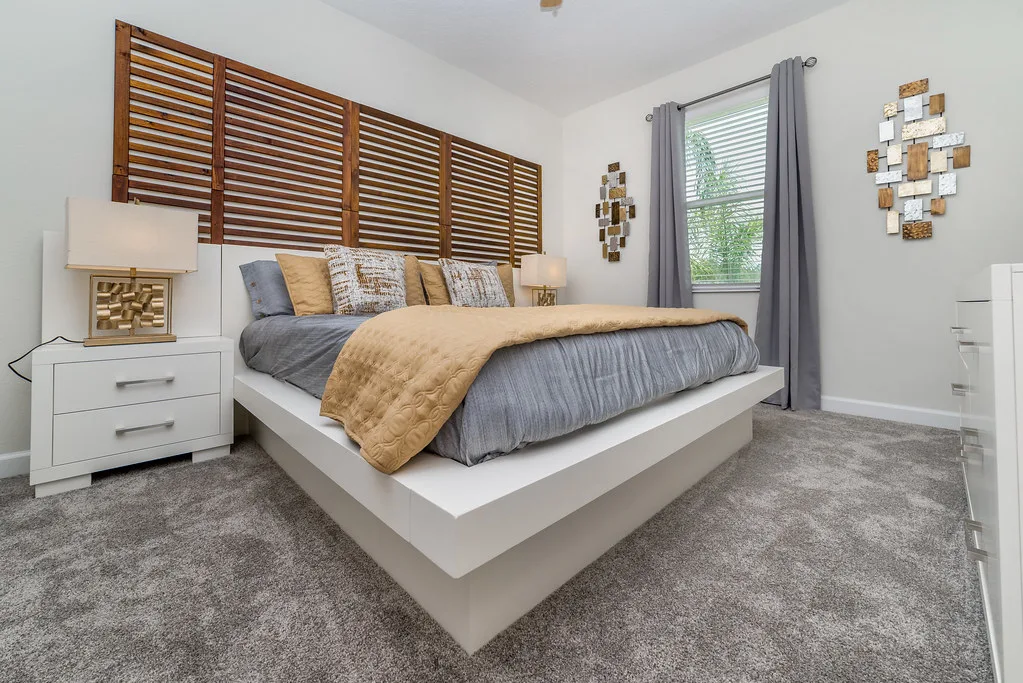
The Central Florida guest profile shifts measurably between 4BR and 5BR. 4BR guests are more likely to be cost-conscious multi-family trips, single-couple-with-kids trips, and corporate retreats traveling lean. 5BR guests are more likely to be Disney-vacation multi-family trips, extended-family reunions, and group travel where the amenity setup matters as much as the bed count. Those audiences book differently — 4BR guests filter on price-per-night and sleeps; 5BR guests filter on amenities, themed spaces, outdoor, and proximity to attractions. The furnishing decision is the same shape (good design, durable furniture, complete housewares) but the amenity scope shifts meaningfully.
Operational complexity is not linear with bedroom count
A 5BR is not simply 25% more operational work than a 4BR — it is closer to 40-50% more depending on the amenity scope. Cleaning crew scales with bedroom count and guest capacity, but laundry volume scales with sleep count (a themed bunk room with four sleeps doubles the linens), houseware turnover scales with cooking-and-eating capacity, and outdoor cleaning scales with entertaining-zone size. First-time STR investors often under-estimate the operational lift between 4BR and 5BR. The lift is real, and it is one of the reasons we sometimes recommend a 4BR as the better first property and a 5BR as a stronger second property once the operational model is dialed in.
How the furnishing budget shifts between the two tiers
The furnishing budget conversation at 4BR is centered on launch-ready package — full launch furniture, complete houseware kit, bedding, outdoor, possibly one themed bunk add. The furnishing budget conversation at 5BR adds a full amenity package upper tier — themed bunk room, game-room corner or den conversion, upgraded outdoor, premium housewares — that is uncommon at 4BR. The 5BR planning range is wider because the amenity-scope decisions are bigger. The 4BR planning range is narrower because the project shape is more uniform. Neither is universally cheaper — a launch-ready package 5BR can come in at the upper end of a launch-ready package 4BR scope, but the 5BR with a full amenity package scope produces a meaningfully different listing.
Which decision belongs at the property-purchase stage vs after
Some 4BR-vs-5BR decisions are reversible — both purchases produce a workable STR with the right furnishing scope. The decisions that are not reversible are usually about location and floor-plan layout: a 4BR on the wrong floor plan can never become a 5BR; a 5BR with a poor great-room layout will never photograph as well as a 5BR with a strong one; a 4BR or 5BR outside the resort corridor will never compete with the same property inside it. The right time to evaluate the 4BR vs 5BR question is at the property-purchase stage, with the listing goal already in place. Furnishing scope can adapt to either tier; the property fundamentals cannot.
How we help owners decide
If you're still shopping, send us both floor plans. We look at who you want to book, what the neighbors are doing, whether the layout supports a bunk or game room, and whether this is your first STR or your third. You get a recommendation on bedroom tier plus a furnishing scope for whichever property you buy. If you already closed, we skip straight to the package conversation. That comparison usually takes a day or two once we have both floor plans — we're not running a formal appraisal, just pattern-matching against the dozens of similar layouts we've already furnished in the same communities.
What to do first this week
Open three same-bedroom-count comps on Airbnb or VRBO and screenshot bunk photos, outdoor dining seats, and primary suite finish. List where your home falls short — that gap list becomes your furnish scope. Torn between 4 and 5 bedrooms? Send both addresses — we'll compare furnishing scope side by side.
What we see go wrong
- Choosing 4BR vs 5BR on square footage and price per bedroom alone — the right frame is guest profile and target guest positioning, not property arithmetic.
- Assuming a 5BR is always the better investment — it is not, particularly for first-time STR owners who under-estimate the operational complexity step-up.
- Buying a 5-bedroom then furnishing it like a 4-bedroom — you pay 5-bedroom carrying costs but compete for the same guests.
- Buying a 4BR with the intent to compete in the 5BR group-travel market — the guest type filters on sleep count and the 4BR is filtered out before the booker sees the listing.
- Ignoring the floor-plan question — two 5BR properties in the same community can have very different listing potential depending on the great-room layout, the outdoor scope, and the themed-room conversion potential.
- Comparing one 4BR against one 5BR without comparing both against the resort-corridor market they will compete in — the local market context shifts the answer materially.
Related Community Guides
Eight Core Services
Turnkey to Themed Rooms — All Under One Roof
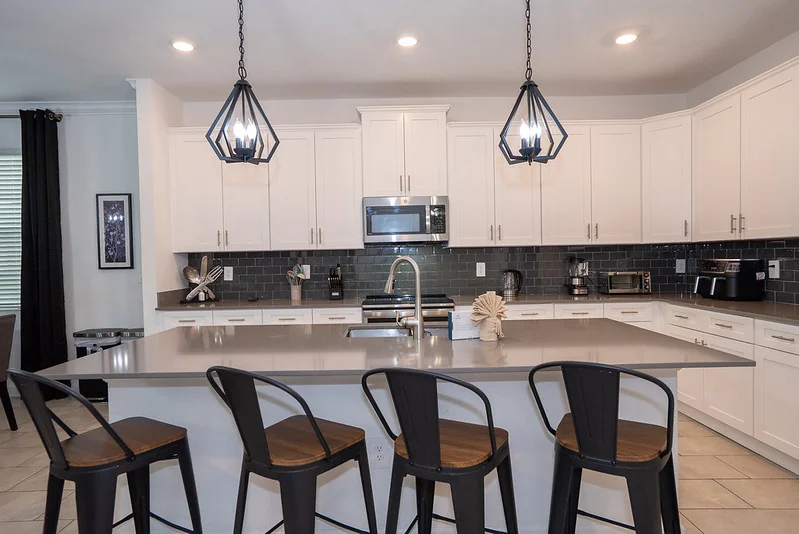
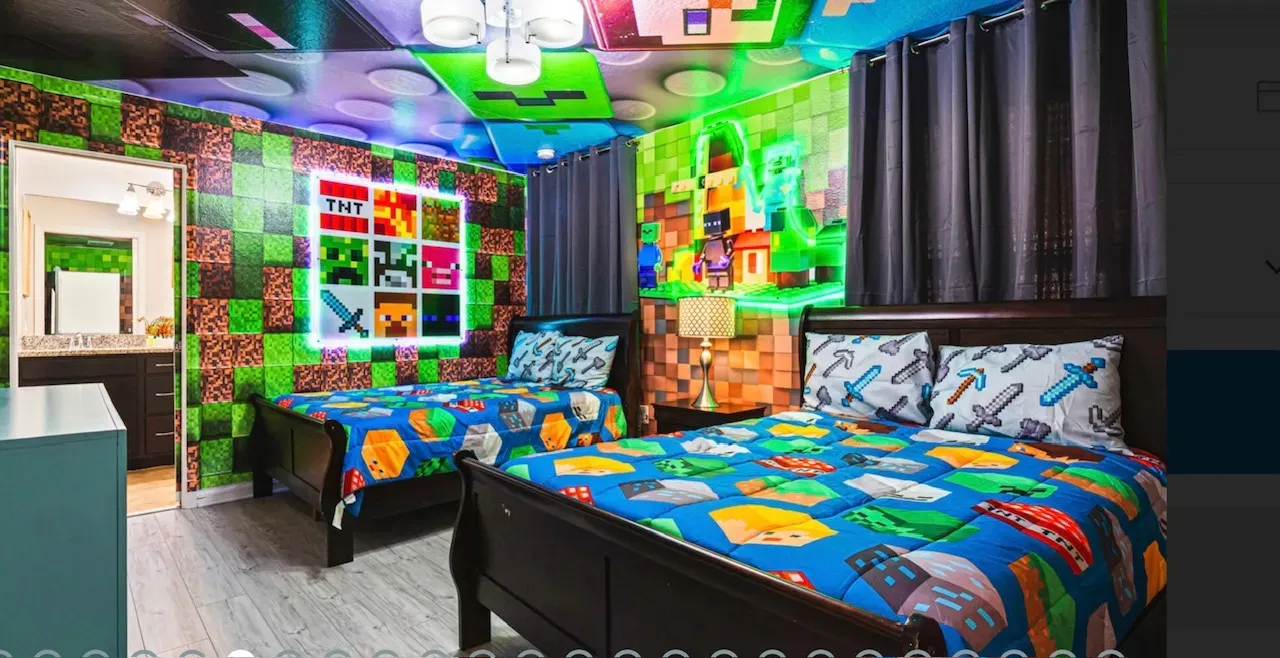
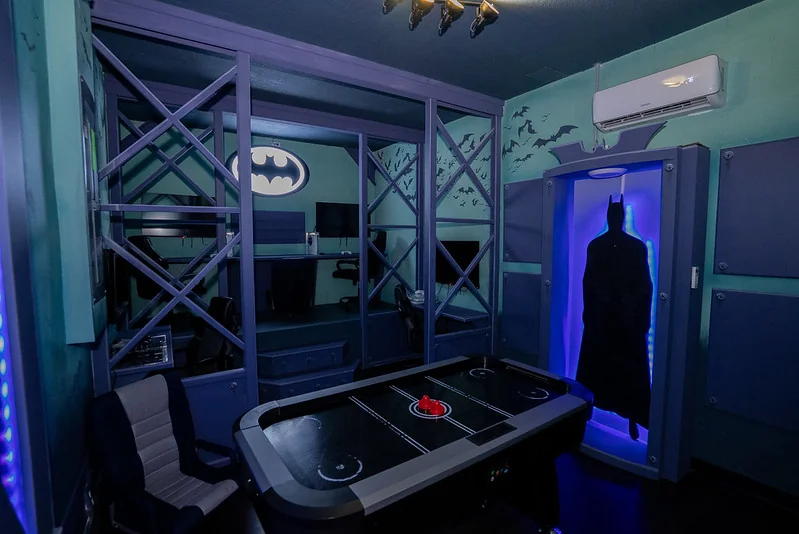
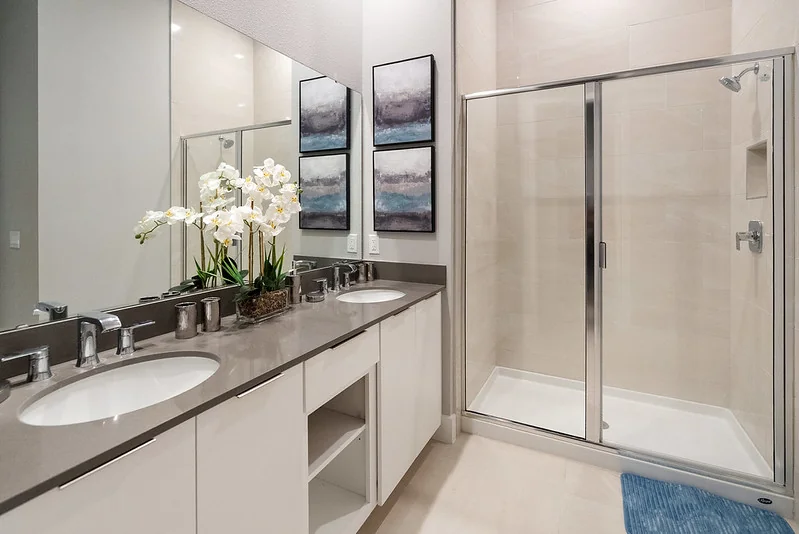
Full furniture packages, STR interior design, themed kids suites, game room conversions, property prep, custom bunks, white-glove install, and listing-ready staging — for vacation rentals and second homes across Orlando, Kissimmee, Davenport, and the full Florida STR market.

Frequently Asked Questions
Is a 4-bedroom or 5-bedroom vacation rental a better STR investment in Central Florida?
Neither universally wins. A well-positioned 4BR with strong furnishing and clean amenity scope can outperform a poorly-positioned 5BR with weak furnishing. A 5BR with a themed bunk room and full outdoor setup in a Disney-corridor resort community competes in a larger family-travel audience than the 4BR equivalent. The right answer depends on the property, the market position, the furnishing scope, and the operational model. Most first-time STR investors are better served by a strong 4BR than by a stretched 5BR.
Does a 5BR vacation rental always produce more revenue than a 4BR?
Not in raw nightly-rate terms across all weeks — and not when occupancy patterns are factored in. 5BRs typically command stronger nightly rates in peak booking windows (Spring Break, summer, Christmas, July 4) where the larger floor plan and amenity scope are the differentiator. 4BRs often hold up better in shoulder-season weeks where larger properties sit empty. Total annual booking revenue is property-specific and depends on furnishing scope, market positioning, amenity setup, and operational consistency. We do not publish revenue projections because they are not honest at the property tier.
How does the furnishing scope shift between a 4BR and a 5BR?
The launch-ready package is similar at both tiers (full launch furniture, complete houseware, bedding upgrades, outdoor scope). The full amenity package appears more meaningfully at 5BR — themed bunk room is closer to baseline expectation at 5BR than at 4BR in the Disney corridor, game-room conversion becomes scope-affordable at 5BR with a den or garage, and premium outdoor scope justifies its cost more clearly at 5BR. The 5BR planning range is wider because the amenity-scope decisions are bigger.
Is a 5BR with weak furnishing worse than a 4BR with strong furnishing?
Almost always, yes. A 5BR competing for the family Disney bucket without a themed bunk room, without a game-room corner, with residential-grade furniture, and with under-scoped housewares loses to a 4BR with a themed bunk add, performance-tier bedding, and complete housewares — even though the 5BR has one more bedroom. Furnishing scope is the differentiator inside the guest type. Bedroom count gets you in those search results; furnishing decides whether you win there.
Should I start with a 4BR and scale to a 5BR for my second property?
For first-time STR investors, this is often the better path. The 4BR runs on a lighter operational model, the furnishing-scope decisions are smaller and lower-risk, and the lessons learned in year one carry directly into a 5BR or 6BR as a second property. Investors who have already operated an STR elsewhere can usually go straight to 5BR or 6BR. The decision depends on the operational appetite and the budget for both furnishing and ongoing operations.
Does location matter more than bedroom count?
In Central Florida, yes — usually meaningfully. A 4BR inside a Disney-corridor resort community with strong amenity infrastructure (community pool, water park, themed amenities) competes in a much stronger market than a 5BR in a non-resort residential neighborhood. The floor plan and the community amenity setup are non-negotiable; bedroom count interacts with both but does not override either. Our city-specific guides for Orlando, Kissimmee, and Davenport walk through the regional market positioning that shapes this decision.
What should I do first?
Pull three in-community comps with your bedroom count, note bunk, outdoor, and primary suite in the hero photos, then send your floor plan. We match package tier to that comp set before you order furniture.
What if I already closed on the wrong bedroom count for my target guest?
You're not stuck — furnishing scope can push a property further toward its guest ceiling even after closing. A 4-bedroom can still compete for smaller multi-family trips with the right launch-ready package; a 5-bedroom that's under-scoped can usually add the themed bunk and outdoor upgrade later without touching the rest of the house. The floor plan is fixed at closing, but the furnishing decision that determines which guests actually book isn't made until you scope the project.