Financing available for qualifying projects · Flexible payment structures for investors & owners · Ask your FPUSA rep about partner lending options · Fast decisions • transparent terms • dedicated support
Turnkey Package vs DIY Furnishing.
A side-by-side decision framework for vacation rental owners weighing a coordinated turnkey furniture package against a self-managed DIY build. No hype, no sticker math — total cost of ownership, scope tiers, and when each approach actually fits.
The sticker comparison between a turnkey furniture package and a DIY furnishing project usually favors DIY. The total-cost-of-ownership comparison usually does not. This page lays out the framework — vendor count, launch-date risk, furniture grade, houseware completeness, replacement cycle, and scope tier — so the decision lands on the right side for your specific property.
For the deeper operational walk-through, read the full turnkey vs DIY educational guide. For published scope tiers and what each tier includes, see our turnkey furniture packages service page. For the companion comparison against a traditional designer engagement, see furniture package vs interior designer.
Planning ranges referenced anywhere on this site are scope-tier ranges, not quoted prices. Final pricing depends on the property, scope tier, amenity stack, housewares depth, outdoor needs, install logistics, and timeline. A scoped proposal is always the basis for a real number.
The Comparison Matrix
Ten factors that move the total-cost-of-ownership math, ranked roughly by how often they decide the call in real consultations.
| Factor | Turnkey Furniture Package | DIY Furnishing |
|---|---|---|
| Total elapsed timeline | Single coordinated procurement + install window (typically 4–9 weeks contract to live listing, depending on scope tier) | Whichever vendor is slowest — every additional vendor in parallel becomes a launch-date dependency |
| Pieces to coordinate | One scope of work, one install team, one accountability owner | Typically 5–15 separate vendors (furniture, mattresses, housewares, bedding, art, outdoor, install labor, photography) |
| Furniture grade | STR-durable specs across all rooms — commercial-grade upholstery, performance fabrics, replaceable hardware | Mix of residential-grade purchases — typically fails inside 12 months on high-turnover STR usage cycles |
| Houseware kit completeness | Sized to actual guest capacity (not bedroom count), included as a planned scope item | Almost always under-scoped at launch — most common source of missing-item complaints in the first 90 days |
| Photography readiness | Staging coordinated as a planned phase ahead of professional photography | Owner-managed, usually compressed into the last weekend before listing — bookable photo quality is hit or miss |
| Where the cost shows up | Visible up front in a scoped proposal with line items | Distributed across cards and invoices — total cost usually exceeds initial expectation by a wide margin |
| Replacement cycle (first 24 months) | Performance-spec furnishings under warranty, scoped against expected STR wear | Replacement spend is a meaningful share of the year-1 furnishing investment for most DIY launches |
| Designer engagement | Included — design direction is set against the listing-positioning goal | Optional separate engagement (additional fee) — or owner-led, which usually shows in photo composition |
| Out-of-state ownership | Fully developed remote process — 60%+ of FPUSA clients never visit the property during the project | Logistically dependent on local presence, a property manager, or repeated trips |
| Scope flexibility | Scope tier set up front — Launch-Ready, Performance STR, Amenitized Resort, Luxury Estate, Mega-Rental / Specialty | Maximum flexibility — at the cost of decision-making time and coordination overhead |
When DIY Actually Makes Sense
We are not going to pretend DIY is always the wrong call. Here are the situations where it can be the right one.
You are local, have time, and the property is small
A studio or 1BR in a non-resort market where the listing is not competing against amenitized neighbors. Coordination overhead at this scale is manageable for a hands-on owner.
You already have most of the inventory
Existing furniture in good STR-grade condition, an owner-led design vision already locked in, and a clear gap-fill scope. Hybrid scopes can work here — see “blended approach” below.
You are an experienced STR operator scaling within a single market
You have a vendor list, an install crew, and your own SOPs. The repeat-build playbook is yours and the cost-of-coordination math has been solved through volume.
When Turnkey Is the Clear Call
The situations where DIY total cost almost always exceeds turnkey total cost, even when the sticker math looks the other way.
This is your first STR (or first in this market)
First-time investors pay the price of every coordination mistake out of the booking calendar — slipped launches into off-peak windows, missing-item complaints, residential-grade furniture failing inside a year. The cost of those mistakes typically exceeds the cost difference between turnkey and self-managed DIY.
You are out of state
Coordinating 8–15 vendors from another state without a property manager is a structural problem. A turnkey scope solves it as a single accountability owner.
The property needs to be live on a target date
Closing into Spring Break, July 4, or Christmas means the launch date matters more than the per-vendor savings. A coordinated install timeline back-calculates from the launch date.
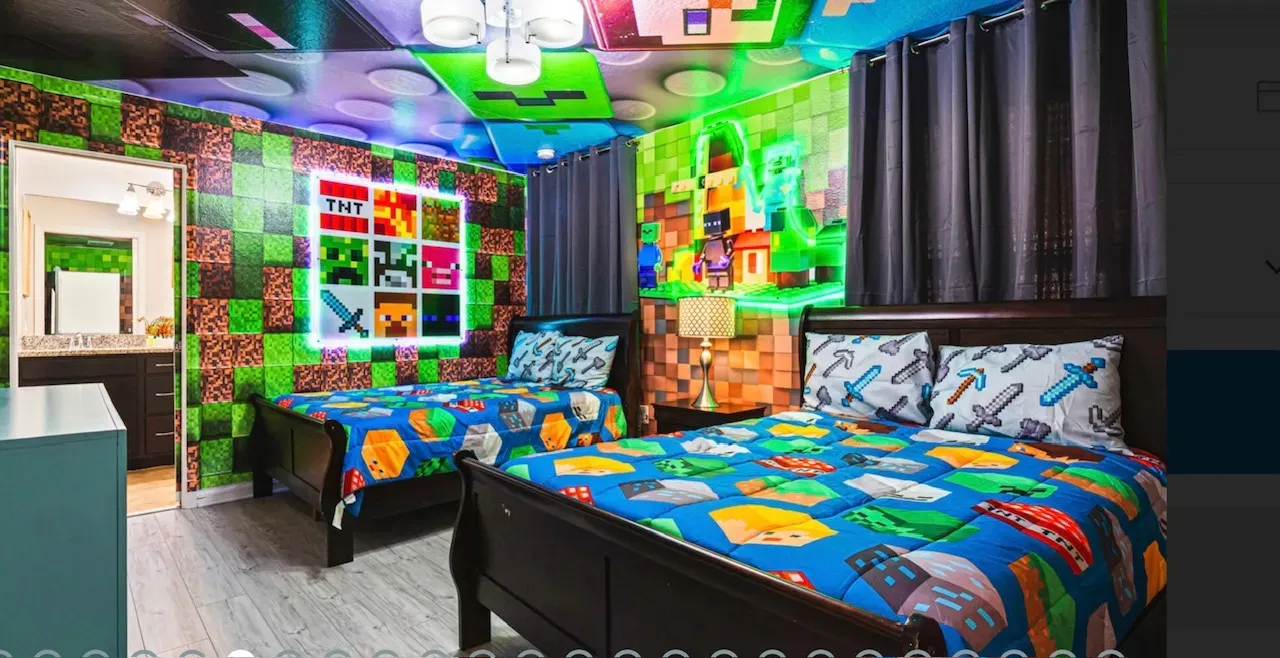
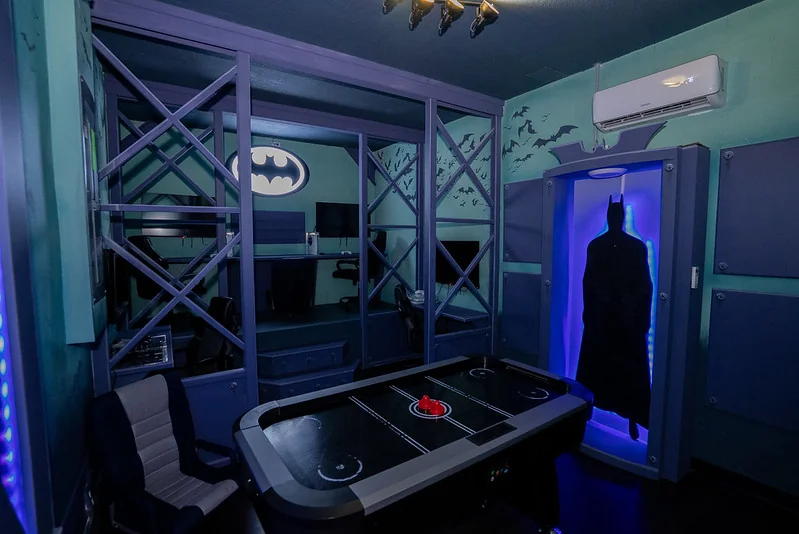
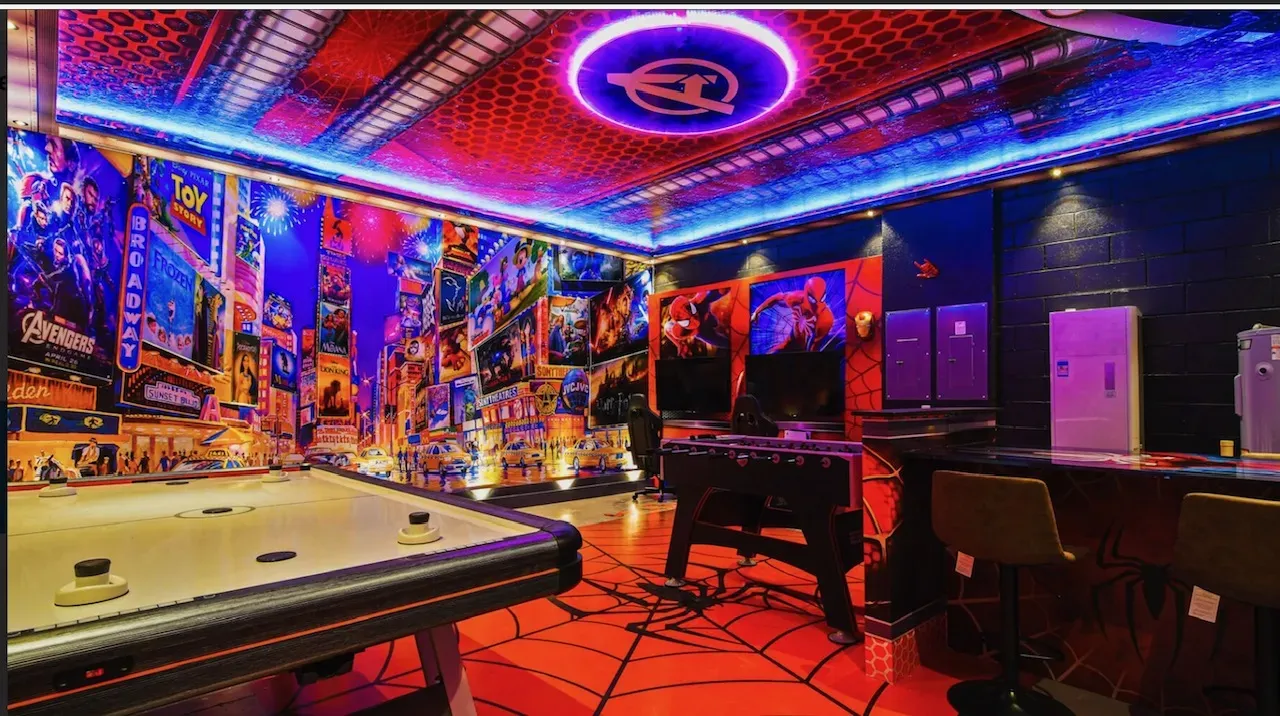
The property needs amenity scope (themed bunk, game room, theater)
Custom themed bunk fabrication, garage conversions, and theater AV are construction-adjacent scopes — not retail purchases. These coordinate poorly across separate vendors.
You are scaling a multi-property portfolio
Repeatable scope, repeatable timeline, repeatable spec. Turnkey provides the operational consistency that a multi-vendor DIY playbook does not.
The Total-Cost-of-Ownership Reframe
DIY furniture sticker prices are visible. The expenses below are usually invisible up front, but they are the ones that decide whether DIY actually came in under turnkey on a real year-one basis.
- Time cost — coordinating 8–15 vendors is a meaningful unpaid project-management role. DIY total cost should include this time, even if it never shows up on an invoice.
- Launch-date cost — every week the listing is not live during a peak-demand window is opportunity cost that does not appear in furnishing invoices.
- Replacement cost — residential-grade furniture fails predictably under STR turnover. The replacement spend in months 6–24 is a real and measurable share of the DIY total cost.
- Houseware-correction cost — under-scoped houseware kits produce two predictable expenses: small but frequent gap-fill orders, and missing-item review complaints that depress the listing’s position for months.
- Photography redo cost — under-staged or under-furnished launches often need a second photo shoot inside the first year once the property is properly dialed in.
How Scope Tier Changes the Answer
The turnkey-vs-DIY decision is not the same at every scope tier. At a launch-ready 2-3BR condo, both paths can work. At an amenitized 8BR with a themed bunk and a game room, DIY effectively stops being a real option. Here is the fit by scope tier.
| Scope Tier | Typical Use Case | DIY vs Turnkey Fit |
|---|---|---|
| Launch-Ready | 2–3BR condos and smaller homes — budget-conscious launches without specialty rooms | Both turnkey and DIY are workable here. The complexity gap is smallest at this scope tier. |
| Performance STR | 4–6BR resort-corridor homes — most common Florida STR scope | Turnkey usually wins on total cost of ownership. Vendor count and themed-bunk coordination start to matter. |
| Amenitized Resort | 5–8BR with themed bunk + game-room scope | Turnkey is strongly preferred. Themed-bunk fabrication, game-room construction, and outdoor coordination are not retail-vendor scopes. |
| Luxury Estate | 7–10BR with multiple themed spaces, theater, premium outdoor | Turnkey only, practically. Project-management overhead exceeds what most owners are able to absorb part-time. |
| Mega-Rental / Specialty | 10BR+ and specialty builds — phased install windows | Turnkey with phased coordination. The project is logistically beyond DIY scope at this tier. |
Scope-tier vocabulary used here matches the rest of the site. Detailed scope by tier lives on the turnkey furniture packages, Airbnb furniture packages, and whole-house furniture packages service pages.
The Hybrid Approach
A blended scope is a real option. The most common version: owner-sourced decor and art, with FPUSA-coordinated furniture, housewares, themed-room construction (where applicable), and install. This works best when the owner already has a clear design vision and existing STR-grade inventory.
Hybrid does not work well in these situations: out-of-state owners without local coordination support, properties with construction-adjacent scope (themed bunks, game-room conversions, theater AV), launches with tight target dates, and 8BR+ projects where vendor coordination overhead overwhelms the owner’s available time.
We will tell you honestly during the consultation whether your specific situation is a good fit for hybrid, full turnkey, or full DIY. Sometimes the right answer is to pass on us entirely — that is a real outcome we recommend when the math points there.
Frequently Asked Questions
Is DIY furnishing always cheaper than a turnkey furniture package?
Almost never on a true total-cost-of-ownership basis. Initial sticker comparisons make DIY look cheaper because they compare a single-line turnkey proposal against itemized retail furniture purchases. The cost-of-coordination, time spent project-managing, replacement cycle on residential-grade furniture, houseware gap-fills, photography redo costs, and slipped launch dates are real expenses that DIY budgets typically do not capture up front. For a deeper analysis, see our full educational guide on turnkey vs DIY.
Can I take a hybrid approach — buy some items myself and have FPUSA handle the rest?
Yes. Hybrid scopes are common for owners who already have an existing inventory of STR-grade pieces, or who want to source specific decor and art independently. The most common hybrid is owner-sourced art and accessories with FPUSA-coordinated furniture, housewares, and install. We will tell you honestly during the consultation whether your specific situation is a good fit for hybrid or full turnkey — hybrid is not the right answer for every project.
What is the biggest hidden cost of going DIY?
The launch-date cost. Multi-vendor DIY launches slip predictably — the launch date becomes whichever vendor is slowest. Listings that miss their target launch window during a peak booking period (Spring Break, summer, Thanksgiving, Christmas) lose more booking revenue in the first 90 days than the per-vendor savings ever recover. Coordinated turnkey timelines back-calculate from the launch date so this rarely happens.
How does the turnkey furniture package vs DIY math change for an 8BR vacation rental?
It moves strongly toward turnkey. At the 8BR scope, the amenity stack (themed bunks, game room, theater, premium outdoor) is the budget driver — and those scopes are construction-adjacent, not retail-vendor scopes. Coordinating themed-bunk fabrication, garage-conversion construction, theater AV install, and standard furnishing across separate vendors is operationally heavy. Our 8BR cost guide walks through why the amenity-stack decisions matter more than bedroom count at this tier.
I am out of state — does a turnkey package actually work remotely?
It is what most of our clients use it for. Over 60% of FPUSA clients are out of state and never visit the property during the project. The remote workflow handles consultation, design review, approval cycles, procurement, install scheduling, and post-install photography prep without requiring owner presence. The deeper explanation lives in the turnkey vs DIY educational guide and on the turnkey furniture packages service page.
When should I read the longer turnkey-vs-DIY blog post instead of this page?
This page is the decision-framework comparison — total cost of ownership, scope tiers, when each approach fits. The /blog/turnkey-vs-diy post is the deeper educational version that walks through the operational and financial mechanics in more detail. Read this page first to size the decision; read the blog if you want the full breakdown.
Related Reading
Turnkey vs DIY — Full Educational Walk-Through
The operational and financial mechanics in detail, beyond the decision-framework comparison above.
Vacation Rental Furniture Cost by Bedroom Count
How bedroom count and scope tier interact to determine furnishing budget — the main cost pillar across the site.
Cost to Furnish a 5-Bedroom Airbnb
The 5BR-specific scoping conversation — three scope tiers, the themed-bunk decision, and the Airbnb-specific differences.
Cost to Furnish an 8-Bedroom Vacation Rental
The 8BR amenity-stack budget conversation — themed bunks, game room, theater, and the mega-rental tier.
Turnkey Furniture Packages
Published scope tiers and what each tier includes — from Launch-Ready through Mega-Rental / Portfolio.
Florida Vacation Rental Furnishing
The full Florida market overview — scope tiers, regional planning ranges, and the FPUSA program.
Ready for a Scoped Proposal?
Share your property address, target launch date, and scope-tier direction — we’ll respond with a line-by-line proposal and an install timeline back-calculated from your launch date.