How to Furnish a Florida Lanai Without Retail Furniture That Fails...
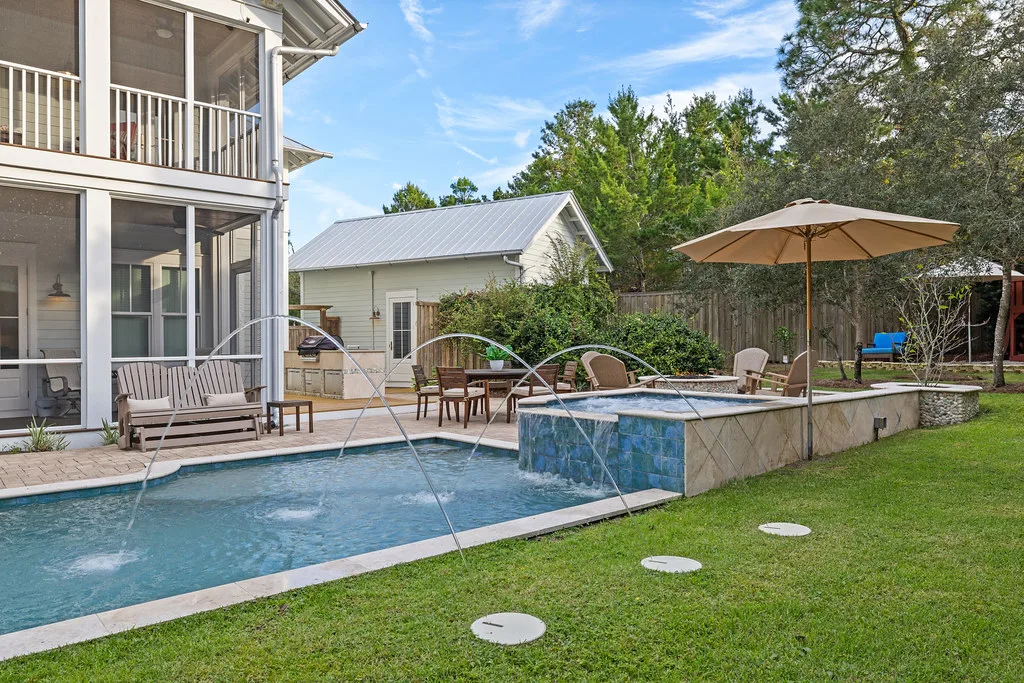
Your pool deck is the hero photo and it's still empty. Cheap outdoor cushions fade in one Tampa summer — and Florida guests remember the lanai more than the dining room.
Sound familiar?
You budgeted for interiors and left the lanai for 'next month.' Move-in is in two weeks and the pool deck is still bare — while Florida humidity turns retail outdoor wicker into a replacement bill within eighteen months.
In short
- Outdoor is not an add-on in Florida — it is core living space
- Materials science matters more than brand hype
- Plan storms and maintenance on day one
On a golf estate, a Palm Beach loggia, or a Tampa pool home, outdoor rooms need the same spec discipline as primary suites — marine-grade frames, cushion stacks that dry fast, and a storm stow plan before the first named storm. Most retail outdoor furniture is built for a deck that sees rain a few times a month, not a lanai that sits in humid air and direct UV for eight months straight. We spec every outdoor piece the way we'd spec an interior piece for a high-traffic room — durability first, then how it looks in photos. Get the materials right once and the lanai holds up through hurricane season after hurricane season instead of needing a refresh every other year.
Design notes
Frame and finish classes we specify
Marine-grade aluminum, teak with maintenance plans, HDPE lumber, and stainless or powder-coat hardware rated for salt exposure. The frame decision usually comes down to maintenance appetite more than budget: teak ages to a silver-gray patina and needs an annual oil treatment to keep the honey tone, while powder-coated aluminum holds its finish with just a rinse-down and costs less to maintain over five years. HDPE lumber, the recycled poly material used in higher-end outdoor casegoods, never rots or needs refinishing, and handles direct Gulf or Atlantic sun better than real wood, which makes it the right call for pieces near a pool deck with full-day exposure. Hardware is where retail outdoor furniture usually fails first: standard zinc-plated screws and hinges can show rust bleed through a cushion within one wet season. We spec 316 marine-grade stainless or a properly cured powder coat on every hinge, leg cap, and umbrella base, because that detail decides whether a set looks new at year three or needs replacing.
Cushion and textile stack
Solution-dyed acrylics, quick-dry reticulated foam, vented covers, and mold-inhibiting liners for humid months.
Lanai ceiling fans, lighting, and heaters
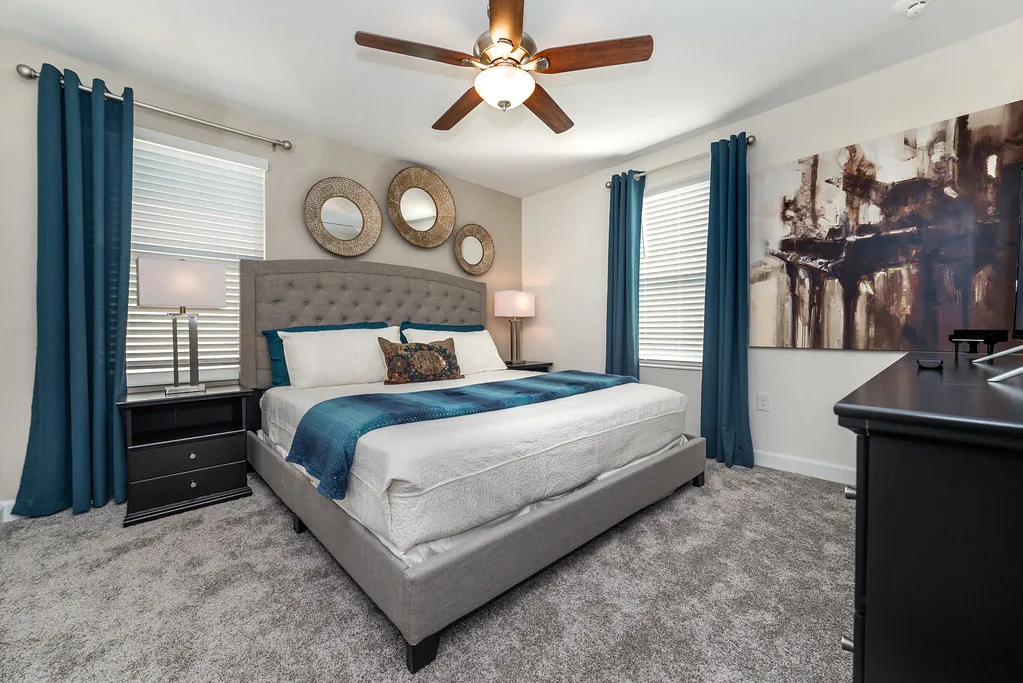
We coordinate with electricians so seating groups sit under comfortable air movement and thoughtful downlight — not accidental glare. The common mistake we see on lanais is fans and can lights placed on a symmetrical grid that ignores where the furniture actually lands; a beautiful sectional under a fan blade's direct downdraft is a windy, uncomfortable seat, and a dining table lit only by a centered fan eats dinner in shadow. We map furniture placement before finalizing the electrical rough-in whenever the timeline allows, so fans sit over walkways and open floor rather than over seating, and dedicated downlights land over the dining table and any reading chair. Wet-rated fans and fixtures are non-negotiable on a screened but not fully enclosed lanai; a standard interior-rated fan motor can fail within a season of humid salt air, even under cover. Heaters, where used, should be positioned for radiant coverage over seating zones rather than open floor, since that's where the comfort gain actually matters on a cool evening.
Hurricane and storm routines
Stackable collections, weighted bases sized to code, and storage guidance for named storms — customized to your county norms.
Kitchen, bar, and pool-house adjacency
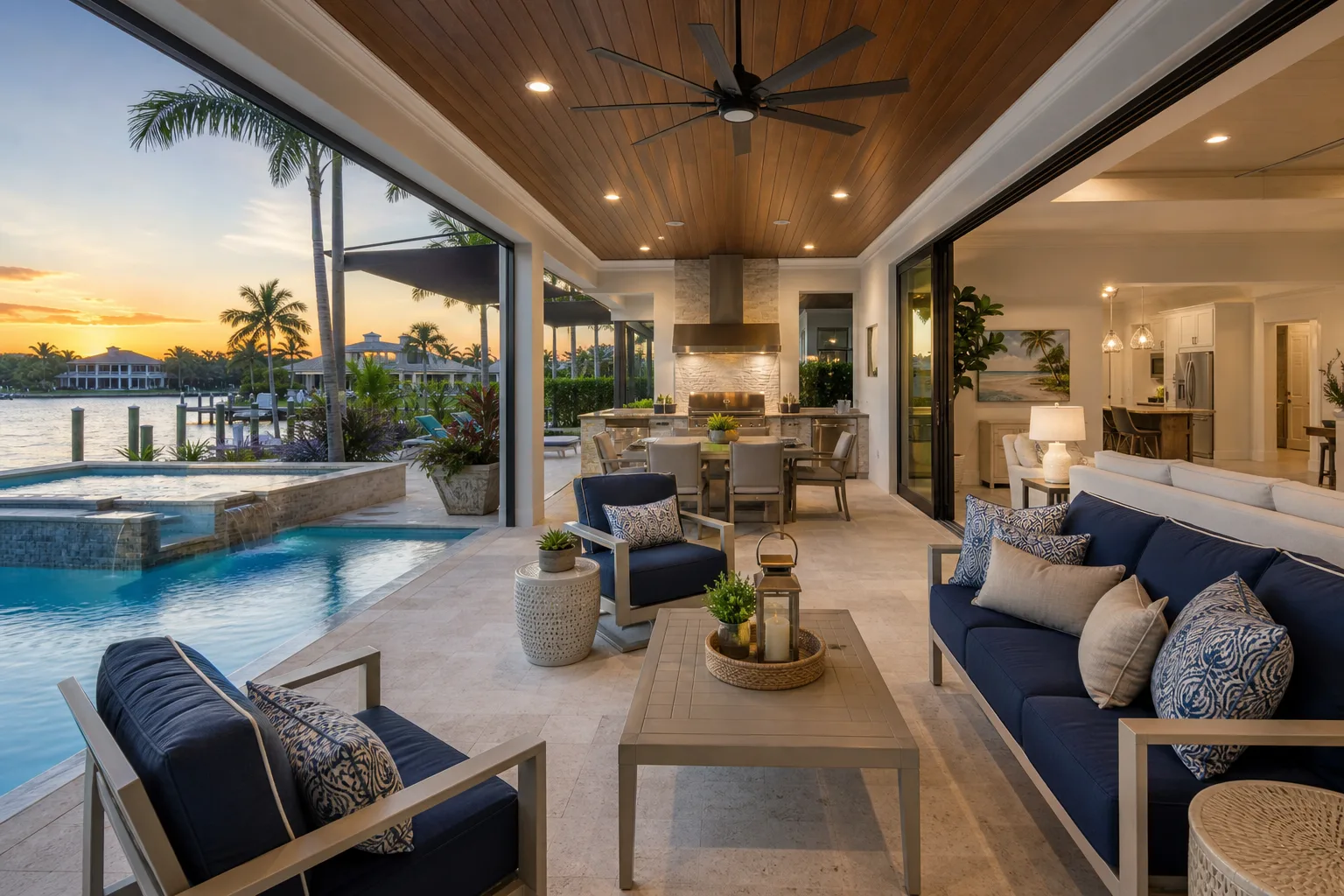
Outdoor dining scaled to match indoor flatware counts; ice and bar storage; towel and sunscreen niches near plunge pools. The decision rule for outdoor dining capacity: match or slightly exceed your indoor seat count, because outdoor is where Florida entertaining actually happens most months of the year, and an undersized patio table pushes overflow guests back indoors on the nights the weather is the whole point of owning the house. Bar and ice storage should sit within a few steps of the main seating group, not tucked at the far end of the lanai, or you'll end up with a cart of drinks camped next to the sofas by the second party. Towel and sunscreen niches near a plunge pool or spa are a small line item that saves the indoor furniture from wet swimsuits and sunscreen transfer; a simple teak or HDPE bench with a slatted top for drainage does more work than people expect for the cost.
Custom outdoor lead times and storm-season timing
In-stock outdoor collections typically land in 2–4 weeks; fully custom outdoor upholstery in COM performance fabric, or made-to-order teak dining sized to a specific lanai footprint, usually runs 10–14 weeks. If your move-in falls between June and November, order early — production queues for marine-grade frames back up ahead of hurricane season as everyone tries to get outdoor furniture in place before storm watches start, and a late order can leave a lanai bare through peak entertaining months. The decision rule: lock in frame and cushion selections for daily-use seating first since those carry the longest lead times, and treat smaller accent pieces, like side tables, planters, or a bar cart, as the flexible layer you can add once the main pieces are on site.
What to do first this week
Open three same-bedroom-count comps on Airbnb or VRBO and screenshot bunk photos, outdoor dining seats, and primary suite finish. List where your home falls short — that gap list becomes your furnish scope. Send your floor plan for a scoped proposal.
What we see go wrong
- Indoor wicker replicas outside — they delaminate
- Dark metal frames on uncovered Gulf pools without heat mitigation
- No drainage plan under sectional feet on travertine decks
- Buying separate outdoor from separate indoor vendors — color drifts
- Forgetting bug pressure — screening and fan strategy matters
Related Community Guides
Eight Core Services
Turnkey to Themed Rooms — All Under One Roof
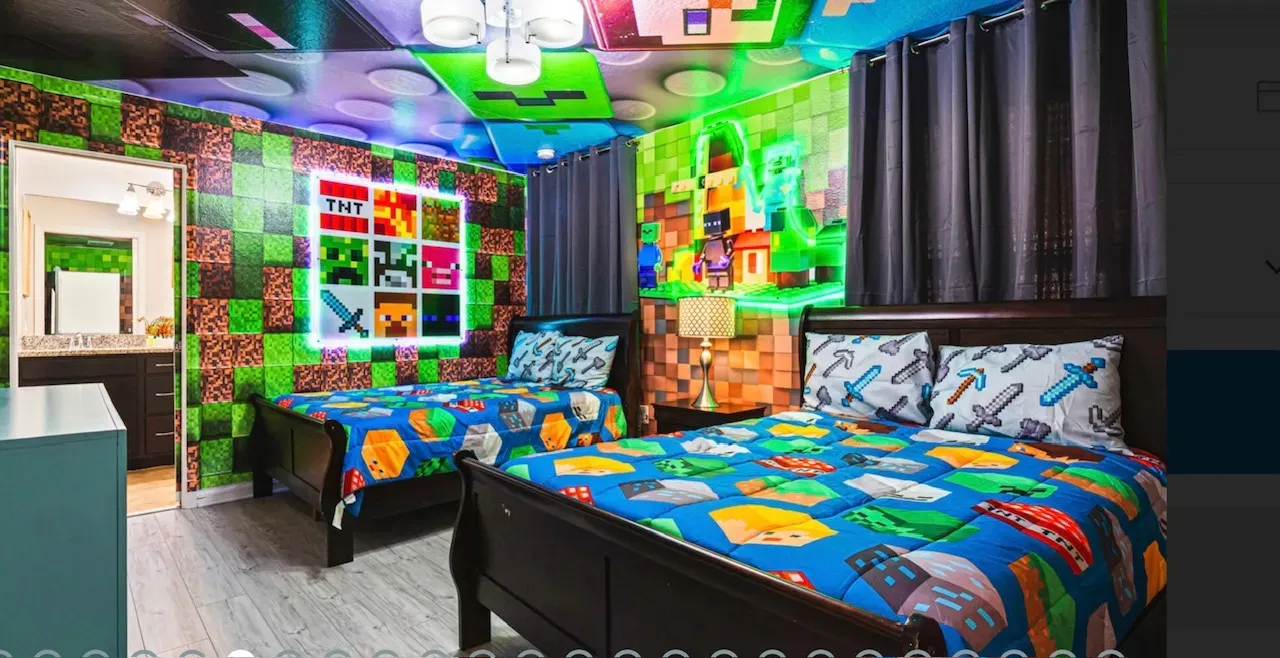
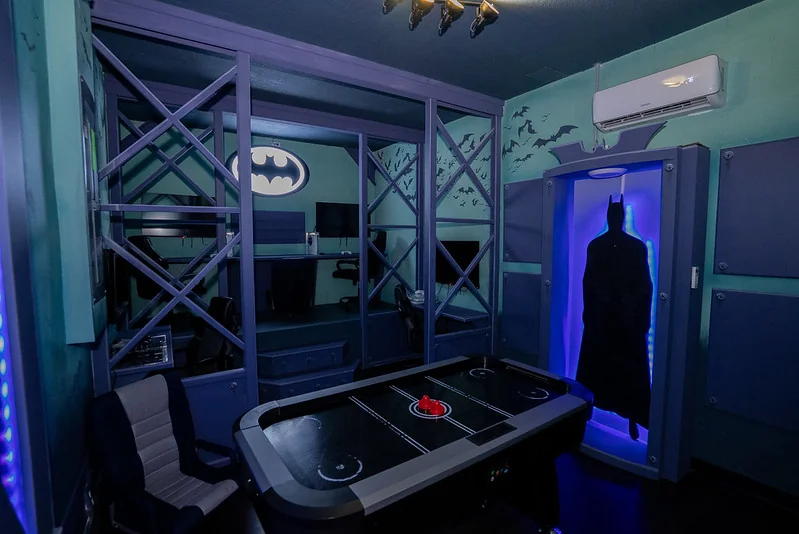
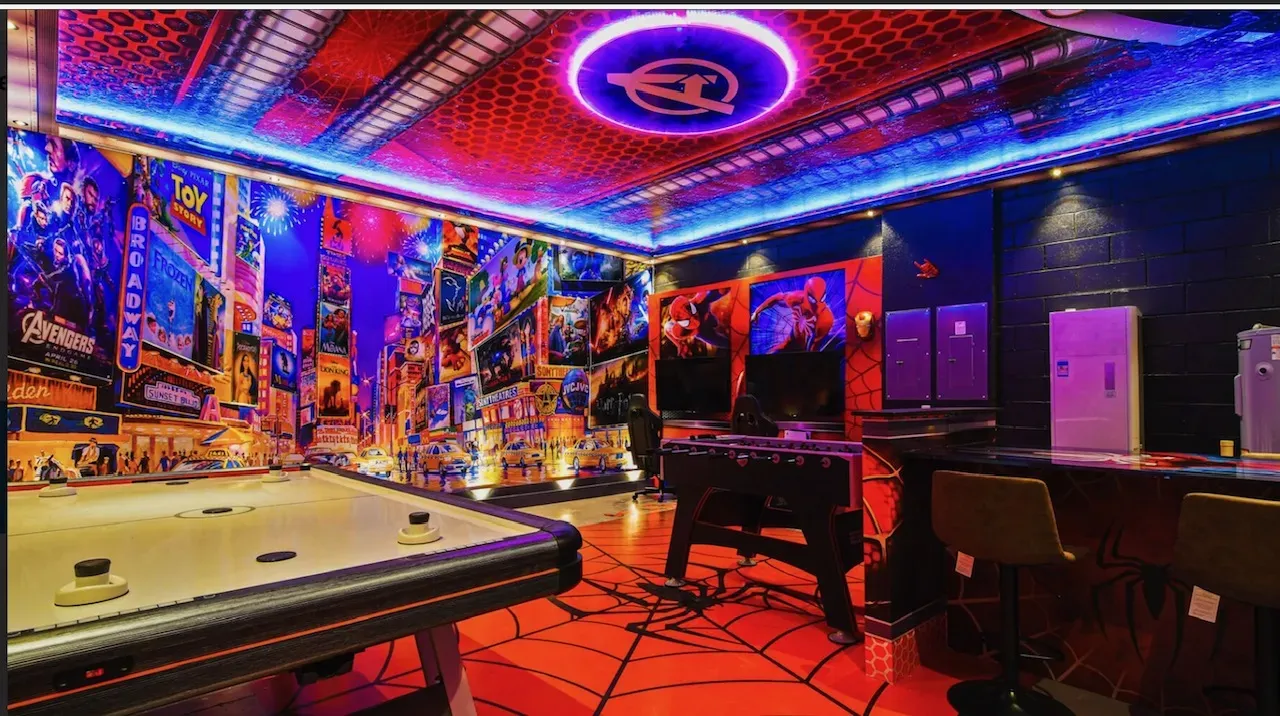
Full furniture packages, STR interior design, themed kids suites, game room conversions, property prep, custom bunks, white-glove install, and listing-ready staging — for vacation rentals and second homes across Orlando, Kissimmee, Davenport, and the full Florida STR market.
Frequently Asked Questions
Can outdoor match indoor aesthetics?
We coordinate finishes and textile families so transitions read intentional.
Maintenance expectations?
We provide simple seasonal care guides and can specify commercial-grade treatments for teak.
Is fire feature integration included?
We plan seating distances, fuel access, and wind screens relative to local code guidance.
Do you ship and assemble large outdoor?
Yes — white-glove placement and debris removal are standard.
What should I do first?
Pull three in-community comps with your bedroom count, note bunk, outdoor, and primary suite in the hero photos, then send your floor plan. We match package tier to that comp set before you order furniture.
What does a full lanai or pool-deck package typically cost?
Most full outdoor packages for a lanai or pool deck fall in the same range as a well-furnished living room, since marine-grade frames and performance cushions carry a real material premium over indoor furniture. Scope and square footage drive the range more than style — a covered loggia with a full outdoor kitchen and dining for twelve costs meaningfully more than a single conversation set around a plunge pool.
Related Reading
Furnishing a New Construction Home in Florida: What Every Luxury Buyer Needs to Know
How to Furnish a Tampa Gated Community Home Without Retail Furniture That Fails Humidity