Turnkey Package Cost Planning
A cost-driver decomposition of turnkey vacation rental furniture packages — the line items inside a turnkey number, the bundling logic, and what moves the planning range up or down.
Sound familiar?
You got two turnkey quotes — $42,000 and $68,000 — for the same 5-bedroom. You cannot tell what is inside either number or why they are so far apart.
In short
- A turnkey furniture package number is six bundled line items: furniture, design, procurement, delivery, install, houseware kit. Single-number quotes without breakdown are not useful for comparison.
- Package level is the dominant cost driver — larger than bedroom count, market, or property style. Comparing proposals across different package levels ranks by scope, not price.
- Houseware-kit sizing to guest capacity (not bedroom count) is the most-skipped cost driver. Under-sized kits produce the lowest headline number and the worst first-cycle operational experience.
- Themed-bunk and game-room scope should appear as separate line items in full amenity package and higher tier proposals. The themed-room and game-room cost-planning posts cover those drivers in depth.
- Cost drivers move the planning range within a tier: custom fabrication, designer-trade procurement, multi-property branding, premium materials push up; standard plans, regional sourcing, calendar flexibility pull down.
This is not a quote. It is what is actually inside a turnkey package number and why two providers on the same property can be 30% apart. Final pricing needs a scoped proposal; use this to compare proposals apples-to-apples.
What to know
A turnkey package is six line items, not one
Every legitimate turnkey furniture package number bundles six categories of scope: (1) furniture by room or zone (sofas, dining, bedroom, outdoor, accent), (2) design and selection work (rendering, palette, material specification, sometimes a small fee separate from product), (3) procurement (vendor coordination, manufacturer relationships, freight management), (4) delivery (white-glove delivery, sometimes separate freight, sometimes bundled), (5) install and staging (placement, assembly, hardware install, photo-staging), and (6) houseware kit (kitchen, bath, bedroom soft goods, sometimes outdoor housewares). Proposals that quote a single number without line-item breakdown are not useful for comparison — you do not know which category they are short on relative to the alternative.
Package level is the dominant cost driver
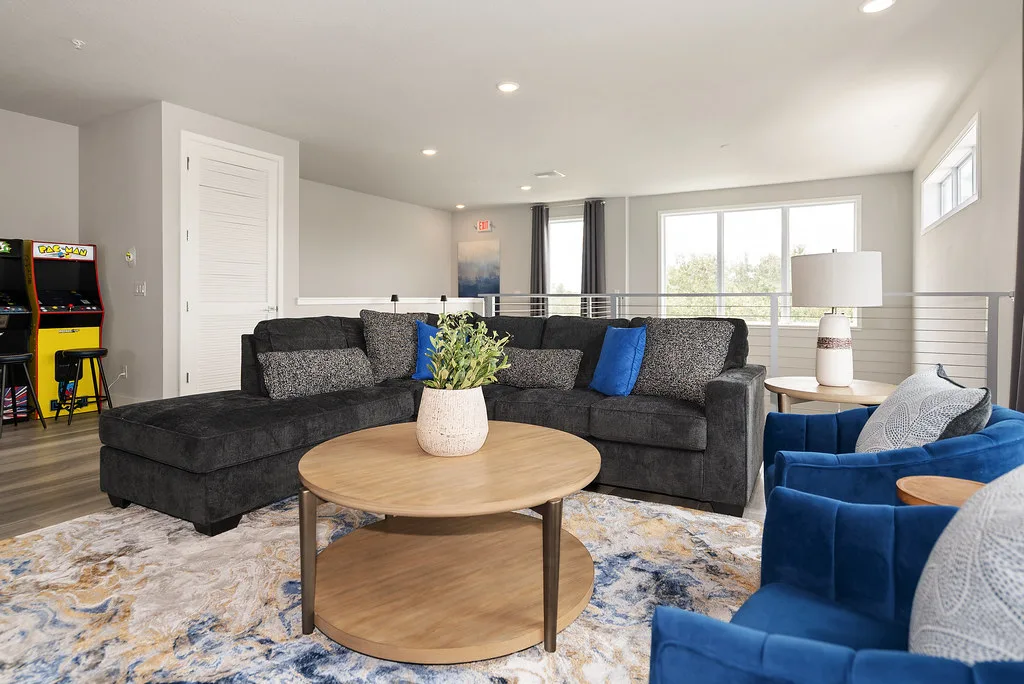
The package level (Launch-Ready, launch-ready package, full amenity package, Luxury Estate, Mega-Rental / Specialty) is the dominant cost variable — larger than bedroom count, larger than market, larger than property style. A Launch-Ready scope on a 6BR property comes in materially below a launch-ready package on a 4BR; an full amenity package at 5BR comes in materially below a Luxury Estate scope at the same bedroom count. Owners comparing proposals across different package levels and treating them as price comparisons are not actually comparing the same product. The package level needs to match the property’s neighborhood comps and the booking-audience positioning before any cost comparison is useful.
Houseware-kit depth is the most-skipped cost driver
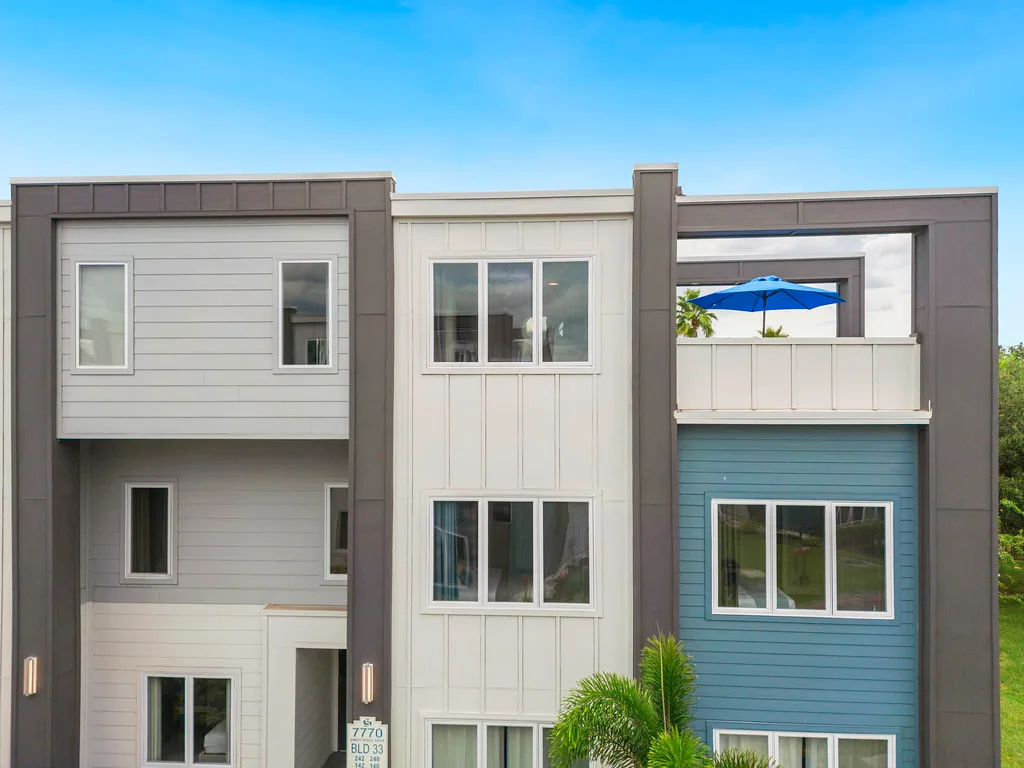
Houseware kits sized to bedroom count rather than to guest capacity are the most common source of post-launch operational pain. A 5BR property sleeping 14 needs a 14-guest houseware kit, not a 10-guest kit. The cost differential between a bedroom-count-sized kit and a guest-capacity-sized kit at 5BR–8BR is meaningful — missing it produces a lower headline number but a property that runs short of dishware, glassware, kitchen tools, bath towels, and bedding within the first two booking cycles. Owners reviewing turnkey proposals should ask explicitly which sizing logic the kit is built against; the answer reveals more about the provider than almost any other question.
Themed-room and game-room scope are separate cost line items
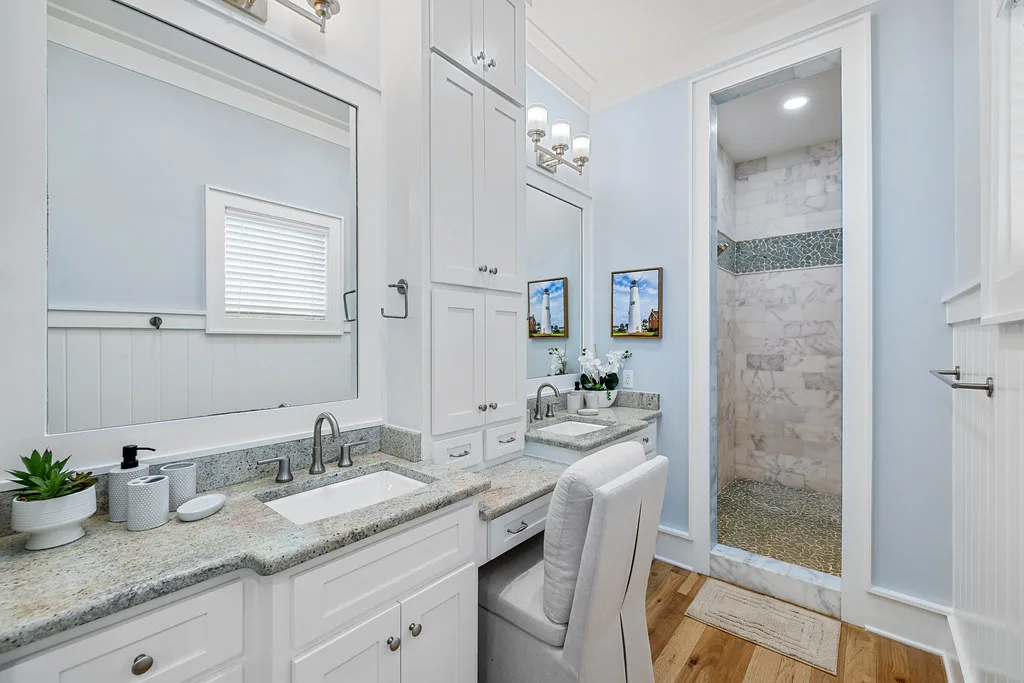
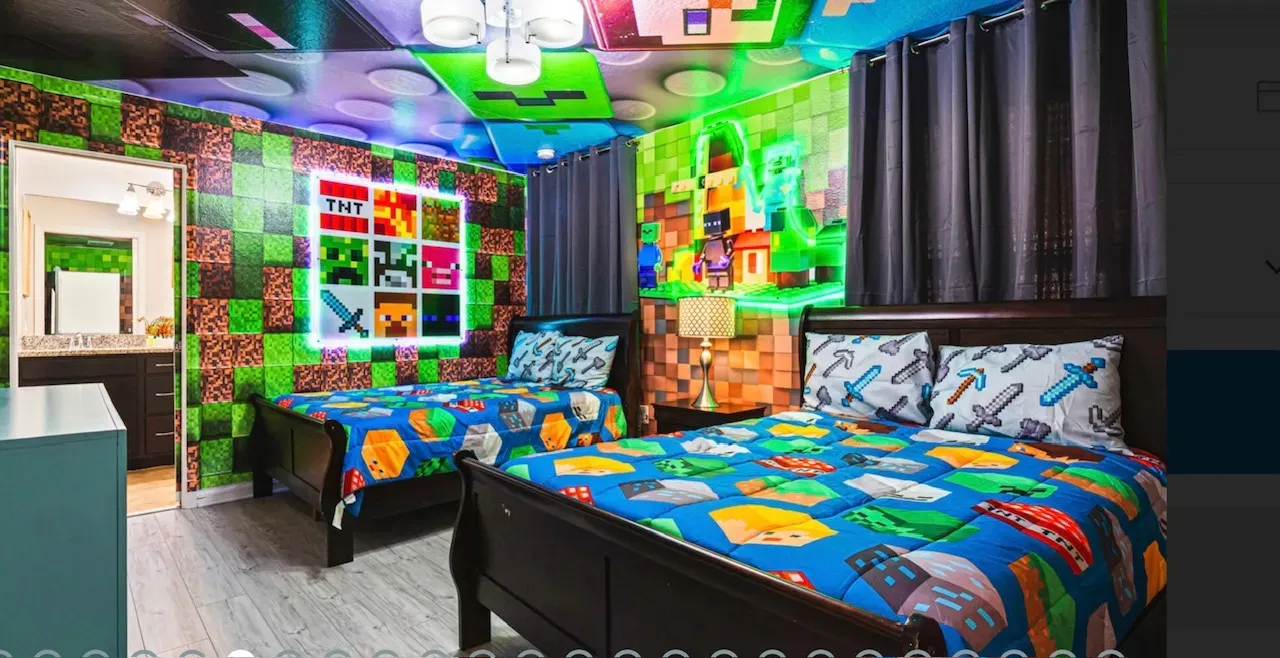
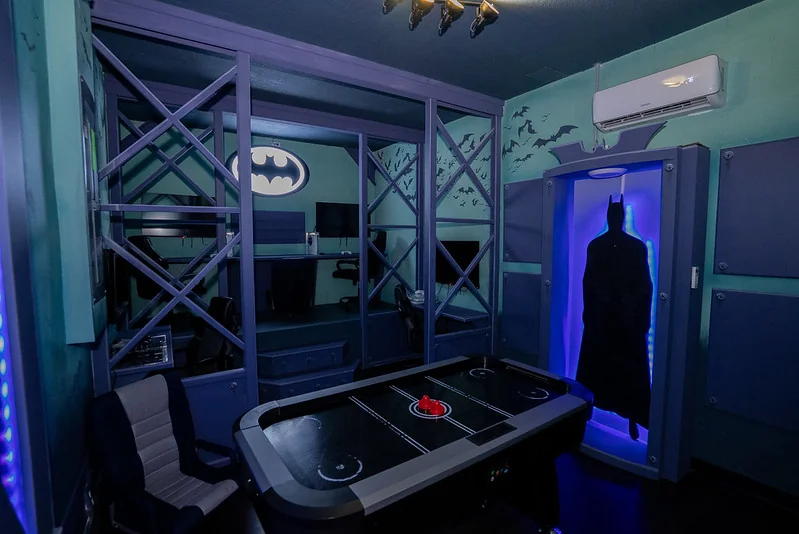
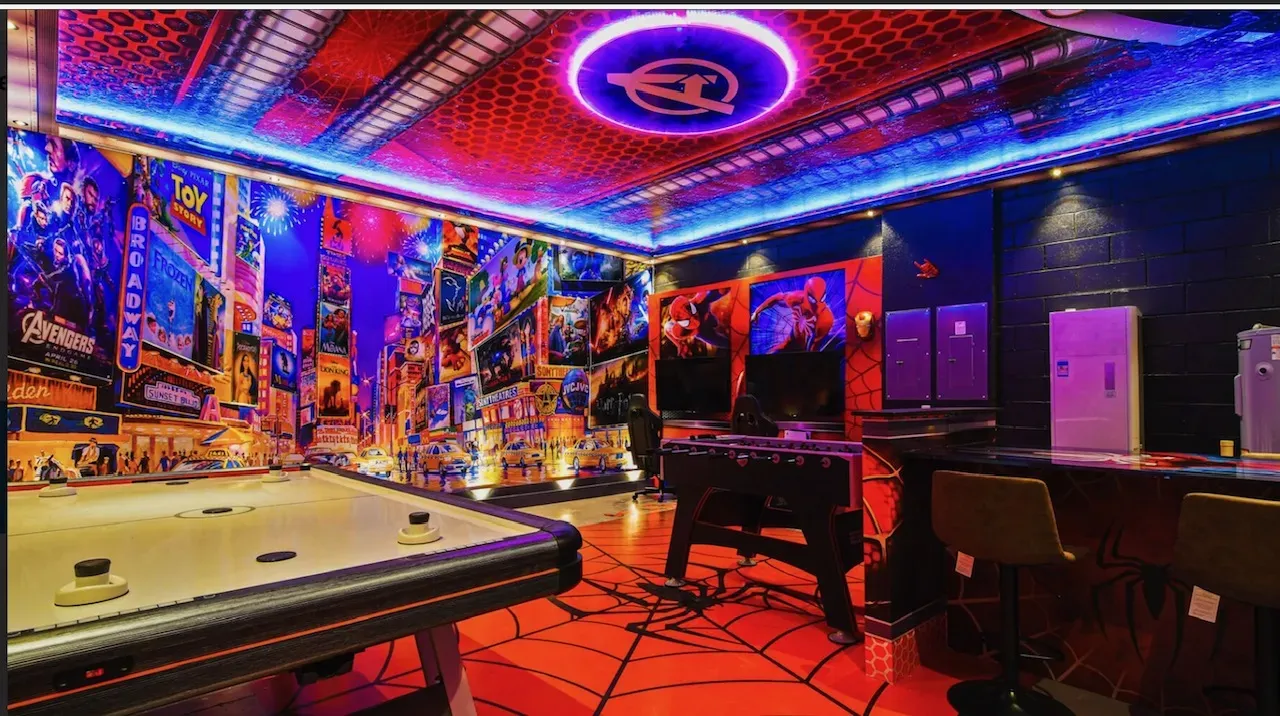
Themed-bunk and game-room scope should appear as distinct line items in any full amenity package or higher package level proposal — not folded into the bedroom or living-room totals. The cost-driver decomposition for these scopes is non-trivial: themed bunks involve custom millwork, fabricated photo-prop staging, theme-specific paint and finish work, and integrated lighting. Game rooms involve construction-adjacent flooring and electrical, equipment selection (arcade, table games, lounge), and sound and HVAC considerations. Proposals that fold themed and game-room scope into general furniture totals usually under-scope both. The themed-room cost-planning and game-room cost-planning posts cover those drivers in depth.
Delivery and install logistics move with the calendar
Install cost varies with calendar pressure, multi-vendor coordination complexity, and crew availability — not just property size. Install during peak booking-prep windows (February–April for spring/summer launches, August–October for Christmas-corridor launches) commands different logistics than install during slow windows. Multi-vendor install (custom fabrication arriving from one source, soft goods from another, equipment from a third) costs more in coordination time than single-source install regardless of room count. Proposals that quote install as a flat percentage of furniture often under-scope the coordination layer at full amenity package and higher tiers, then add it as a change order during execution.
What moves the planning range up
Cost drivers that push toward the higher end of any tier’s planning range: custom fabrication (themed bunks, built-in entertainment walls, custom upholstery in non-standard fabrics), designer-trade procurement (statement lighting, art, accent pieces sourced through trade-only channels), multi-property branding consistency (palette discipline across portfolios), expanded outdoor scope (pool deck furniture, outdoor entertainment, fire features), premium materials (performance velvets, leather options, hardwood vs engineered, natural stone vs engineered surfaces), and accelerated install windows (compressed timelines absorbing logistics cost). At Luxury Estate and Mega-Rental scope, these drivers can move the planning range 40–60% within the tier itself.
What moves the planning range down
Cost drivers that pull toward the lower end of any tier’s planning range: standard floor-plan replication (same furniture spec across multiple properties on the same plan), standard package level templates (no custom fabrication, no specialty rooms), flexible install windows (no calendar pressure), regional or stock vendor sourcing (versus custom or designer-trade), simpler outdoor scope (covered lanai with seating set vs full outdoor entertainment), and complete owner-side decision discipline (no extended approval cycles consuming designer hours). Owners who arrive at the scope conversation with clear package level alignment and calendar flexibility consistently see their proposals land lower in the tier range without sacrificing scope.
How to compare turnkey proposals apples-to-apples
Before comparing turnkey proposals, ensure they are built against the same package level and the same property scope. Differences to surface explicitly: (1) houseware-kit sizing (guest capacity vs bedroom count); (2) outdoor scope (covered lanai only vs full outdoor entertainment); (3) themed-bunk and game-room line items (included, excluded, or treated as phased Phase 2); (4) install logistics (single vendor vs multi-vendor coordination); (5) photography prep (included, owner-managed, or excluded); (6) post-launch first-cycle replacement coverage. Two proposals quoting the same package level should agree on these structural elements; if they do not, the cost comparison is not meaningful. Ask each provider for the actual line count behind their total. A proposal with six or fewer opaque bullets is a caution flag at full amenity package or higher — a properly scoped 6–8 bedroom project usually generates 15–25 distinct line items once you separate bedroom-by-bedroom furniture, houseware categories, and amenity scope. Also ask what happens if a retail item backorders mid-install; a provider without a pre-approved substitution list will either push your launch date or swap in a mismatched piece without telling you first.
How we structure turnkey proposals
Our scoped proposals break out all six categories: furniture by room, design direction, procurement, delivery, install, and housewares sized to guest capacity — not bedroom count. Themed bunks and game rooms are separate line items when they apply. The total is the sum of those lines, not one opaque number. On a typical 5-bedroom launch-ready proposal, that breakdown runs six distinct lines you can hold up next to a competing quote item by item — including whether the houseware line is sized to guest count or bedroom count, which alone can explain a meaningful gap between two quotes. If you are comparing quotes, ask the other provider for the same six-line breakdown before you compare totals; itemize both the same way and the gap usually becomes obvious in about fifteen minutes. A provider who can't produce a line-item breakdown same-day is usually the one hiding a scope gap, not the one with the better price.
What to do first this week
Open three same-bedroom-count comps on Airbnb or VRBO and screenshot bunk photos, outdoor dining seats, and primary suite finish. List where your home falls short — that gap list becomes your furnish scope. Send your floor plan for a scoped proposal.
What we see go wrong
- Comparing turnkey proposals by total price without aligning the package level or the structural inclusions — produces a comparison that ranks by what was left out rather than by what was included.
- Accepting houseware kits sized to bedroom count rather than to guest capacity — produces the lowest-headline number but the worst first-cycle operational experience.
- Folding themed-bunk and game-room scope into general furniture totals — obscures the cost drivers behind those scopes and usually under-scopes both.
- Treating install as a flat percentage of furniture cost — under-scopes the coordination layer at full amenity package and higher tiers, leading to change orders during execution.
- Compressing package level downward to hit a budget target without acknowledging the competitive-set implications — produces an under-scoped property at the wrong nightly rate.
- Accepting single-number bundled quotes without line-item breakdown — these proposals are not comparable to itemized proposals and usually hide scope gaps that surface as change orders.
Eight Core Services
Turnkey to Themed Rooms — All Under One Roof
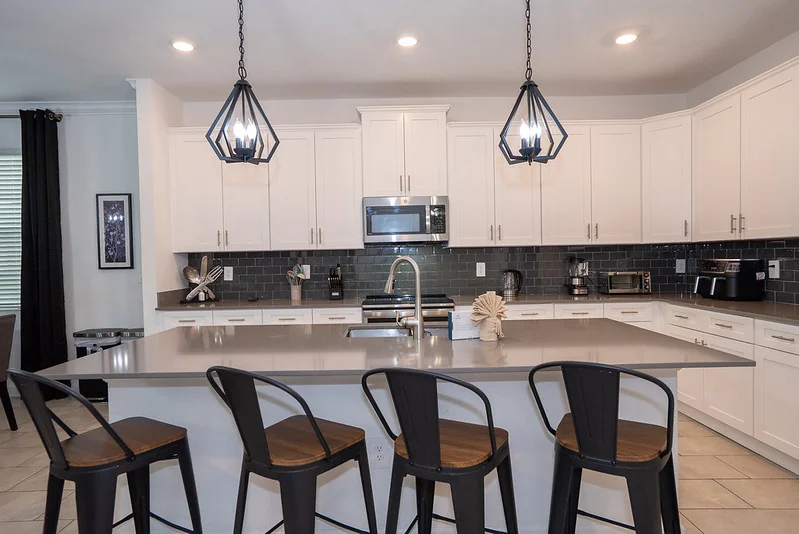
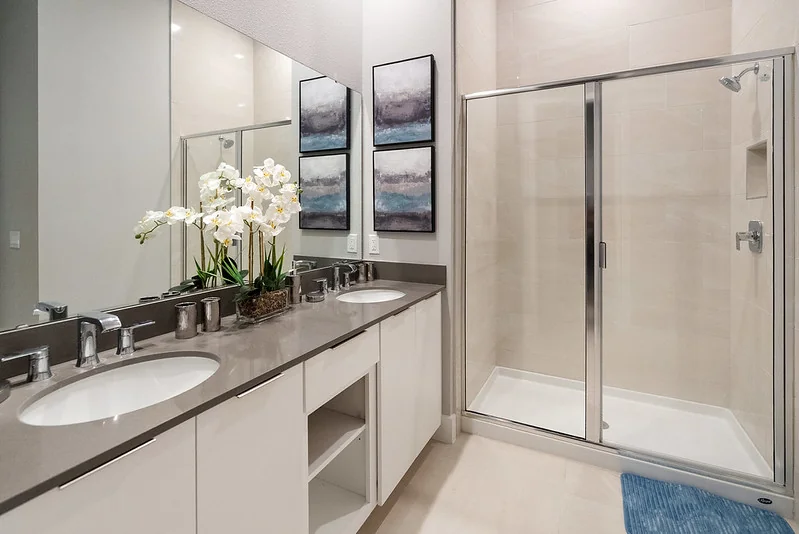
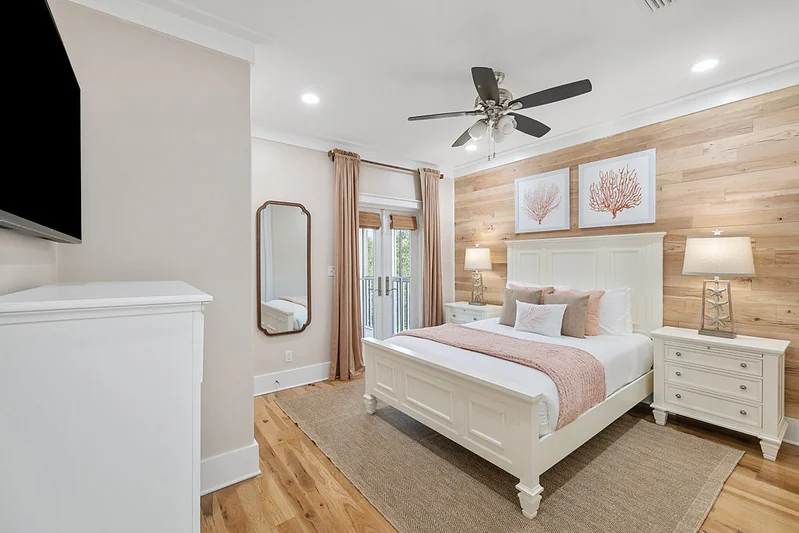
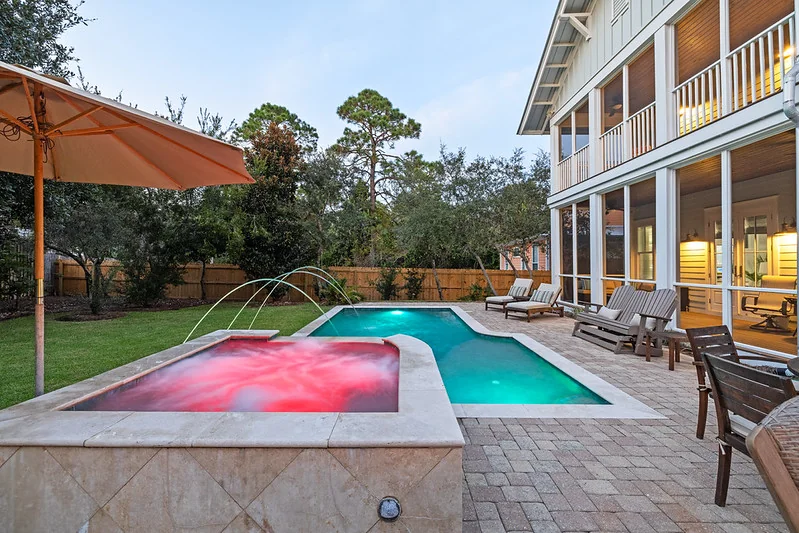
Full furniture packages, STR interior design, themed kids suites, game room conversions, property prep, custom bunks, white-glove install, and listing-ready staging — for vacation rentals and second homes across Orlando, Kissimmee, Davenport, and the full Florida STR market.
Frequently Asked Questions
Why do different providers quote such different turnkey package totals for the same property?
Because they are usually quoting against different package levels, different houseware-kit sizing logic, different outdoor scope, and different inclusion logic on themed-bunk and game-room scope. Two providers quoting the same property at different package levels will produce dramatically different totals — not because one is cheaper, but because they are quoting different products. The first comparison step is to align the package level; the second is to align the structural inclusions; the third is to compare line items at the same level.
How do I know what package level my property should be quoted against?
Match package level to your neighborhood comps and who you want to book. Disney-corridor 5–8 bedrooms usually need launch-ready package or full amenity package to compete in listing photos. Luxury and mega-rentals need Luxury Estate or Mega-Rental scope. Decide the tier before you compare prices — not after.
What is the single biggest cost driver inside a turnkey package?
Package level. Larger than bedroom count, larger than market, larger than property style. The same property at Launch-Ready vs full amenity package vs Luxury Estate produces planning ranges that can differ by 2–3x. Within a single package level, the next-largest drivers are houseware-kit sizing, themed-bunk and game-room inclusion, outdoor scope depth, and custom-fabrication content.
Should I get multiple turnkey proposals and pick the lowest?
Multiple proposals are useful for understanding the package level conversation in the market. Picking the lowest is rarely useful unless the proposals are aligned on package level, houseware-kit sizing, themed-bunk and game-room inclusion, and structural inclusions. A package level-mismatched proposal at a lower total is not actually cheaper — it is quoting a different product. The useful comparison is between proposals quoting the same tier and same structural inclusions.
Why does the houseware kit cost more than I expected?
Because houseware kits sized to guest capacity rather than to bedroom count include meaningfully more dishware, glassware, kitchen tools, bath towels, and bedding than bedroom-count-sized kits. A 5BR property sleeping 14 needs roughly 40% more houseware depth than the same property sized as a 5BR. The cost differential is real but recoverable in operational quality — properties with under-sized kits run short within the first two booking cycles and absorb the cost as replacement runs over the first six months.
How does this cost-driver framework apply to phased install scopes?
Phased install (Launch-Ready at the launch target, phased amenity setup add 8–16 weeks later) splits the turnkey package across two procurement and install windows. Each phase has its own line-item decomposition with its own package level. The total cost across both phases is typically 5–12% higher than a single-window install of the same total scope because of duplicated logistics, but the booking-window revenue captured during the gap usually exceeds the differential. The phased-install path is a strategic option for tight launch targets, not a fallback compromise.
What should I do first?
Pull three in-community comps with your bedroom count, note bunk, outdoor, and primary suite in the hero photos, then send your floor plan. We match package tier to that comp set before you order furniture.
My two quotes use the same six-category structure and package level — why is one still 20% higher?
Check the materials grade inside each category next, not the category list itself. Two full amenity package quotes can list identical line items — furniture, houseware, install — but spec commercial-grade performance fabric in one and mid-tier retail fabric in the other, or size the outdoor zone to a full lanai build-out in one and covered-seating-only in the other. Ask each provider to name the fabric class, frame material, and outdoor zone count behind their number; that's usually where the remaining gap lives.