Large Vacation Rental Housewares Guide
Housewares are the most-under-scoped line item in large vacation rentals. Where the kit depth actually matters, where corner-cutting shows up in reviews, and how the houseware scope earns its planning range at 5BR-and-larger scale.
Sound familiar?
Housewares are consistently the most-under-scoped line item in large vacation rental furnishing projects. The scope conversation focuses on furniture, themed bunks, game rooms, theater rooms, and outdoor — the houseware kit is treated as a checklist item rather than a strategic scope decision. The reality at 5BR-and-larger scale is that housewares drive a meaningful share of negative reviews (missing cookware, undersized dining, inadequate linen inventory) and a meaningful share of positive reviews (well-stocked kitchen, family-trip-ready dining setup, hotel-grade bedding-and-bath supplies). The houseware-scope decision is a meaningful booking differentiator at large vacation rental scale than most owners realize.
In short
- Housewares are the most-under-scoped line item in large vacation rental projects — and one of the what matters most review-cycle quality drivers at 5BR-and-larger scale.
- Dining capacity sizes to maximum guest count plus 25% buffer, not to bedroom count. The dining-math mistake (undersized place-setting kits) is one of the most common negative-review triggers at large scale.
- Linen inventory runs 1.5x to 2.5x bed count depending on the laundry model and the property scale. Single-set inventory at 5BR+ produces booking-cycle shortages.
- Kitchen-kit depth (commercial-grade cookware, doubled bakeware, oversize prep tools, scaled small appliances) is a meaningful booking differentiator than most owners realize at large vacation rental scale.
- Decorative finish-out is the line between a furnished property and a styled property. Performance-fabric throw pillows, framed art, statement centerpieces, and kitchen-counter styling read in the gallery and through the guest stay.
Housewares — kitchenware, dining capacity, bedroom-and-bath linens, cleaning supplies, decorative finish-out — are the most-overlooked scope category in large vacation rental projects. At small-Airbnb scale, the houseware kit sizes cleanly to the 2–4 sleep count and the scope is straightforward. At 5BR-and-larger scale, the houseware kit has to support multi-family group cooking, family-trip dining for 10–20 guests, kid-friendly serveware, hotel-grade bedding turnover across multiple suites, and bath-supply depth across multiple bathrooms — and the operational reality of cycling those soft goods and consumables through high-volume booking turnover. This guide walks through the houseware-depth decisions that consistently differentiate large vacation rentals in their review cycles. We will not publish exact pricing — the houseware-kit scope is project-specific — but the structural guidance below is consistent across the large-vacation-rental market.
What to know
Why housewares is the most-under-scoped category at 5BR+
Owners and investors planning a large vacation rental furnishing project typically allocate the majority of mental scope-attention to the visible hero photos — primary great-room furniture, themed bunk rooms, theater and game rooms, outdoor entertaining. Housewares get a checklist pass at the end of the planning phase: dishes, glassware, towels, bedding, basic cookware. That allocation is structurally wrong at 5BR+ scale. The houseware kit at large-vacation-rental scale is what actually gets used during every booking — every meal, every coffee, every shower, every bed turnover. Under-spec housewares produce immediate friction during the stay, show up directly in the review cycle, and compound the negative-review impact across 30–60 bookings per year. The houseware-scope decision is a meaningful booking differentiator than the optional accent-furniture or decorative-finish decisions that often consume more planning attention.
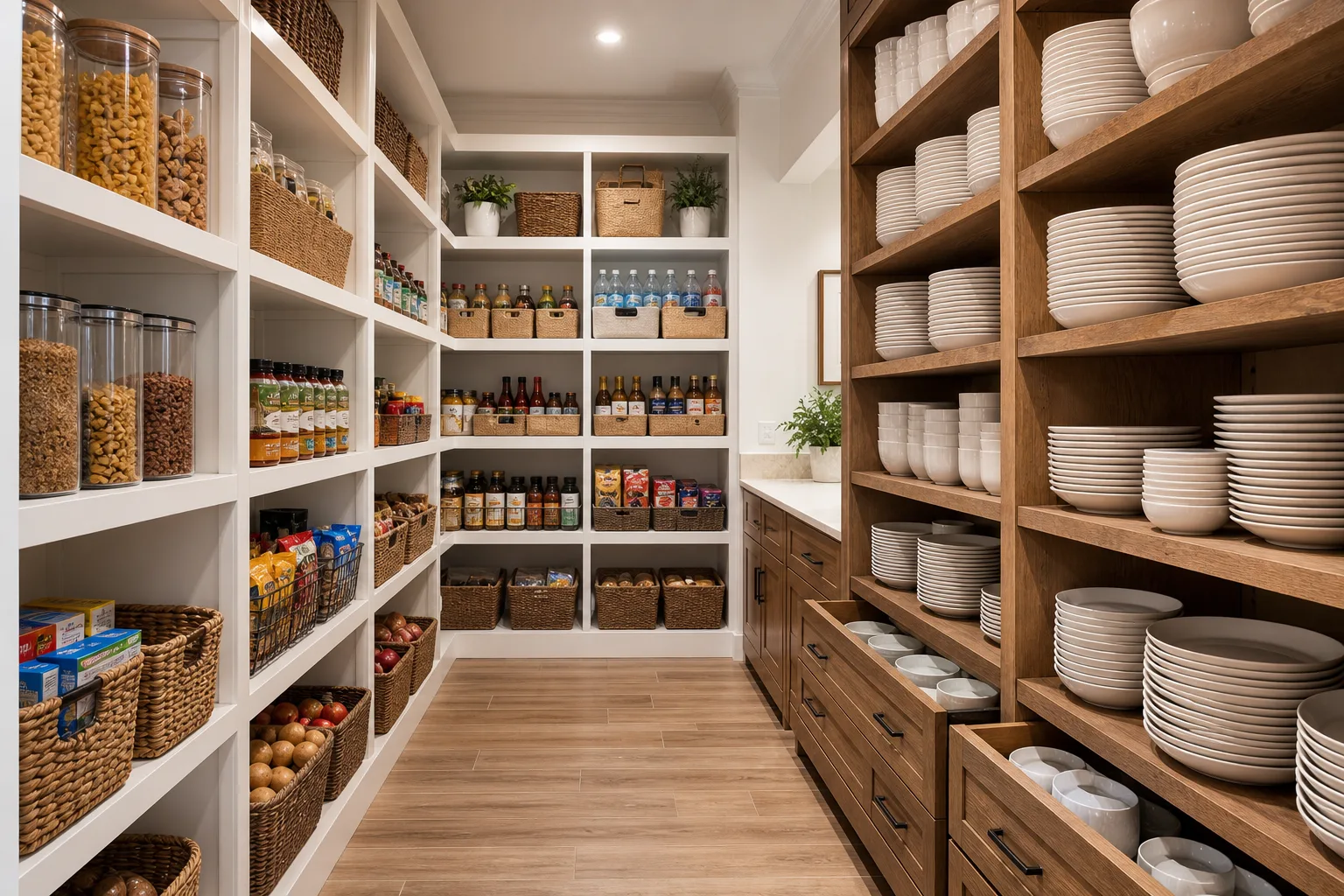
Kitchen-kit depth — cookware, bakeware, prep, and small appliances
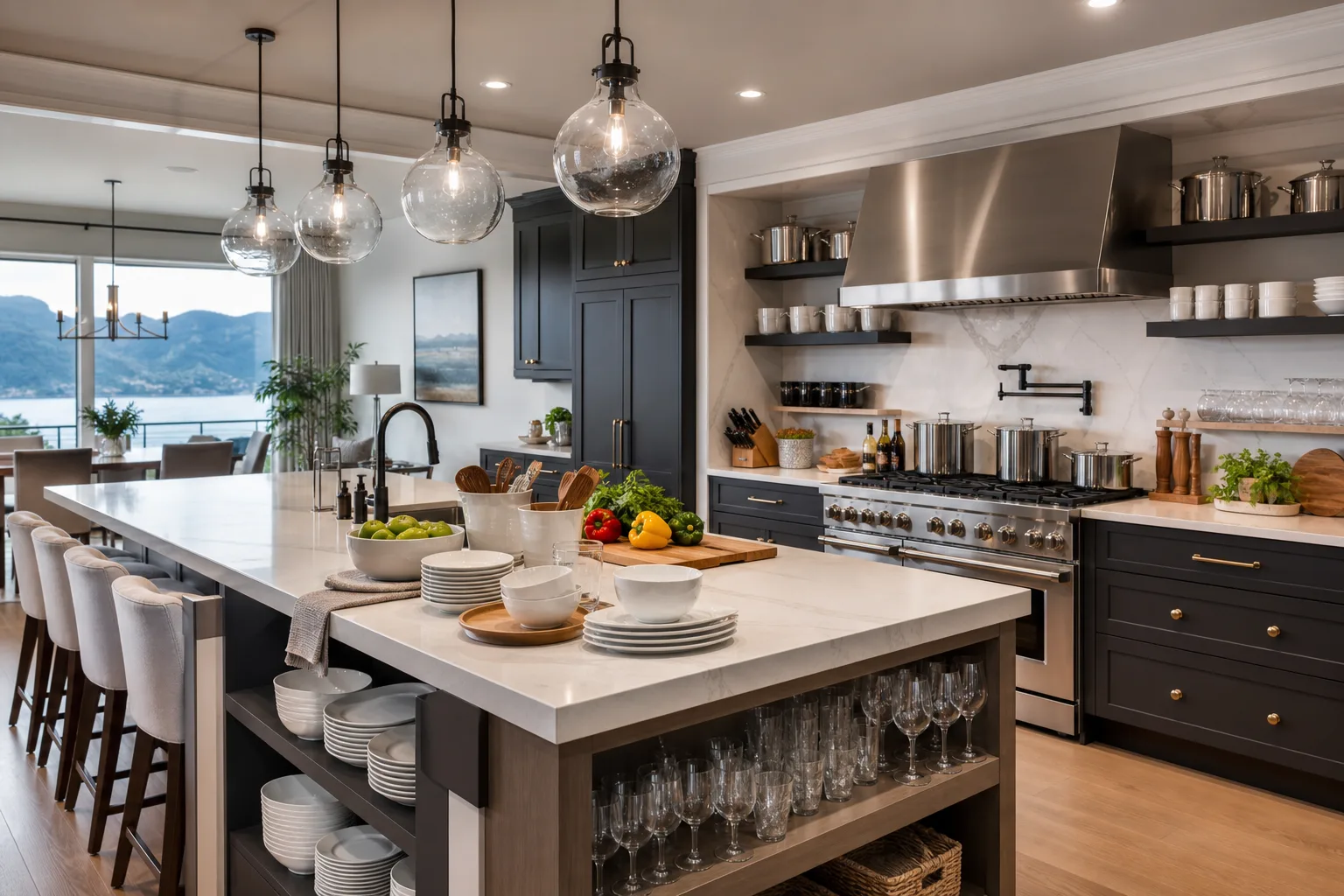
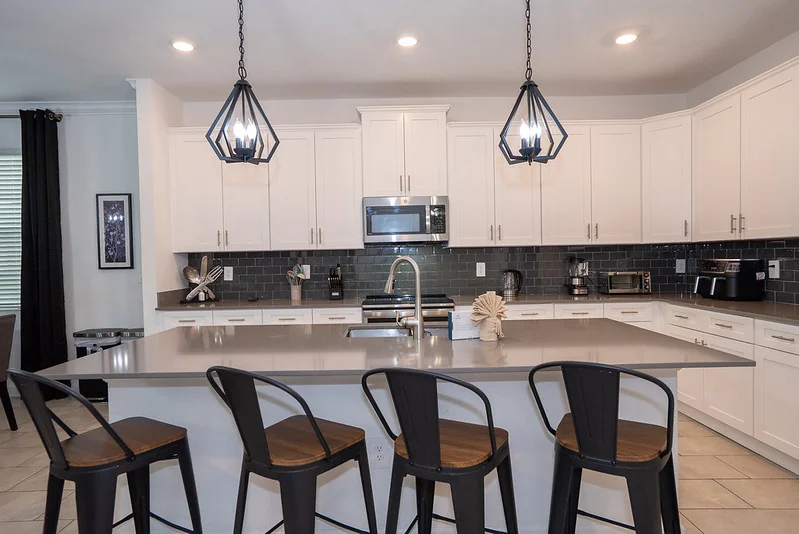
A large-vacation-rental kitchen kit has to support actual cooking for 10–20 guests, not just the family-of-four meal pattern that residential kitchens are designed for. Commercial-grade cookware in oversize specifications (large stockpots, double sheet pans, large skillets, serving-size pans, oversize cutting boards). Bakeware kit-doubled on high-use items (two sets of sheet pans, two roasting pans, two casserole dishes). Prep tools in commercial quantities (multiple mixing bowls in nested sizes, multiple cutting boards, oversized colanders and strainers, knife block plus auxiliary knives). Small appliances scaled to group cooking (oversize coffee maker plus a backup, large slow cooker or oversize crockpot, large blender, oversized toaster). Counter staging that actually photographs as a real kitchen (not display-only props). The kitchen-kit depth is one of the what matters most houseware-scope decisions for review quality.
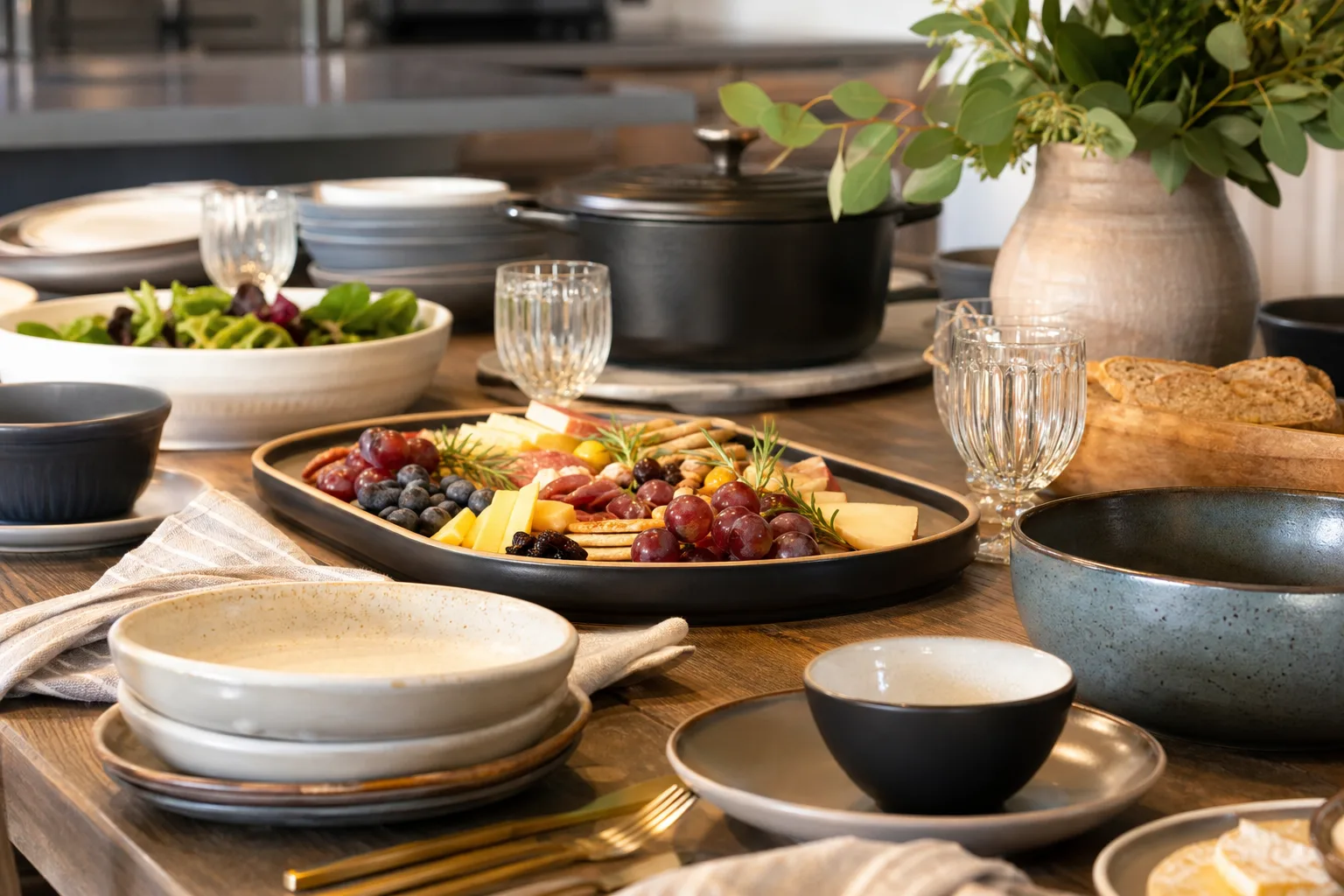
Dining capacity — table setting, serveware, and the dining math
The dining-zone houseware kit at large-vacation-rental scale has to seat the maximum guest count plus 25% buffer — a 14-guest property runs a 16–18 place-setting kit, an 18-guest property runs a 22+ place-setting kit. Dinner plates, salad-and-bread plates, dinner bowls and serving bowls, glassware in three categories (water, wine, cocktail), flatware sized to the maximum count with proper backup, serveware platters and trays sized for the group, and oversize serving utensils. Kid-friendly serveware (plastic kid plates, sippy cups, kid utensils) belongs in the kit at family-vacation-positioned properties. The dining-math mistake we see most often is owners sizing the dining kit to the bedroom count rather than the maximum sleep count — undersized dining kits run out of place settings mid-meal at full bookings and produce direct review-cycle damage.
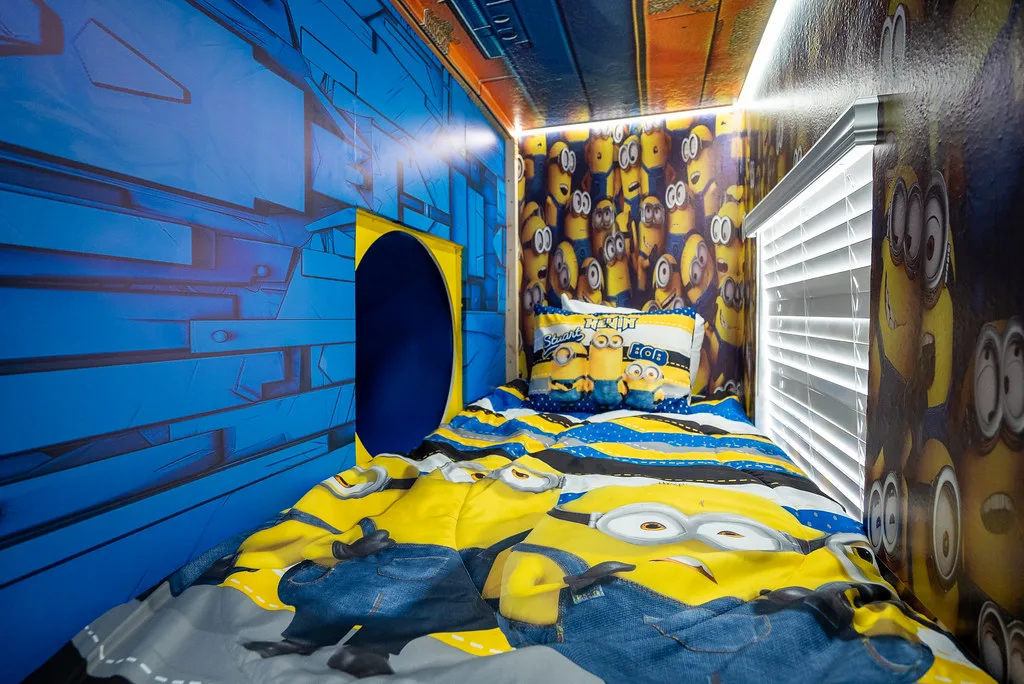
Bedroom-and-bath linens — kit doubling and turnover-cycle math
Linen inventory at large-vacation-rental scale runs at 2x bed count minimum for properties operating with off-site or commercial laundry, and 1.5x bed count minimum for properties operating with in-property laundry — and at mega-rental scale (10BR+) the linen inventory runs at 2.5x to 3x bed count to absorb back-to-back high-season bookings without shortages. The math: every bed needs the on-the-bed set plus the in-laundry set plus the in-cabinet rotation set. Bath linens follow the same logic — bath towels at 3 per maximum-guest minimum (one in use, one in cabinet, one in laundry), hand towels and washcloths at proportional ratios, hospitality-grade GSM specifications across the board. Linen-inventory shortages during a booking are one of the most common operational failures at large-vacation-rental scale and consistently show up in the negative-review pattern.
Cleaning, paper goods, and consumables
The consumables kit at large-vacation-rental scale runs at restaurant-supply volume rather than residential-grocery volume. Paper towels in cases, not single rolls. Toilet paper in cases, sized to multiple bathrooms across longer-stay bookings. Cleaning supplies in commercial volume with backups across categories. Trash bags in commercial roll sizes. Dish soap, hand soap, body soap, shampoo, and conditioner in proper hospitality bottles or dispensers, not residential single-use bottles. Coffee, tea, and welcome consumables sized to the maximum stay length. The consumables logic at 5BR+ is “a guest should never run out of anything during their stay” — and the kit inventory is sized to that standard rather than to residential restocking rhythms.
Decorative finish-out — the houseware-aesthetic dimension
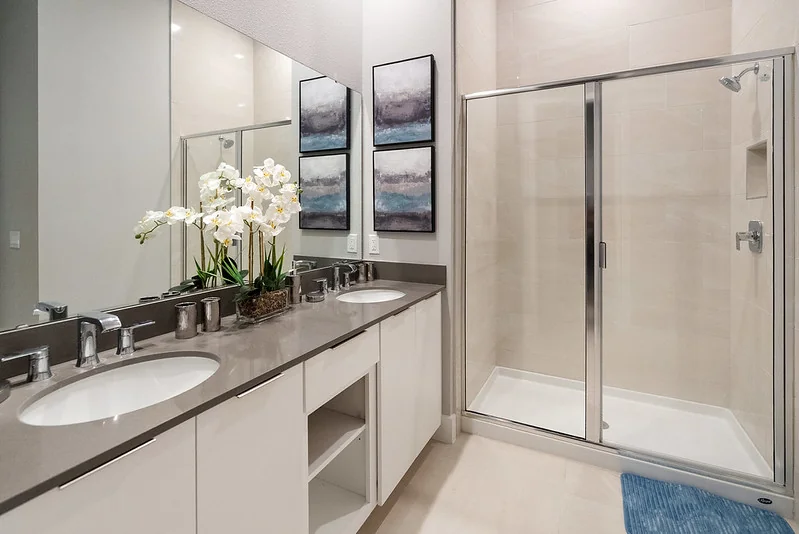
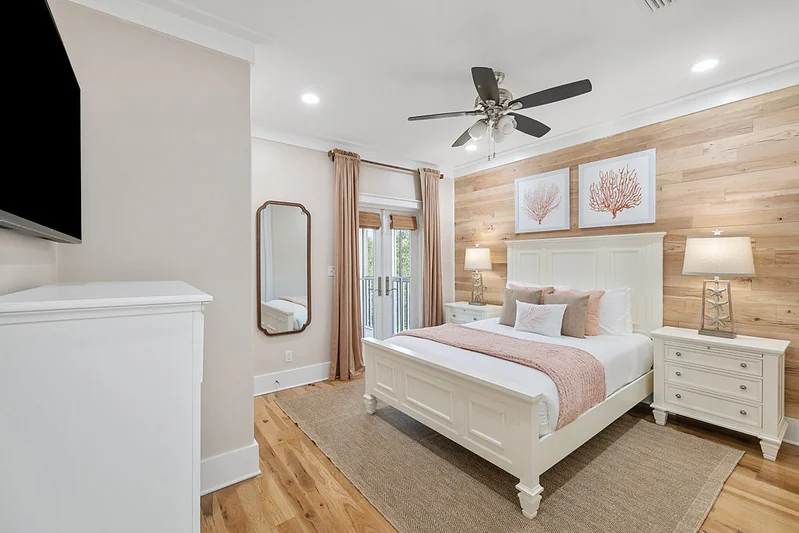
Decorative housewares are the aesthetic finish-out layer that photographs in the gallery and reads through the entire guest stay: framed art and prints in the great-room and bedroom zones, statement vases or pottery in the dining and entry zones, throw pillows and throws across seating in performance-fabric specifications, dining-zone centerpieces, kitchen-counter styling pieces (real bowls and decorative pieces, not display-only props), bedroom finish-out (statement headboards or art over bed, accent pillows, bedside-table styling), and bathroom finish-out (hotel-grade towels styled at the rack, decorative tray on the counter, photogenic toiletry presentation). Decorative finish-out is the line between a furnished property and a styled property — and the styled property reads in the gallery at a meaningfully higher tier.
The operational reality at large vacation rental scale
Housewares at large-vacation-rental scale operate under continuous turnover stress. A 5BR property doing 30–50 bookings per year cycles its houseware kit through 30–50 high-stress use cycles per year — every meal, every shower, every bed turnover, every load of laundry. Residential-grade specifications routinely fail under that stress within 12–18 months. Commercial-grade cookware survives 4–6 years. Hospitality-grade bedding survives 100+ wash cycles before quality degradation shows. Performance-fabric throw pillows and decorative soft goods survive 18+ months at the listing-photo standard. The houseware-scope decision is not just about the install-week kit list — it is about the kit specification that keeps the property looking install-week quality at month 18, month 24, and month 36. The houseware-scope kit specification at large-vacation-rental scale is one of the what matters most operational-durability decisions in the project.
How FPUSA scopes housewares for large vacation rentals
A houseware-kit scope conversation at large-vacation-rental scale runs through four filters: the property maximum guest count (which sets the dining-math kit baseline, linen-inventory math, and consumables sizing), the audience positioning (multi-family and reunion audiences need full group-cooking kits; corporate-retreat audiences need lighter kitchen but stronger work-zone and beverage scope; bachelor-party audiences need crash-zone-and-entertaining kit), the operational model (in-property vs commercial laundry, owner-stocked vs PM-managed consumables), and the durability spec (commercial-grade vs hospitality-grade vs residential-grade across each category). The output is a houseware-kit specification that fits inside the overall package proposal — launch-ready package, full amenity package, Luxury Estate, or Mega-Rental — and that sets the operational-durability baseline for the property’s 24–36 month review-cycle quality.
What we see go wrong
- Treating housewares as a checklist item rather than a strategic scope decision — the houseware kit drives a meaningful share of the review-cycle quality at large-vacation-rental scale.
- Sizing the dining kit to the bedroom count rather than the maximum guest count — undersized place-setting kits run out mid-meal and produce direct review-cycle damage.
- Residential-grade cookware at 5BR+ — the operational turnover stress destroys residential cookware within 12–18 months and the photo quality degrades visibly by month 18.
- Linen inventory at 1x bed count — back-to-back high-season bookings stress single-set linen inventory to failure, and shortages during a booking are one of the most common negative-review triggers at large scale.
- Skipping kid-friendly serveware on family-vacation-positioned properties — multi-family bookings expect kid plates, sippy cups, and kid utensils as baseline, and missing them appears in the negative-review pattern.
- Display-only kitchen prop styling instead of real cookware staging — guests who arrive to find the staged kitchen is empty produce a specific class of negative review the first time they try to cook.
- Residential single-use bottles for soap, shampoo, and conditioner — hospitality dispensers or larger refillable bottles read at the right tier and last across multiple bookings; single-use bottles read as Airbnb-budget rather than vacation-rental-baseline.
Related Community Guides
Eight Core Services
Turnkey to Themed Rooms — All Under One Roof
Full furniture packages, STR interior design, themed kids suites, game room conversions, property prep, custom bunks, white-glove install, and listing-ready staging — for vacation rentals and second homes across Orlando, Kissimmee, Davenport, and the full Florida STR market.
Frequently Asked Questions
Why are housewares so under-scoped at large vacation rental scale?
Housewares are not visible in the listing-listing photos the way furniture, themed bunks, and outdoor zones are — so they consume less planning attention during the scope-decision phase. The reality is that housewares get used during every booking by every guest, while the gallery decides whether a booking happens in the first place. The two scope categories are equally important at large-vacation-rental scale: the gallery drives the booking, the housewares drive the review that drives the next booking. Under-scoping housewares produces booking-cycle damage that compounds across 30–50 reviews per year.
How is the houseware kit at 5BR+ different from a small Airbnb houseware kit?
Categorically different. A small-Airbnb houseware kit serves 2–4 guests with residential-pattern cooking and use. A 5BR-and-larger houseware kit serves 10–20 guests with group-cooking and family-trip patterns — oversize cookware, doubled bakeware kits, dining serveware at 16+ place settings, linen inventory at 2x to 2.5x bed count, restaurant-supply consumables volume, hospitality-grade bath supplies across multiple bathrooms. The scope decision shape is the same, but every line-item specification scales meaningfully upward.
How much does the houseware kit cost as a share of a large vacation rental furnishing project?
Housewares typically run a meaningful share of the overall scope at large-vacation-rental scale — usually 8–15% of the project planning range depending on the kit specification, the consumables stocking depth, and the operational durability tier. The kitchen-and-dining kit is the largest subcategory, followed by linens, followed by decorative finish-out, followed by consumables-and-cleaning. Final pricing depends on the property, the maximum guest count, the audience positioning, the operational model, and the durability spec — confirmed through a scoped proposal.
What linen-inventory specification should a 5BR vacation rental run?
A 5BR property with in-property laundry should run a 1.5x bed-count linen inventory minimum (every bed has the in-use set plus 0.5 sets in cabinet rotation). A 5BR property with off-site or commercial laundry should run a 2x bed-count linen inventory minimum (every bed has the in-use set plus the in-laundry set). Mega-rental properties (10BR+) typically run 2.5x to 3x to absorb back-to-back high-season bookings. Bath towel inventory follows the same math at 3-per-guest minimum across the property.
Do I need to include kid-friendly serveware in the houseware kit?
For family-vacation-positioned and multi-family-reunion-positioned properties, yes — kid plates, sippy cups, kid utensils, kid-sized cups, and at least one high chair (booster seat for some properties) are baseline expectations at large vacation rental scale. The kid-friendly serveware is often the difference between a 4-star and 5-star review on the multi-family-with-young-kids booking pattern. For bachelor-party, corporate-retreat, or adult-group-positioned properties, the kid-serveware scope is lower priority.
How long do well-scoped housewares last at large vacation rental scale?
Commercial-grade cookware typically survives 4–6 years under STR turnover stress at large-vacation-rental scale. Hospitality-grade bedding survives 100+ wash cycles before quality degradation becomes visible. Performance-fabric throw pillows and decorative soft goods survive 18+ months at the listing-photo standard. Bath linens at proper GSM specifications survive 100+ wash cycles. The houseware-replacement cycle on a well-scoped 5BR or 8BR runs roughly every 24–36 months for soft goods and 4–6 years for cookware-and-hardgoods.