The Real Reason Your Tampa Airbnb Is Getting 4-Star Reviews (And...
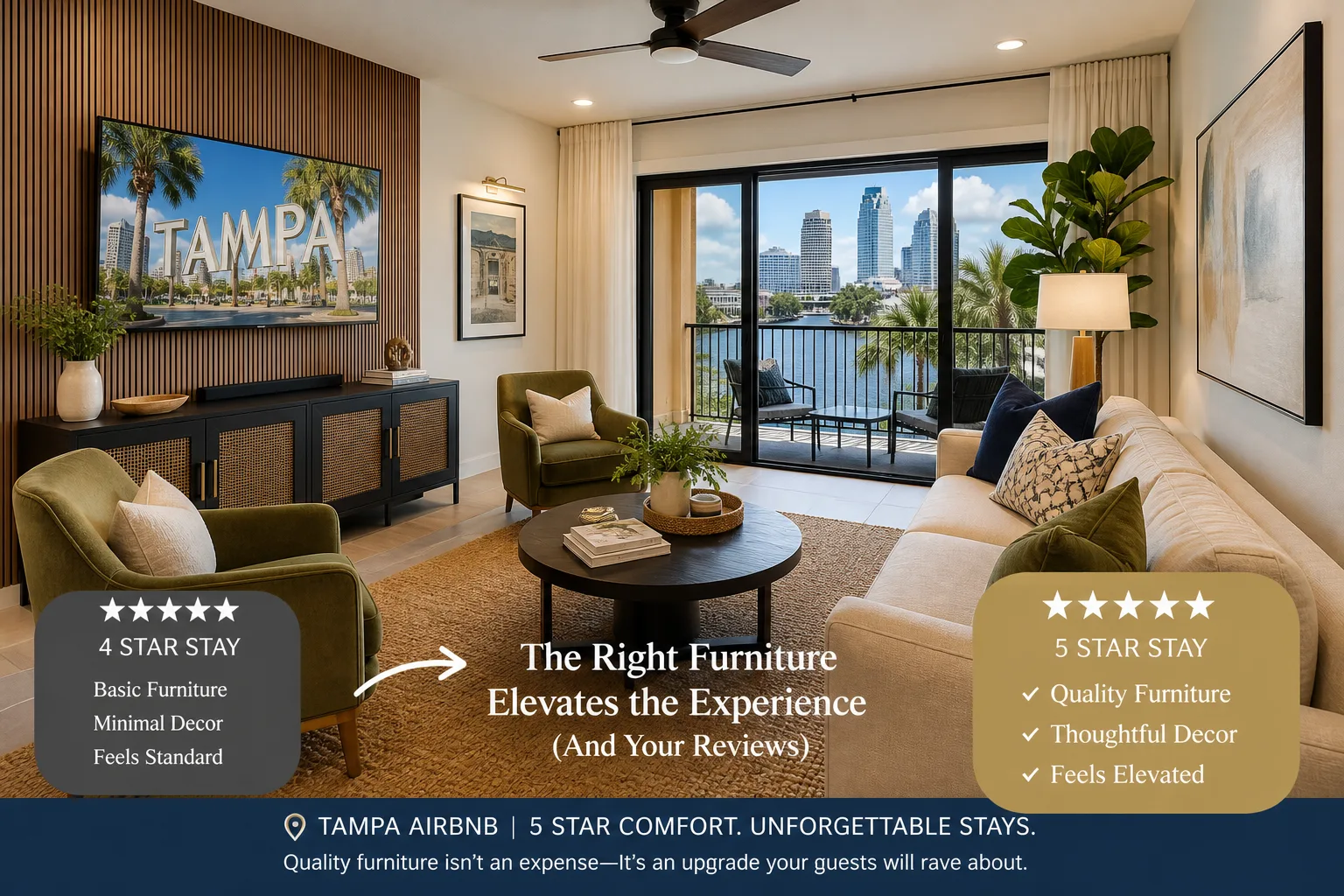
A 4.3 rating looks fine until you notice where it is costing you—search ranking, nightly rate, and the gap between what guests expected from your photos and what they actually found.
Sound familiar?
Your Tampa listing is stuck at 4.3. Gasparilla week is three weeks out and guests are booking 4.8 neighbors instead. The reviews keep mentioning the mattress and a sofa that doesn't match the photos.
In short
- Comfort is the review variable furniture controls—and it drives the most consistent negative pattern in STR reviews
- Photo-trust failures create disappointment before guests even try the mattress
- In Tampa's competitive market, half a star in rating can represent thousands in annual revenue
- Re-photograph after every meaningful upgrade to reset guest expectations accurately
Four-star comfort complaints look the same across South Tampa: sleep quality, seating, thin kitchens, and patio furniture that couldn't handle the humidity. Fix those before peak season — or spend another year watching stronger listings take the booking window. Most owners we talk to have already repainted, deep-cleaned, and updated their listing description before calling us, and the rating doesn't move, because none of that touches what guests are actually naming in their reviews. Read your last ten reviews line by line — the fix is almost always a specific, nameable piece of furniture, not a process problem.
What works
What Tampa guests actually write about
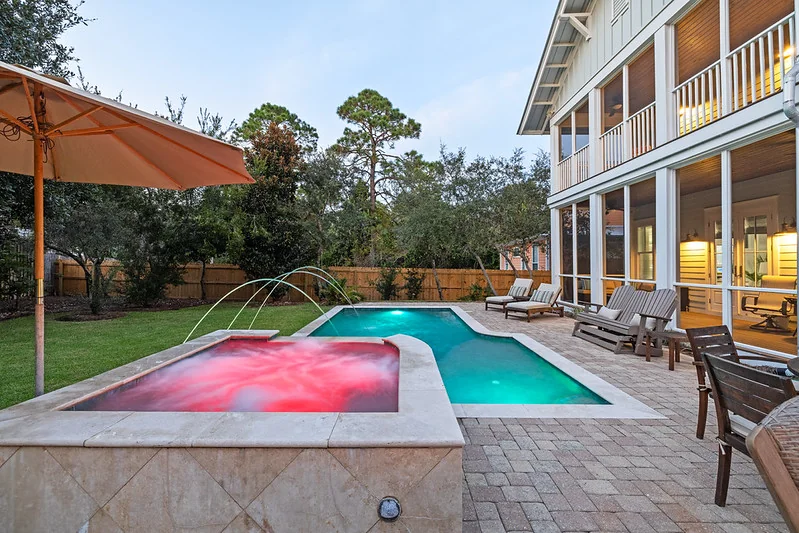
Mattress firmness, sagging, or noise. Sofa comfort during evening downtime. Dining setup adequacy for the group size. Kitchen completeness when the listing implied "chef's kitchen." The overall look and feel when described as dated, worn, mismatched, or not as shown—which means the gallery set expectations the reality did not meet. A pattern we see across South Tampa listings specifically: humidity-related wear on lanai furniture shows up in reviews as "the patio furniture looked worn" even when the interior is in great shape, because guests weight their outdoor experience heavily in a market where the lanai gets used nearly every month of the year.
The photo-trust problem
One of the most damaging review patterns in any STR market is when listing photos show the property in better condition than it currently is—whether from an earlier, better-staged shoot or from staging that was removed after photos. Guests arrive with photo-shaped expectations. When reality undersells the photo, the review reflects the disappointment, not just the furniture. We see this most often with rental-arbitrage and long-hold South Tampa properties where the original launch photos are two or three years old and the furniture has visibly aged since — the listing still shows the sofa's first season, but a guest is sitting on its third.
What a rating improvement is worth in Tampa
Properties maintaining a 4.8 or higher rating consistently achieve materially better occupancy and ADR than equivalent listings at 4.3–4.5. On a 4-bedroom Tampa home generating $60,000 annually, a 15–20% occupancy improvement from a better rating represents $9,000–$12,000 in additional annual revenue. A furniture upgrade that achieves and sustains a five-star comfort pattern often pays back within the first full year.
What a targeted furniture upgrade covers
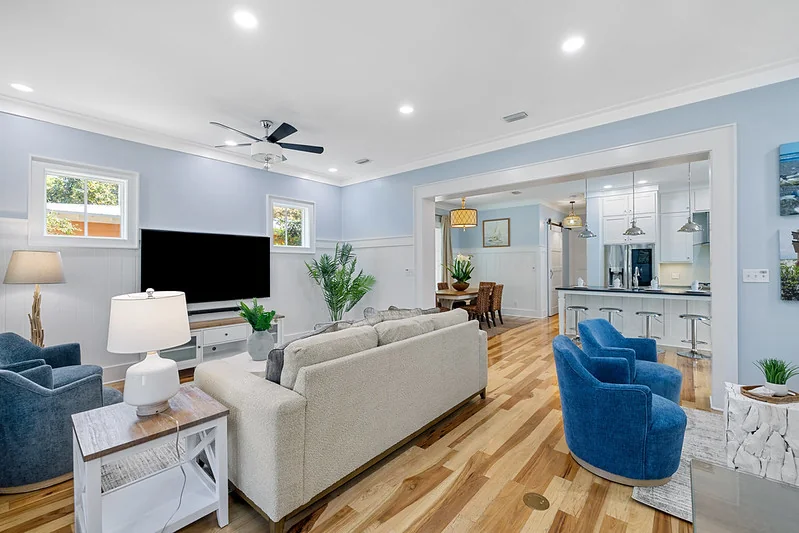
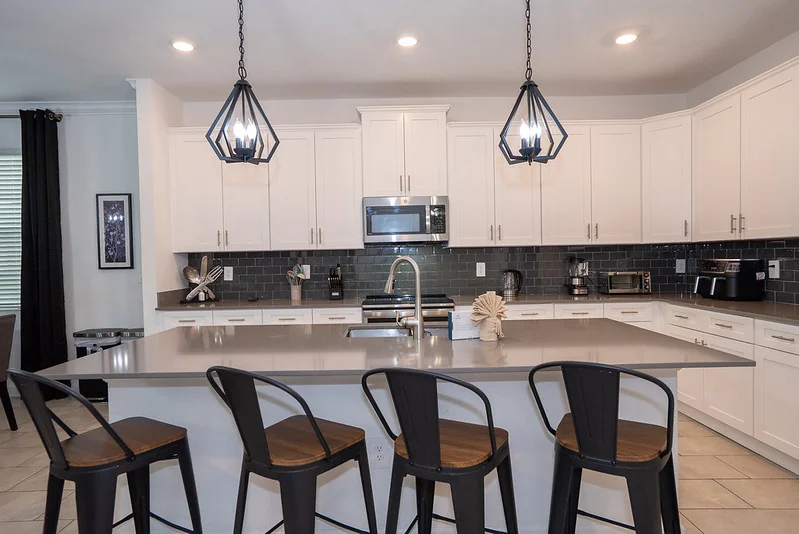
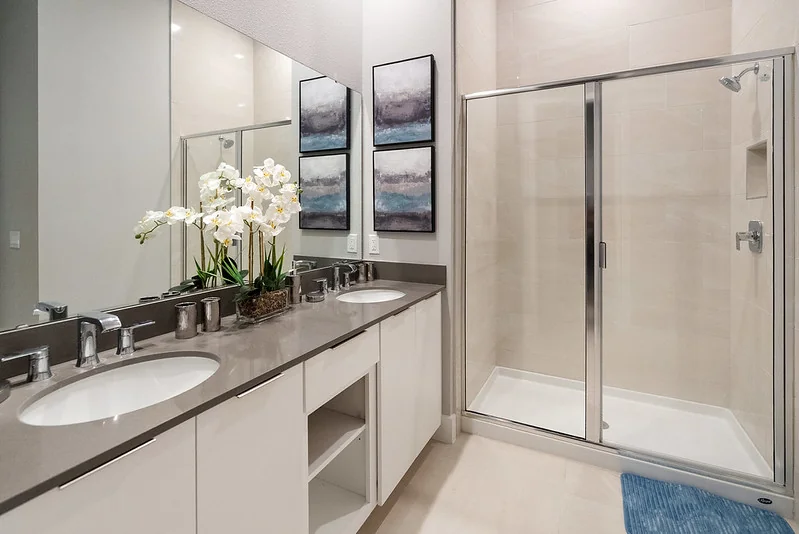
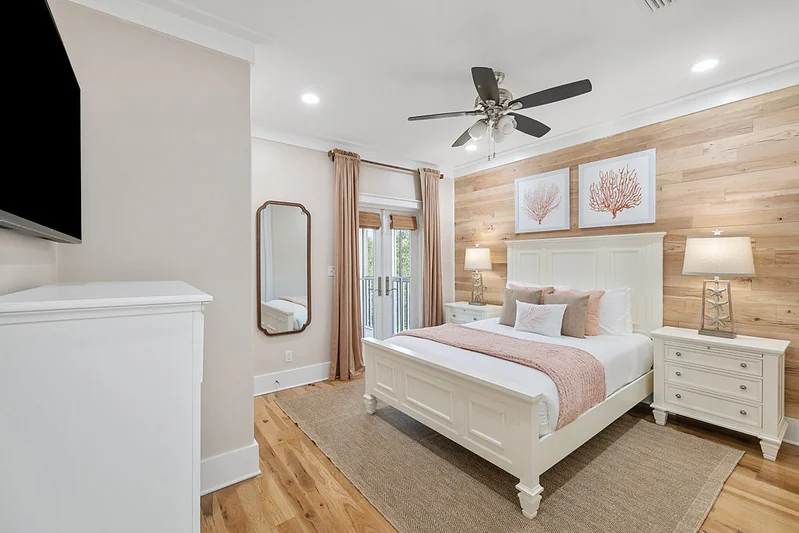
New mattresses across every bedroom because sleep quality is the single most-mentioned comfort variable in reviews. Living room reupholstery or replacement with durable fabric that photographs well. Bedroom staging with quality linens and window treatments. Kitchen upgrade: cookware, dinnerware, and small appliances that match the listing's implied quality level. Bathroom sets aligned to the rate tier.
Shoot photos after the upgrade, not before
Every furniture upgrade should be followed by a fresh photography session. New photos that accurately represent the upgraded interior eliminate the photo-trust gap and give the algorithm a fresh start on impressions. Schedule the shoot 24–48 hours after installation once cushions have settled and any assembly hardware is fully cleared, and shoot the outdoor space during daylight hours that match how guests will actually see it — a lanai photographed at golden hour when it's furnished with mismatched patio chairs sets an expectation the daytime reality won't meet. Update every platform listing at once so a guest browsing Airbnb and VRBO side by side doesn't see the old interior on one and the new one on the other.
Budgeting the upgrade: targeted vs full refresh
A targeted upgrade addressing the two or three most-cited items — typically mattresses and the living room sofa — usually runs $4,000–$9,000 for a 3-bedroom Tampa unit and can be completed in a single delivery day. A full interior refresh, including kitchen completion and lanai restyling, typically tracks toward the lower half of the full furnishing cost ranges for a comparable new unit, since some existing pieces, like case goods and dining tables, often stay in place. The decision rule: if three or more distinct categories — sleep, seating, kitchen, outdoor — show up across your last ten reviews, a full refresh pays back faster than piecemeal fixes, because you avoid multiple installation trips and get one clean photography reset instead of several incremental ones.
What to do first this week
Open three same-bedroom-count comps on Airbnb or VRBO and screenshot bunk photos, outdoor dining seats, and primary suite finish. List where your home falls short — that gap list becomes your furnish scope. Send your floor plan for a scoped proposal.
What we see go wrong
- Blaming reviews on cleaning alone when mattress and sofa language dominates the text
- Upgrading one room while leaving the rooms guests use most in poor condition
- Photographing before the upgrade is complete and then wondering why the new listing underperforms
- Describing kitchens as "fully stocked" when the knives are dull and there are three pots total
- Accepting a chronic 4.3 because "it still books sometimes"—revenue is leaking to competitors every peak week
Related Community Guides
Eight Core Services
Turnkey to Themed Rooms — All Under One Roof
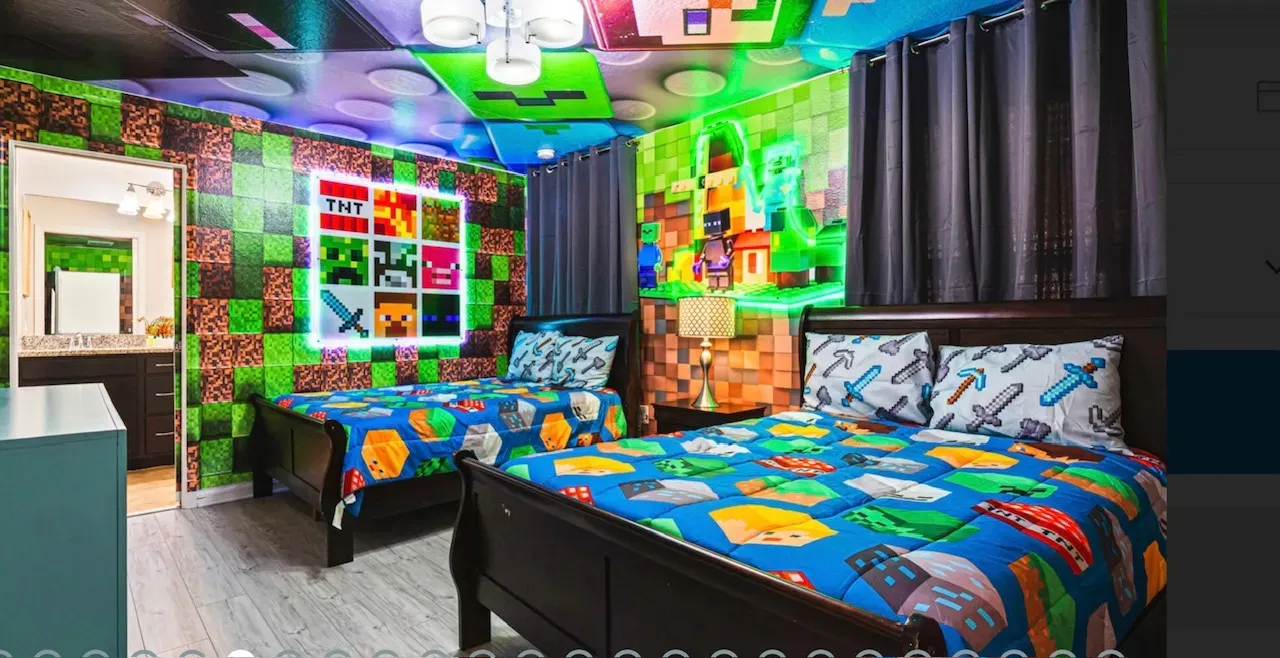
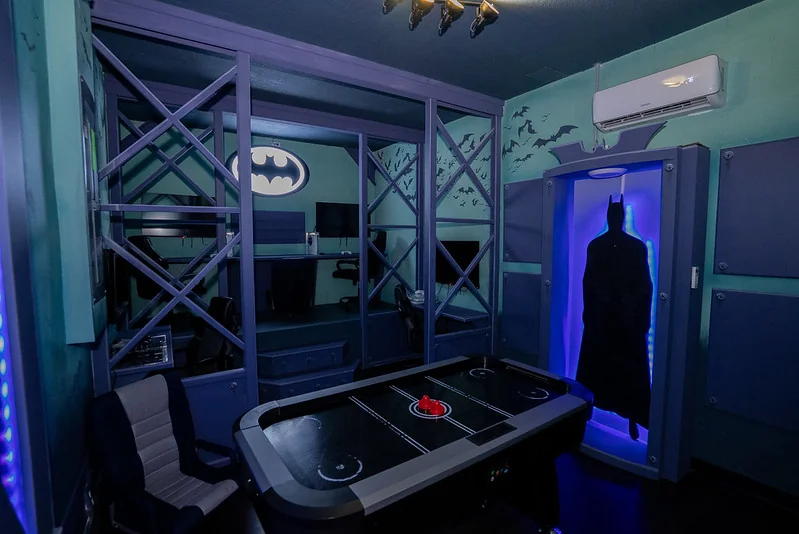
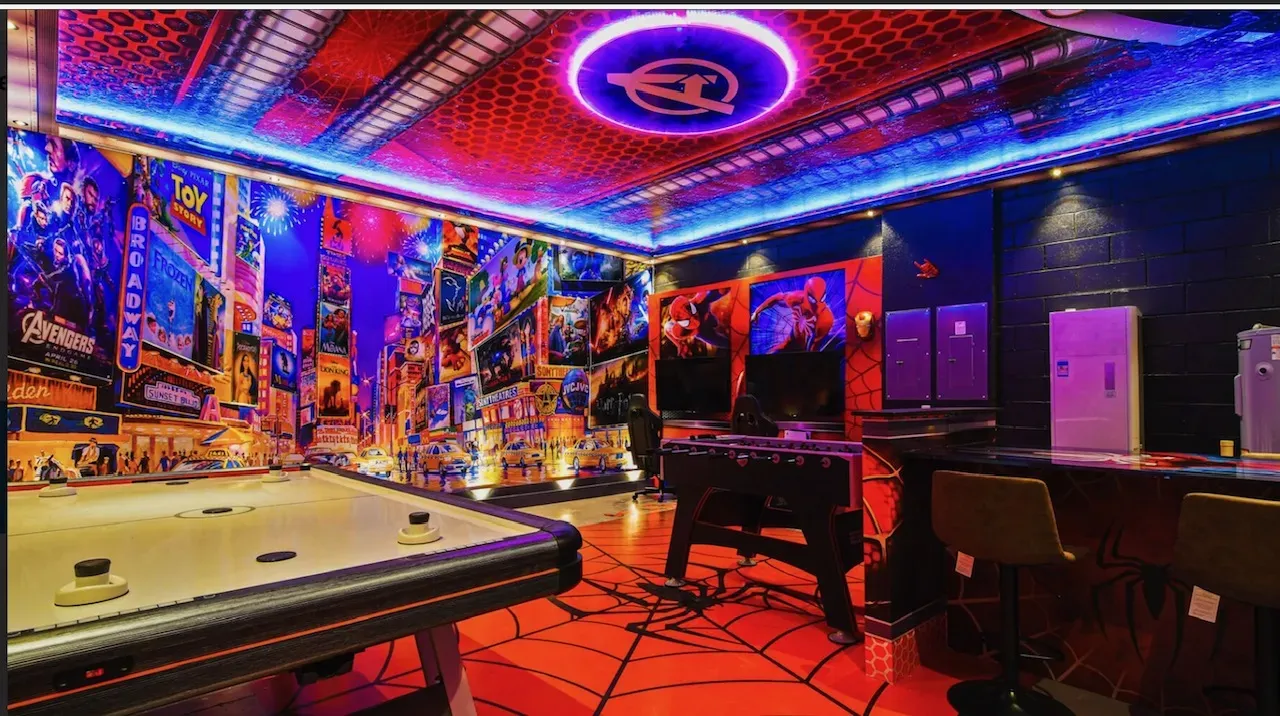
Full furniture packages, STR interior design, themed kids suites, game room conversions, property prep, custom bunks, white-glove install, and listing-ready staging — for vacation rentals and second homes across Orlando, Kissimmee, Davenport, and the full Florida STR market.
Frequently Asked Questions
Will furniture alone fix my rating?
Furniture addresses the most common comfort and expectation drivers. Communication and housekeeping are still necessary—but furniture is the piece most owners underinvest in relative to its review impact.
Should I do a full replacement or targeted upgrades?
It depends on the age and condition of current pieces. Mattresses, sofas, and the primary bedroom set are the highest-impact upgrade targets if everything else is in reasonable condition.
How fast do reviews improve after a furniture upgrade?
Many owners see improved comfort language in reviews within the first 2–3 guest cycles after a quality upgrade and re-shoot.
Is re-photography necessary after an upgrade?
Yes. New furniture without new photos means the photo-trust gap persists—guests arrive expecting the old interior.
What should I do first?
Pull three in-community comps with your bedroom count, note bunk, outdoor, and primary suite in the hero photos, then send your floor plan. We match package tier to that comp set before you order furniture.
Will new lanai or patio furniture actually hold up better than what I have now, or will it just wear out again in a year?
It depends entirely on the material spec, not just that it's new — standard big-box wicker and untreated cushion foam typically break down within 12–18 months in Tampa's humidity and UV exposure. Marine-grade fabrics, powder-coated aluminum frames, and quick-dry foam cost more upfront but are built to hold up through multiple Florida summers without the fading and mildew that drives the same complaint in reviews year after year.